Max Planck Institute Biology of Ageing - Karolinska Institutet Laboratory, Stockholm, Sweden.
Department of Medical Biochemistry and Biophysics, Karolinska Institutet, Stockholm, Sweden.
Mol Genet Genomic Med. 2019 Jun;7(6):e654. doi: 10.1002/mgg3.654. Epub 2019 Mar 28.
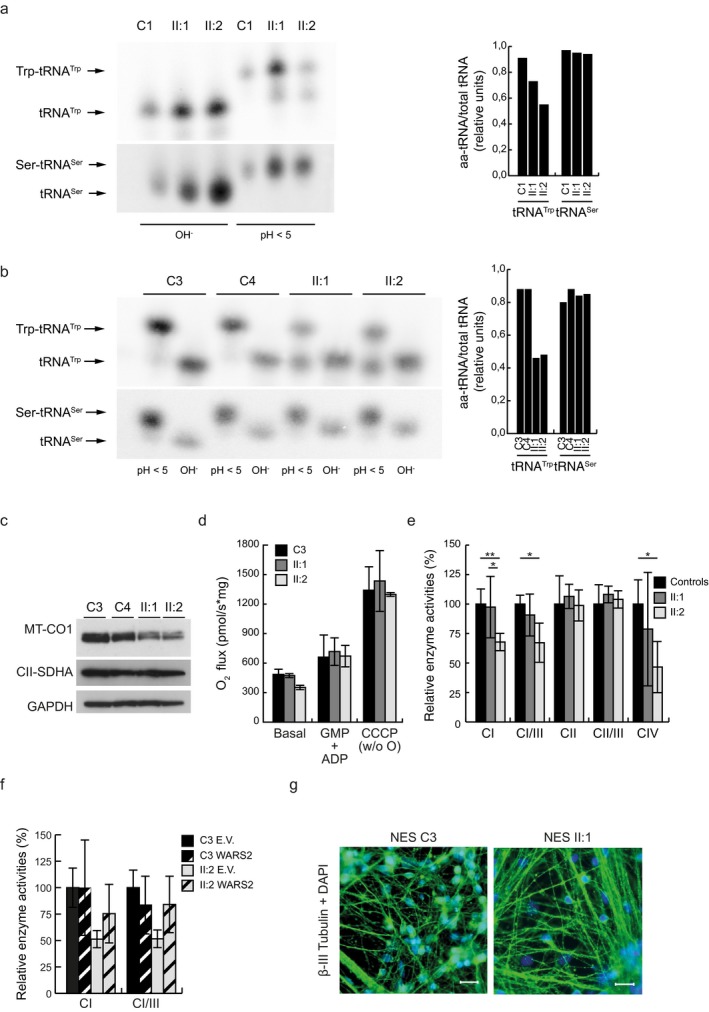
Mutations in mitochondrial aminoacyl tRNA synthetases form a subgroup of mitochondrial disorders often only perturbing brain function by affecting mitochondrial translation. Here we report two siblings with mitochondrial disease, due to compound heterozygous mutations in the mitochondrial tryptophanyl-tRNA synthetase (WARS2) gene, presenting with severe neurological symptoms but normal mitochondrial function in skeletal muscle biopsies and cultured skin fibroblasts.
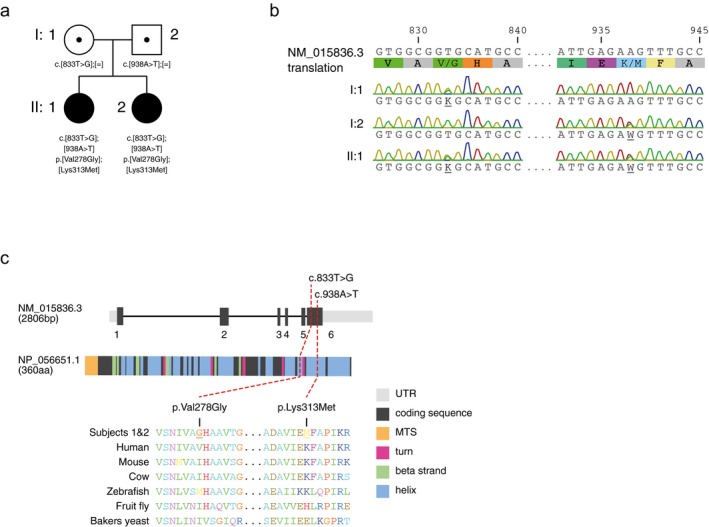
Whole exome sequencing on genomic DNA samples from both subjects and their parents identified two compound heterozygous variants c.833T>G (p.Val278Gly) and c.938A>T (p.Lys313Met) in the WARS2 gene as potential disease-causing variants. We generated patient-derived neuroepithelial stem cells and modeled the disease in yeast and Drosophila melanogaster to confirm pathogenicity.
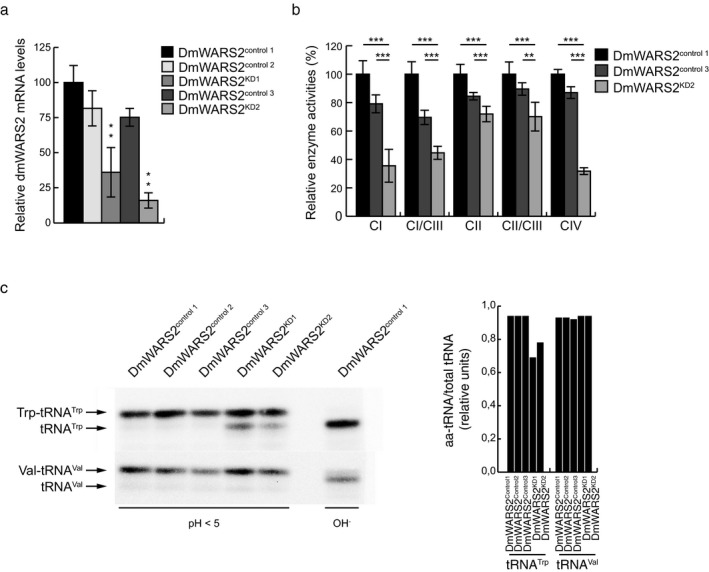
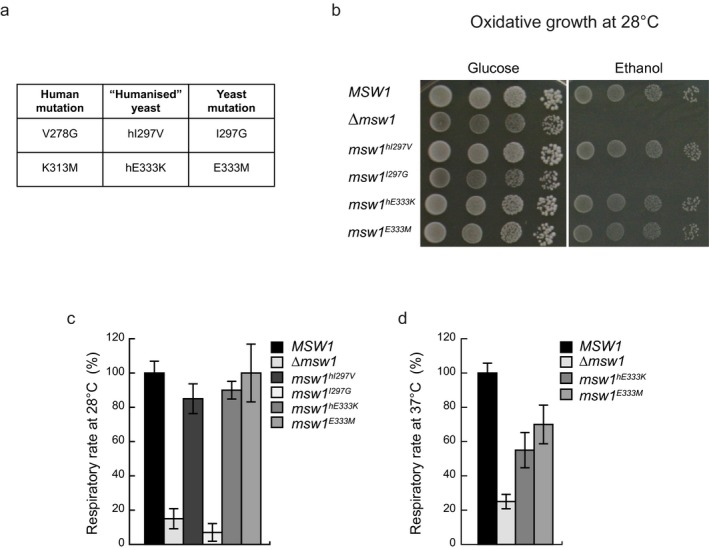
Biochemical analysis of patient-derived neuroepithelial stem cells revealed a mild combined complex I and IV defect, while modeling the disease in yeast demonstrated that the reported aminoacylation defect severely affects respiration and viability. Furthermore, silencing of wild type WARS2 in Drosophila melanogaster showed that a partial defect in aminoacylation is enough to cause lethality.
Our results establish the identified WARS2 variants as disease-causing and highlight the benefit of including human neuronal models, when investigating mutations specifically affecting the nervous system.
线粒体氨酰基-tRNA 合成酶的突变形成了线粒体疾病的一个亚组,这些突变通常仅通过影响线粒体翻译来扰乱脑功能。在这里,我们报告了两例由于线粒体色氨酰-tRNA 合成酶(WARS2)基因的复合杂合突变导致的线粒体疾病患者,他们表现出严重的神经症状,但骨骼肌活检和培养的皮肤成纤维细胞中线粒体功能正常。
对两名患者及其父母的基因组 DNA 样本进行全外显子组测序,发现 WARS2 基因中的两个复合杂合变体 c.833T>G(p.Val278Gly)和 c.938A>T(p.Lys313Met)可能是致病变异。我们生成了患者来源的神经上皮干细胞,并在酵母和黑腹果蝇中对疾病进行建模,以确认其致病性。
对患者来源的神经上皮干细胞的生化分析显示,存在轻度的综合 I 型和 IV 型缺陷,而在酵母中对疾病进行建模表明,报道的氨酰化缺陷严重影响呼吸和活力。此外,在黑腹果蝇中沉默野生型 WARS2 表明,部分氨酰化缺陷足以导致致死性。
我们的研究结果确立了所鉴定的 WARS2 变异为致病变异,并强调了在专门研究影响神经系统的突变时,纳入人类神经元模型的益处。