Graduate Institute of Anatomy and Cell Biology, College of Medicine, National Taiwan University, Taipei, Taiwan.
Department of Neurology and Stroke Center, National Taiwan University Hospital and National Taiwan University College of Medicine, Taipei, Taiwan.
Brain Behav. 2019 May;9(5):e01274. doi: 10.1002/brb3.1274. Epub 2019 Mar 28.
Erythropoietin (EPO) can enhance neurogenesis and fibroblasts can secrete growth factors; together, they may benefit ischemic stroke. We transplanted EPO-producing fibroblasts into the rodent infarcted brain to test their effect on neurogenesis and functional recovery.
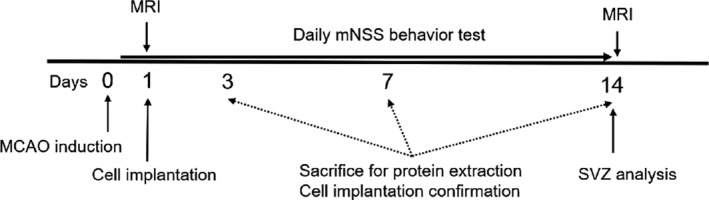
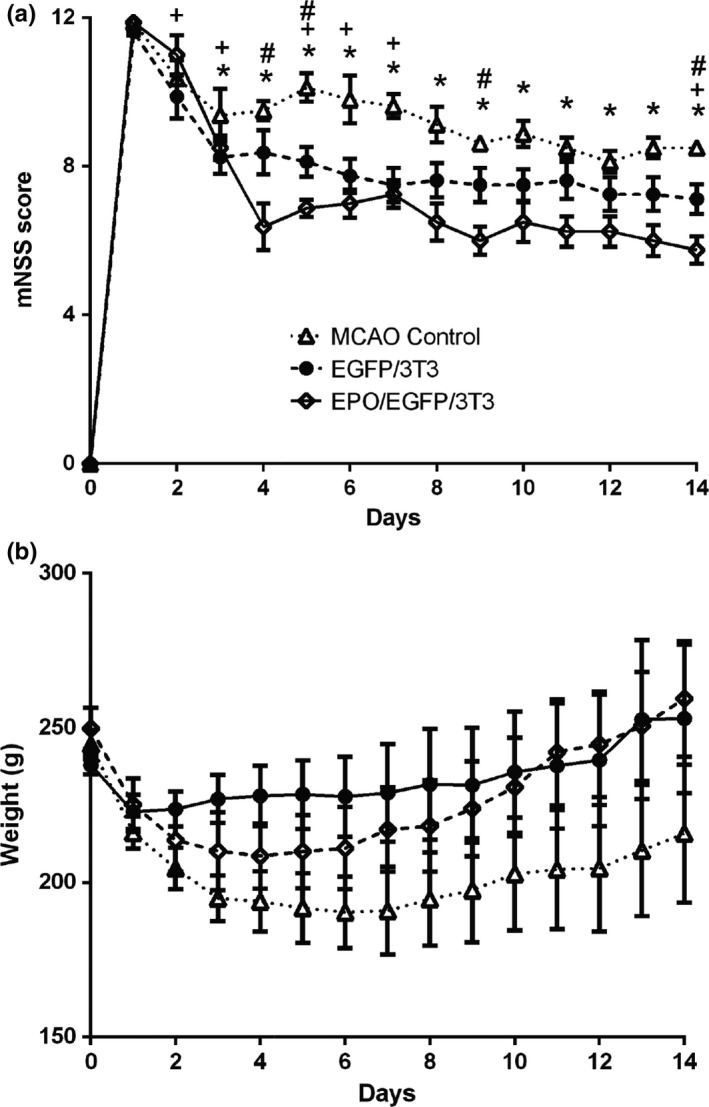
A total of 10 cells of EPO-producing NIH/3T3 fibroblasts (EPO/EGFP/3T3) or enhanced green fluorescence protein (EGFP)-expressing fibroblasts (EGFP/3T3) were stereotaxically injected into the infarcted striatum of adult rats that received transient middle cerebral artery occlusion (MCAO) surgery 1 day poststroke. On day 14 after MCAO, the animals were euthanized for the evaluation of neurogenesis via immunohistochemistry and of the expression of growth factors using enzyme-linked immunosorbent assay. The infarct volume was analyzed using magnetic resonance imaging and the neurological behavior was assessed using the neurological severity scoring performed within 14 days after MCAO.
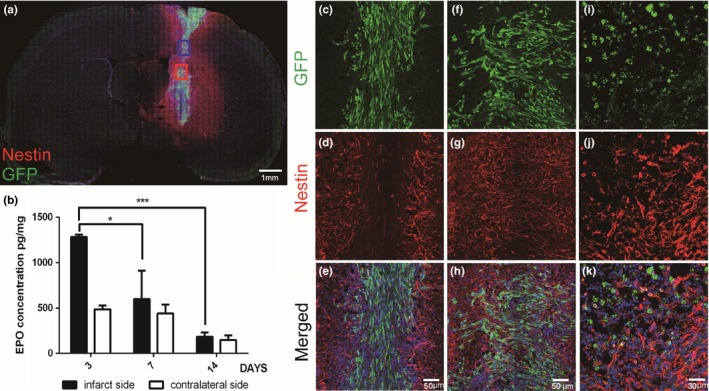
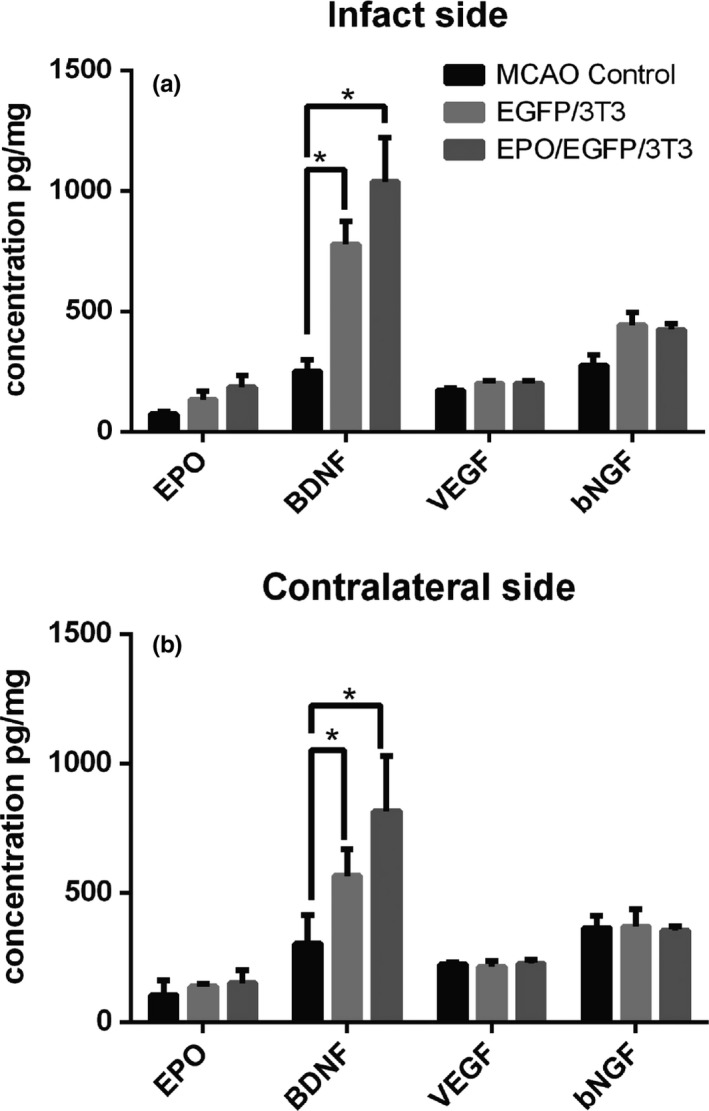
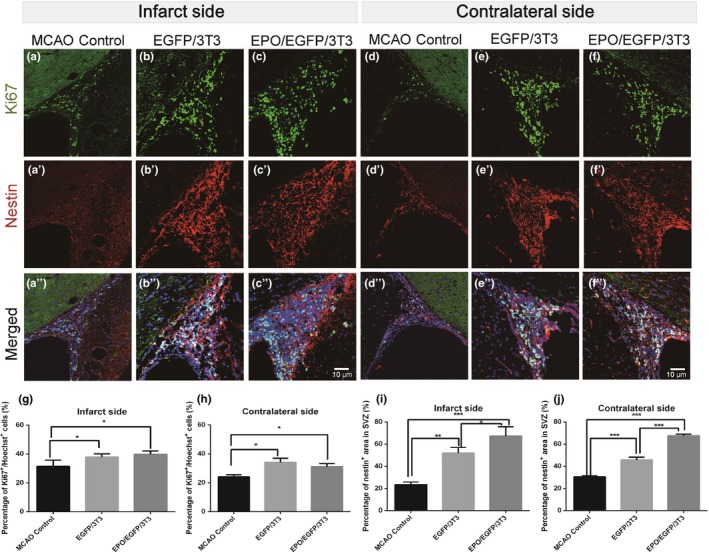
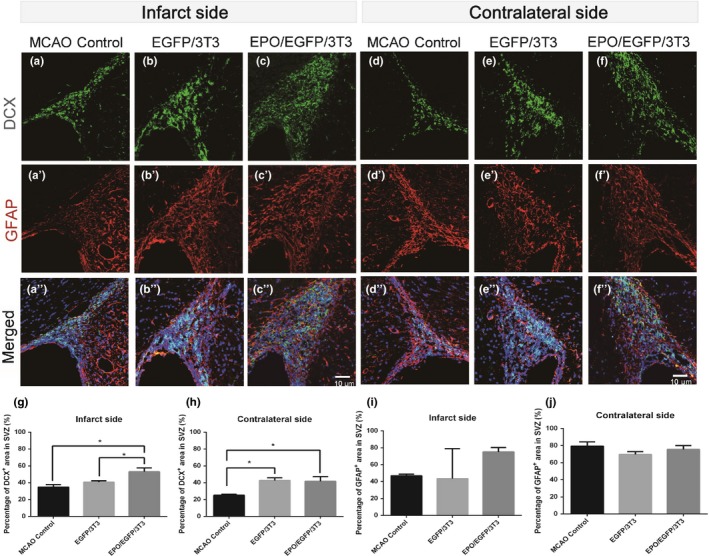
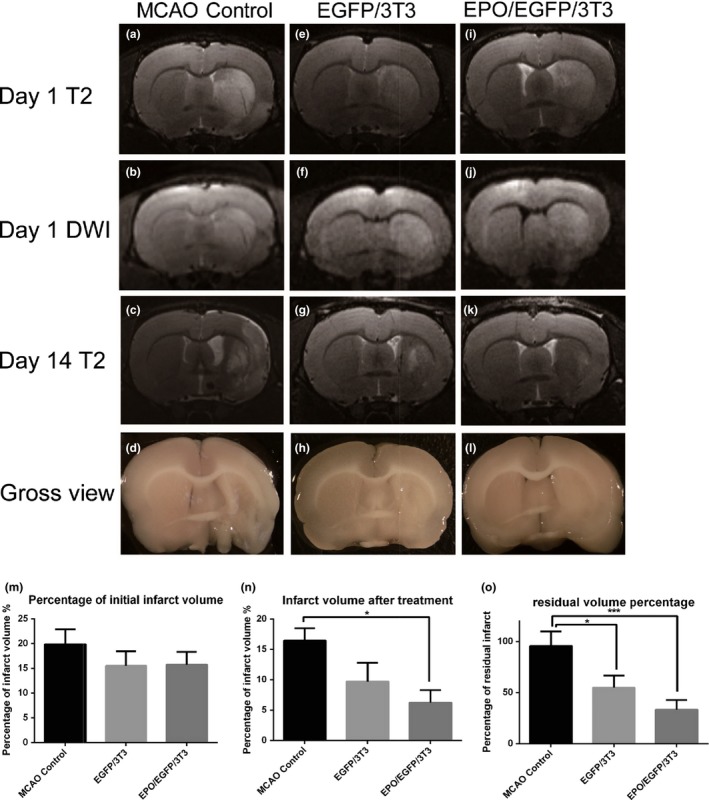
The MCAO rats with EPO/EGFP/3T3 treatment showed high EPO expression in the infarcted brain for at least 1 week. The concentration of brain-derived neurotrophic factor was higher in both hemispheres of MCAO rats with either EGFP/3T3 or EPO/EGFP/3T3 treatment at 14 days poststroke compared with untreated MCAO rats. The number of Ki-67-, nestin-, or doublecortin-immunoreactive cells in bilateral subventricular zones was higher in EPO/EGFP/3T3-treated MCAO rats than it was in untreated MCAO control animals, indicating the enhancement of neurogenesis after EPO/EGFP/3T3 treatment. Notably, post-MCAO EPO/EGFP/3T3 treatment significantly reduced infarct size and improved functional recovery.
The intracerebral transplantation of EPO-producing fibroblasts benefited an ischemic stroke model probably via the enhancement of neurogenesis.
促红细胞生成素(EPO)可以促进神经发生,成纤维细胞可以分泌生长因子;它们可能一起有益于缺血性中风。我们将产生 EPO 的成纤维细胞移植到啮齿动物梗死的大脑中,以测试它们对神经发生和功能恢复的影响。
总共将 10 个细胞的产生 EPO 的 NIH/3T3 成纤维细胞(EPO/EGFP/3T3)或表达增强型绿色荧光蛋白(EGFP)的成纤维细胞(EGFP/3T3)立体定向注射到成年大鼠的梗死纹状体中,这些大鼠在中风后 1 天接受短暂性大脑中动脉闭塞(MCAO)手术。在 MCAO 后 14 天,处死动物,通过免疫组织化学评估神经发生,并通过酶联免疫吸附试验评估生长因子的表达。通过磁共振成像分析梗死体积,并在 MCAO 后 14 天内进行神经严重程度评分评估神经行为。
MCAO 大鼠用 EPO/EGFP/3T3 治疗后,至少在 1 周内大脑中 EPO 表达较高。与未治疗的 MCAO 大鼠相比,在 MCAO 后 14 天,接受 EGFP/3T3 或 EPO/EGFP/3T3 治疗的 MCAO 大鼠的两个半球中脑源性神经营养因子的浓度均较高。EPO/EGFP/3T3 治疗的 MCAO 大鼠双侧侧脑室下区的 Ki-67、巢蛋白或双皮质素免疫反应细胞数量高于未治疗的 MCAO 对照动物,表明 EPO/EGFP/3T3 治疗后神经发生增强。值得注意的是,MCAO 后 EPO/EGFP/3T3 治疗显著减少梗死体积并改善功能恢复。
产生 EPO 的成纤维细胞的脑内移植可能通过增强神经发生有益于缺血性中风模型。