Laboratory of Pediatrics, Section Systems Medicine of Metabolism and Signaling, University of Groningen, University Medical Center Groningen, Groningen, The Netherlands.
Department for Neuroscience, School of Medicine and Health Sciences, Carl von Ossietzky University Oldenburg, Oldenburg, Germany.
Life Sci Alliance. 2019 Mar 28;2(2). doi: 10.26508/lsa.201800257. Print 2019 Apr.
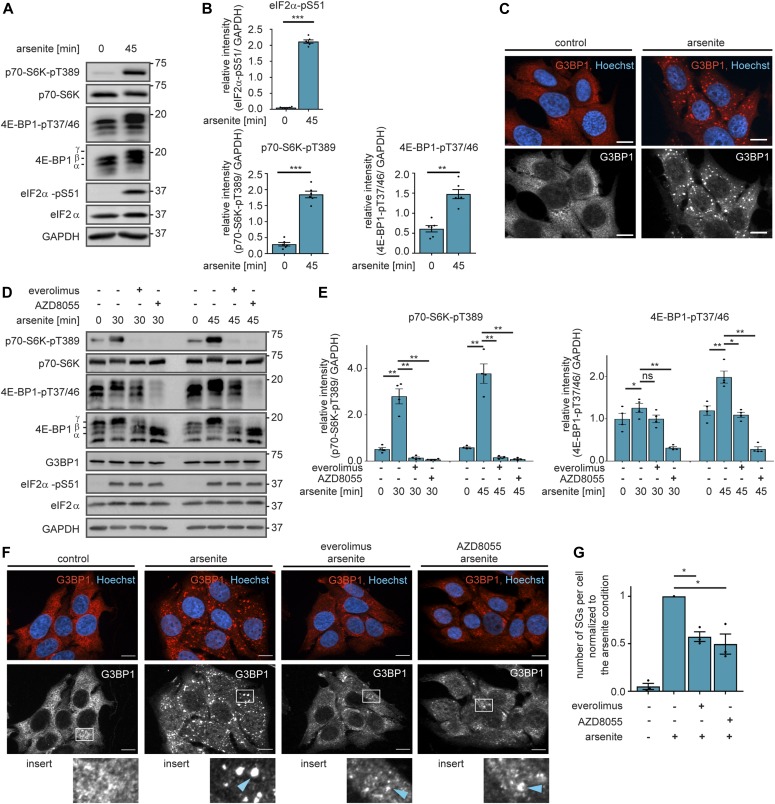
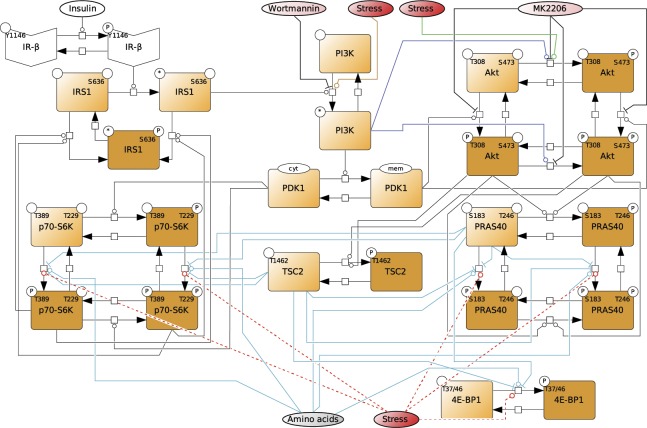
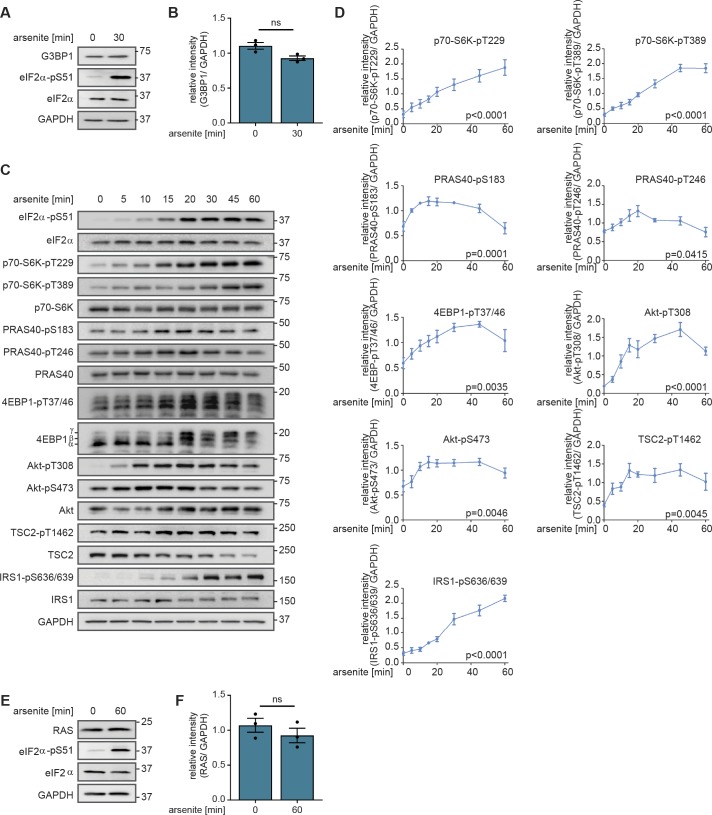
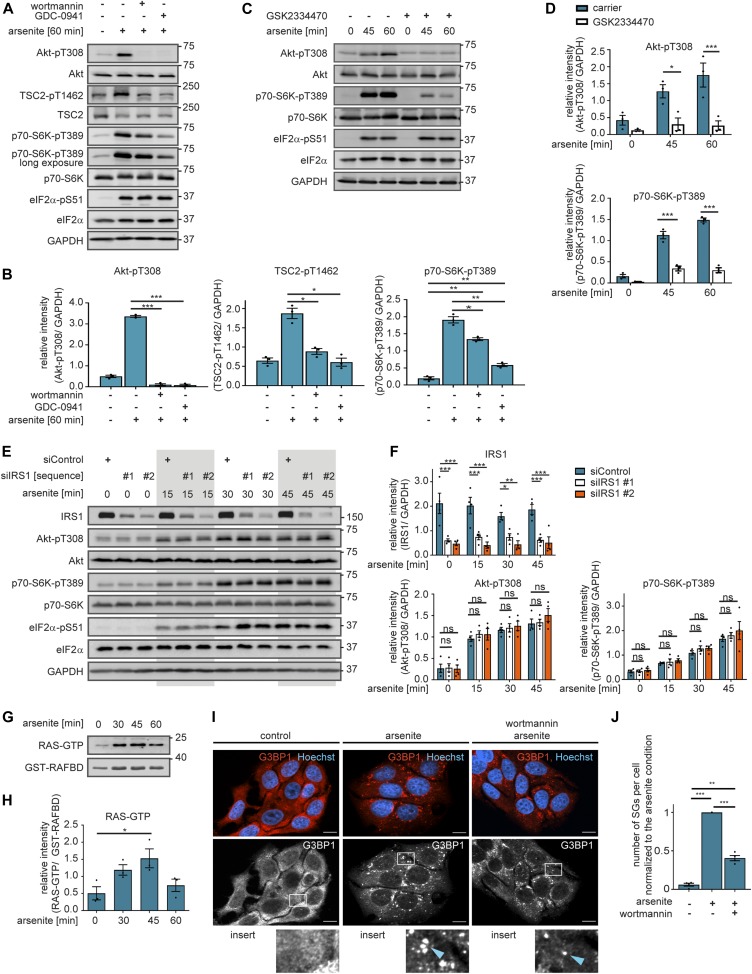
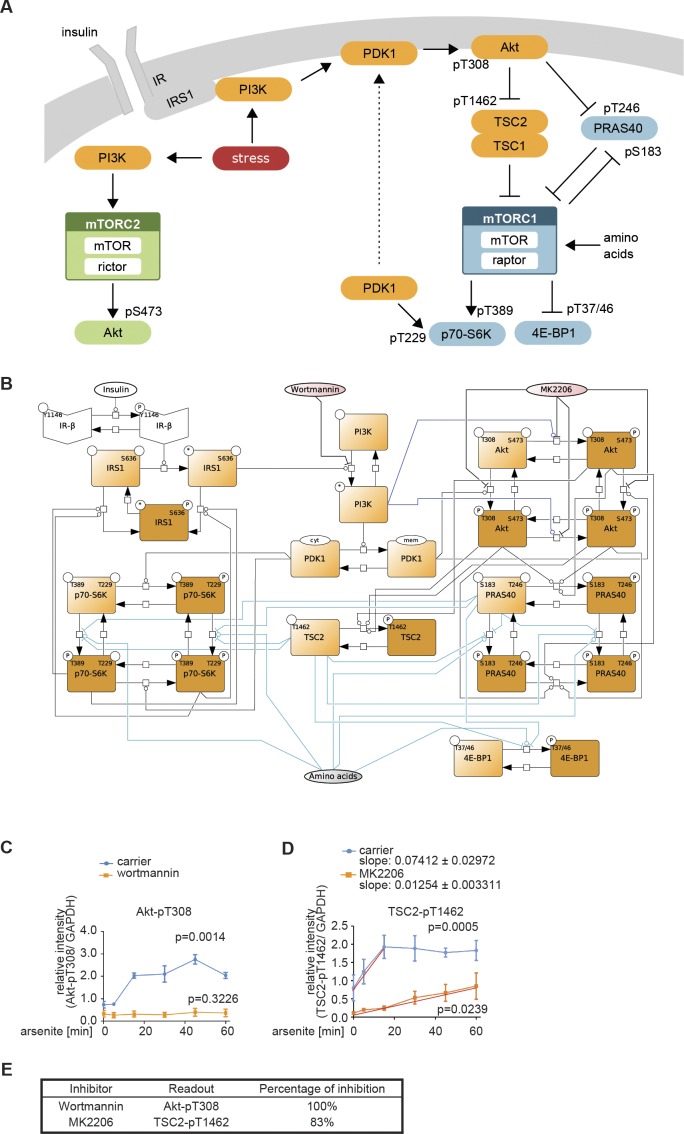
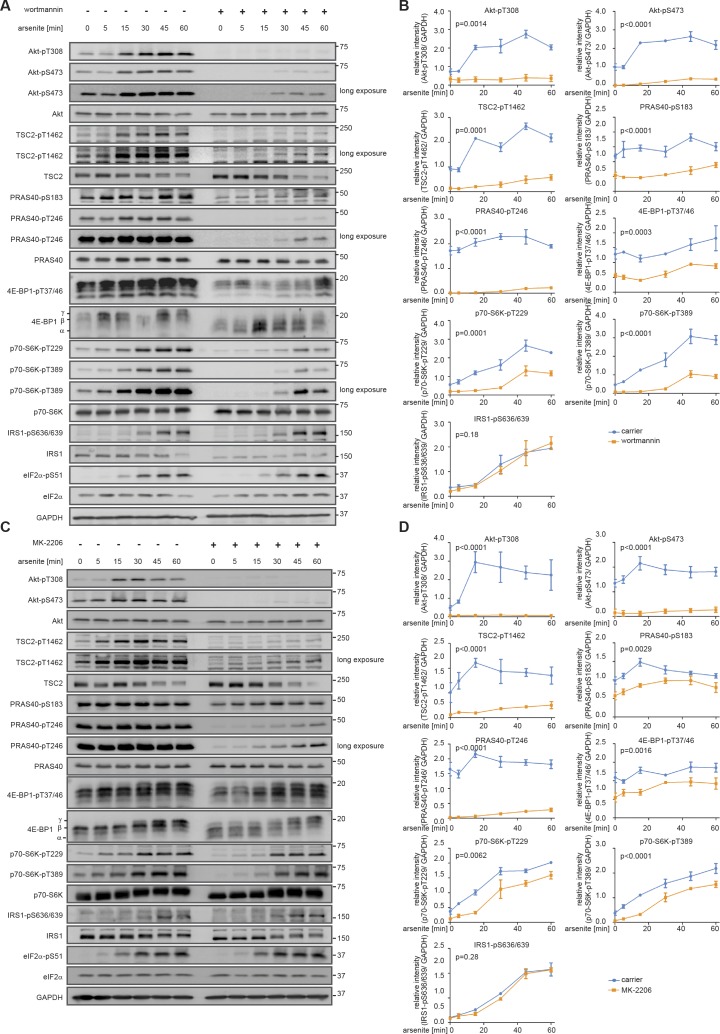
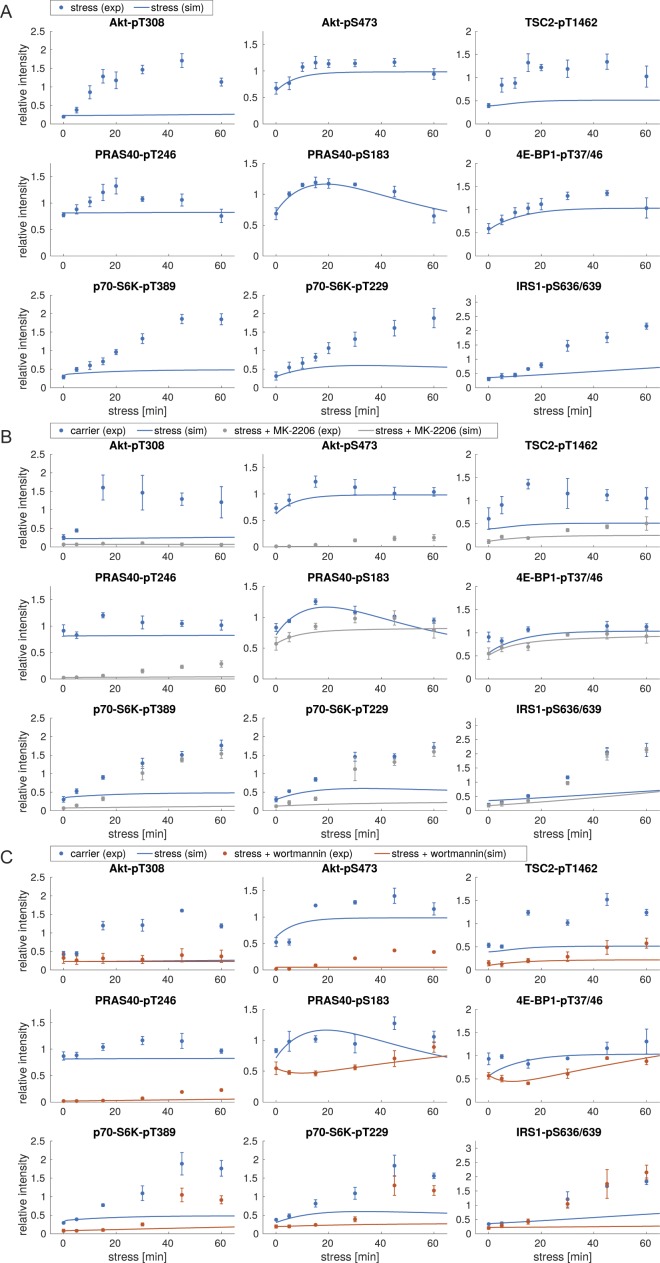
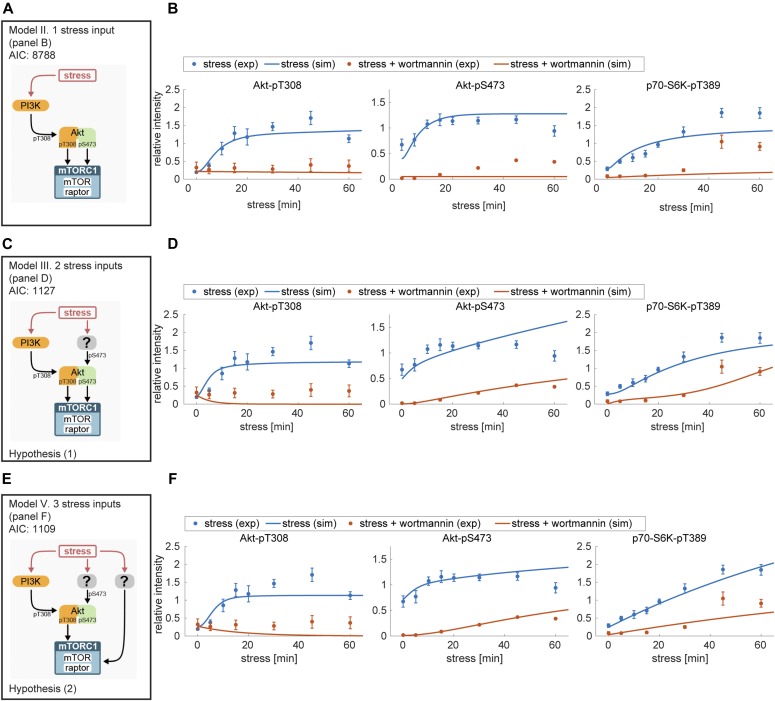
All cells and organisms exhibit stress-coping mechanisms to ensure survival. Cytoplasmic protein-RNA assemblies termed stress granules are increasingly recognized to promote cellular survival under stress. Thus, they might represent tumor vulnerabilities that are currently poorly explored. The translation-inhibitory eIF2α kinases are established as main drivers of stress granule assembly. Using a systems approach, we identify the translation enhancers PI3K and MAPK/p38 as pro-stress-granule-kinases. They act through the metabolic master regulator mammalian target of rapamycin complex 1 (mTORC1) to promote stress granule assembly. When highly active, PI3K is the main driver of stress granules; however, the impact of p38 becomes apparent as PI3K activity declines. PI3K and p38 thus act in a hierarchical manner to drive mTORC1 activity and stress granule assembly. Of note, this signaling hierarchy is also present in human breast cancer tissue. Importantly, only the recognition of the PI3K-p38 hierarchy under stress enabled the discovery of p38's role in stress granule formation. In summary, we assign a new pro-survival function to the key oncogenic kinases PI3K and p38, as they hierarchically promote stress granule formation.
所有细胞和生物都表现出应激应对机制以确保生存。越来越多的细胞质蛋白-RNA 复合物被称为应激颗粒,被认为可在应激下促进细胞存活。因此,它们可能代表目前研究不足的肿瘤脆弱性。翻译抑制 eIF2α 激酶被认为是应激颗粒组装的主要驱动因素。我们采用系统方法,确定翻译增强子 PI3K 和 MAPK/p38 为应激颗粒激酶。它们通过代谢主调节因子雷帕霉素复合物 1 (mTORC1) 发挥作用,促进应激颗粒组装。当活性很高时,PI3K 是应激颗粒的主要驱动因素;然而,当 PI3K 活性下降时,p38 的影响变得明显。PI3K 和 p38 因此以层级方式作用以驱动 mTORC1 活性和应激颗粒组装。值得注意的是,这种信号级联在人类乳腺癌组织中也存在。重要的是,只有在应激下识别出 PI3K-p38 级联,才能发现 p38 在应激颗粒形成中的作用。总之,我们赋予关键致癌激酶 PI3K 和 p38 新的促生存功能,因为它们分层促进应激颗粒形成。