Department of Anesthesiology and Perioperative Medicine, Medical University of South Carolina, Charleston, SC, USA; Department of Neuroscience, Medical University of South Carolina, Charleston, SC, USA.
Department of Neuroscience, Medical University of South Carolina, Charleston, SC, USA.
Neuroscience. 2019 May 15;406:528-541. doi: 10.1016/j.neuroscience.2019.03.040. Epub 2019 Mar 26.
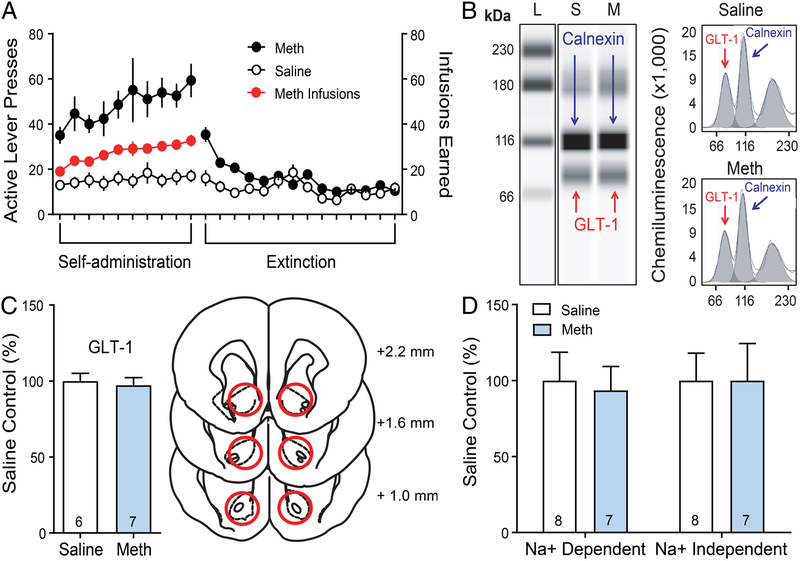
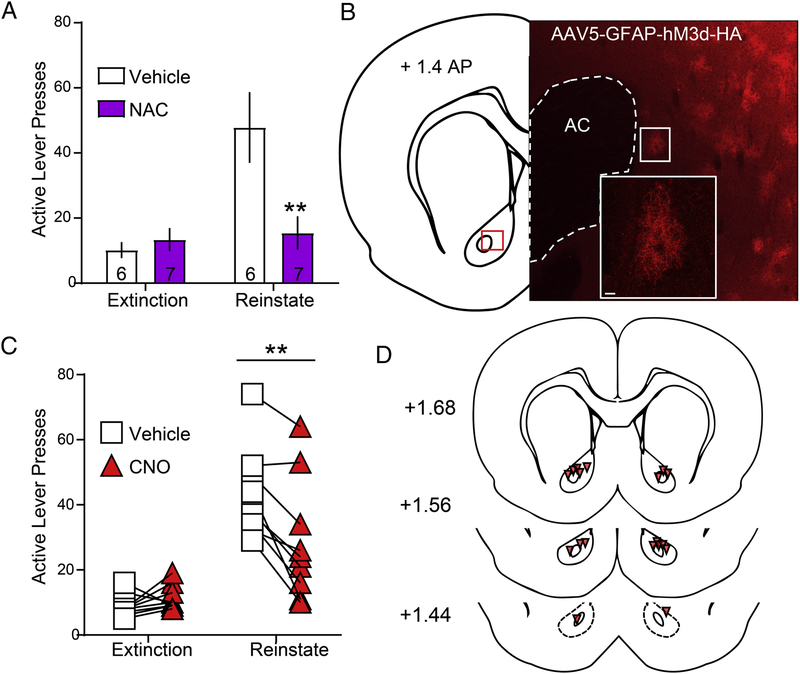
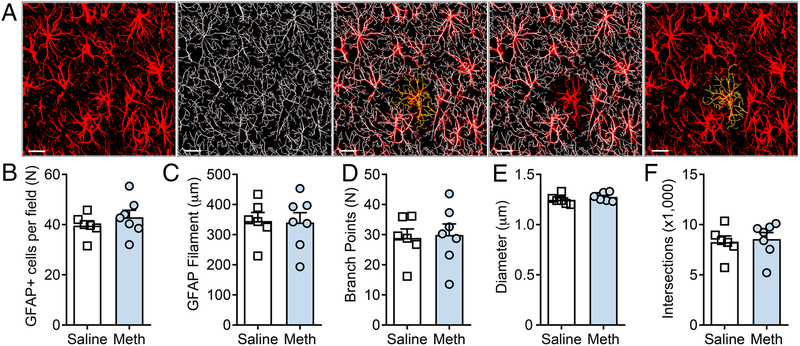
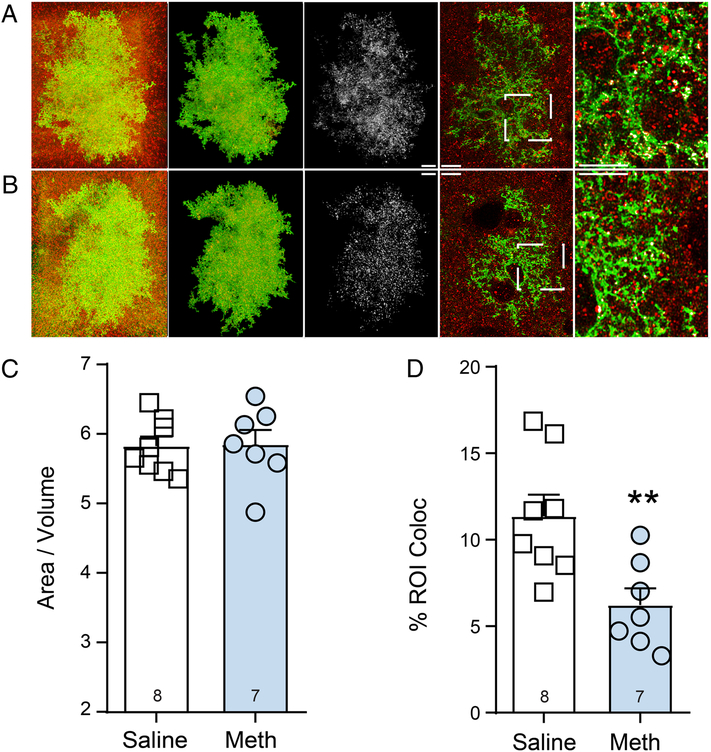
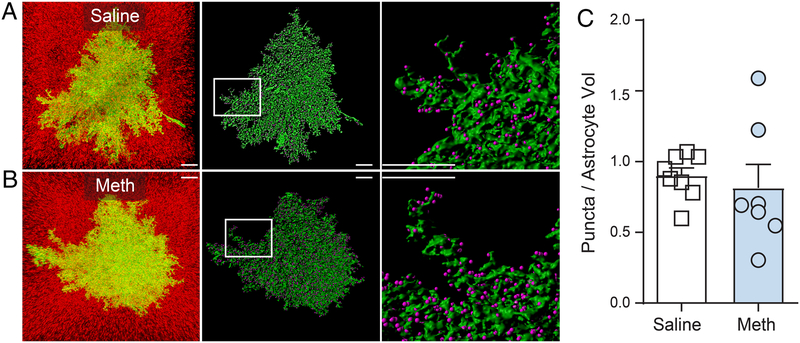
Astrocytes provide support for neurons, regulate metabolic processes, and influence neuronal communication in a variety of ways, including through the homeostatic regulation of glutamate. Following 2-h cocaine or methamphetamine self-administration (SA) and extinction, rodents display decreased levels of basal glutamate in the nucleus accumbens core (NAcore), which transitions to elevated glutamate levels during drug seeking. We hypothesized that, like cocaine, this glutamate 'overflow' during methamphetamine seeking arises via decreased expression of the astroglial glutamate transporter GLT-1, and withdrawal of perisynaptic astroglial processes (PAPs) from synapses. As expected, methamphetamine self-administration and extinction decreased the level of contact made by PAPs in the NAcore, yet did not impact glutamate uptake, GLT-1 expression, or the general structural characteristics of astrocytes. Interestingly, systemic administration of N-acetylcysteine (NAC), a drug that both upregulates GLT-1 and promotes glial-glutamate release, reduced cued methamphetamine seeking. In order to test the impact of astrocyte activation and the induction of glial glutamate release within the NAcore, we employed astrocyte-specific expression of designer receptors exclusively activated by designer drugs (DREADDs). We show here that acute activation of Gq-coupled DREADDs in this region inhibited cued methamphetamine seeking. Taken together, these data indicate that cued methamphetamine seeking following two-hour SA is not mediated by deficient glutamate clearance in the NAcore, yet can be inhibited by engaging NAcore astrocytes.
星形胶质细胞为神经元提供支持,通过多种方式调节代谢过程和影响神经元通讯,包括通过谷氨酸的稳态调节。在可卡因或甲基苯丙胺自我给药(SA)和消退后,啮齿动物的伏隔核核心(NAcore)中的基础谷氨酸水平降低,在觅药时转变为升高的谷氨酸水平。我们假设,与可卡因一样,这种在寻找甲基苯丙胺时的谷氨酸“溢出”是由于星形胶质细胞谷氨酸转运体 GLT-1 的表达减少以及突触周围星形胶质细胞过程(PAPs)从突触撤回引起的。正如预期的那样,甲基苯丙胺自我给药和消退减少了 PAP 在 NAc 的接触程度,但不会影响谷氨酸摄取、GLT-1 表达或星形胶质细胞的一般结构特征。有趣的是,系统给予 N-乙酰半胱氨酸(NAC),一种既能上调 GLT-1 又能促进神经胶质谷氨酸释放的药物,可减少线索性甲基苯丙胺的觅药。为了测试 NAcore 中星形胶质细胞激活和诱导神经胶质谷氨酸释放的影响,我们使用了专门由设计药物激活的设计受体(DREADDs)在星形胶质细胞中的特异性表达。我们在这里表明,该区域中与 Gq 偶联的 DREADDs 的急性激活抑制了线索性甲基苯丙胺的觅药。总的来说,这些数据表明,两小时 SA 后的线索性甲基苯丙胺觅药不是由 NAcore 中谷氨酸清除不足介导的,但可以通过激活 NAcore 星形胶质细胞来抑制。