1 Department of Physics , Lund University , PO Box 118 , 22 100 Lund , Sweden.
2 LIDYL , CEA , CNRS , Université Paris-Saclay , CEA Saclay , 91191 Gif-sur-Yvette , France.
Philos Trans A Math Phys Eng Sci. 2019 May 20;377(2145):20170475. doi: 10.1098/rsta.2017.0475.
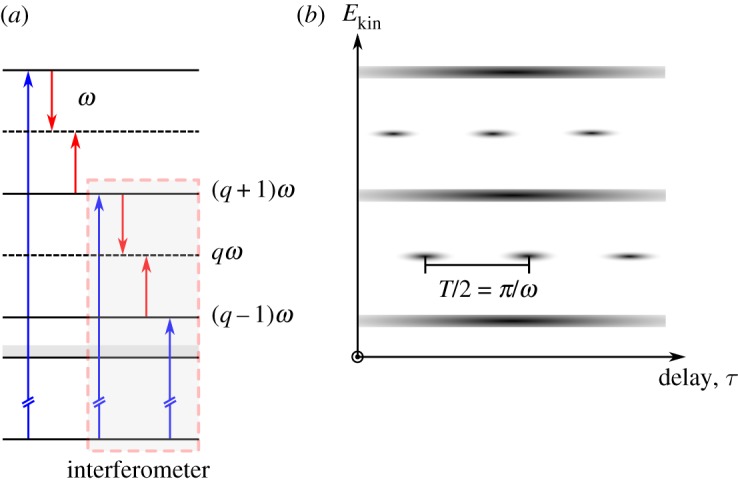
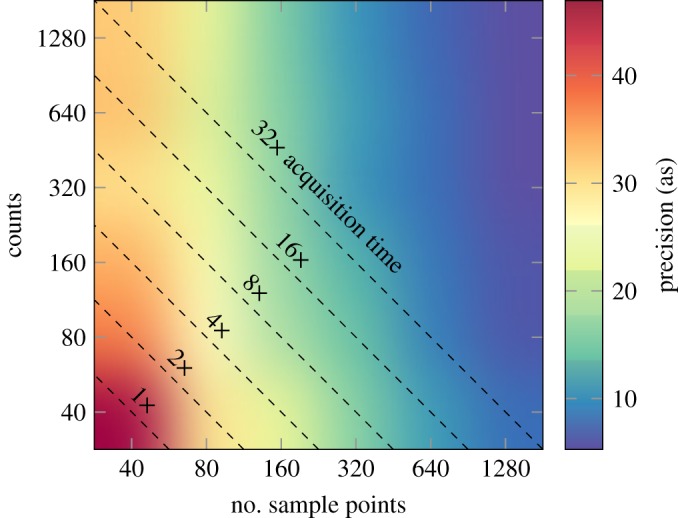
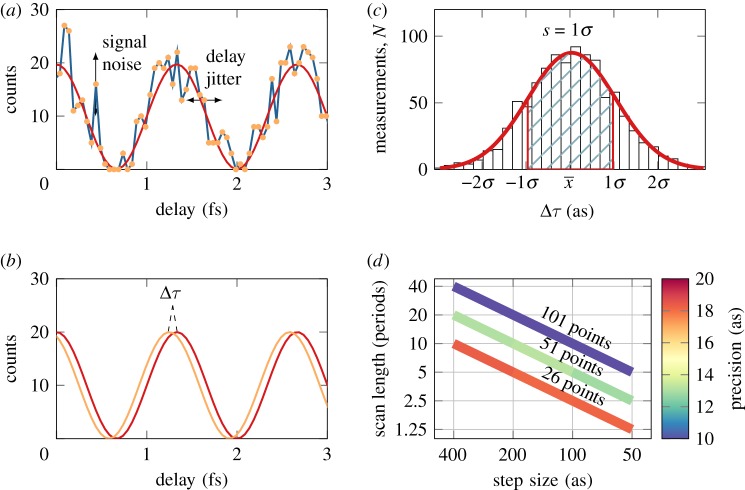
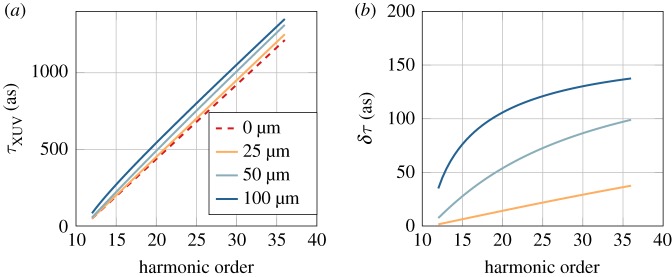
One of the most ubiquitous techniques within attosecond science is the so-called reconstruction of attosecond beating by interference of two-photon transitions (RABBIT). Originally proposed for the characterization of attosecond pulses, it has been successfully applied to the accurate determination of time delays in photoemission. Here, we examine in detail, using numerical simulations, the effect of the spatial and temporal properties of the light fields and of the experimental procedure on the accuracy of the method. This allows us to identify the necessary conditions to achieve the best temporal precision in RABBIT measurements. This article is part of the theme issue 'Measurement of ultrafast electronic and structural dynamics with X-rays'.
阿秒科学中最常用的技术之一是所谓的通过双光子跃迁干涉重建阿秒拍频(RABBIT)。最初是为了描述阿秒脉冲而提出的,它已成功应用于光发射中时间延迟的精确确定。在这里,我们使用数值模拟详细研究了光场的时空特性和实验过程对该方法精度的影响。这使我们能够确定实现 RABBIT 测量最佳时间精度的必要条件。本文是“用 X 射线测量超快电子和结构动力学”主题特刊的一部分。