Tibbles J A, Cohen M M
Br Med J (Clin Res Ed). 1986 Sep 13;293(6548):683-5. doi: 10.1136/bmj.293.6548.683.
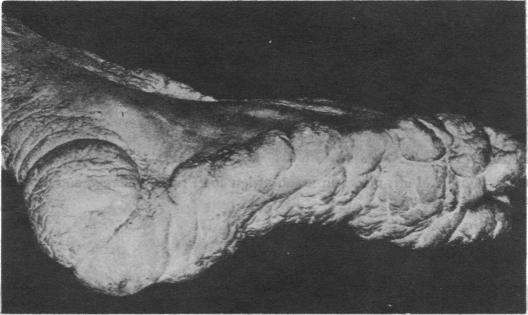
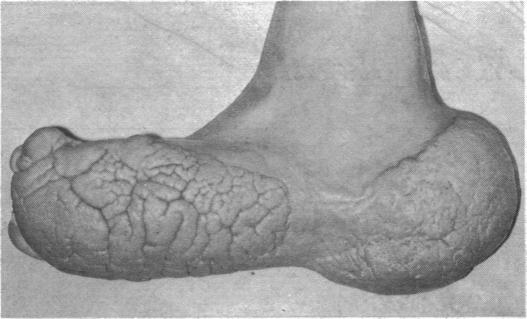
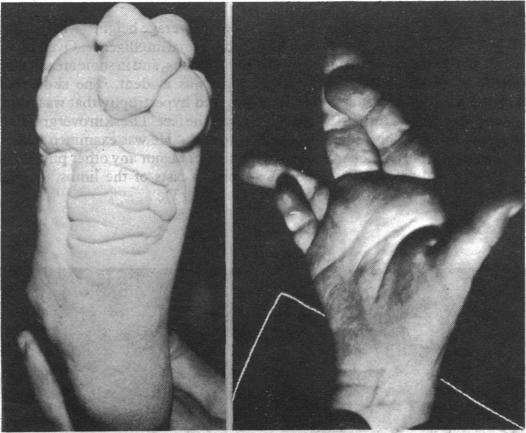
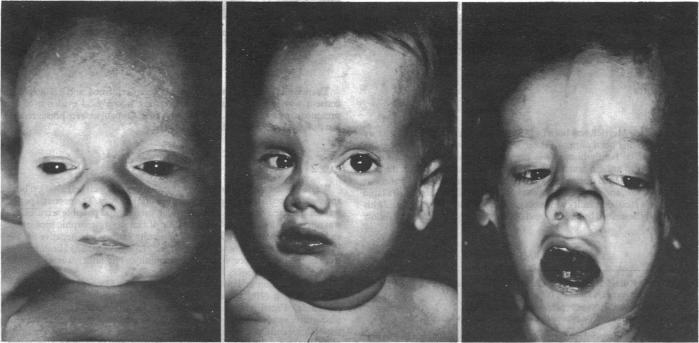
Sir Frederick Treves first showed Joseph Merrick, the famous Elephant Man, to the Pathological Society of London in 1884. A diagnosis of neurofibromatosis was suggested in 1909 and was widely accepted. There is no evidence, however, of café au lait spots or histological proof of neurofibromas. It is also clear that Joseph Merrick's manifestations were much more bizarre than those commonly seen in neurofibromatosis. Evidence indicates that Merrick suffered from the Proteus syndrome and had the following features compatible with this diagnosis: macrocephaly; hyperostosis of the skull; hypertrophy of long bones; and thickened skin and subcutaneous tissues, particularly of the hands and feet, including plantar hyperplasia, lipomas, and other unspecified subcutaneous masses.
1884年,弗雷德里克·特里夫斯爵士首次将著名的象人约瑟夫·梅里克展示给伦敦病理学会。1909年有人提出神经纤维瘤病的诊断,该诊断被广泛接受。然而,没有咖啡斑的证据或神经纤维瘤的组织学证据。同样明显的是,约瑟夫·梅里克的症状比神经纤维瘤病中常见的症状要怪异得多。有证据表明梅里克患有变形综合征,具有以下与该诊断相符的特征:巨头症;颅骨骨质增生;长骨肥大;皮肤和皮下组织增厚,尤其是手和脚,包括足底增生、脂肪瘤和其他未明确的皮下肿块。