Al-Mayali M F, Hutt S, Sharif K J, Clarke A, Evans H P
1College of Engineering, University of Al-Qadisiyah, Al Diwaniyah, Iraq.
2School of Engineering, Cardiff University, Cardiff, UK.
Tribol Lett. 2018;66(4):150. doi: 10.1007/s11249-018-1110-2. Epub 2018 Nov 2.
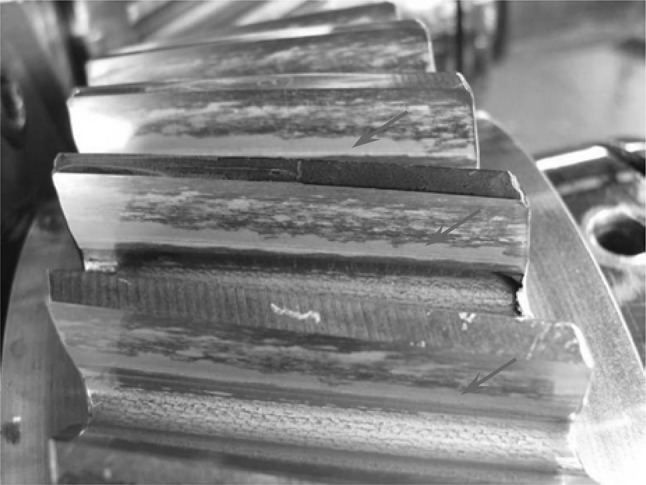
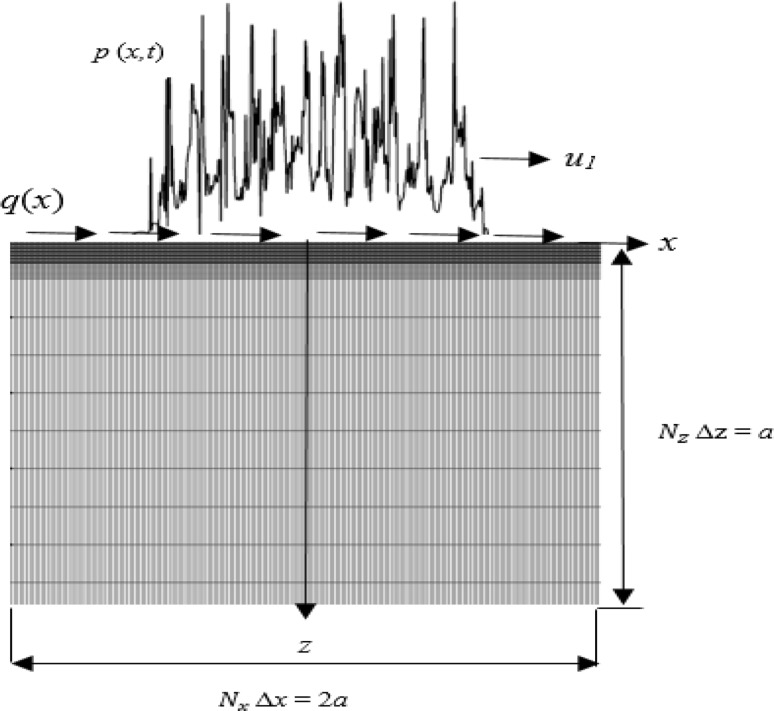
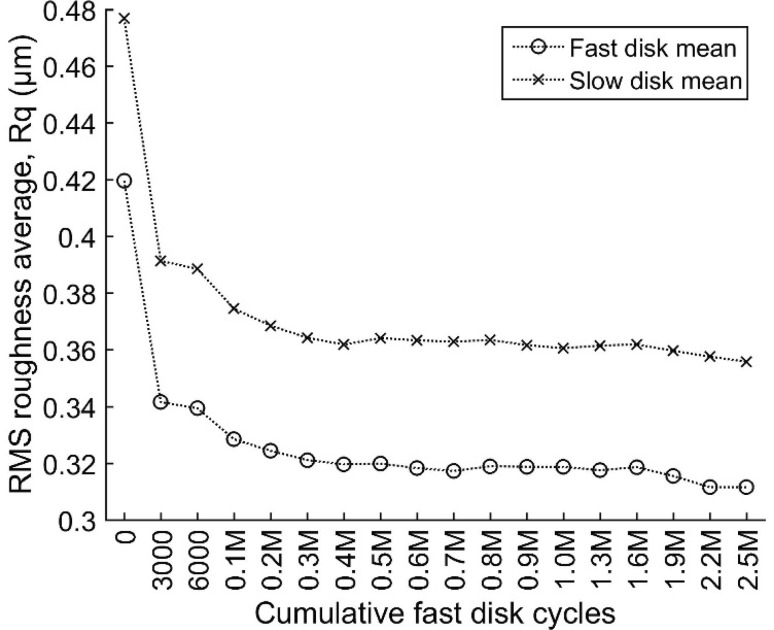
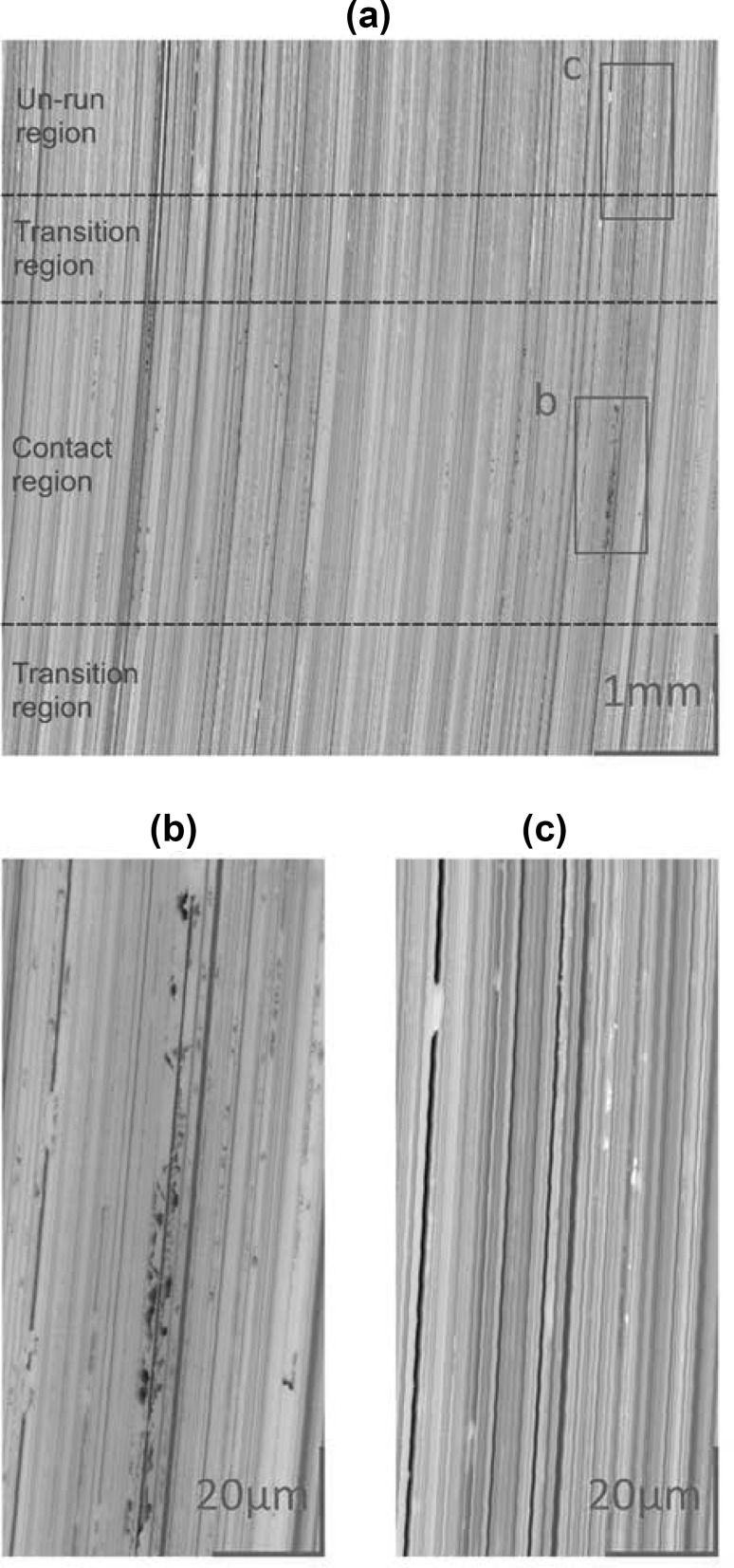
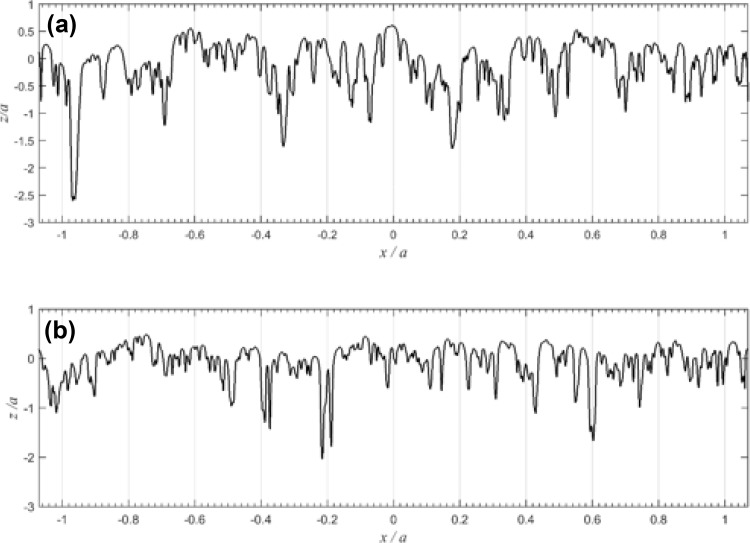
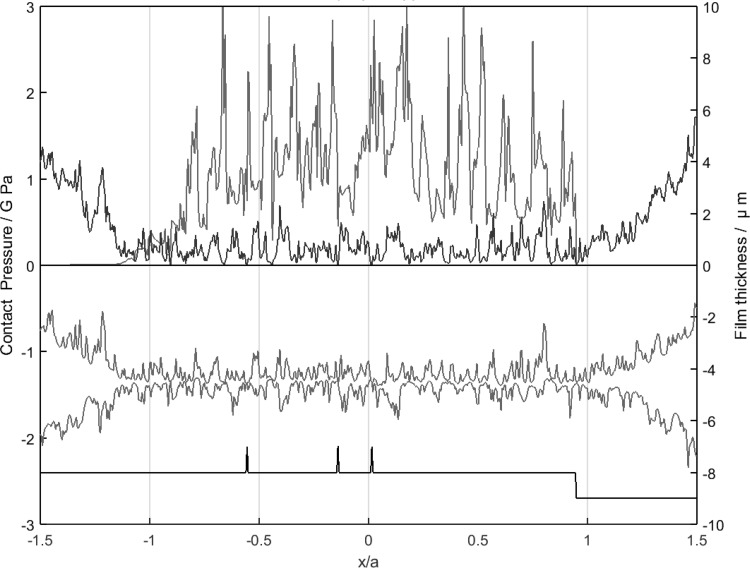
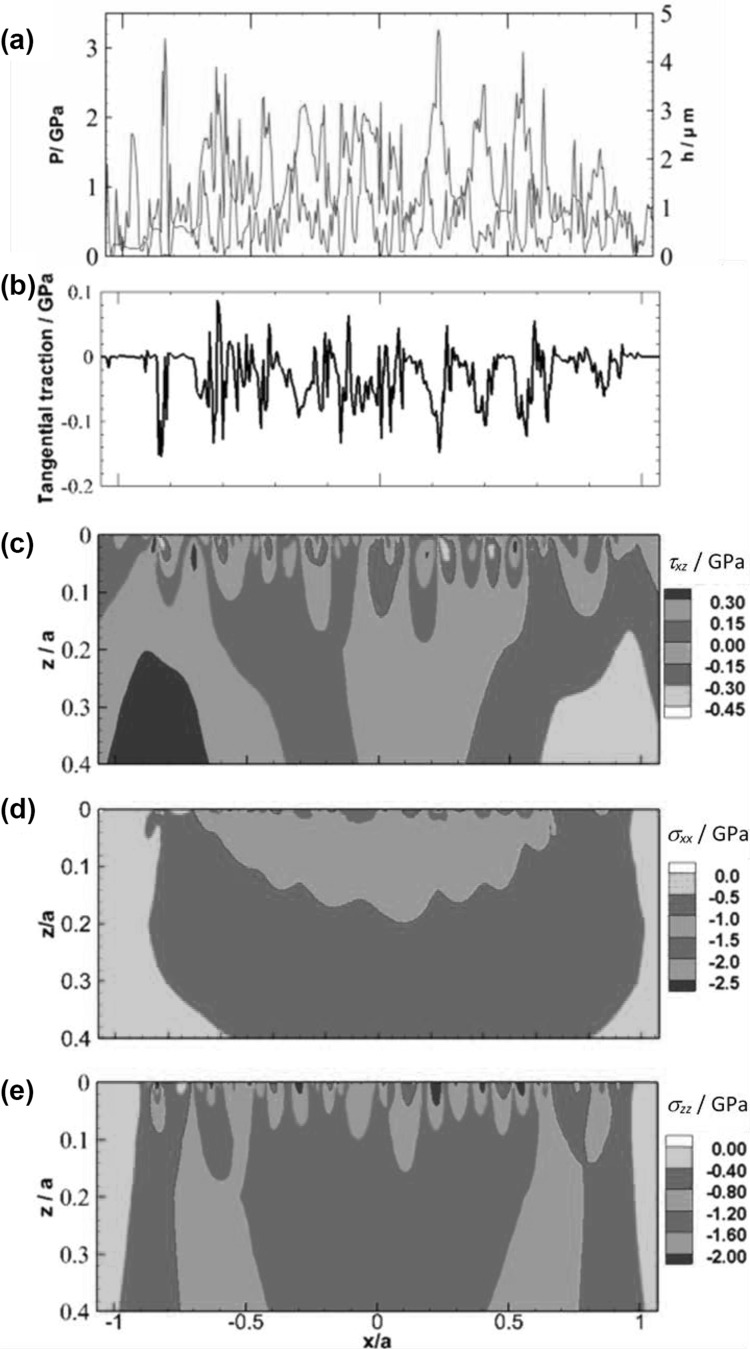
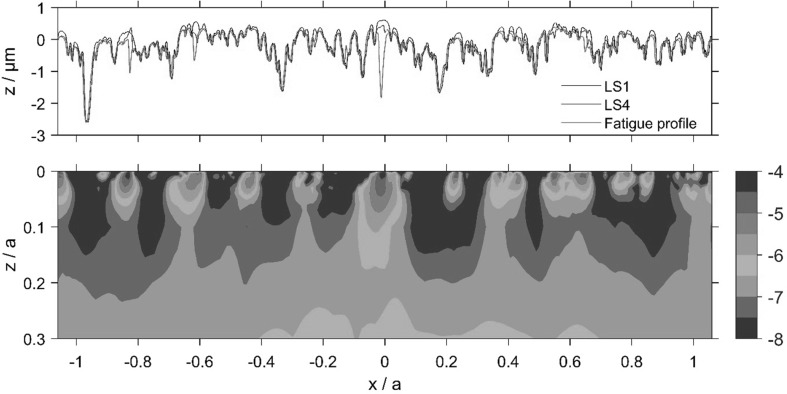
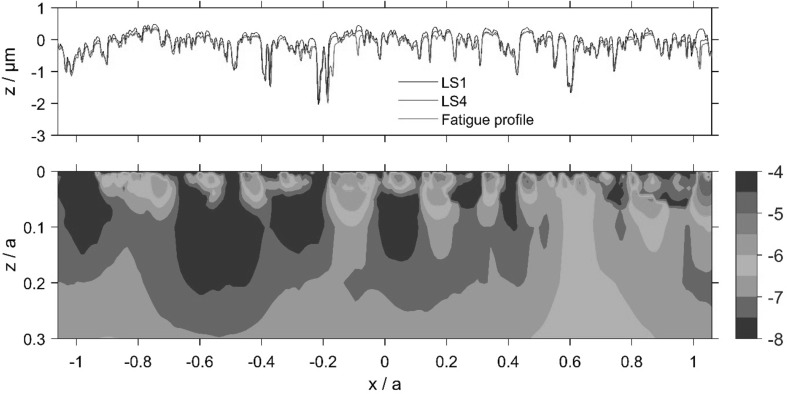
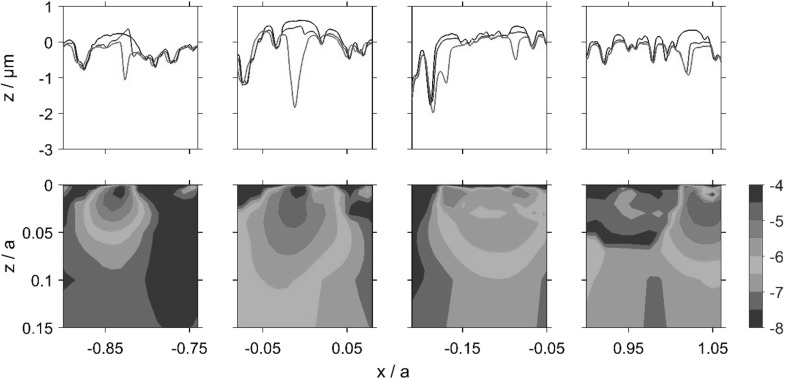
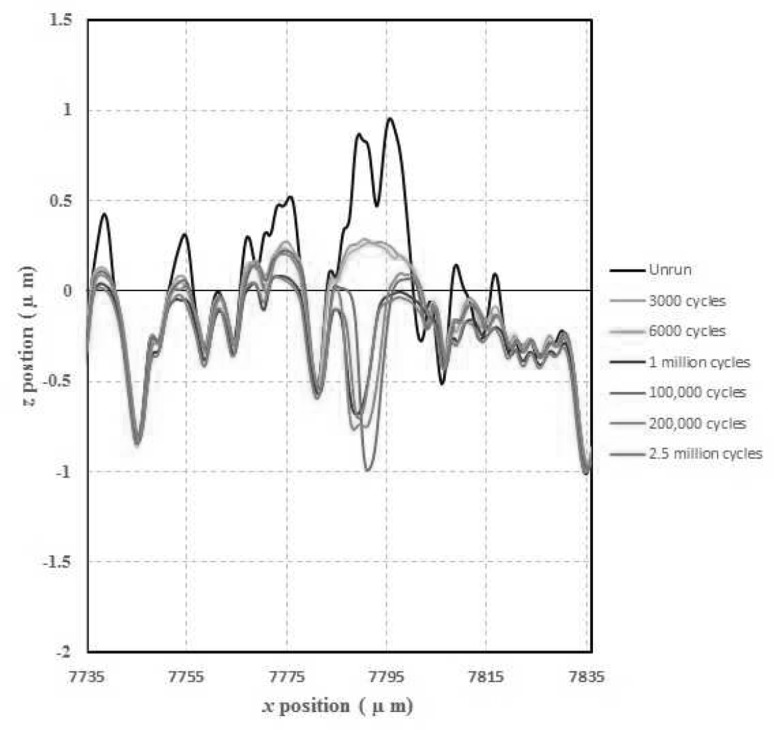
Micropitting is a form of surface fatigue damage that happens at the surface roughness scale in lubricated contacts in commonly used machine elements, such as gears and bearings. It occurs where the specific film thickness (ratio of smooth surface film thickness to composite surface roughness) is sufficiently low for the contacts to operate in the mixed lubrication regime, where the load is in part carried by direct asperity contacts. Micropitting is currently seen as a greater issue for gear designers than is regular pitting fatigue failure as the latter can be avoided by control of steel cleanliness. This paper describes the results of both theoretical and experimental studies of the onset of micropitting in test disks operated in the mixed lubrication regime. A series of twin disk mixed-lubrication experiments were performed in order to examine the evolution of micropitting damage during repeated cyclic loading of surface roughness asperities as they pass through the contact. Representative measurements of the surfaces used in the experimental work were then evaluated using a numerical model which combines a transient line contact micro-elastohydrodynamic lubrication (micro-EHL) simulation with a calculation of elastic sub-surface stresses. This model generated time-history of stresses within a block of material as it passes through the contact, based on the instantaneous surface contact pressure and traction at each point in the computing mesh at each timestep. This stress time-history was then used within a shear-strain-based fatigue model to calculate the cumulative damage experienced by the surface due to the loading sequence experienced during the experiments. The proposed micro-EHL model results and the experimental study were shown to agree well in terms of predicting the number of loading cycles that are required for the initial micropitting to occur.
微点蚀是一种表面疲劳损伤形式,发生在常用机械元件(如齿轮和轴承)的润滑接触中表面粗糙度尺度上。它发生在特定膜厚(光滑表面膜厚与复合表面粗糙度之比)足够低的情况下,使得接触在混合润滑状态下运行,此时部分载荷由直接的粗糙接触承担。目前,对于齿轮设计师来说,微点蚀被视为比常规点蚀疲劳失效更大的问题,因为后者可以通过控制钢的清洁度来避免。本文描述了在混合润滑状态下运行的试验圆盘上微点蚀起始的理论和实验研究结果。进行了一系列双圆盘混合润滑实验,以研究表面粗糙度微凸体在反复循环加载通过接触时微点蚀损伤的演变。然后使用一个数值模型对实验工作中使用的表面进行代表性测量评估,该模型将瞬态线接触微弹流润滑(micro-EHL)模拟与弹性次表面应力计算相结合。该模型根据每个时间步计算网格中每个点的瞬时表面接触压力和牵引力,生成材料块通过接触时内部应力随时间的变化历程。然后在基于剪切应变的疲劳模型中使用该应力随时间的变化历程,来计算由于实验过程中经历的加载序列而使表面遭受的累积损伤。结果表明,所提出的微弹流润滑模型结果与实验研究在预测初始微点蚀发生所需的加载循环次数方面吻合良好。