Harada Alice E, Healy Timothy M, Burton Ronald S
Marine Biology Research Division, Scripps Institution of Oceanography, University of California, San Diego, La Jolla, CA, United States.
Front Physiol. 2019 Mar 15;10:213. doi: 10.3389/fphys.2019.00213. eCollection 2019.
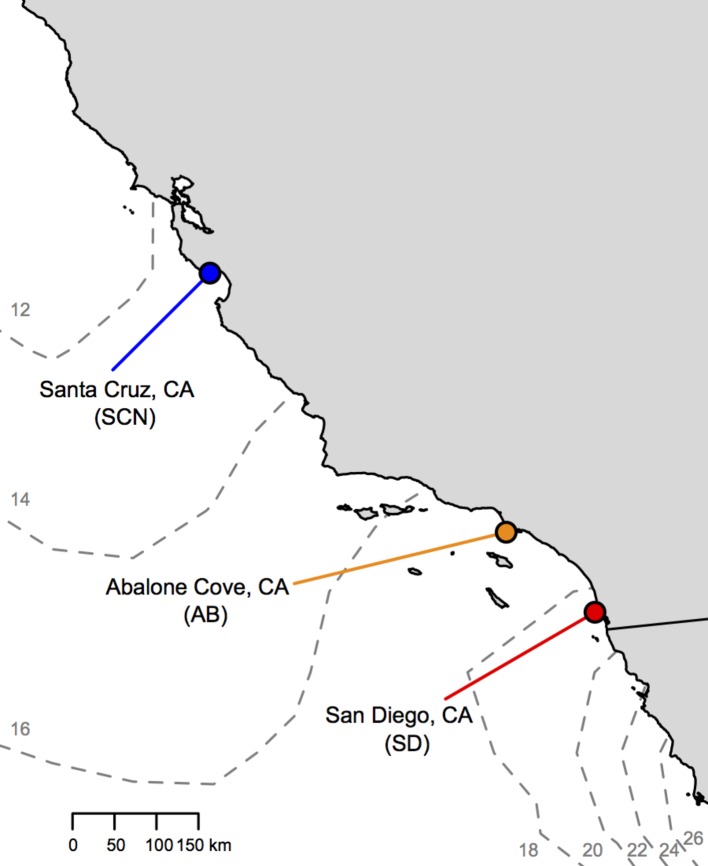
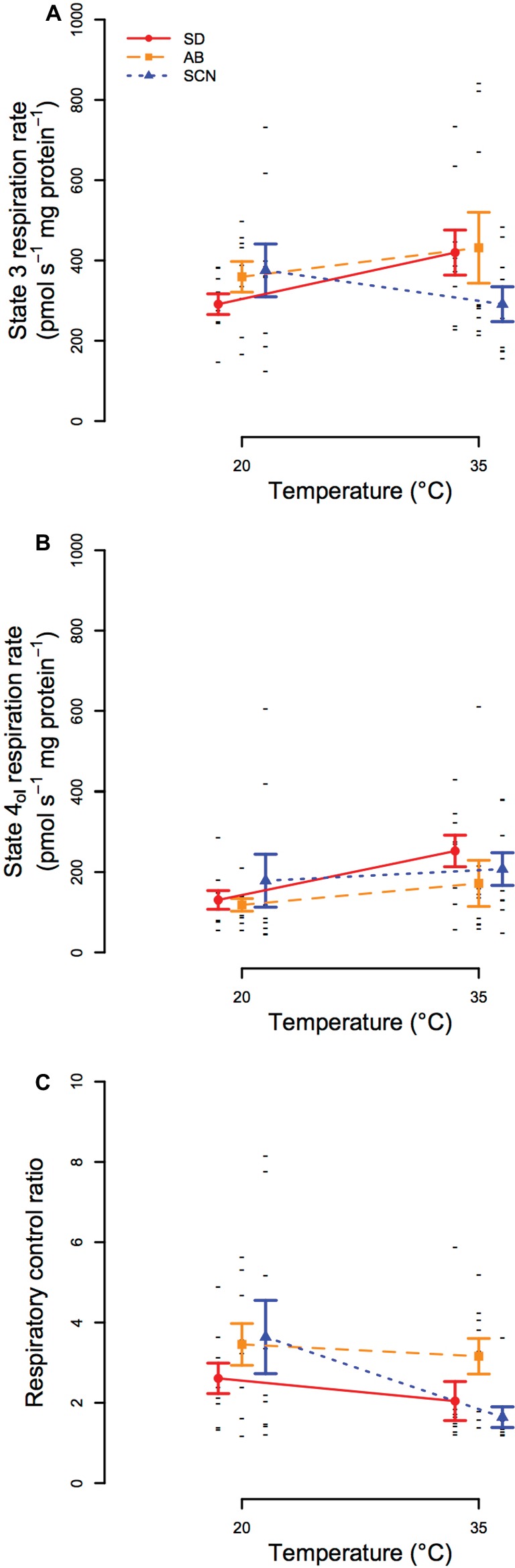
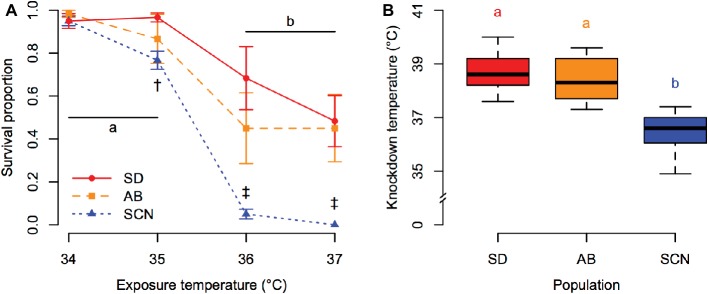
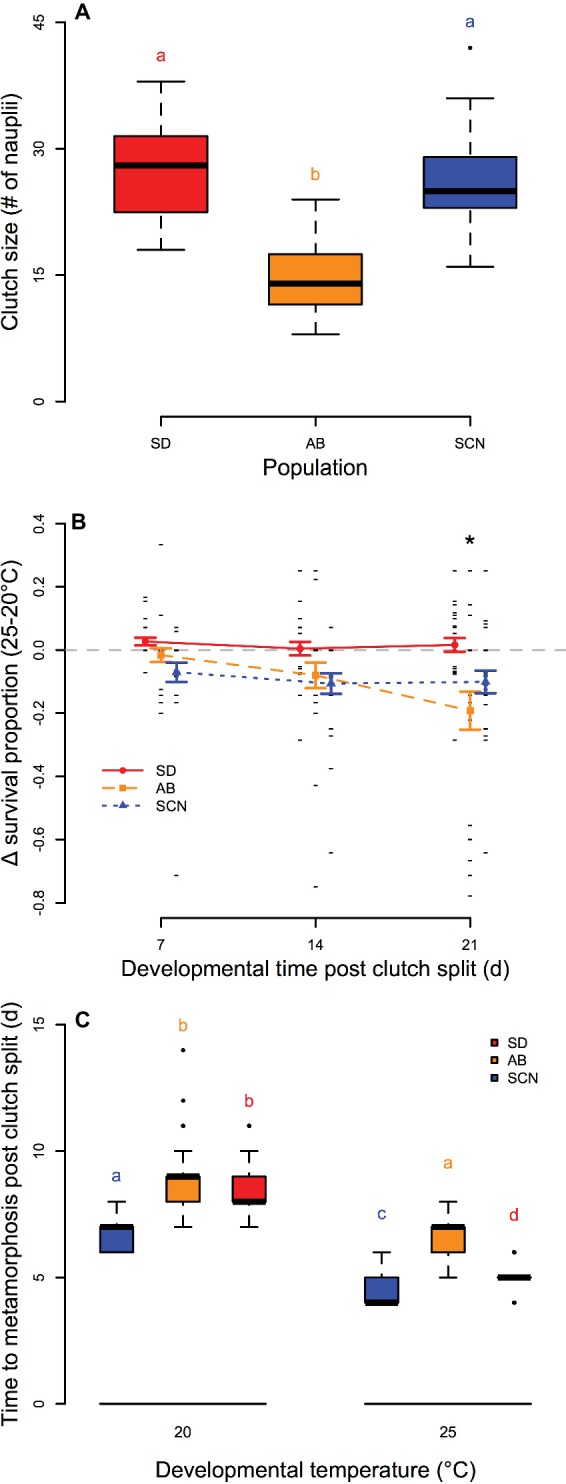
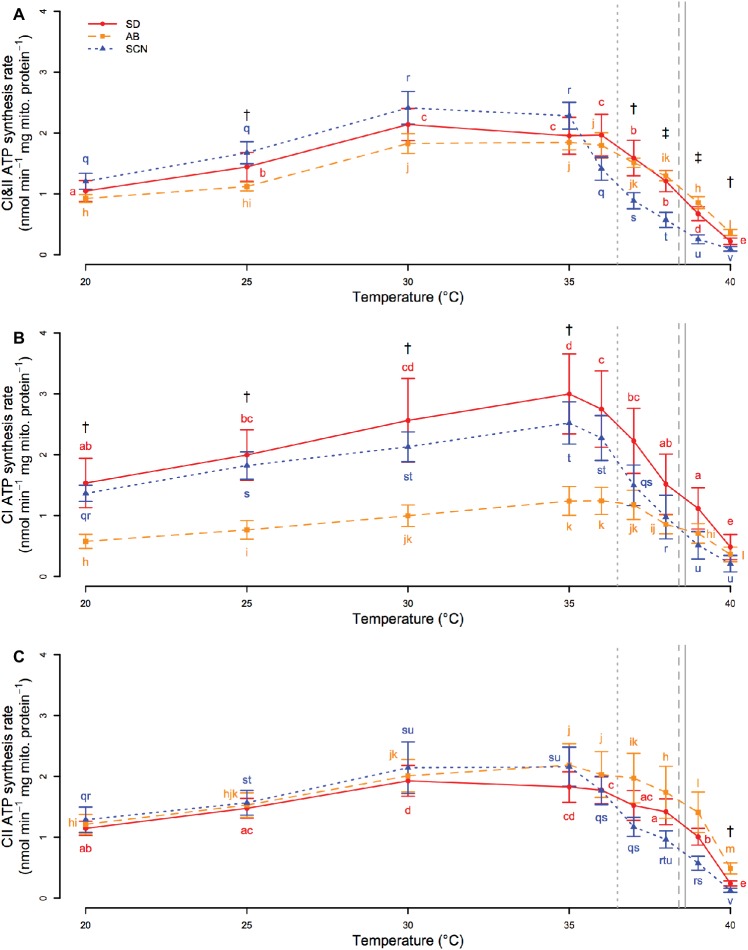
Variation in thermal tolerance plays a key role in determining the biogeographic distribution of organisms. Consequently, identifying the mechanistic basis for thermal tolerance is necessary for understanding not only current species range limits but also the capacity for range limits to shift in response to climate change. Although variation in mitochondrial function likely contributes to variation in thermal tolerance, the extent to which mitochondrial function underlies local thermal adaptation is not fully understood. In the current study, we examine variation in thermal tolerance and mitochondrial function among three populations of the intertidal copepod found across a latitudinal thermal gradient along the coast of California, USA. We tested (1) acute thermal tolerance using survivorship and knockdown assays, (2) chronic thermal tolerance using survivorship of nauplii and developmental rate, and (3) mitochondrial performance at a range of temperatures using ATP synthesis fueled by complexes I, II, and I&II, as well as respiration of permeabilized fibers. We find evidence for latitudinal thermal adaptation: the southernmost San Diego population outperforms the northernmost Santa Cruz in measures of survivorship, knockdown temperature, and ATP synthesis rates during acute thermal exposures. However, under a chronic thermal regime, survivorship and developmental rate are more similar in the southernmost and northernmost population than in the mid-range population (Abalone Cove). Though this pattern is unexpected, it aligns well with population-specific rates of ATP synthesis at these chronic temperatures. Combined with the tight correlation of ATP synthesis decline and knockdown temperature, these data suggest a role for mitochondria in setting thermal range limits and indicate that divergence in mitochondrial function is likely a component of adaptation across latitudinal thermal gradients.
热耐受性的差异在决定生物的生物地理分布中起着关键作用。因此,确定热耐受性的机制基础不仅对于理解当前物种的分布范围限制,而且对于理解分布范围限制因气候变化而发生转移的能力都是必要的。尽管线粒体功能的差异可能导致热耐受性的差异,但线粒体功能在局部热适应中所起作用的程度尚未完全了解。在本研究中,我们调查了美国加利福尼亚海岸沿纬度热梯度分布的三个潮间带桡足类种群的热耐受性和线粒体功能的差异。我们进行了以下测试:(1)使用存活率和击倒试验测试急性热耐受性;(2)使用无节幼体的存活率和发育速率测试慢性热耐受性;(3)在一系列温度下,使用由复合体I、II以及I和II驱动的ATP合成以及透化纤维的呼吸作用来测试线粒体性能。我们发现了纬度热适应的证据:在急性热暴露期间,最南端的圣地亚哥种群在存活率、击倒温度和ATP合成速率方面优于最北端的圣克鲁兹种群。然而,在慢性热环境下,最南端和最北端种群的存活率和发育速率比中间范围的种群(鲍鱼湾)更为相似。尽管这种模式出乎意料,但它与这些慢性温度下特定种群的ATP合成速率非常吻合。结合ATP合成下降与击倒温度的紧密相关性,这些数据表明线粒体在设定热范围限制中发挥作用,并表明线粒体功能的差异可能是跨纬度热梯度适应的一个组成部分。