Inflammatory Disease Section, National Human Genome Research Institute (NHGRI), NIH, Bethesda, MD, United States.
Department of Laboratory Medicine, NIH Clinical Center (CC), Bethesda, MD, United States.
Front Immunol. 2019 Mar 18;10:479. doi: 10.3389/fimmu.2019.00479. eCollection 2019.
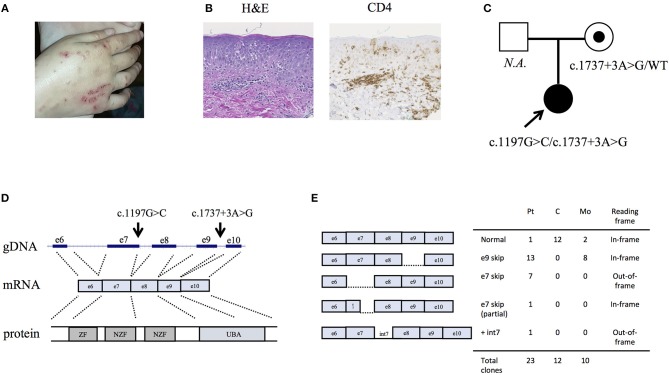
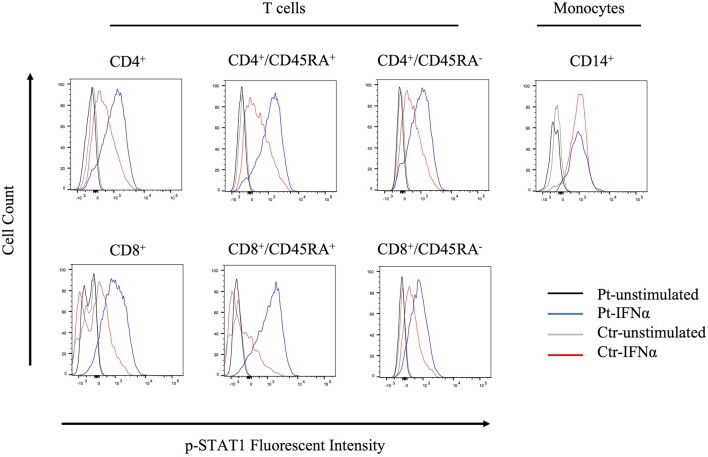
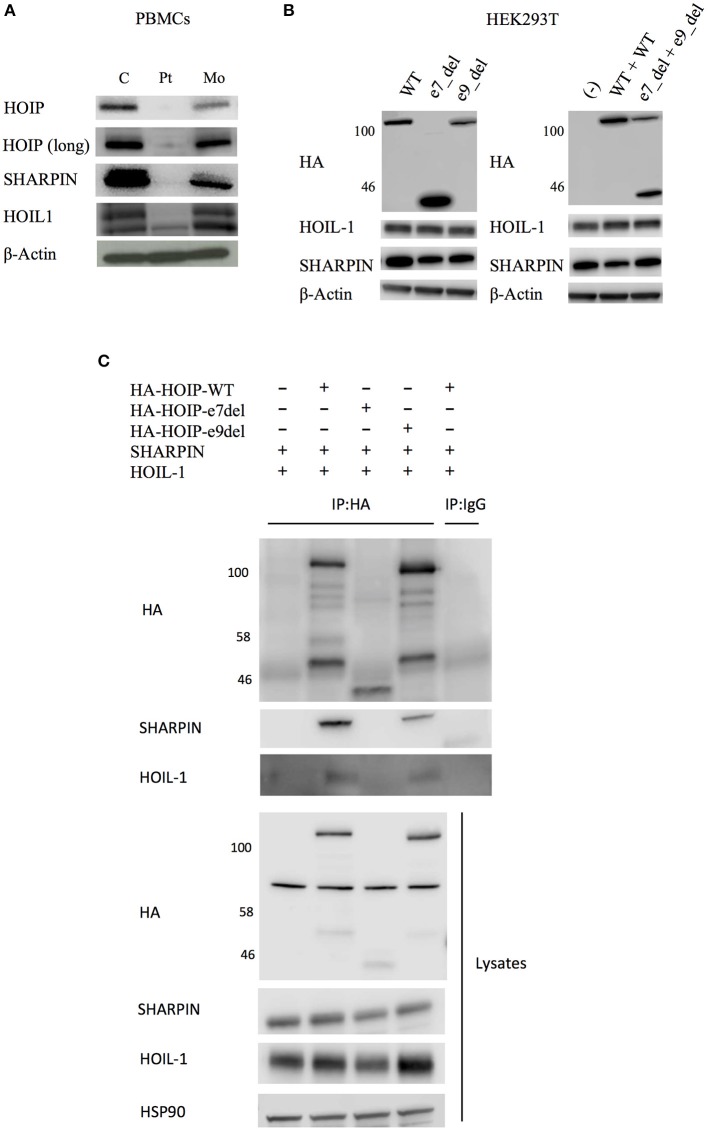
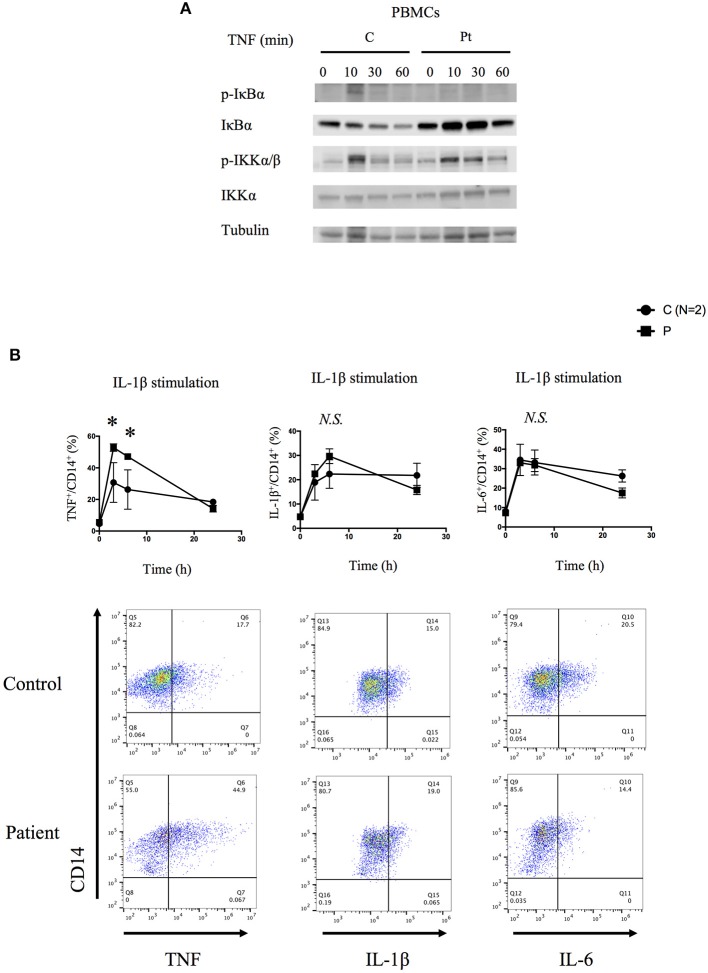
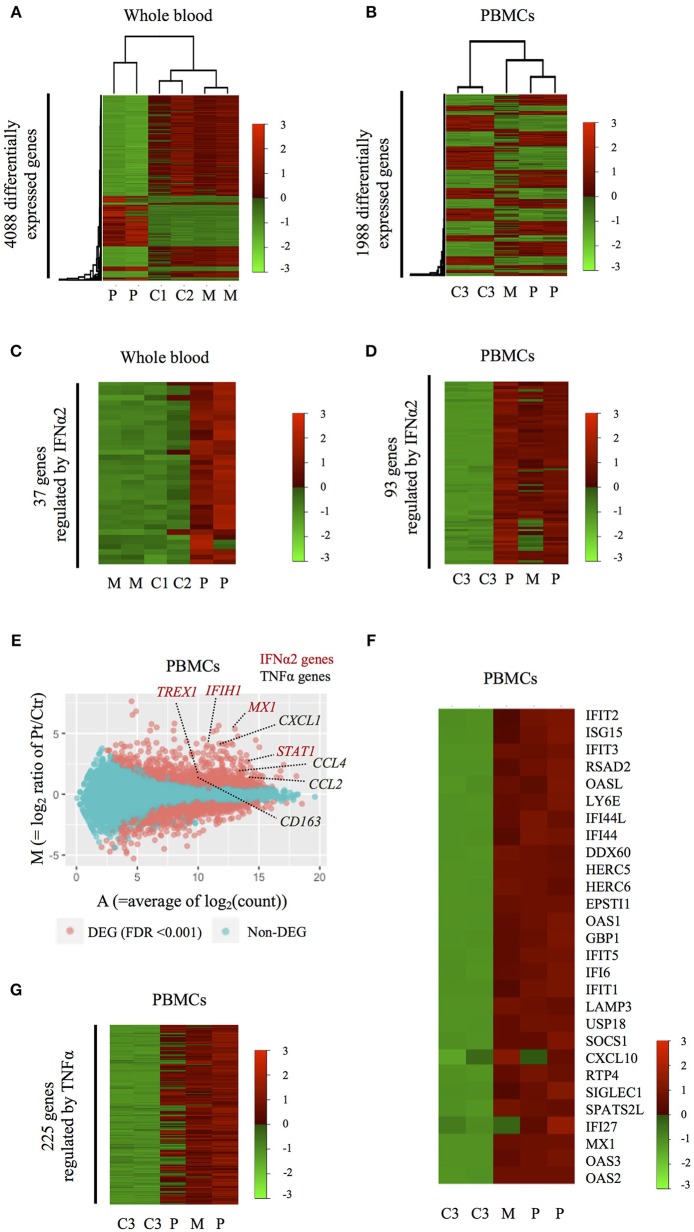
HOIP is the catalytic subunit of the linear ubiquitination chain assembly complex (LUBAC) that is essential for NF-κB signaling and thus proper innate and adaptive immunity. To date only one patient with HOIP deficiency has been reported with clinical characteristics that include autoinflammation, immunodeficiency, amylopectinosis, and systemic lymphangiectasia. We sought to identify a genetic cause of a disease for an 8 year-old girl who presented with early-onset immune deficiency and autoinflammation. Targeted next generation sequencing of 352 immune-related genes was performed. Functional studies included transcriptome analysis, cytokine profiling, and protein analysis in patients' primary cells. We identified biallelic variants in close proximity to splice sites (c.1197G>C and c.1737+3A>G) in the gene. RNA extracted from patient cells showed alternatively spliced transcripts not present in control cells. Protein expression of HOIP and LUBAC was reduced in primary cells as shown by western blotting. Patient-derived fibroblasts demonstrated attenuated IL-6 production, while PBMCs showed higher TNF production after stimulation with proinflammatory cytokines. RNA sequencing of whole blood RNA and PBMCs demonstrated a marked transcriptome wide change including differential expression of type I interferon regulated genes. We report the second case of HOIP deficiency with novel compound heterozygous mutations in and distinct clinical and molecular features. Our results expand on the clinical spectrum of HOIP deficiency and molecular signatures associated with LUBAC deficiency.
HOIP 是线性泛素链组装复合物(LUBAC)的催化亚基,对于 NF-κB 信号转导以及适当的先天和适应性免疫至关重要。迄今为止,仅报道了一例 HOIP 缺乏症患者,其临床特征包括自身炎症、免疫缺陷、淀粉样多聚糖沉积症和系统性淋巴管扩张症。我们试图确定一名 8 岁女孩疾病的遗传原因,该女孩表现为早期免疫缺陷和自身炎症。对 352 个免疫相关基因进行了靶向下一代测序。功能研究包括患者原代细胞的转录组分析、细胞因子谱分析和蛋白质分析。我们在 基因中靠近剪接位点(c.1197G>C 和 c.1737+3A>G)发现了双等位基因变异。从患者细胞中提取的 RNA 显示出在对照细胞中不存在的剪接转录本。通过 Western blot 显示,HOIP 和 LUBAC 的蛋白表达在原代细胞中减少。患者来源的成纤维细胞表现出 IL-6 产生减少,而 PBMC 在受到促炎细胞因子刺激后 TNF 产生增加。全血 RNA 和 PBMC 的 RNA 测序显示整个转录组发生明显变化,包括 I 型干扰素调节基因的差异表达。我们报告了第二个 HOIP 缺乏症病例,该病例具有 基因中的新型复合杂合突变和独特的临床和分子特征。我们的研究结果扩展了 HOIP 缺乏症的临床谱和与 LUBAC 缺乏症相关的分子特征。