Zhang Jiayu, Zeng Yue, Chen Jiawei, Cai Daqiu, Chen Chengwei, Zhang Sifang, Chen Zhenguo
Department of Ophthalmology, The Third Affiliated Hospital of Wenzhou Medical University, Rui'an, Zhejiang 325200, P.R. China.
Exp Ther Med. 2019 Apr;17(4):3108-3116. doi: 10.3892/etm.2019.7323. Epub 2019 Feb 27.
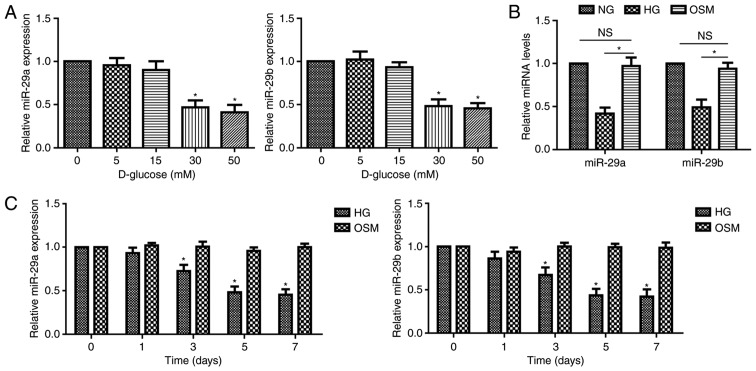
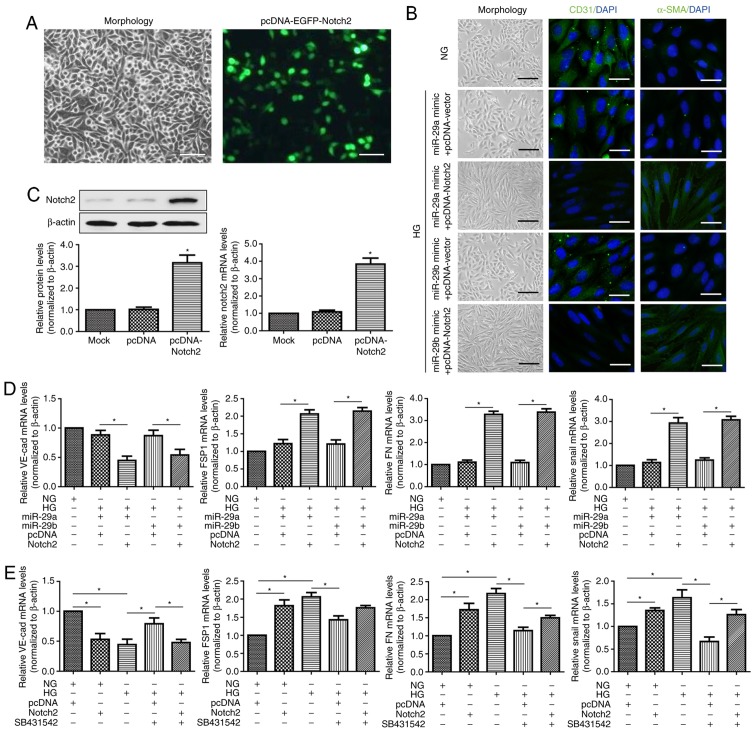
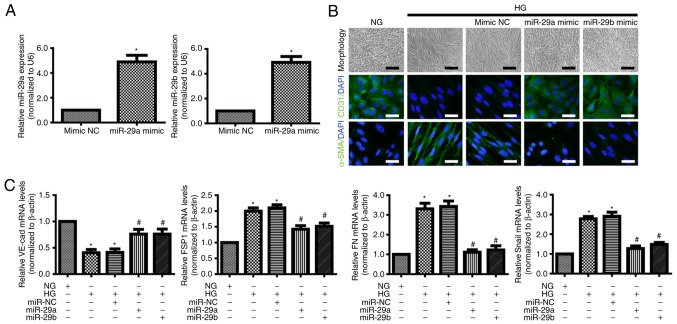
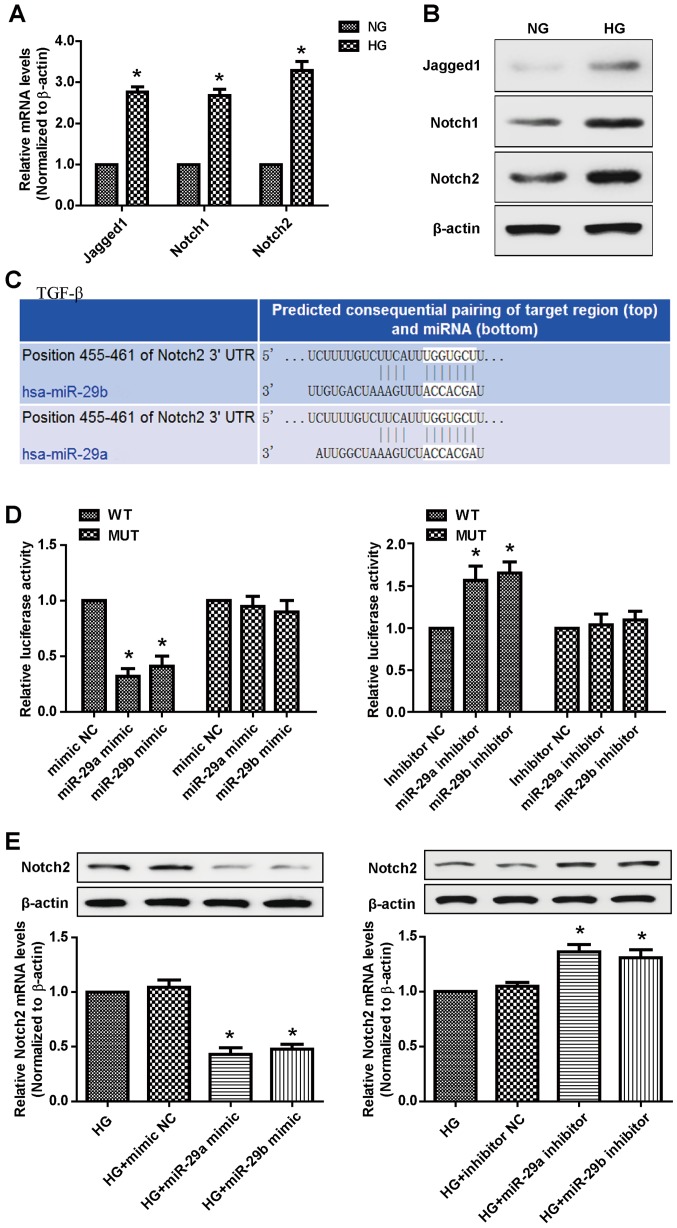
Several studies have previously reported that endothelial cells contributed to pathological fibrosis in proliferative diabetic retinopathy (PDR) through endothelial-mesenchymal transition (EndMT); however, the precise mechanism of this interaction has not been completely elucidated. The present study investigated the expression of microRNA (miR)-29a/b cluster in human retinal microvascular endothelial cells (HRMECs) and examined its functional role in high glucose (HG)-induced EndMT. HRMECs were exposed to glucose at concentrations of 5, 15, 30 and 50 mM for 7 days and reverse transcription-quantitative polymerase chain reaction, western blotting and immunofluorescence were conducted to determine the expression of genes associated with miR-29a/b and EndMT. A luciferase reporter gene assay was also performed to confirm the association between miR-29a/b and neurogenic locus notch homolog protein 2 (Notch2). The expression levels of miR-29a/b, and endothelial markers vascular endothelial cadherin and cluster of differentiation 31 were decreased, whereas the expression levels of Notch2 and mesenchymal markers, including α-smooth muscle actin, fibroblast-specific protein 1 (also named S100 calcium binding protein A4, S100A4), fibronectin and SNAI1 were increased in HRMECs under HG (30 nM) conditions. In addition, Notch2 was identified as a target of miR-29a and miR-29b. Overexpression of miR-29a/b downregulated the expression of Notch2 and subsequently suppressed HG-induced EndMT. Taken together, the results of the present study revealed that the miR-29/Notch2 signaling pathway may participate in the regulation of HG-induced EndMT, and may serve as a potential molecular target during fibrosis in PDR.
此前有多项研究报道,内皮细胞通过内皮-间充质转化(EndMT)促成增殖性糖尿病视网膜病变(PDR)中的病理性纤维化;然而,这种相互作用的确切机制尚未完全阐明。本研究调查了人视网膜微血管内皮细胞(HRMECs)中微小RNA(miR)-29a/b簇的表达,并研究了其在高糖(HG)诱导的EndMT中的功能作用。将HRMECs分别暴露于浓度为5、15、30和50 mM的葡萄糖中7天,然后进行逆转录-定量聚合酶链反应、蛋白质印迹法和免疫荧光法,以确定与miR-29a/b和EndMT相关基因的表达。还进行了荧光素酶报告基因测定,以证实miR-29a/b与神经源性位点Notch同源蛋白2(Notch2)之间的关联。在HG(30 nM)条件下,HRMECs中miR-29a/b以及内皮标志物血管内皮钙黏蛋白和分化簇31的表达水平降低,而Notch2和间充质标志物(包括α-平滑肌肌动蛋白、成纤维细胞特异性蛋白1(也称为S100钙结合蛋白A4,S100A4)、纤连蛋白和SNAI1) 的表达水平升高。此外,Notch2被确定为miR-29a和miR-29b的靶标。miR-29a/b的过表达下调了Notch2的表达,随后抑制了HG诱导的EndMT。综上所述,本研究结果表明,miR-29/Notch2信号通路可能参与了HG诱导的EndMT的调控,并且可能是PDR纤维化过程中的一个潜在分子靶点。