Ecology & Biodiversity Group, Utrecht University, Padualaan 8, Utrecht, 3584 CH, The Netherlands.
Grupo de Investigación en Biodiversidad, Medio Ambiente y Salud-BIOMAS- Universidad de las Américas, Campus Queri, Quito Ecuador.
Ecol Lett. 2019 Jul;22(7):1072-1082. doi: 10.1111/ele.13264. Epub 2019 Apr 2.
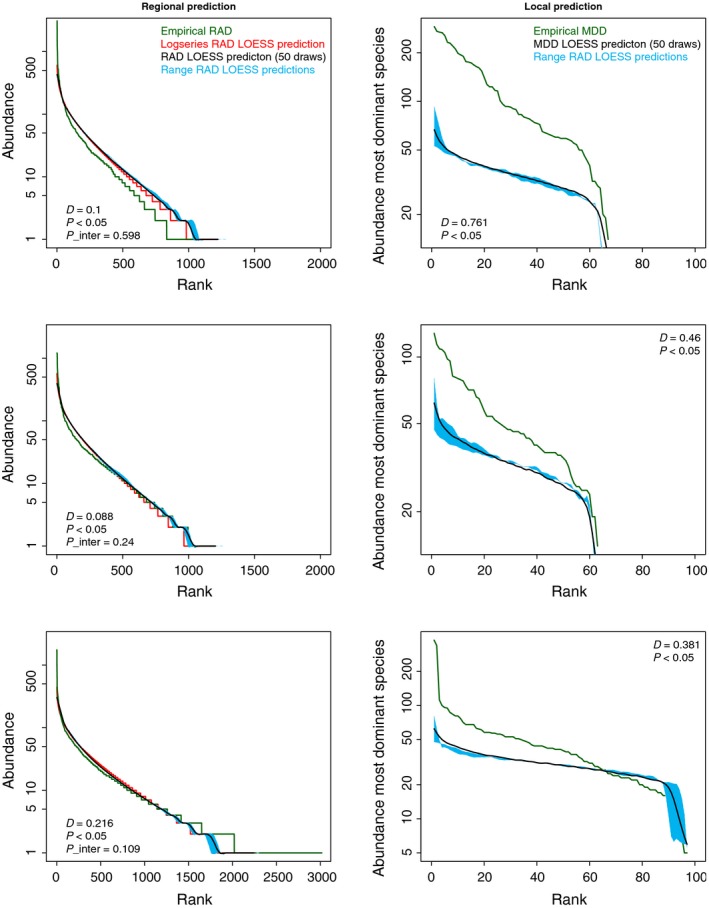
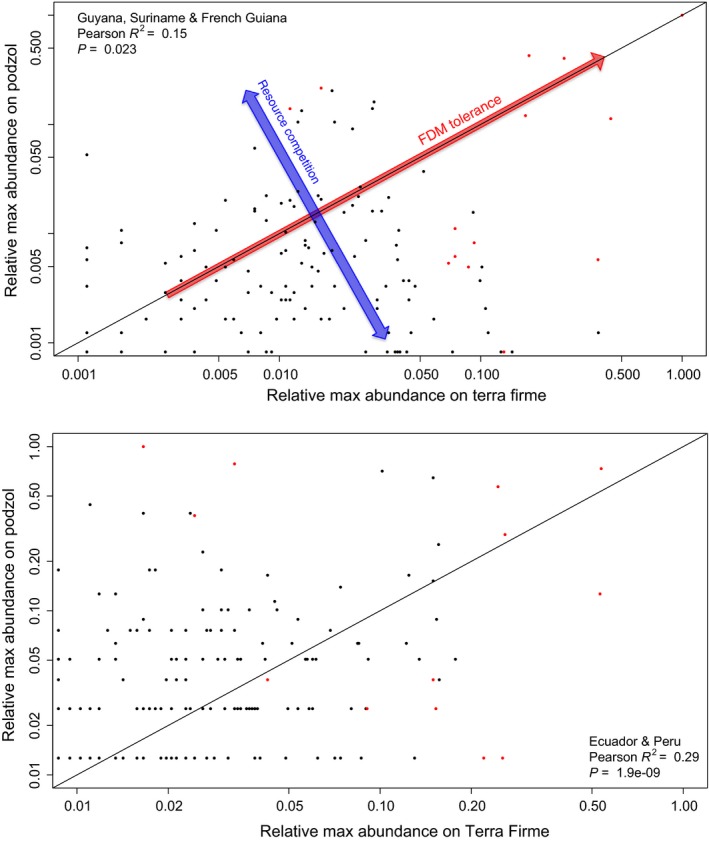
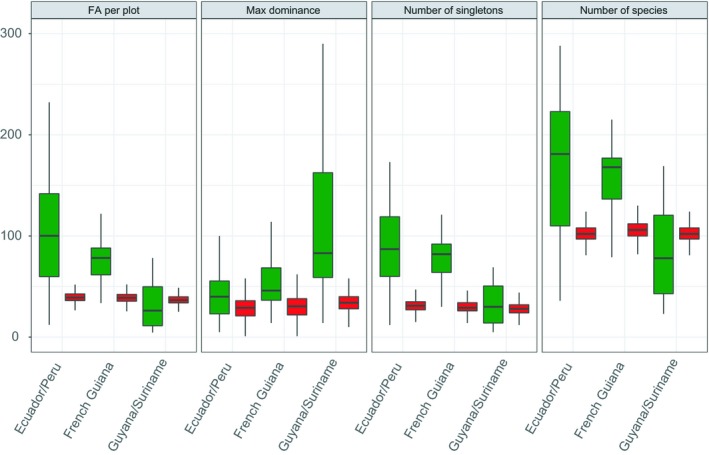
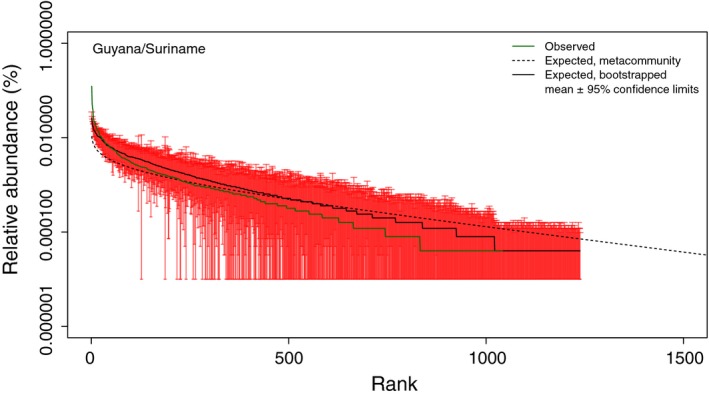
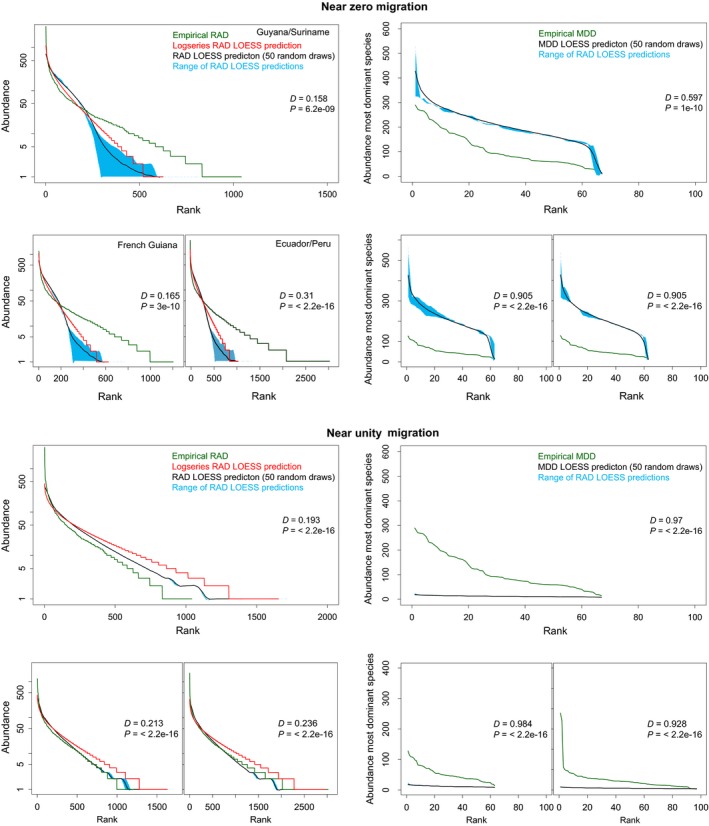
Neutral models are often used as null models, testing the relative importance of niche versus neutral processes in shaping diversity. Most versions, however, focus only on regional scale predictions and neglect local level contributions. Recently, a new formulation of spatial neutral theory was published showing an incompatibility between regional and local scale fits where especially the number of rare species was dramatically under-predicted. Using a forward in time semi-spatially explicit neutral model and a unique large-scale Amazonian tree inventory data set, we show that neutral theory not only underestimates the number of rare species but also fails in predicting the excessive dominance of species on both regional and local levels. We show that although there are clear relationships between species composition, spatial and environmental distances, there is also a clear differentiation between species able to attain dominance with and without restriction to specific habitats. We conclude therefore that the apparent dominance of these species is real, and that their excessive abundance can be attributed to fitness differences in different ways, a clear violation of the ecological equivalence assumption of neutral theory.
中性模型通常被用作零模型,用于检验生态位与中性过程在塑造多样性方面的相对重要性。然而,大多数模型版本仅关注区域尺度的预测,忽略了局部尺度的贡献。最近,一种新的空间中性理论公式被发表,该理论显示了区域和局部尺度拟合之间的不兼容性,尤其是稀有物种的数量被严重低估。利用一个向前的半空间显式中性模型和一个独特的大规模亚马逊树清单数据集,我们表明中性理论不仅低估了稀有物种的数量,而且在预测区域和局部水平上物种过度优势方面也失败了。我们表明,尽管物种组成、空间和环境距离之间存在明显的关系,但也存在明显的分化,即有些物种能够在不受特定栖息地限制的情况下获得优势,而有些则不能。因此,我们得出结论,这些物种的明显优势是真实存在的,它们的过度丰度可以归因于不同的适应度差异,这明显违反了中性理论的生态等价性假设。