Department of Pathology, Microbiology, and Immunology, Vanderbilt University Medical Center, Nashville, Tennessee, USA.
Department of Chemistry, Stanford University, Stanford, California, USA.
mBio. 2019 Apr 2;10(2):e02400-18. doi: 10.1128/mBio.02400-18.
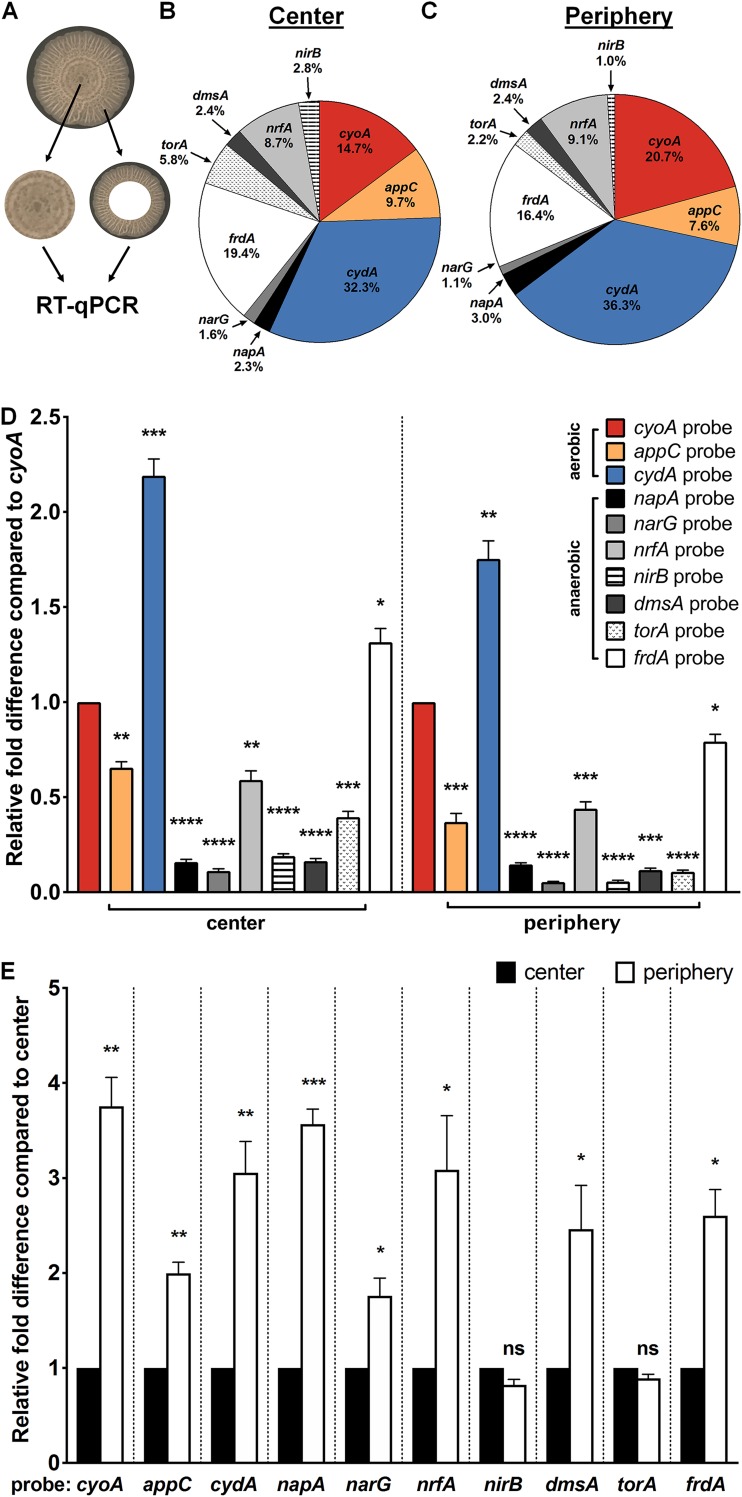
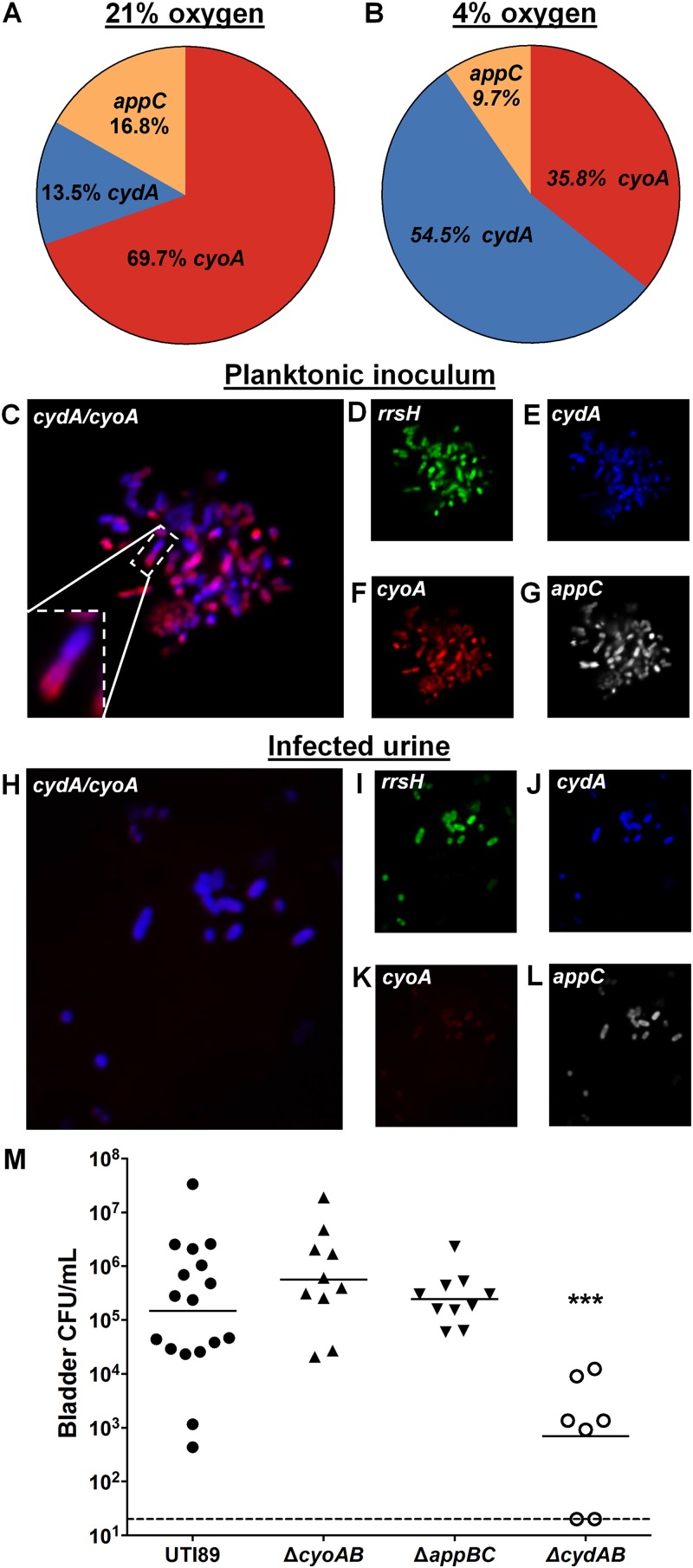
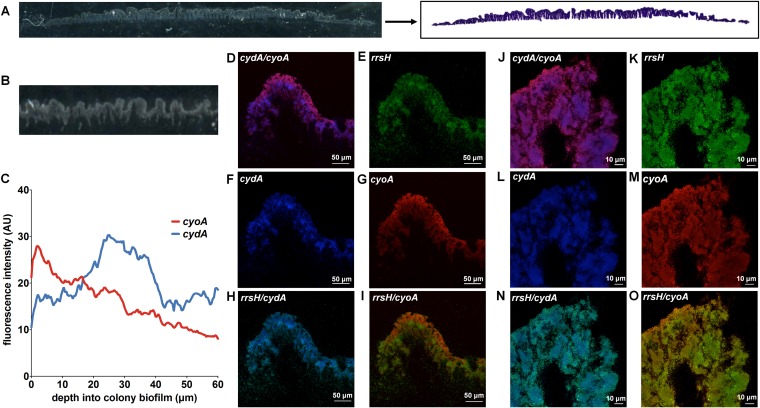
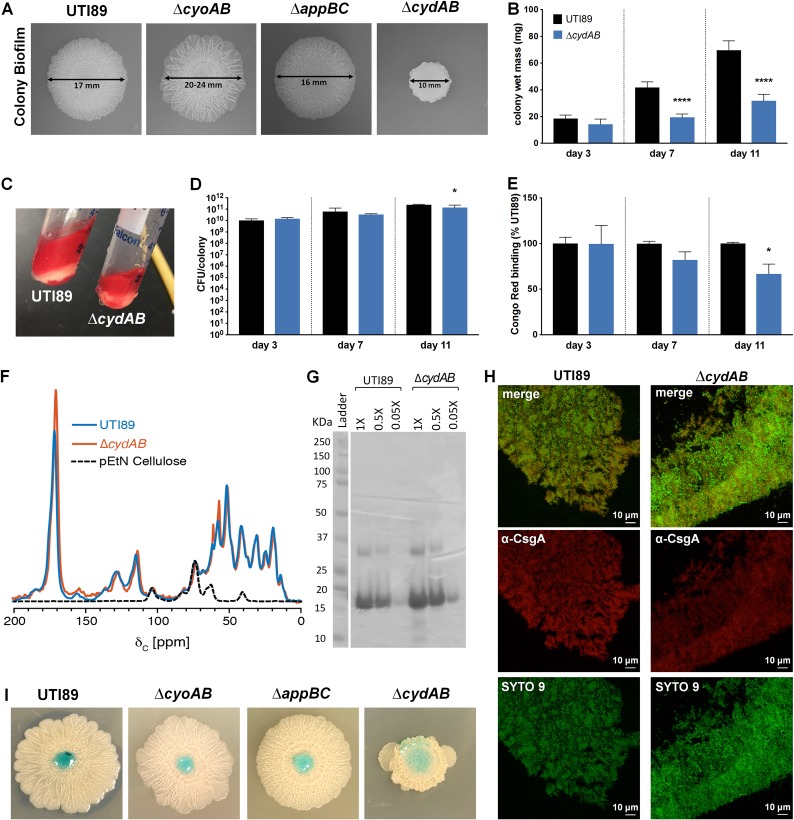
Biofilms are multicellular bacterial communities encased in a self-secreted extracellular matrix comprised of polysaccharides, proteinaceous fibers, and DNA. Organization of these components lends spatial organization to the biofilm community such that biofilm residents can benefit from the production of common goods while being protected from exogenous insults. Spatial organization is driven by the presence of chemical gradients, such as oxygen. Here we show that two quinol oxidases found in and other bacteria organize along the biofilm oxygen gradient and that this spatially coordinated expression controls architectural integrity. Cytochrome , a high-affinity quinol oxidase required for aerobic respiration under hypoxic conditions, is the most abundantly expressed respiratory complex in the biofilm community. Depletion of the cytochrome expressing subpopulation compromises biofilm complexity by reducing the abundance of secreted extracellular matrix as well as increasing cellular sensitivity to exogenous stresses. Interrogation of the distribution of quinol oxidases in the planktonic state revealed that ∼15% of the population expresses cytochrome at atmospheric oxygen concentration, and this population dominates during acute urinary tract infection. These data point toward a bet-hedging mechanism in which heterogeneous expression of respiratory complexes ensures respiratory plasticity of across diverse host niches. Biofilms are multicellular bacterial communities encased in a self-secreted extracellular matrix comprised of polysaccharides, proteinaceous fibers, and DNA. Organization of these components lends spatial organization in the biofilm community. Here we demonstrate that oxygen gradients in uropathogenic (UPEC) biofilms lead to spatially distinct expression programs for quinol oxidases-components of the terminal electron transport chain. Our studies reveal that the cytochrome -expressing subpopulation is critical for biofilm development and matrix production. In addition, we show that quinol oxidases are heterogeneously expressed in planktonic populations and that this respiratory heterogeneity provides a fitness advantage during infection. These studies define the contributions of quinol oxidases to biofilm physiology and suggest the presence of respiratory bet-hedging behavior in UPEC.
生物膜是由多糖、蛋白纤维和 DNA 组成的自我分泌的细胞外基质包裹的多细胞细菌群落。这些成分的组织赋予生物膜群落空间组织,使生物膜居民能够从共同商品的生产中受益,同时免受外源物质的侵害。空间组织是由化学梯度(如氧气)驱动的。在这里,我们表明, 和其他细菌中发现的两种喹诺酮氧化酶沿着生物膜中的氧气梯度组织,这种空间协调的表达控制着生物膜的结构完整性。细胞色素 ,一种在低氧条件下有氧呼吸所需的高亲和力喹诺酮氧化酶,是生物膜群落中表达最丰富的呼吸复合物。细胞色素表达亚群的耗竭通过减少分泌细胞外基质的丰度以及增加细胞对外源应激的敏感性,从而破坏生物膜的复杂性。对浮游状态下喹诺酮氧化酶分布的探究表明,在大气氧浓度下,约 15%的种群表达细胞色素 ,并且在急性尿路感染期间,该种群占主导地位。这些数据表明,在呼吸复合物的异质表达中存在一种“风险分担”机制,该机制确保了 在不同宿主小生境中的呼吸可塑性。生物膜是由多糖、蛋白纤维和 DNA 组成的自我分泌的细胞外基质包裹的多细胞细菌群落。这些成分的组织赋予生物膜群落空间组织。在这里,我们证明了尿路感染性 (UPEC) 生物膜中的氧气梯度导致了末端电子传递链组件喹诺酮氧化酶的空间上不同的表达程序。我们的研究表明,细胞色素表达亚群对于生物膜的发展和基质的产生至关重要。此外,我们还表明,喹诺酮氧化酶在浮游种群中存在异质表达,这种呼吸异质性在感染期间提供了适应性优势。这些研究定义了喹诺酮氧化酶对生物膜生理学的贡献,并表明 UPEC 中存在呼吸风险分担行为。