Department of Rheumatology and Clinical Immunology, Charité-Universitätsmedizin Berlin, corporate member of Freie Universität Berlin, Humboldt-Universität zu Berlin, and Berlin Institute of Health, Berlin, Germany.
German Rheumatism Research Centre (DRFZ) Berlin, a Leibniz Institute, Berlin, Germany.
PLoS One. 2019 Apr 4;14(4):e0214276. doi: 10.1371/journal.pone.0214276. eCollection 2019.
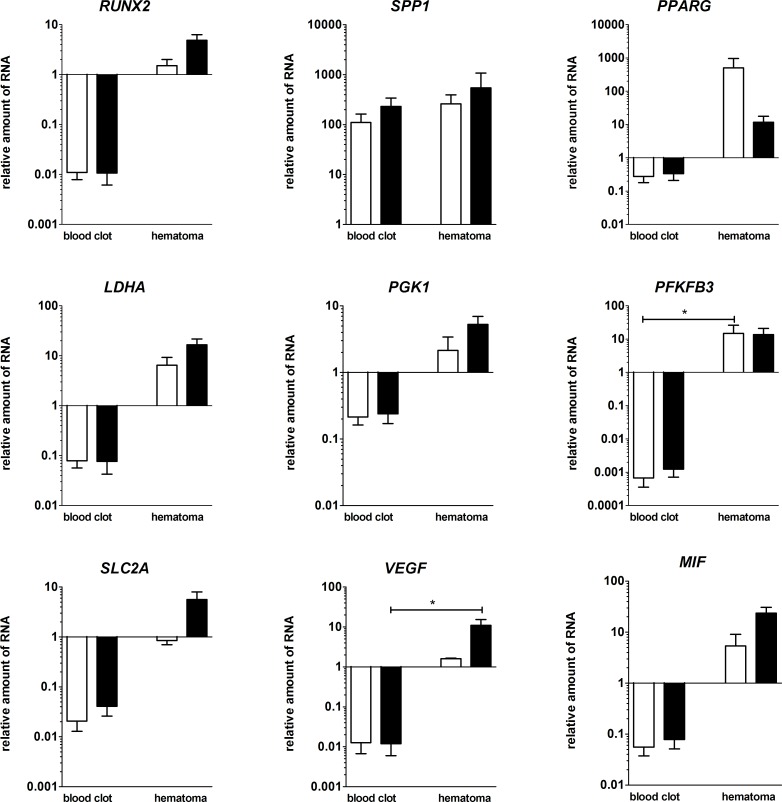
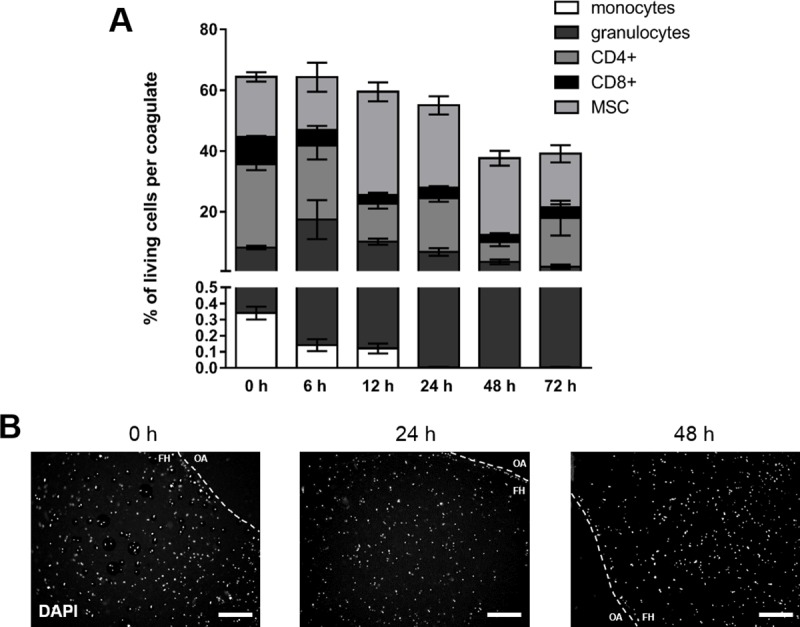
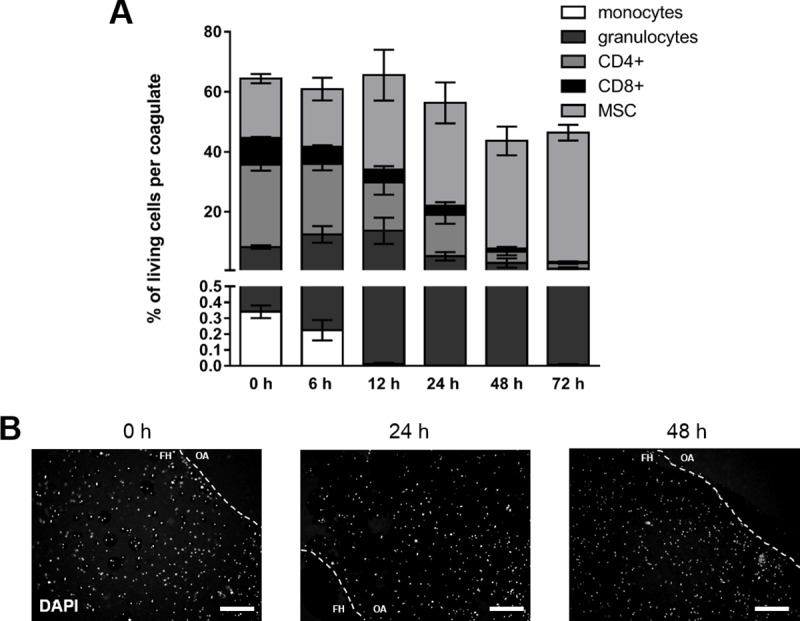
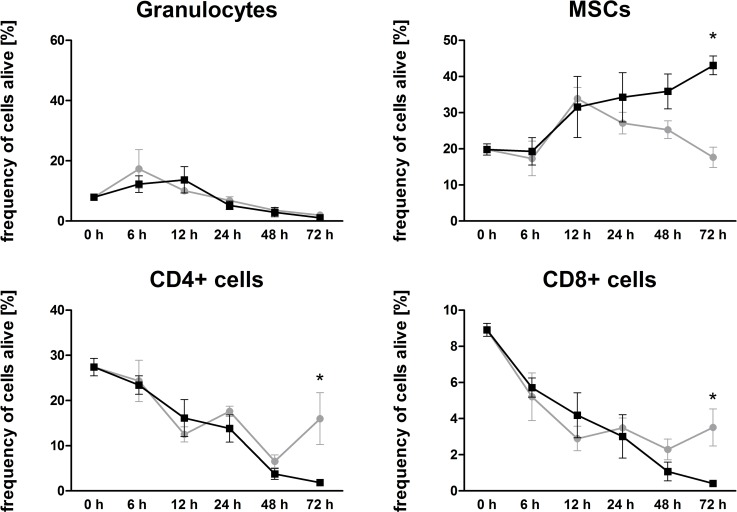
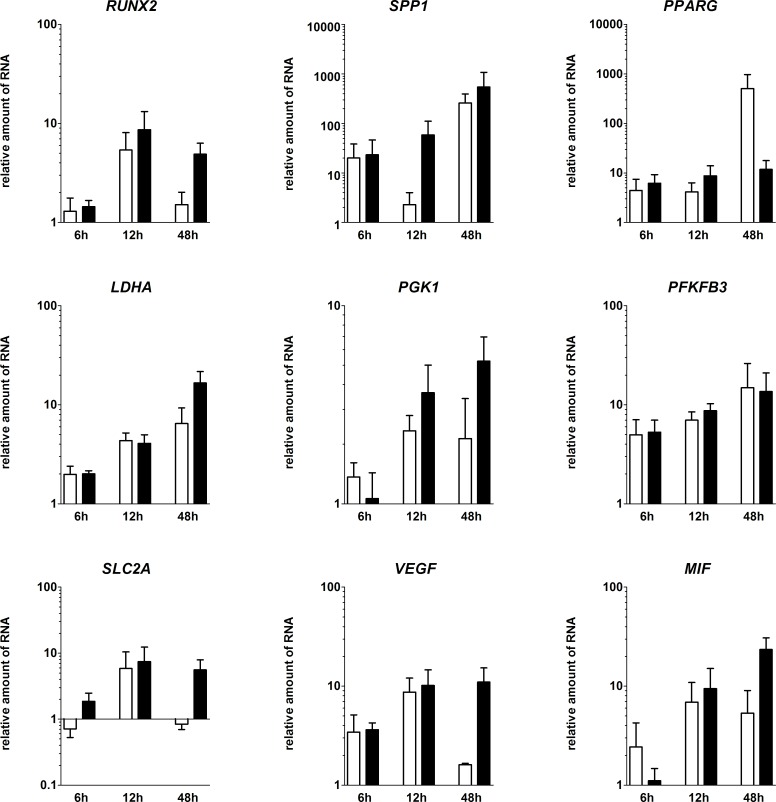
Fractures in horses-whether simple fractures with just one clean break, or incomplete greenstick with stress fractures, or complications such as shattered bones can all be either minimal or even catastrophic. Thus, improvement in fracture healing is a hallmark in equine orthopedics. The fracture healing process implements a complex sequence of events including the initial inflammatory phase removing damaged tissue, re-establishment of vessels and mesenchymal stromal cells, a soft and hard callus phase closing the fracture gap as well as the remodeling phase shaping the bone to a scar-free tissue. Detailed knowledge on processes in equine fracture healing in general and on the initial phase in particular is apparently very limited. Therefore, we generated equine in vitro fracture hematoma models (FH models) to study time-dependent changes in cell composition and RNA-expression for the most prominent cells in the FH model (immune cells, mesenchymal stromal cells) under conditions most closely adapted to the in vivo situation (hypoxia) by using flow cytometry and qPCR. In order to analyze the impact of mesenchymal stromal cells in greater detail, we also incubated blood clots without the addition of mesenchymal stromal cells under the same conditions as a control. We observed a superior survival capacity of mesenchymal stromal cells over immune cells within our FH model maintained under hypoxia. Furthermore, we demonstrate an upregulation of relevant angiogenic, osteogenic and hypoxia-induced markers within 48 h, a time well-known to be crucial for proper fracture healing.
马的骨折——无论是只有一处整齐断裂的简单骨折,还是有应力性骨折的不完全青枝骨折,还是粉碎性骨折等并发症——都可能是轻微的,也可能是灾难性的。因此,改善骨折愈合是马骨科的一个标志。骨折愈合过程实施了一个复杂的事件序列,包括最初的炎症阶段,清除受损组织,重新建立血管和间充质基质细胞,软、硬骨痂阶段闭合骨折间隙,以及重塑阶段将骨骼塑造成无疤痕组织。关于马骨折愈合的一般过程和特别是初始阶段的过程的详细知识显然是非常有限的。因此,我们生成了马体外骨折血肿模型(FH 模型),通过使用流式细胞术和 qPCR 研究 FH 模型中最显著的细胞(免疫细胞、间充质基质细胞)在最接近体内情况(缺氧)的条件下的细胞组成和 RNA 表达的时间依赖性变化。为了更详细地分析间充质基质细胞的影响,我们还在相同条件下孵育没有添加间充质基质细胞的血凝块作为对照。我们观察到在我们的 FH 模型中,间充质基质细胞在缺氧条件下比免疫细胞具有更好的生存能力。此外,我们在 48 小时内证明了相关的血管生成、成骨和缺氧诱导标记物的上调,这一时间对于适当的骨折愈合至关重要。