EMBL Australia Node in Single Molecule Science and ARC Centre of Excellence in Advanced Molecular Imaging, School of Medical Sciences, UNSW, Sydney, NSW, 2052, Australia.
Department of Pathology, Microbiology and Immunology, Vanderbilt University Medical Center, Nashville, TN, USA.
Retrovirology. 2019 Apr 4;16(1):10. doi: 10.1186/s12977-019-0471-4.
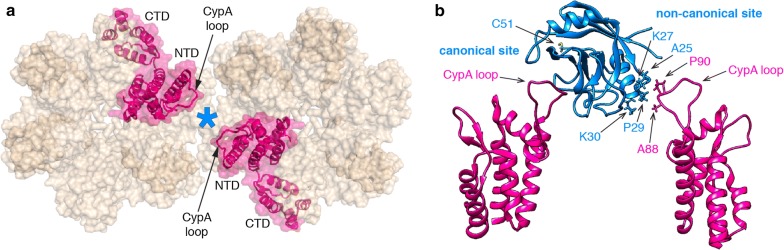
Efficient HIV-1 replication depends on interaction of the viral capsid with the host protein cyclophilin A (CypA). CypA, a peptidylprolyl isomerase, binds to an exposed loop in the viral CA protein via the enzyme's active site. Recent structural analysis of CypA in complex with CA tubes in conjunction with molecular dynamics simulations identified a secondary CA binding site on CypA that allows a bridging interaction with two hexameric subunits of the assembled CA lattice, leading to capsid stabilization (Liu et al. in Nat Commun 7:10714, 2016).
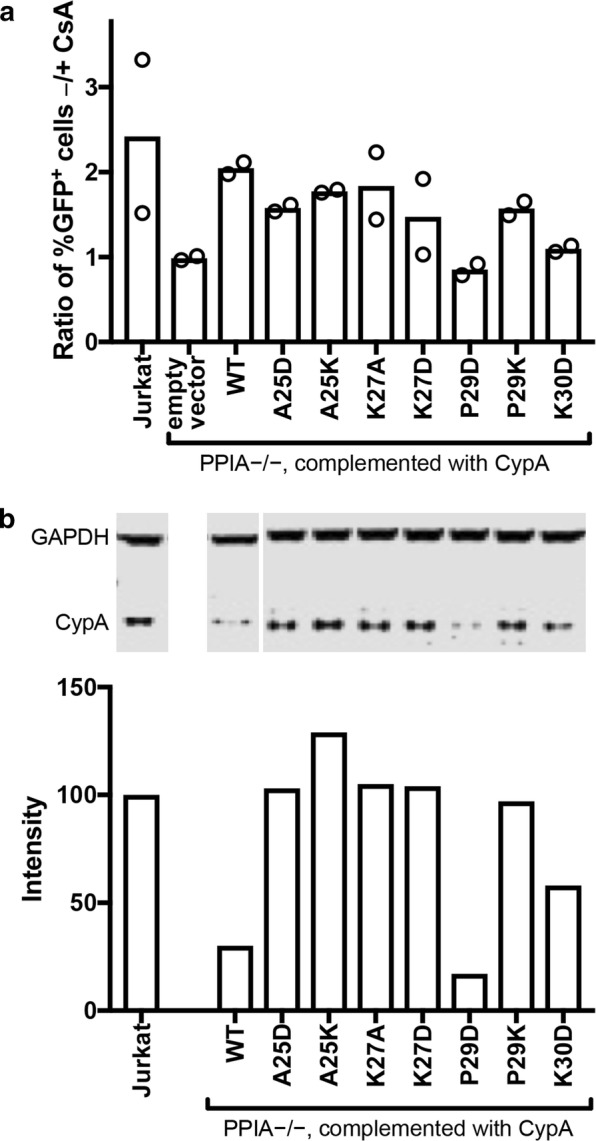
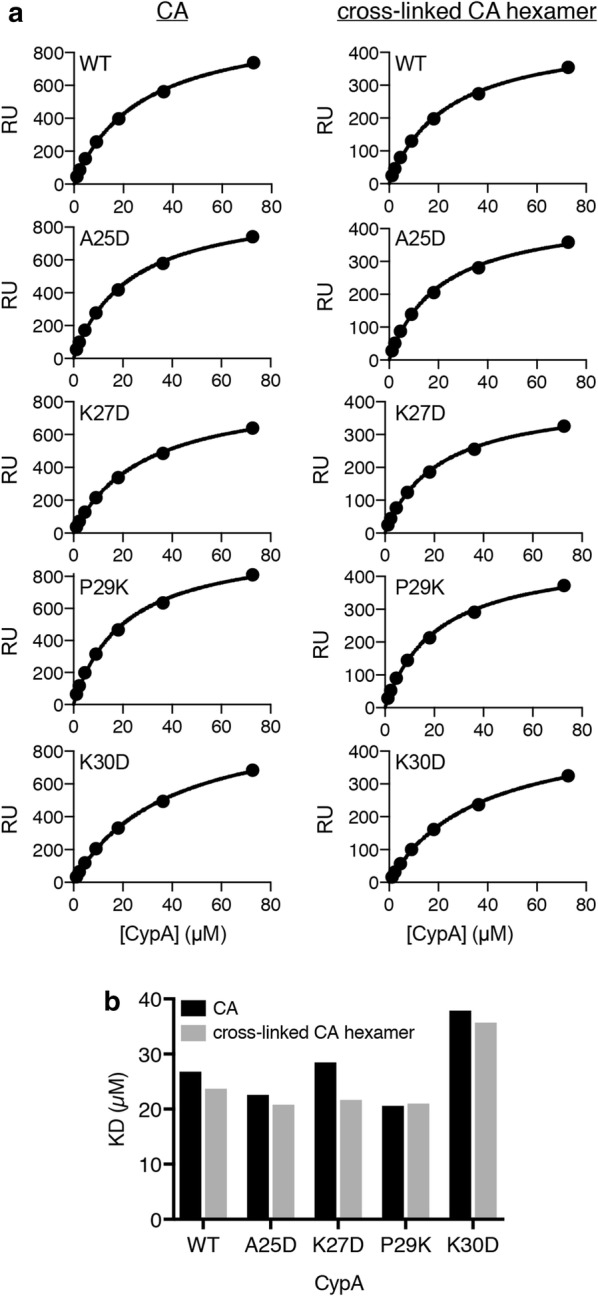
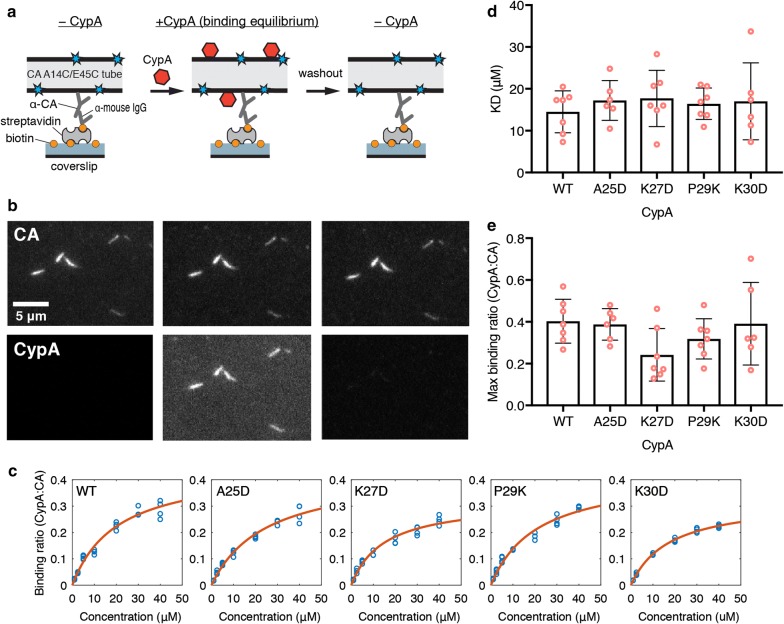
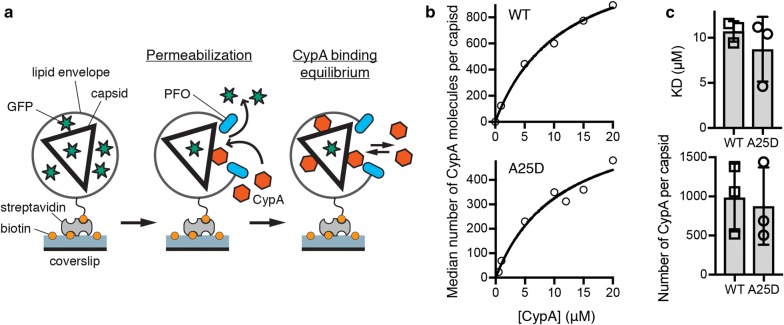
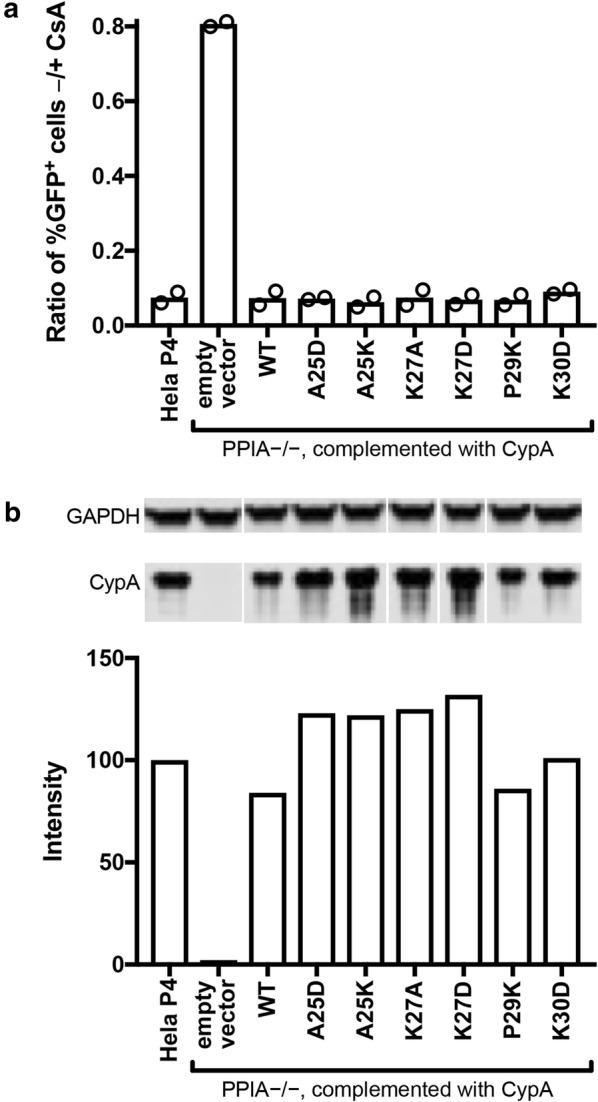
We performed mutational analysis of residues that have been proposed to mediate CA binding at the secondary binding site on CypA (A25, K27, P29 and K30) and tested the effects of the amino acid substitutions using interaction assays and HIV-1 infection assays in cells. The binding of recombinant CypA to self-assembled CA tubes or native HIV-1 capsids was measured in vitro using a quantitative fluorescence microscopy binding assay revealing that affinity and stoichiometry of CypA to the CA lattice was not affected by the substitutions. To test for functionality of the CypA secondary CA-binding site in HIV-1 infection, mutant CypA proteins were expressed in cells in which endogenous CypA was deleted, and the effects on HIV-1 infection were assayed. In normal HeLa-P4 cells, infection with HIV-1 bearing the A92E substitution in CA is inhibited by endogenous CypA and was inhibited to the same extent by expression of CypA mutants in CypA-null HeLa-P4 cells. Expression of the mutant CypA proteins in CypA-null Jurkat cells restored their permissiveness to infection by wild type HIV-1.
The amino acid changes at A25, K27, P29 and K30 did not affect the affinity of CypA for the CA lattice and did not impair CypA function in infection assays suggesting that these residues are not part of a secondary CA binding site on CypA.
高效的 HIV-1 复制依赖于病毒衣壳与宿主蛋白亲环素 A(CypA)的相互作用。亲环素 A 是一种肽基脯氨酰顺反异构酶,通过酶的活性位点与病毒 CA 蛋白暴露环结合。最近,对 CypA 与 CA 管复合物的结构分析以及分子动力学模拟确定了 CypA 上的第二个 CA 结合位点,该位点允许与组装 CA 晶格的两个六聚体亚基进行桥接相互作用,从而稳定衣壳(Liu 等人,Nat Commun 7:10714,2016)。
我们对先前提出的介导 CypA 上第二个结合位点与 CA 结合的残基(A25、K27、P29 和 K30)进行了突变分析,并使用细胞内相互作用测定和 HIV-1 感染测定来测试这些氨基酸取代的影响。使用定量荧光显微镜结合测定法在体外测量重组 CypA 与自组装 CA 管或天然 HIV-1 衣壳的结合,结果表明 CypA 与 CA 晶格的亲和力和化学计量比不受取代的影响。为了测试 CypA 对 HIV-1 感染的第二个 CA 结合位点的功能,在 CypA 缺失的细胞中表达突变型 CypA 蛋白,并测定对 HIV-1 感染的影响。在正常的 HeLa-P4 细胞中,CA 中带有 A92E 取代的 HIV-1 的感染被内源性 CypA 抑制,并且在 CypA 缺失的 HeLa-P4 细胞中表达 CypA 突变体也以相同程度抑制感染。突变型 CypA 蛋白在 CypA 缺失的 Jurkat 细胞中的表达恢复了其对野生型 HIV-1 的感染易感性。
A25、K27、P29 和 K30 氨基酸的变化没有影响 CypA 与 CA 晶格的亲和力,并且在感染测定中没有损害 CypA 的功能,这表明这些残基不是 CypA 上第二个 CA 结合位点的一部分。