Department of Biochemistry, Boston University School of Medicine, Boston, MA
Department of Biochemistry, Boston University School of Medicine, Boston, MA.
J Cell Biol. 2019 May 6;218(5):1743-1763. doi: 10.1083/jcb.201811174. Epub 2019 Apr 4.
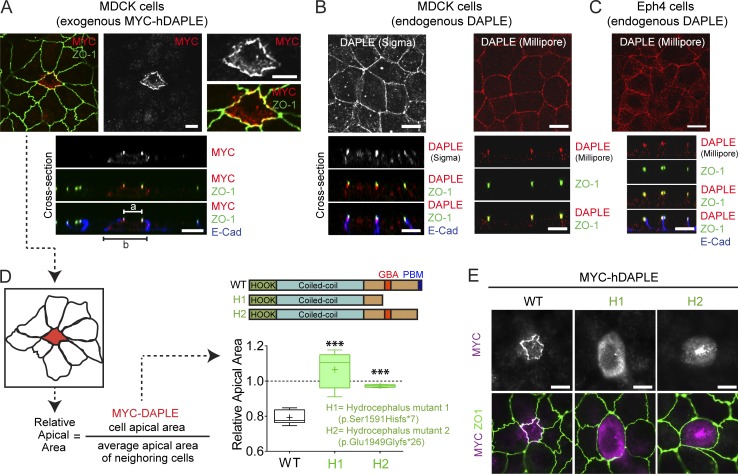
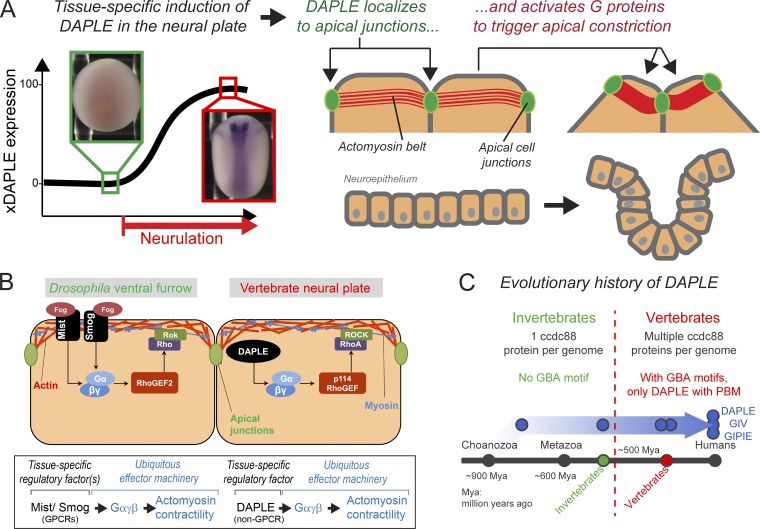
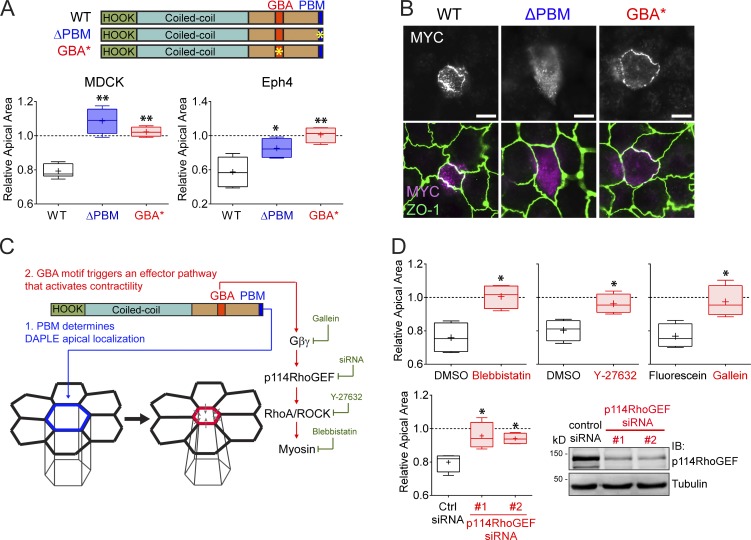
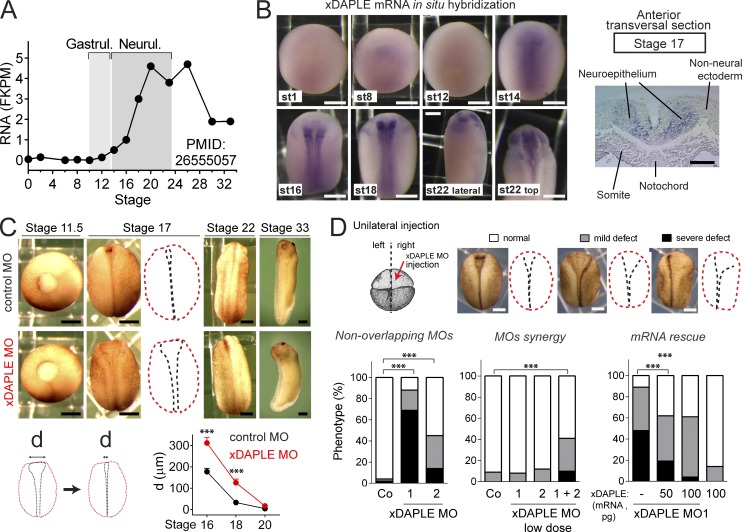
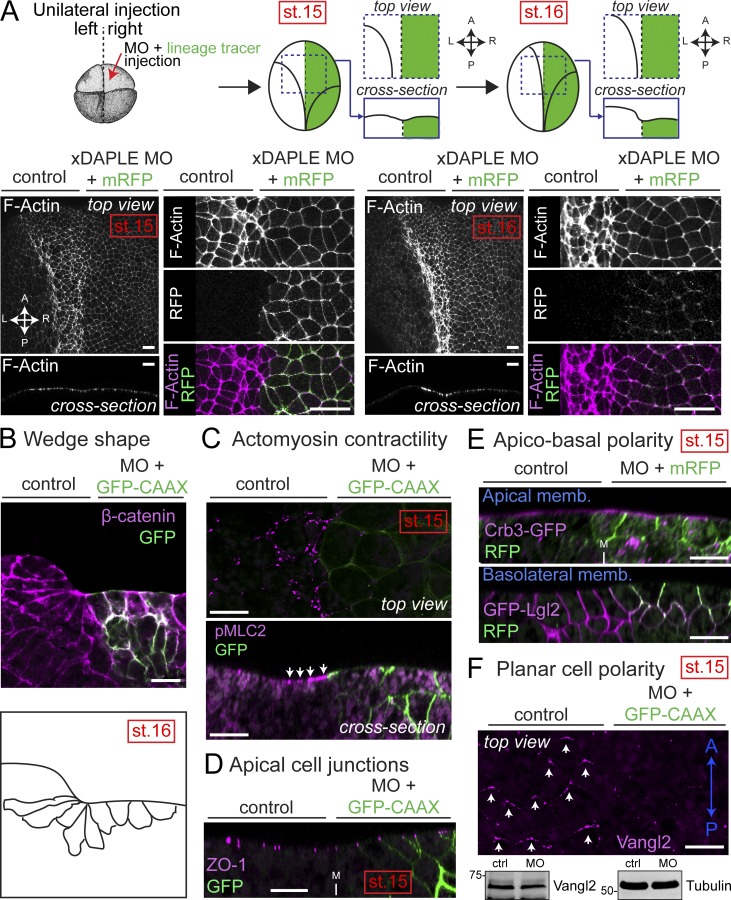
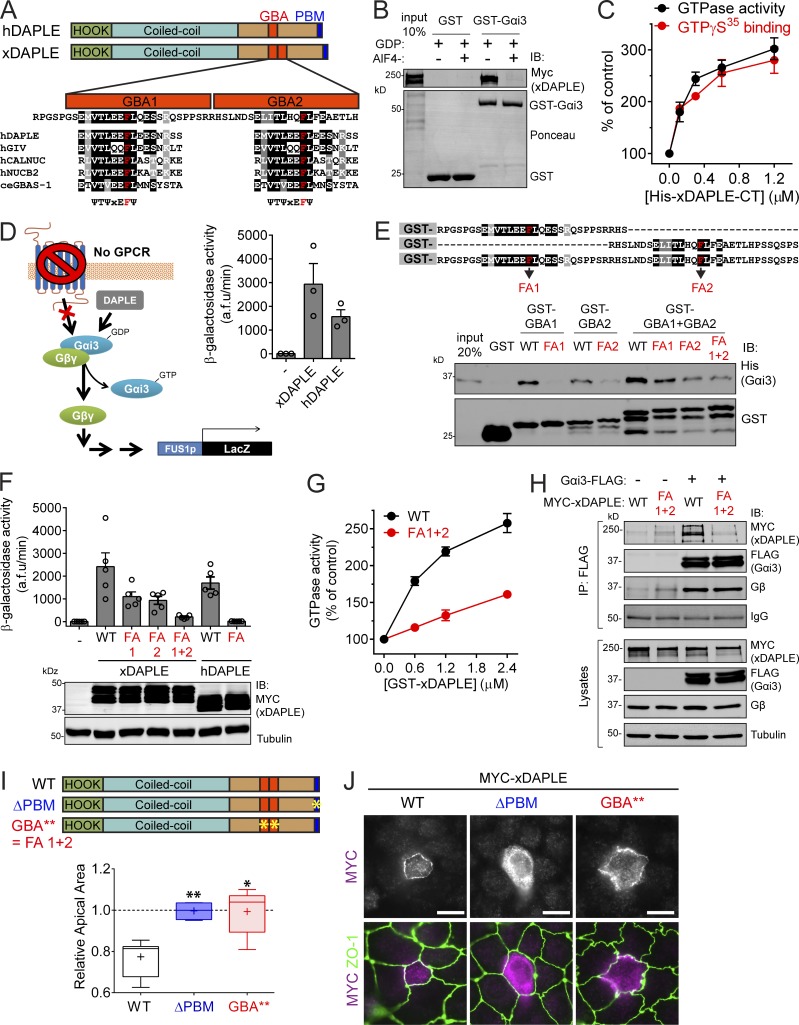
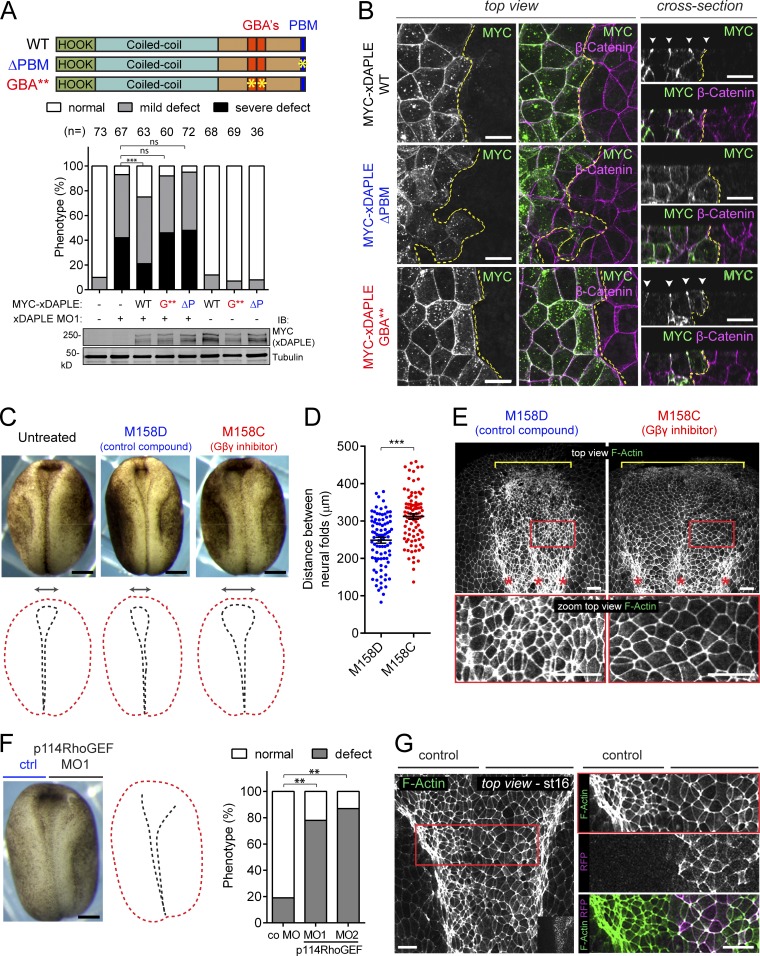
Heterotrimeric G proteins are signaling switches that control organismal morphogenesis across metazoans. In invertebrates, specific GPCRs instruct G proteins to promote collective apical cell constriction in the context of epithelial tissue morphogenesis. In contrast, tissue-specific factors that instruct G proteins during analogous processes in vertebrates are largely unknown. Here, we show that DAPLE, a non-GPCR protein linked to human neurodevelopmental disorders, is expressed specifically in the neural plate of embryos to trigger a G protein signaling pathway that promotes apical cell constriction during neurulation. DAPLE localizes to apical cell-cell junctions in the neuroepithelium, where it activates G protein signaling to drive actomyosin-dependent apical constriction and subsequent bending of the neural plate. This function is mediated by a (GBA) motif that was acquired by DAPLE in vertebrates during evolution. These findings reveal that regulation of tissue remodeling during vertebrate development can be driven by an unconventional mechanism of heterotrimeric G protein activation that operates in lieu of GPCRs.
三聚体 G 蛋白是信号开关,可控制后生动物的器官发生。在无脊椎动物中,特定的 GPCR 指示 G 蛋白促进上皮组织形态发生过程中细胞的集体顶端收缩。相比之下,在脊椎动物中,在类似过程中指示 G 蛋白的组织特异性因子在很大程度上是未知的。在这里,我们表明,与人类神经发育障碍相关的非 GPCR 蛋白 DAPLE 特异性表达于胚胎的神经板中,以触发 G 蛋白信号通路,该通路在神经胚形成过程中促进顶端细胞收缩。DAPLE 定位于神经上皮的顶端细胞-细胞连接处,在该处激活 G 蛋白信号传导以驱动肌动球蛋白依赖性顶端收缩和随后的神经板弯曲。该功能由 DAPLE 在脊椎动物进化过程中获得的 (GBA) 基序介导。这些发现揭示了脊椎动物发育过程中组织重塑的调节可以由一种替代 GPCR 的三聚体 G 蛋白激活的非常规机制驱动。