Ho Dong Hwan, Lee Heajin, Son Ilhong, Seol Wongi
InAm Neuroscience Research Center, Sanbon Medical Center, College of Medicine, Wonkwang University, Gunpo-si, Republic of Korea.
Electron Microscopy Research Center, Korea Basic Science Institute (KBSI), Daejeon-si, Republic of Korea.
Anim Cells Syst (Seoul). 2019 Mar 1;23(2):106-111. doi: 10.1080/19768354.2019.1585948. eCollection 2019 Apr.
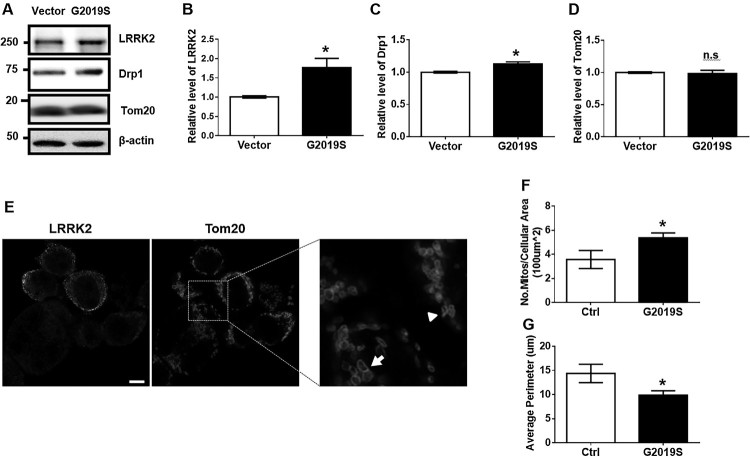
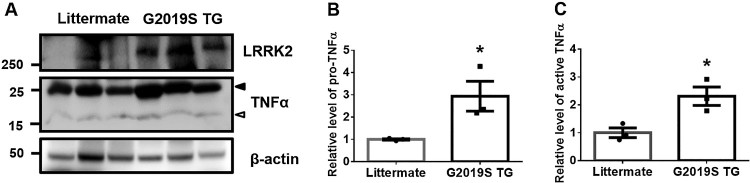
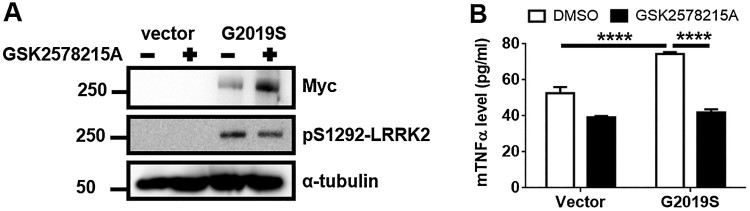
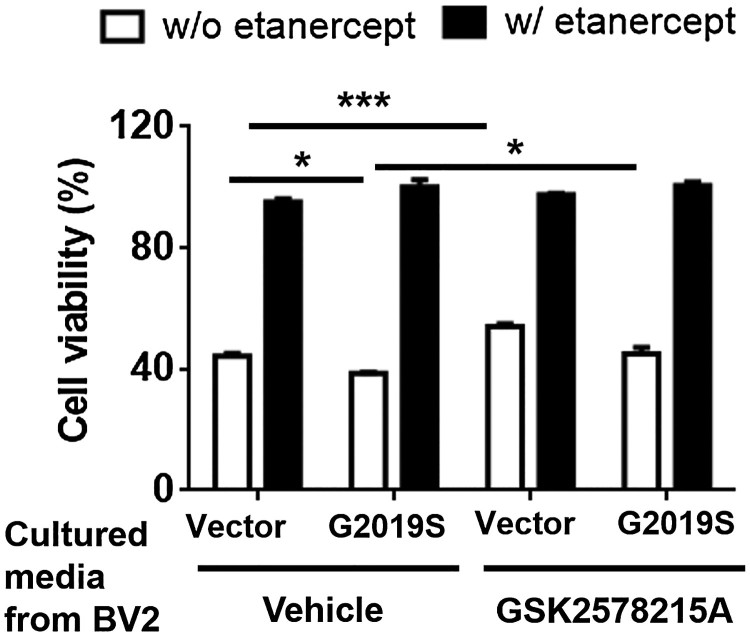
Leucine rich-repeat kinase 2 (LRRK2) is involved in the pathogenesis of Parkinson's disease (PD). LRRK2 has kinase and GTPase activities, and mediates several cell functions, including vesicle trafficking, apoptosis, autophagy, mitochondrial dynamics, and neuroinflammation. G2019S (GS) is the most prevalent mutation of LRRK2. The mutation increases kinase activity, suggesting that this activity is crucial for PD pathogenesis. The activation and inhibition of LRRK2 kinase increases and reduces the levels of proinflammatory cytokines, respectively suggesting that the role of LRRK2 in neuroinflammation is critical for the pathology of PD. Previously, we demonstrated that microglial activation by lipopolysaccharide (LPS) increases mitochondrial fission via the activation of LRRK2 kinase, while LRRK2 kinase inhibition diminishes the fission morphology and release of tumor necrosis factor-alpha (TNFα) in BV2 or rat primary microglia and the brains of GS transgenic mice. In this study, the ectopic expression of GS LRRK2 in BV2 cells significantly elevated the expression of Drp1 along the fragmented mitochondria and decreased mitochondria size compared with controls. GS LRRK2-transfected BV2 cells displayed significantly increased TNFα release and neuronal death. Inhibition of LRRK2 kinase alleviated these features. TNFα levels in brains of GS mice were significantly increased compared to those in their littermates. These data further support our previous findings concerning LPS-induced neuroinflammation and mitochondrial fission in microglia via LRRK2 kinase activation.
富含亮氨酸重复激酶2(LRRK2)参与帕金森病(PD)的发病机制。LRRK2具有激酶和GTP酶活性,并介导多种细胞功能,包括囊泡运输、细胞凋亡、自噬、线粒体动力学和神经炎症。G2019S(GS)是LRRK2最常见的突变。该突变增加了激酶活性,表明这种活性对PD发病机制至关重要。LRRK2激酶的激活和抑制分别增加和降低促炎细胞因子的水平,这表明LRRK2在神经炎症中的作用对PD的病理过程至关重要。此前,我们证明脂多糖(LPS)激活小胶质细胞会通过激活LRRK2激酶增加线粒体裂变,而抑制LRRK2激酶会减少BV2细胞、大鼠原代小胶质细胞以及GS转基因小鼠大脑中肿瘤坏死因子-α(TNFα)的裂变形态和释放。在本研究中,与对照组相比,BV2细胞中GS LRRK2的异位表达显著提高了Drp1沿破碎线粒体的表达,并减小了线粒体大小。转染GS LRRK2的BV2细胞显示TNFα释放和神经元死亡显著增加。抑制LRRK2激酶可减轻这些特征。与同窝小鼠相比,GS小鼠大脑中的TNFα水平显著升高。这些数据进一步支持了我们之前关于LPS通过激活LRRK2激酶诱导小胶质细胞神经炎症和线粒体裂变的研究结果。