Robillard Julie M, Feng Tanya L, Sporn Arlo B, Lai Jen-Ai, Lo Cody, Ta Monica, Nadler Roland
Division of Neurology, Department of Medicine, The University of British Columbia, B404 - 4480 Oak Street, Vancouver, BC V6H 3N1, Canada.
University of Ottawa Centre for Health Law, Policy and Ethics, Common Law Section, Faculty of Law, University of Ottawa, 57 Louis Pasteur (Fauteux Hall), Ottawa, ON K1N 6N5, Canada.
Internet Interv. 2019 Mar 6;17:100243. doi: 10.1016/j.invent.2019.100243. eCollection 2019 Sep.
To assess the availability, readability, and privacy-related content of the privacy policies and terms of agreement of mental health apps available through popular digital stores.
Popular smartphone app stores were searched using combinations of keywords "track" and "mood" and their synonyms. The first 100 apps from each search were evaluated for inclusion and exclusion criteria. Apps were assessed for availability of a privacy policy (PP) and terms of agreement (ToA) and if available, these documents were evaluated for both content and readability.
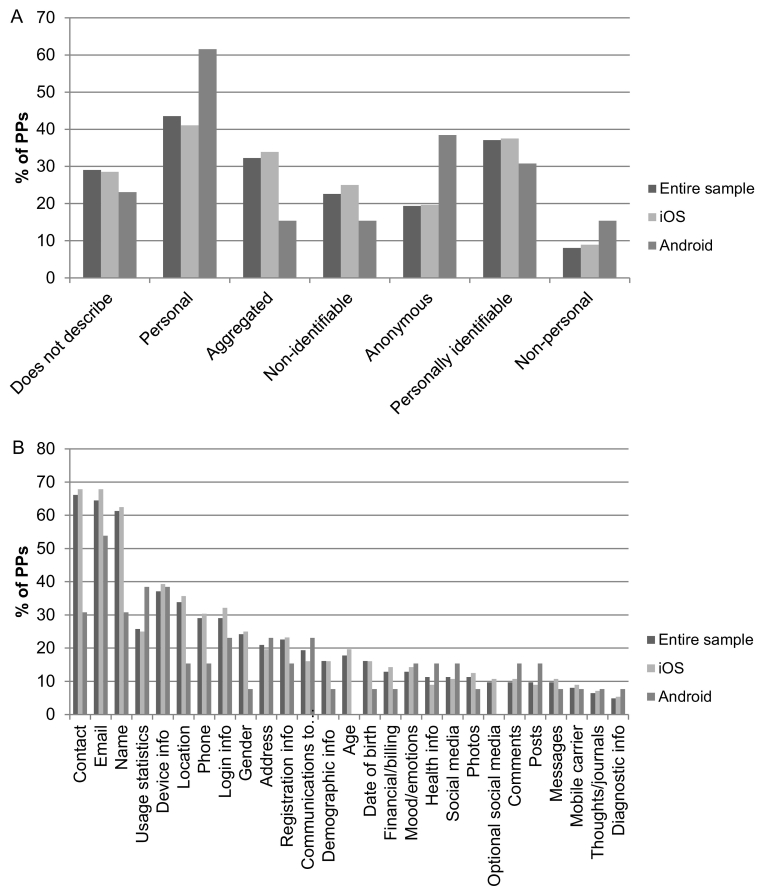
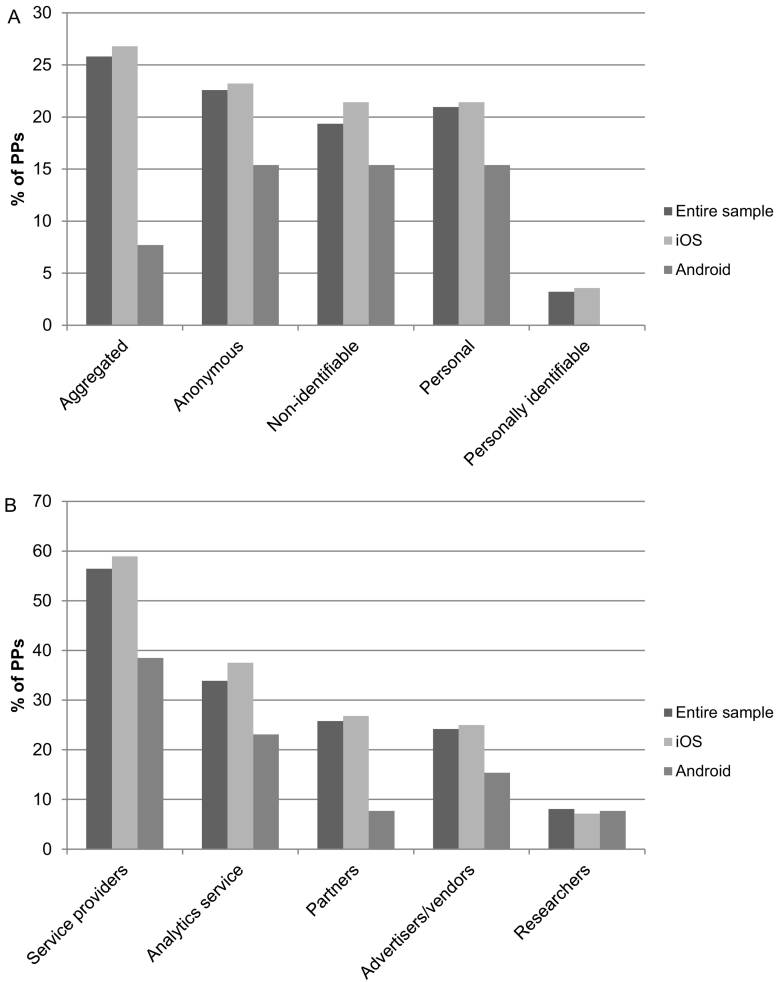
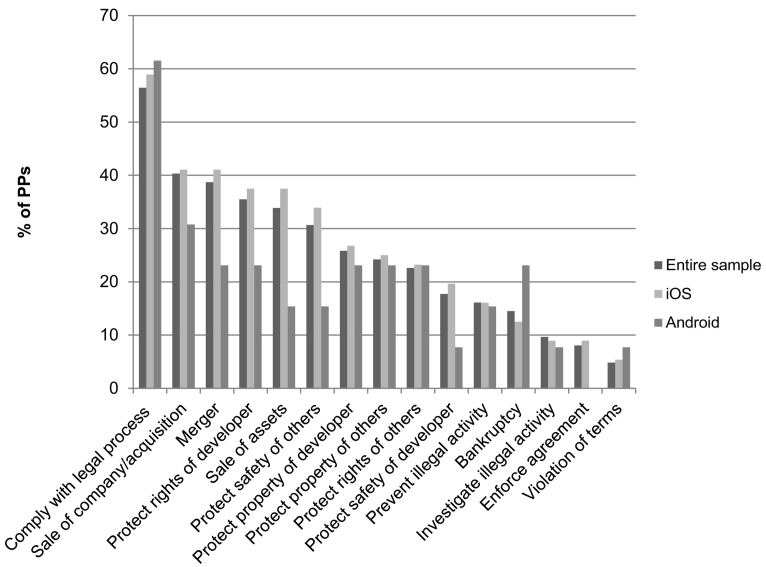
Most of the apps collected in the sample did not include a PP or ToA. PPs could be accessed for 18% of iOS apps and 4% of Android apps; whereas ToAs were available for 15% of iOS and 3% of Android apps. Many PPs stated that users' information may be shared with third parties (71% iOS, 46% Android).
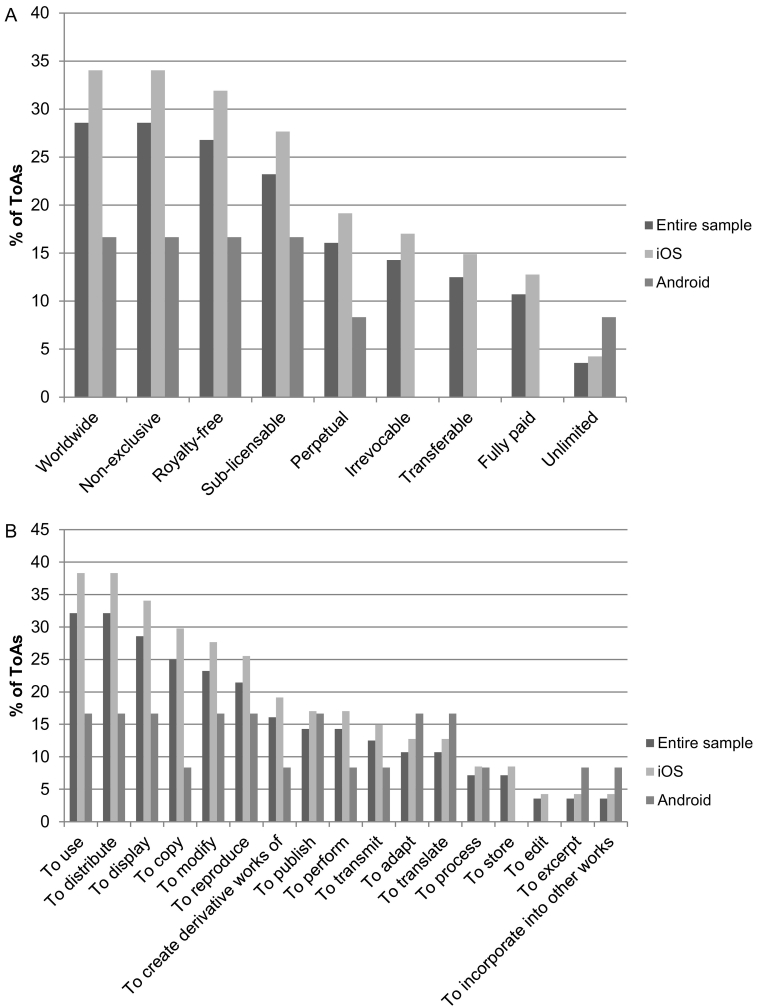
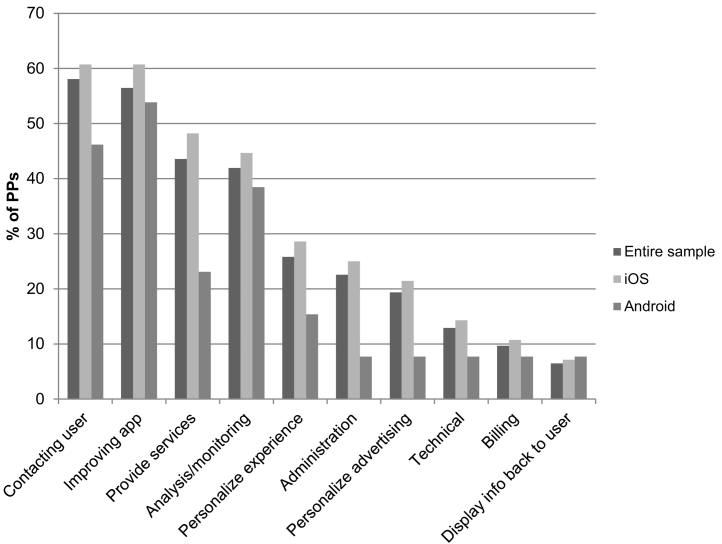
Results demonstrate that information collection is occurring with the majority of apps that allow users to track the status of their mental health. Most of the apps collected in the initial sample did not include a PP or ToA despite this being a requirement by the store. The majority of PPs and ToAs that were evaluated are written at a post-secondary reading level and disclose that extensive data collection is occurring.
Our findings raise concerns about consent, transparency, and data sharing associated with mental health apps and highlight the importance of improved regulation in the mobile app environment.
评估通过流行数字商店提供的心理健康应用程序的隐私政策和使用协议的可获取性、可读性以及与隐私相关的内容。
使用关键词“跟踪”和“情绪”及其同义词组合在流行的智能手机应用商店中进行搜索。对每次搜索结果中的前100个应用程序进行纳入和排除标准评估。评估应用程序是否有隐私政策(PP)和使用协议(ToA),如果有,对这些文件的内容和可读性进行评估。
样本中收集的大多数应用程序未包括PP或ToA。18%的iOS应用程序和4%的安卓应用程序可访问PP;而15%的iOS应用程序和3%的安卓应用程序有ToA。许多PP表示用户信息可能会与第三方共享(iOS为71%,安卓为46%)。
结果表明,大多数允许用户跟踪其心理健康状况的应用程序都在进行信息收集。尽管这是商店的要求,但初始样本中收集的大多数应用程序都未包括PP或ToA。评估的大多数PP和ToA是按照大专阅读水平编写的,并披露了正在进行广泛的数据收集。
我们的研究结果引发了对与心理健康应用程序相关的同意、透明度和数据共享的担忧,并强调了在移动应用程序环境中加强监管的重要性。