Department of Microbial Pathogenesis, Yale University School of Medicine, New Haven, Connecticut, United States of America.
Department of Genetics, Yale University School of Medicine, New Haven, Connecticut, United States of America.
PLoS Pathog. 2019 Apr 5;15(4):e1007704. doi: 10.1371/journal.ppat.1007704. eCollection 2019 Apr.
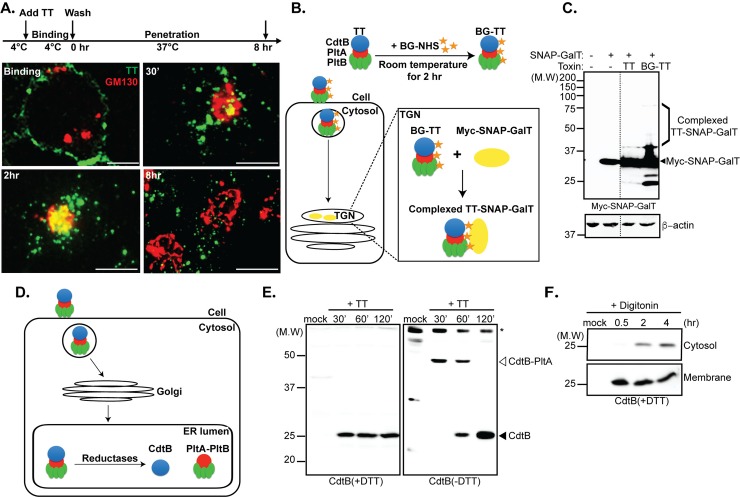
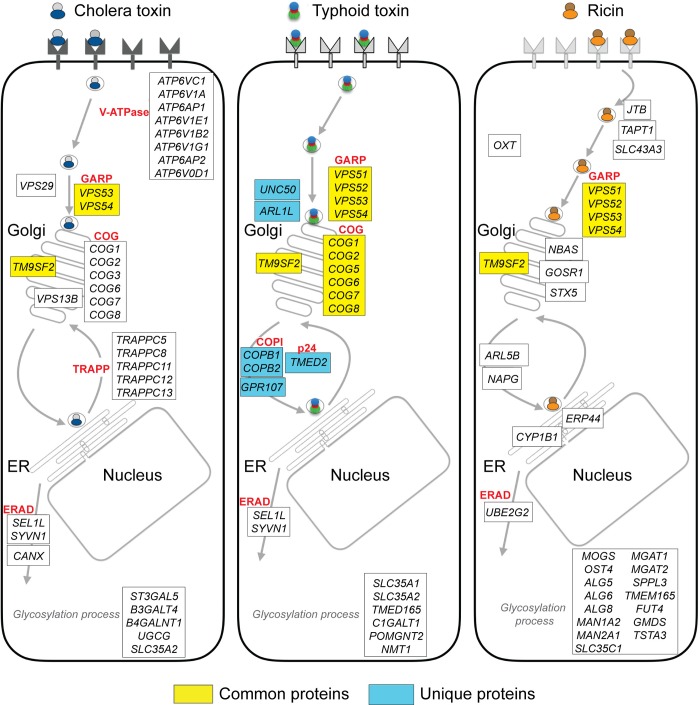
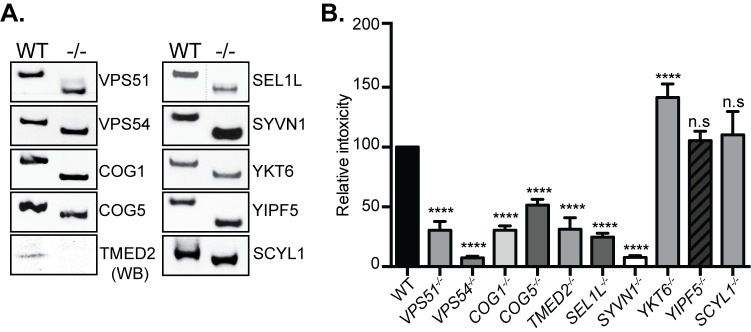
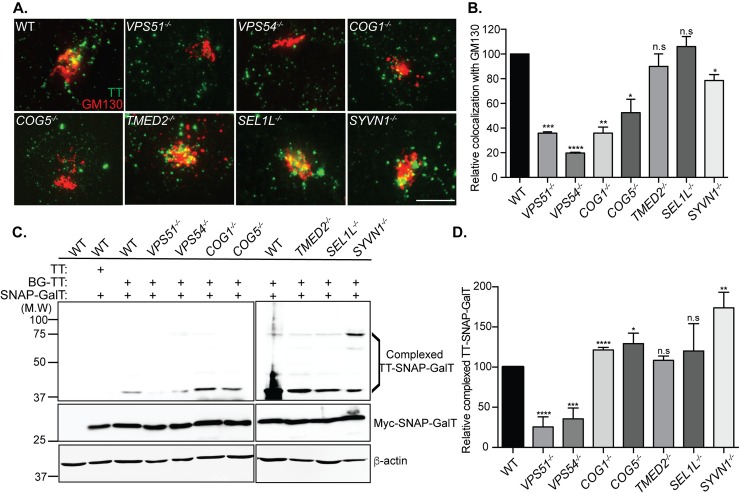
Typhoid toxin is a virulence factor for Salmonella Typhi and Paratyphi, the cause of typhoid fever in humans. This toxin has a unique architecture in that its pentameric B subunit, made of PltB, is linked to two enzymatic A subunits, the ADP ribosyl transferase PltA and the deoxyribonuclease CdtB. Typhoid toxin is uniquely adapted to humans, recognizing surface glycoprotein sialoglycans terminated in acetyl neuraminic acid, which are preferentially expressed by human cells. The transport pathway to its cellular targets followed by typhoid toxin after receptor binding is currently unknown. Through a genome-wide CRISPR/Cas9-mediated screen we have characterized the mechanisms by which typhoid toxin is transported within human cells. We found that typhoid toxin hijacks specific elements of the retrograde transport and endoplasmic reticulum-associated degradation machineries to reach its subcellular destination within target cells. Our study reveals unique and common features in the transport mechanisms of bacterial toxins that could serve as the bases for the development of novel anti-toxin therapeutic strategies.
伤寒毒素是伤寒沙门氏菌和副伤寒沙门氏菌的一种毒力因子,也是人类伤寒热的病原体。这种毒素具有独特的结构,其由 PltB 组成的五聚体 B 亚基与两个酶活性 A 亚基(ADP 核糖基转移酶 PltA 和脱氧核糖核酸酶 CdtB)相连。伤寒毒素是专门适应人类的,它识别表面糖蛋白唾液酸聚糖,其末端为乙酰神经氨酸,而这些糖蛋白在人类细胞中优先表达。伤寒毒素在与受体结合后进入细胞的运输途径目前尚不清楚。通过全基因组 CRISPR/Cas9 介导的筛选,我们已经描述了伤寒毒素在人类细胞内运输的机制。我们发现,伤寒毒素劫持了逆行运输和内质网相关降解机制的特定元件,以到达靶细胞内的亚细胞目的地。我们的研究揭示了细菌毒素运输机制的独特和共同特征,这些特征可以作为开发新型抗毒素治疗策略的基础。