Department of Cell Biology, Yale University School of Medicine, New Haven, CT.
Laboratory of Molecular Electron Microscopy, The Rockefeller University, New York, NY.
J Cell Biol. 2019 Jun 3;218(6):1787-1798. doi: 10.1083/jcb.201811139. Epub 2019 Apr 5.
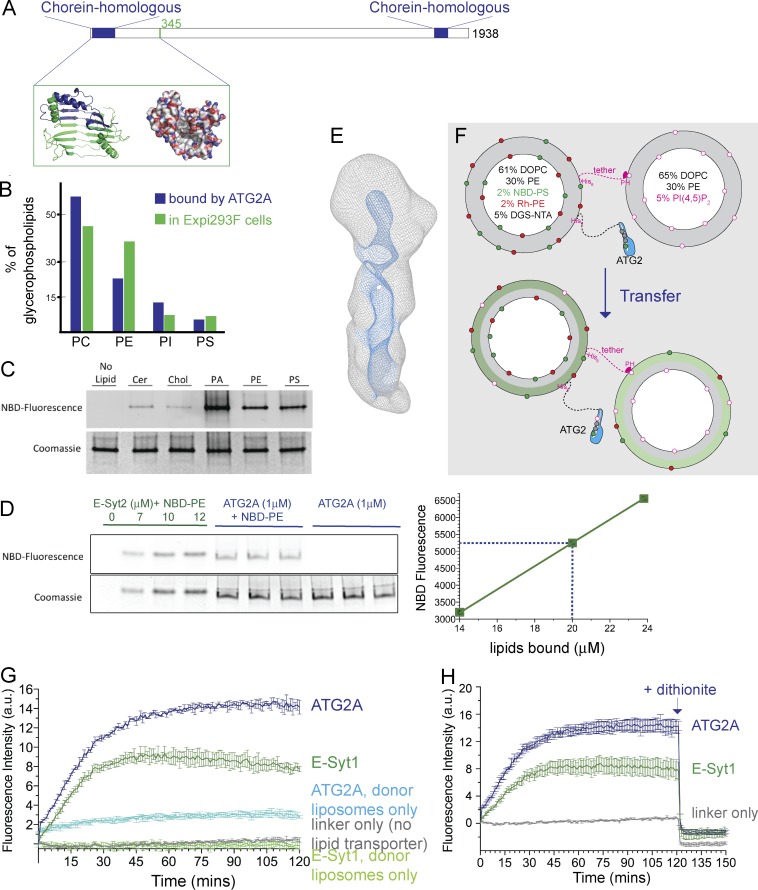
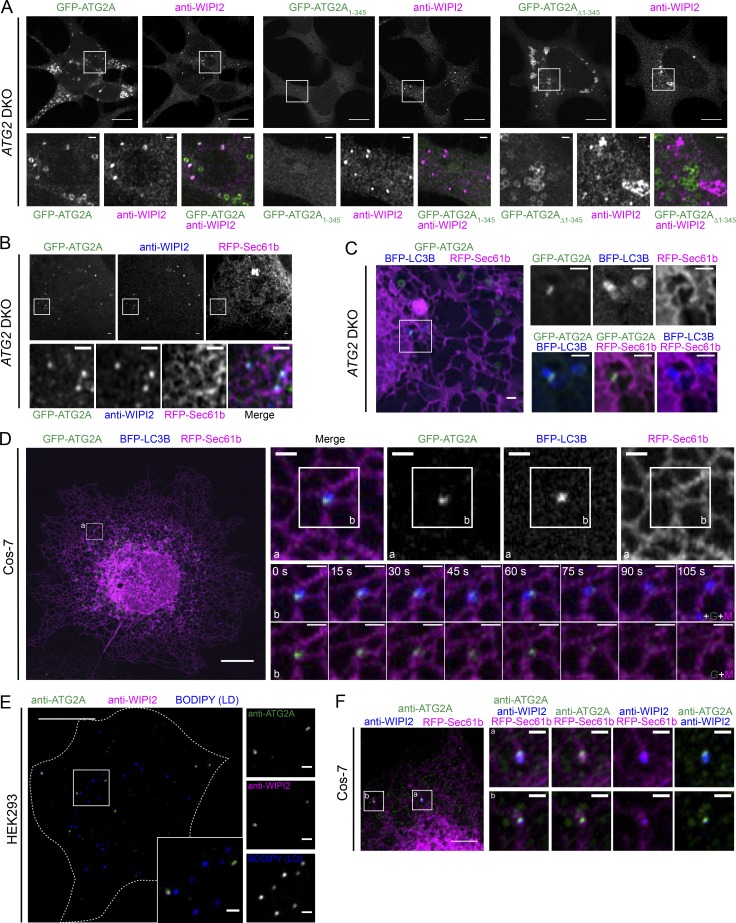
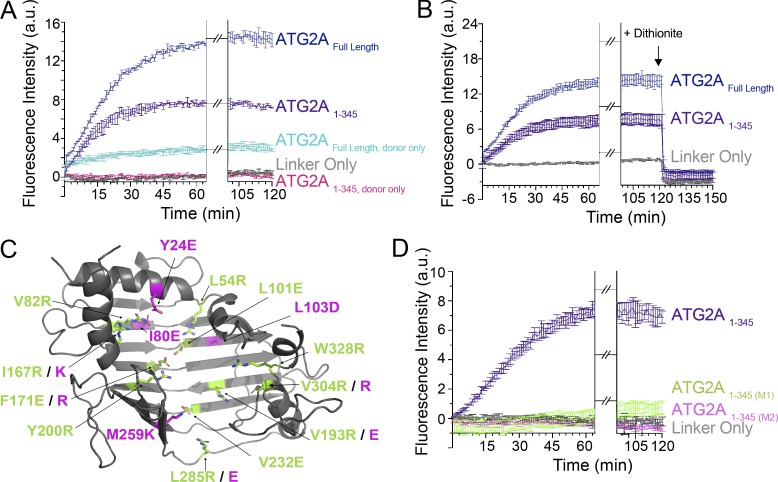
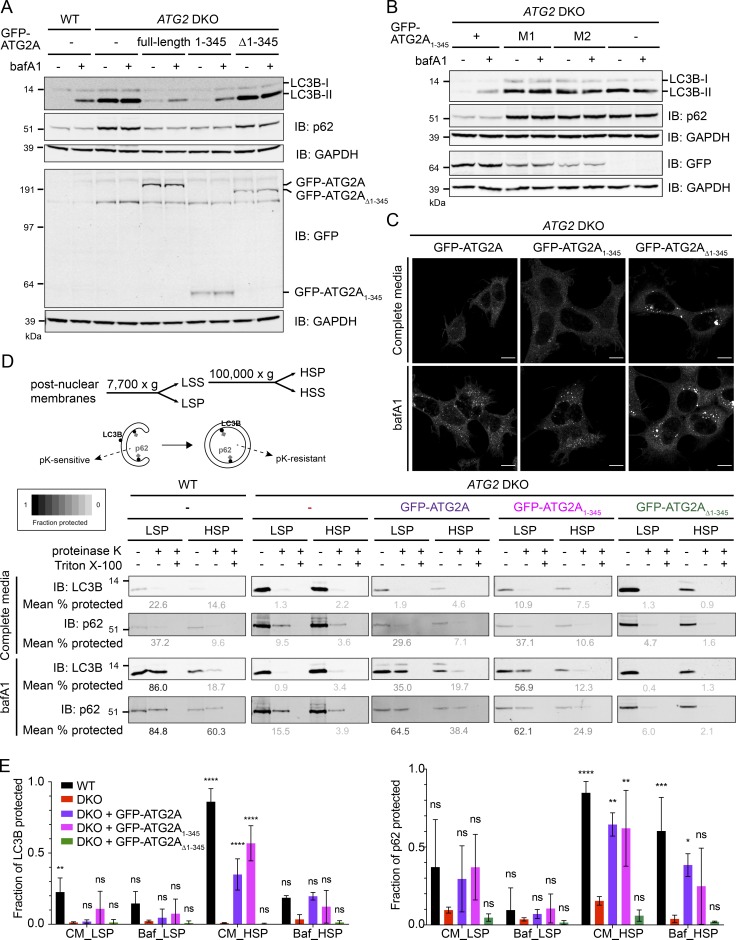
During macroautophagic stress, autophagosomes can be produced continuously and in high numbers. Many different organelles have been reported as potential donor membranes for this sustained autophagosome growth, but specific machinery to support the delivery of lipid to the growing autophagosome membrane has remained unknown. Here we show that the autophagy protein, ATG2, without a clear function since its discovery over 20 yr ago, is in fact a lipid-transfer protein likely operating at the ER-autophagosome interface. ATG2A can bind tens of glycerophospholipids at once and transfers lipids robustly in vitro. An N-terminal fragment of ATG2A that supports lipid transfer in vitro is both necessary and fully sufficient to rescue blocked autophagosome biogenesis in KO cells, implying that regulation of lipid homeostasis is the major autophagy-dependent activity of this protein and, by extension, that protein-mediated lipid transfer across contact sites is a principal contributor to autophagosome formation.
在巨自噬应激期间,可以连续大量地产生自噬体。已经报道了许多不同的细胞器作为这种持续的自噬体生长的潜在供体膜,但支持将脂质递送至生长中的自噬体膜的特定机制仍然未知。在这里,我们表明自噬蛋白 ATG2 实际上是一种脂质转移蛋白,它可能在 ER-自噬体界面起作用。ATG2A 可以一次结合数十种甘油磷脂,并在体外有效地转移脂质。在体外支持脂质转移的 ATG2A 的 N 端片段在 KO 细胞中既是必需的,也是完全充分的,可以挽救被阻断的自噬体生物发生,这意味着脂质平衡的调节是该蛋白的主要自噬依赖性活性,并且,通过扩展,蛋白介导的脂质在接触部位的转移是自噬体形成的主要贡献者。