Mammalian Behaviour and Evolution Group, Institute of Integrative Biology, University of Liverpool, Leahurst Campus, Neston, Cheshire, United Kingdom.
PLoS One. 2019 Apr 8;14(4):e0211601. doi: 10.1371/journal.pone.0211601. eCollection 2019.
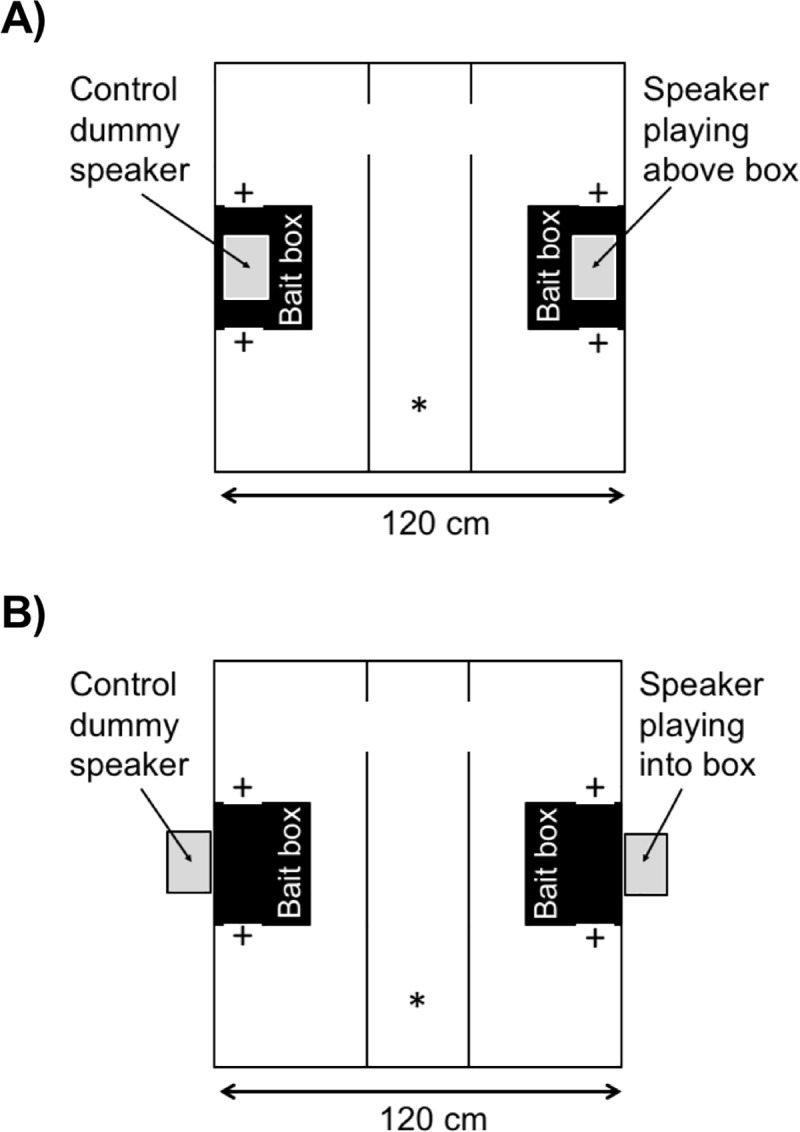
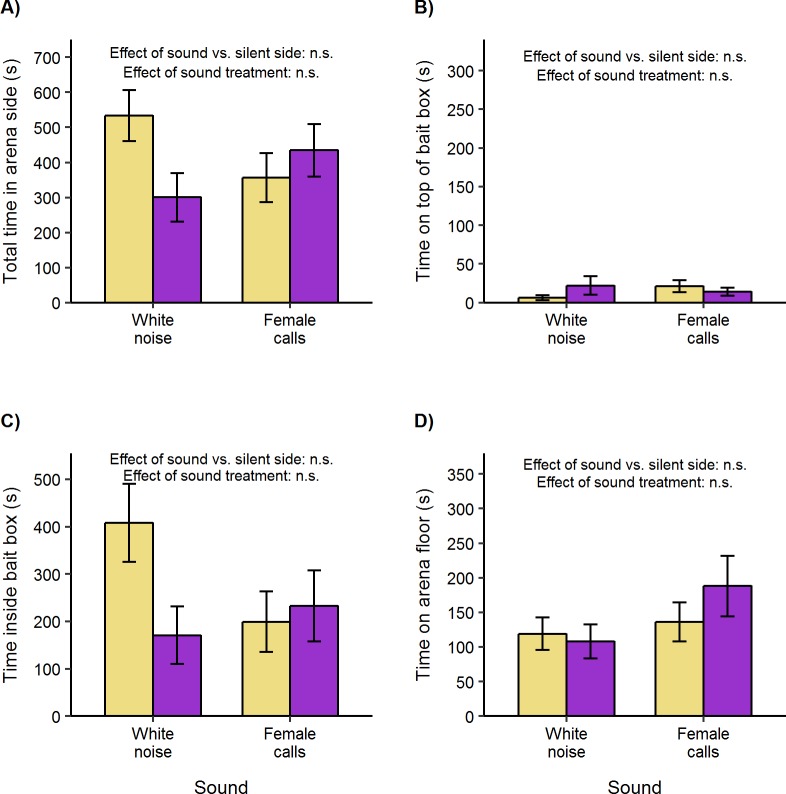
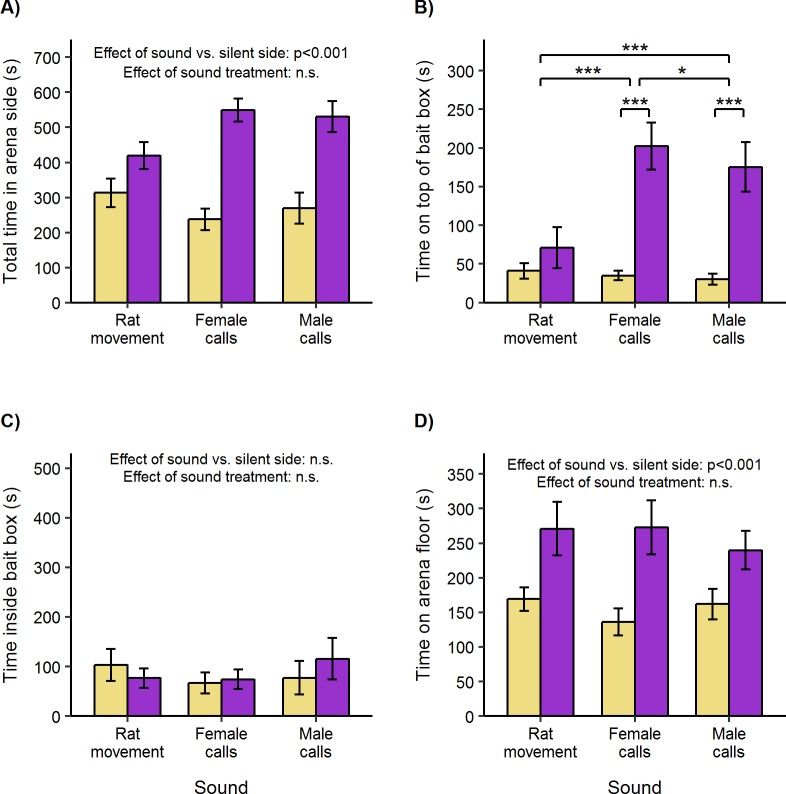
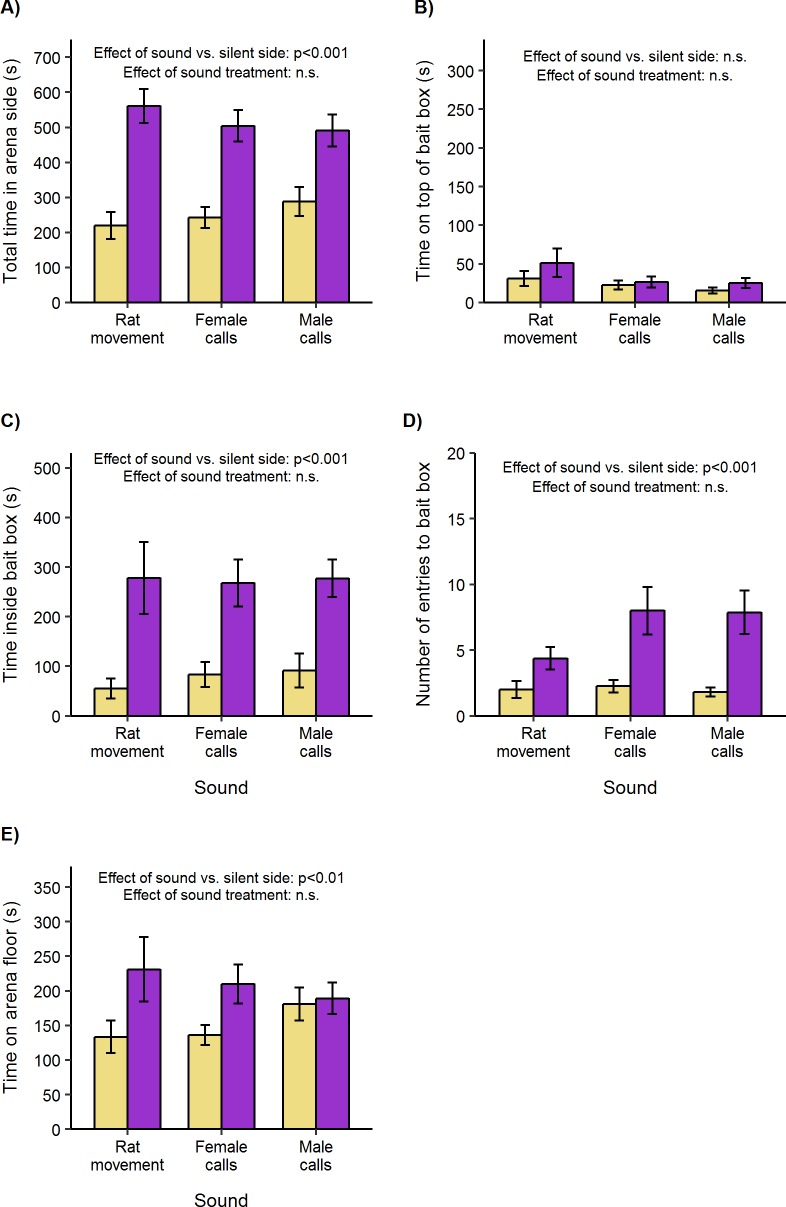
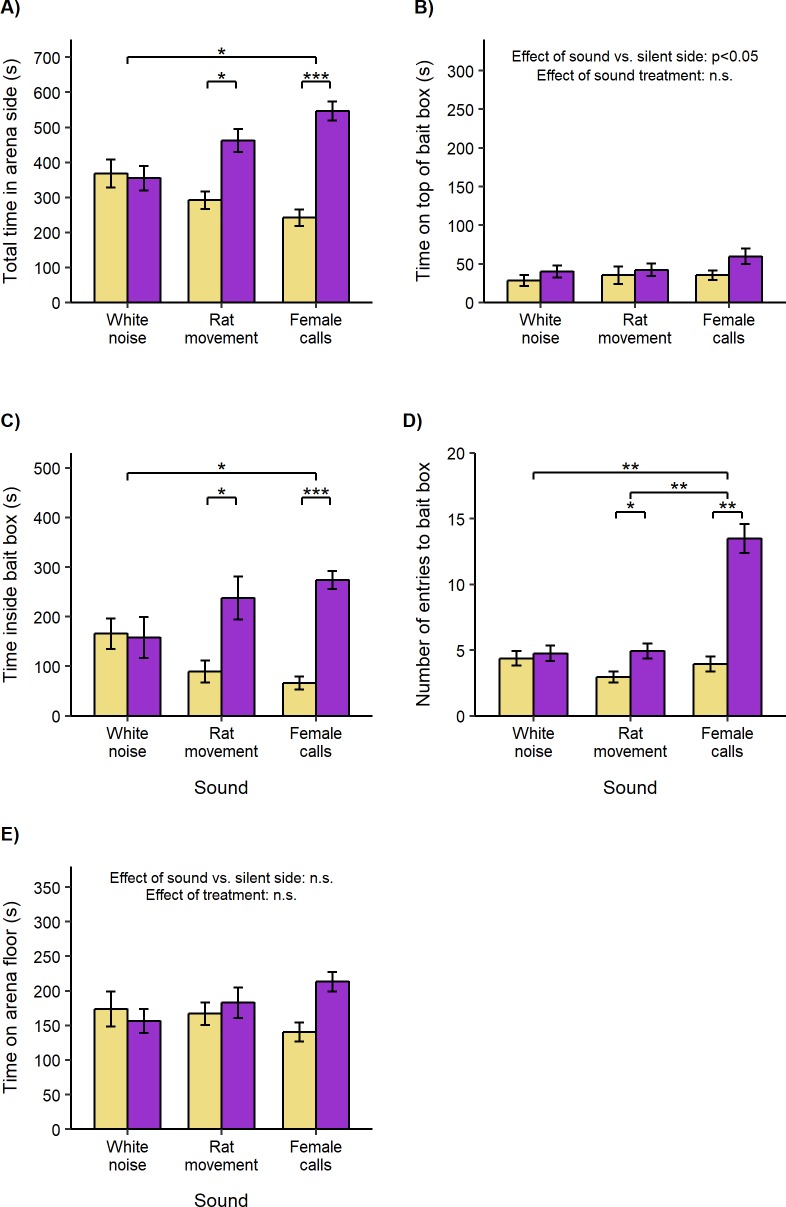
The control of mammalian pests relies heavily on the use of pesticides that are often avoided and are not species-specific. These problems are particularly acute for pesticides used to control rats (Rattus spp.). The efficacy and targeting of control could be improved by attracting animals to control measures using species-specific cues. One cue that has the potential to attract rats is the 50 kHz calls they emit in positive social situations. Here we test the potential of these rat calls as a species-specific attractant by examining the response of laboratory rats (Rattus norvegicus; n = 48) and non-target bank voles (Myodes glareolus; n = 16) to 50 kHz calls from either sex in a compartmentalised laboratory arena. Sounds of rat movement and white noise acted as control treatments, with each sound tested against a silent control in the opposite side of the arena. When sound cues were played above an empty bait box, rats were attracted to spend time close to 50 kHz rat calls, climbing on top of boxes, regardless of the sex of subject or caller. When either 50 kHz rat calls or rat movement sounds were played inside an empty bait box, rats of both sexes spent 3-4 fold more time inside boxes and visited more frequently. Rats were not attracted by intermittent white noise. Bank voles were neither attracted to, nor avoided, 50 kHz rat calls played inside empty bait boxes. Our findings show that 50 kHz rat calls are an effective attractant for rats of both sexes under laboratory conditions, while not attracting non-target bank voles. These calls are strong candidates for providing a species-specific lure that may be attractive even in the absence of food bait, but further trials will be needed to assess their efficacy under field conditions.
哺乳动物害虫的防治在很大程度上依赖于使用农药,但这些农药往往会被回避,而且不具有物种特异性。这些问题在用于控制老鼠(Rattus spp.)的农药中尤为突出。通过使用特定于物种的线索来吸引动物接受控制措施,可以提高控制的效果和针对性。一种有潜力吸引老鼠的线索是它们在积极社交环境中发出的 50 kHz 叫声。在这里,我们通过在分隔式实验室竞技场中检查实验室大鼠(Rattus norvegicus;n = 48)和非靶标田鼠(Myodes glareolus;n = 16)对来自任何性别的 50 kHz 叫声的反应,来测试这些大鼠叫声作为物种特异性引诱剂的潜力。大鼠运动的声音和白噪声作为对照处理,每种声音都与竞技场另一侧的静音对照进行了测试。当声音线索在空诱饵盒上方播放时,大鼠被吸引靠近 50 kHz 大鼠叫声,爬上盒子,而不管对象或呼叫者的性别如何。当在空诱饵盒内播放 50 kHz 大鼠叫声或大鼠运动声音时,无论性别如何,大鼠在盒子内的时间都增加了 3-4 倍,并且更频繁地访问。间歇性白噪声不会吸引大鼠。在空诱饵盒内播放 50 kHz 大鼠叫声时,田鼠既不会被吸引,也不会被回避。我们的研究结果表明,50 kHz 大鼠叫声在实验室条件下对雌雄大鼠均具有吸引力,而不会吸引非靶标田鼠。这些叫声是提供特定于物种的诱饵的有力候选者,即使在没有食物诱饵的情况下也可能具有吸引力,但需要进一步的试验来评估它们在野外条件下的效果。