J Natl Cancer Inst. 2019 Nov 1;111(11):1170-1178. doi: 10.1093/jnci/djz038.
Patient-reported outcomes (PROs) are captured within cancer trials to help future patients and their clinicians make more informed treatment decisions. However, variability in standards of PRO trial design and reporting threaten the validity of these endpoints for application in clinical practice.
We systematically investigated a cohort of randomized controlled cancer trials that included a primary or secondary PRO. For each trial, an evaluation of protocol and reporting quality was undertaken using standard checklists. General patterns of reporting where also explored.
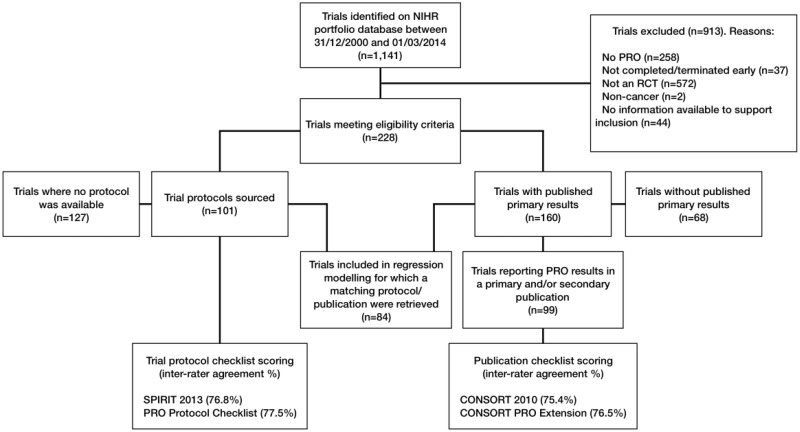
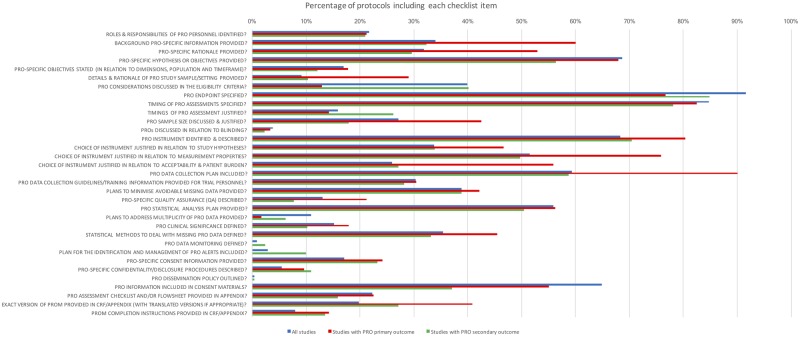
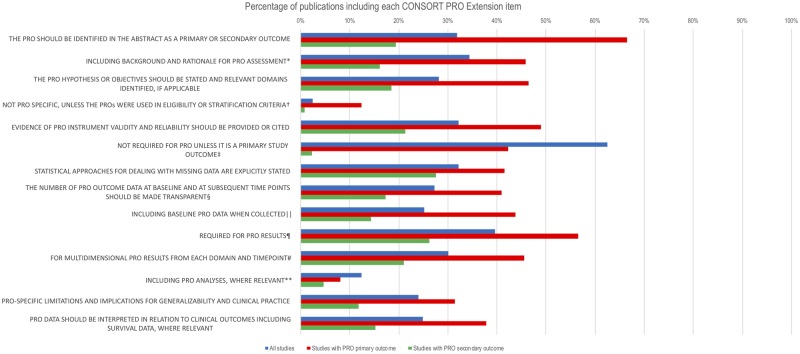
Protocols (101 sourced, 44.3%) included a mean (SD) of 10 (4) of 33 (range = 2-19) PRO protocol checklist items. Recommended items frequently omitted included the rationale and objectives underpinning PRO collection and approaches to minimize/address missing PRO data. Of 160 trials with published results, 61 (38.1%, 95% confidence interval = 30.6% to 45.7%) failed to include their PRO findings in any publication (mean 6.43-year follow-up); these trials included 49 568 participants. Although two-thirds of included trials published PRO findings, reporting standards were often inadequate according to international guidelines (mean [SD] inclusion of 3 [3] of 14 [range = 0-11]) CONSORT PRO Extension checklist items). More than one-half of trials publishing PRO results in a secondary publication (12 of 22, 54.5%) took 4 or more years to do so following trial closure, with eight (36.4%) taking 5-8 years and one trial publishing after 14 years.
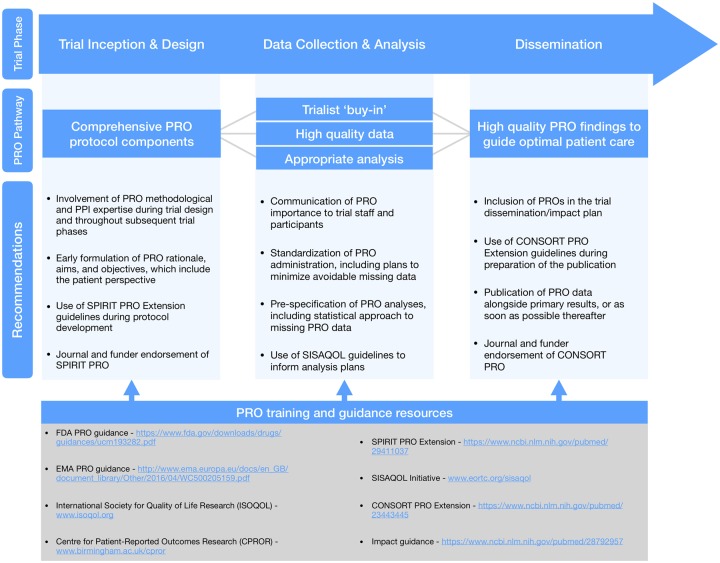
PRO protocol content is frequently inadequate, and nonreporting of PRO findings is widespread, meaning patient-important information may not be available to benefit patients, clinicians, and regulators. Even where PRO data are published, there is often considerable delay and reporting quality is suboptimal. This study presents key recommendations to enhance the likelihood of successful delivery of PROs in the future.
患者报告结局(PROs)在癌症试验中被捕获,以帮助未来的患者及其临床医生做出更明智的治疗决策。然而,PRO 试验设计和报告标准的差异威胁到这些终点在临床实践中的应用的有效性。
我们系统地调查了一组包含主要或次要 PRO 的随机对照癌症试验。对于每个试验,使用标准检查表对方案和报告质量进行了评估。还探索了报告的一般模式。
方案(101 个来源,44.3%)包括 33 个(范围=2-19)PRO 方案检查表项目中的 10(4)个平均(SD)项目。经常省略的推荐项目包括支持 PRO 收集的理由和目标,以及最小化/解决缺失 PRO 数据的方法。在已发表结果的 160 项试验中,有 61 项(38.1%,95%置信区间=30.6%至 45.7%)未在任何出版物中包含其 PRO 结果(平均随访 6.43 年);这些试验包括 49568 名参与者。尽管三分之二的纳入试验发表了 PRO 结果,但根据国际指南,报告标准往往不够充分(纳入的 14 项中的 3 项[范围=0-11]的平均[SD])。超过一半的试验在二级出版物中发表 PRO 结果(12 项中的 22 项,54.5%)在试验结束后 4 年或更长时间才这样做,其中 8 项(36.4%)需要 5-8 年,一项试验在 14 年后发表。
PRO 方案内容经常不足,PRO 结果的报告也很普遍,这意味着患者重要的信息可能无法提供给患者、临床医生和监管机构。即使 PRO 数据已发表,通常也存在相当大的延迟,报告质量也不理想。本研究提出了关键建议,以提高未来成功提供 PRO 的可能性。