Günther Martin, Lorenzetti Alessandra, Schartel Bernhard
Bundesanstalt für Materialforschung und-prüfung (BAM), Unter den Eichen 87, 12205 Berlin, Germany.
Department of Industrial Engineering, Padova University, v. F. Marzolo 9, 35131 Padua, Italy.
Polymers (Basel). 2018 Oct 19;10(10):1166. doi: 10.3390/polym10101166.
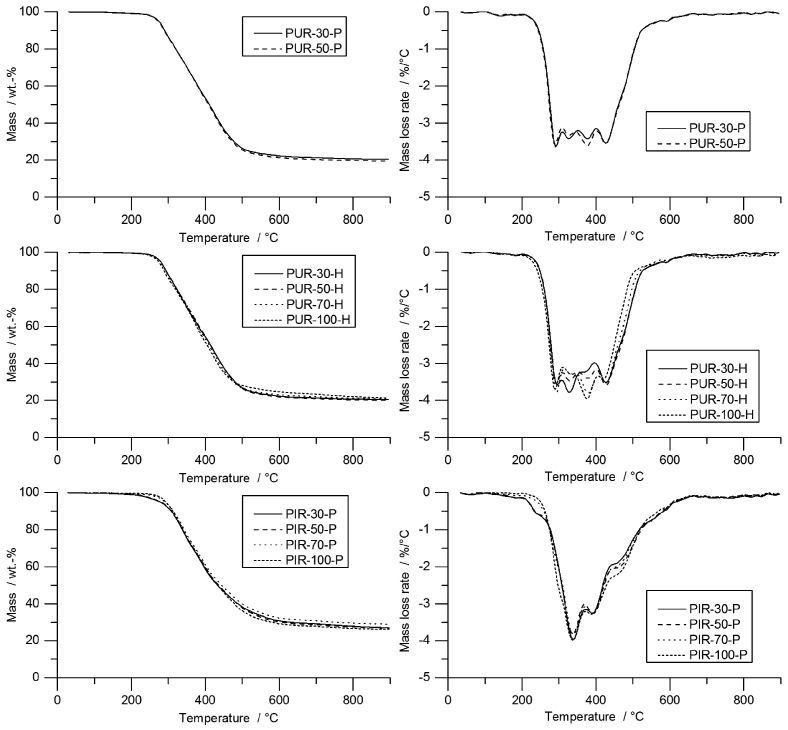
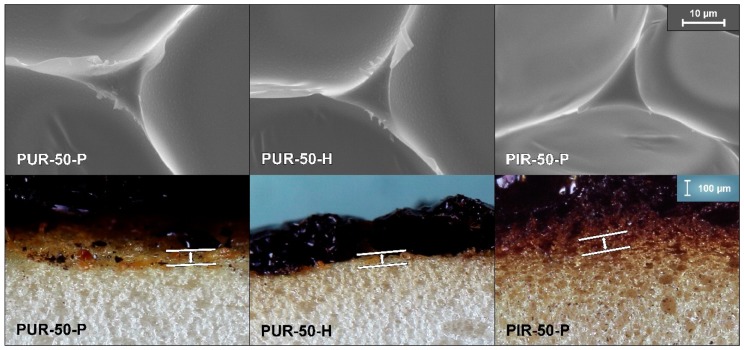
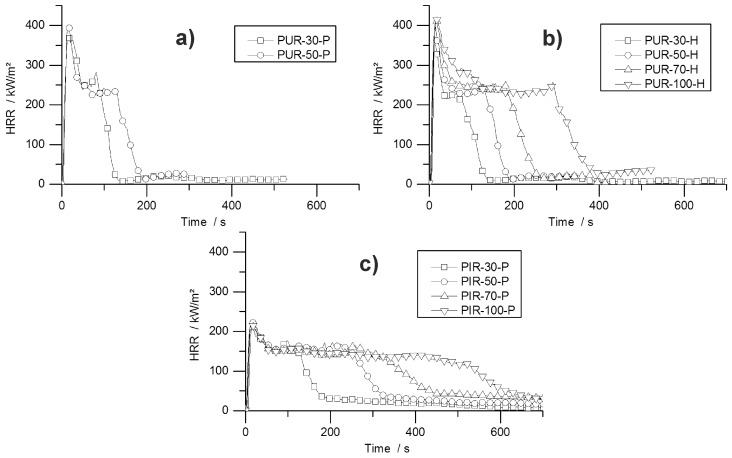
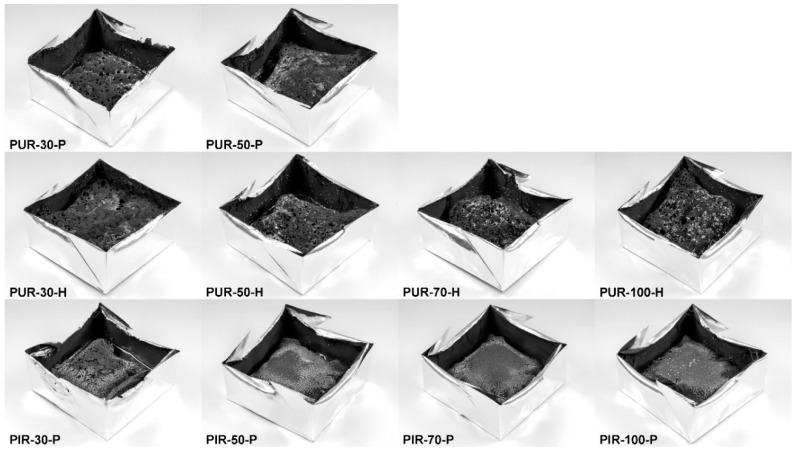
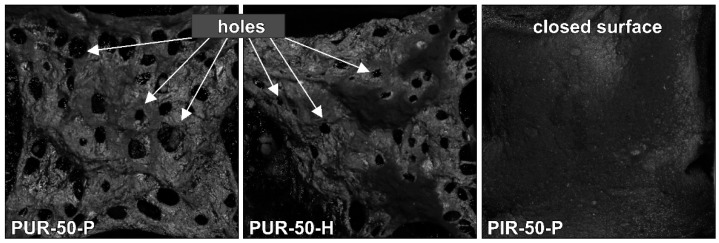
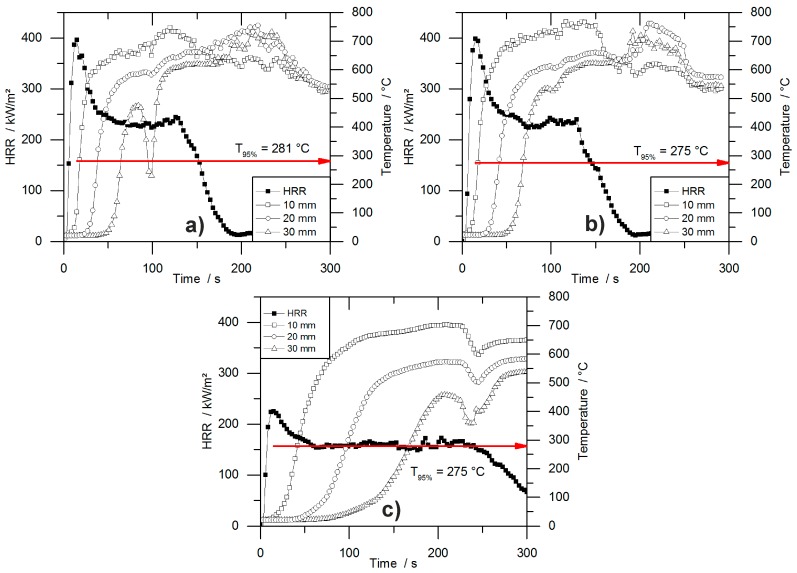
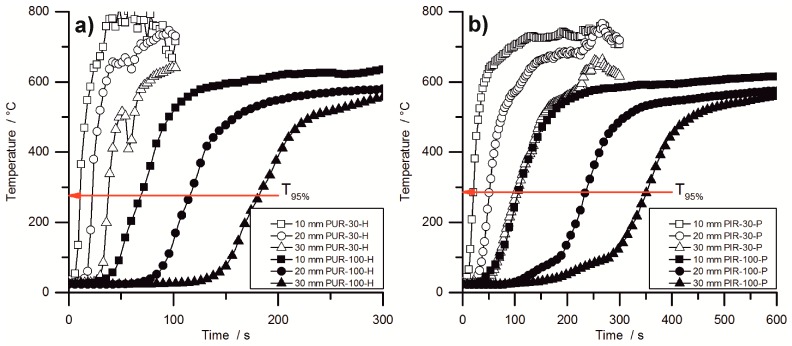
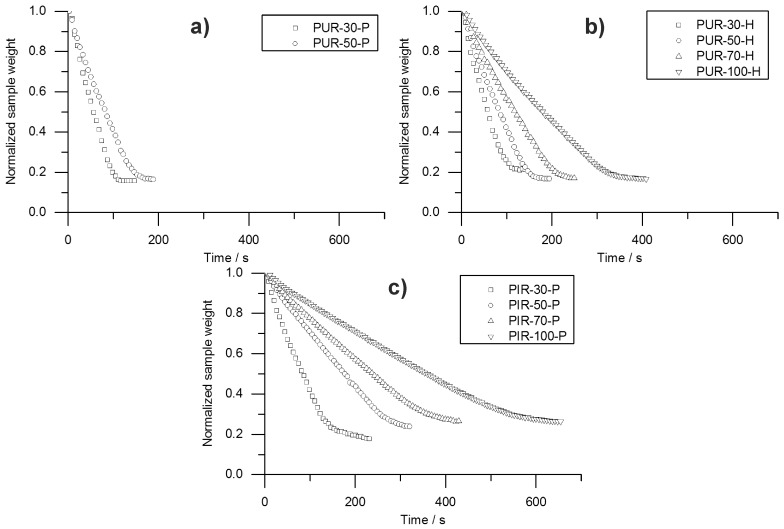
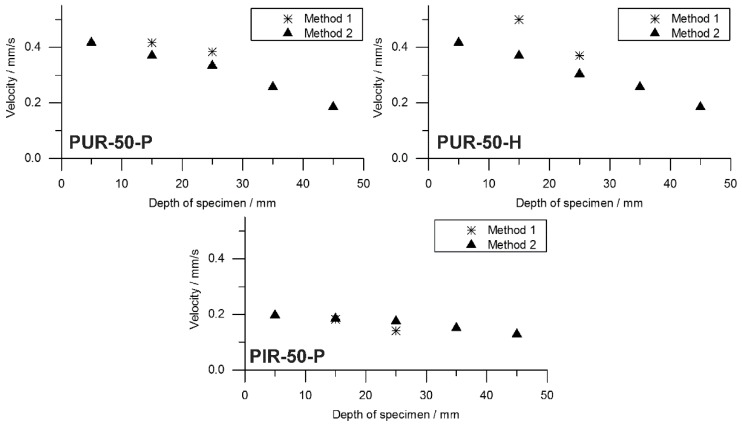
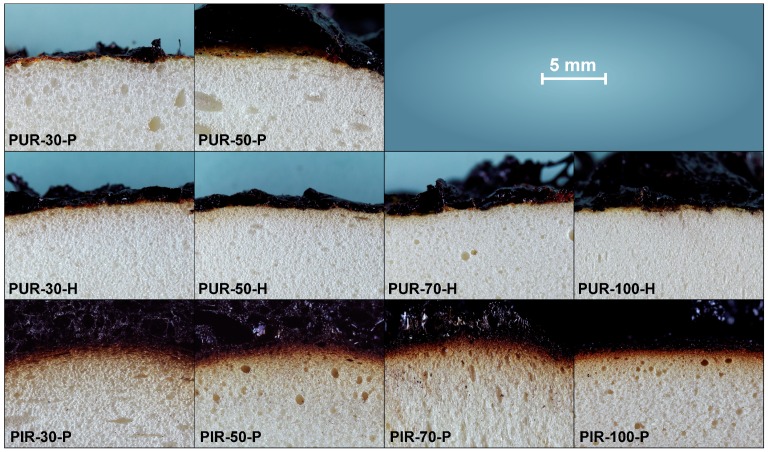
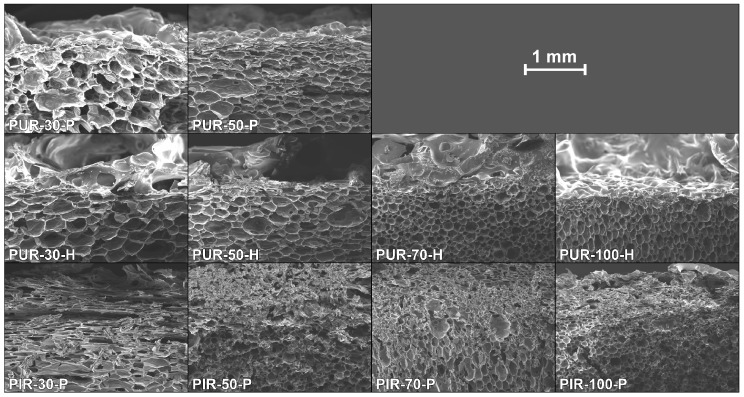
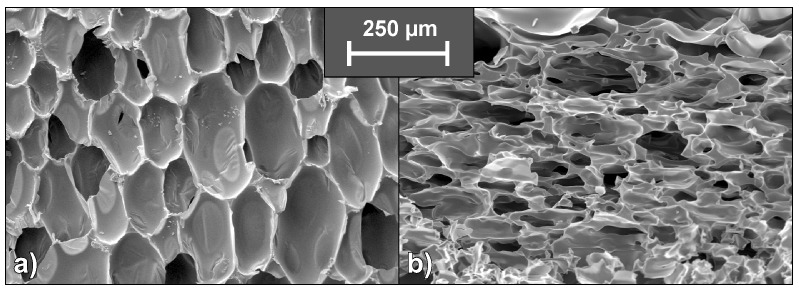
Rigid polyurethane foams (RPUFs) typically exhibit low thermal inertia, resulting in short ignition times and rapid flame spread. In this study, the fire phenomena of RPUFs were investigated using a multi-methodological approach to gain detailed insight into the fire behaviour of pentane- and water-blown polyurethane (PUR) as well as pentane-blown polyisocyanurate polyurethane (PIR) foams with densities ranging from 30 to 100 kg/m³. Thermophysical properties were studied using thermogravimetry (TG); flammability and fire behaviour were investigated by means of the limiting oxygen index (LOI) and a cone calorimeter. Temperature development in burning cone calorimeter specimens was monitored with thermocouples inside the foam samples and visual investigation of quenched specimens' cross sections gave insight into the morphological changes during burning. A comprehensive investigation is presented, illuminating the processes taking place during foam combustion. Cone calorimeter tests revealed that in-depth absorption of radiation is a significant factor in estimating the time to ignition. Cross sections examined with an electron scanning microscope (SEM) revealed a pyrolysis front with an intact foam structure underneath, and temperature measurement inside burning specimens indicated that, as foam density increased, their burning behaviour shifted towards that of solid materials. The superior fire performance of PIR foams was found to be based on the cellular structure, which is retained in the residue to some extent.
硬质聚氨酯泡沫(RPUFs)通常表现出低热惯性,导致着火时间短且火焰蔓延迅速。在本研究中,采用多方法途径研究了RPUFs的燃烧现象,以深入了解戊烷和水发泡聚氨酯(PUR)以及密度范围为30至100 kg/m³的戊烷发泡聚异氰脲酸酯聚氨酯(PIR)泡沫的燃烧行为。使用热重分析法(TG)研究热物理性质;通过极限氧指数(LOI)和锥形量热仪研究燃烧性和燃烧行为。用泡沫样品内部的热电偶监测燃烧锥形量热仪试样中的温度变化,对淬火试样横截面的目视研究揭示了燃烧过程中的形态变化。本文进行了全面的研究,阐明了泡沫燃烧过程中发生的过程。锥形量热仪测试表明,深度吸收辐射是估计着火时间的一个重要因素。用电子扫描显微镜(SEM)检查的横截面显示出一个热解前沿,其下方泡沫结构完整,燃烧试样内部的温度测量表明,随着泡沫密度的增加,其燃烧行为向固体材料的燃烧行为转变。发现PIR泡沫优异的防火性能基于其泡孔结构,该结构在残留物中在一定程度上得以保留。