Zhang Qiyan, Zhang Bo-Yuan, Guo Zhao-Xia, Yu Jian
Key Laboratory of Advanced Materials (MOE), Department of Chemical Engineering, Tsinghua University, Beijing 100084, China.
Polymers (Basel). 2017 Aug 31;9(9):404. doi: 10.3390/polym9090404.
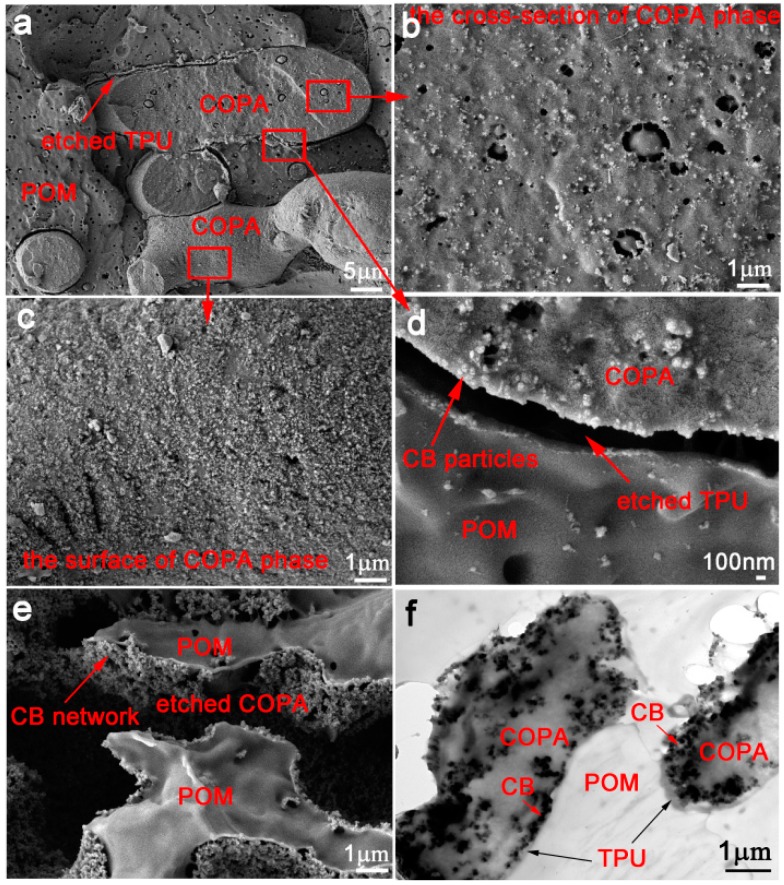
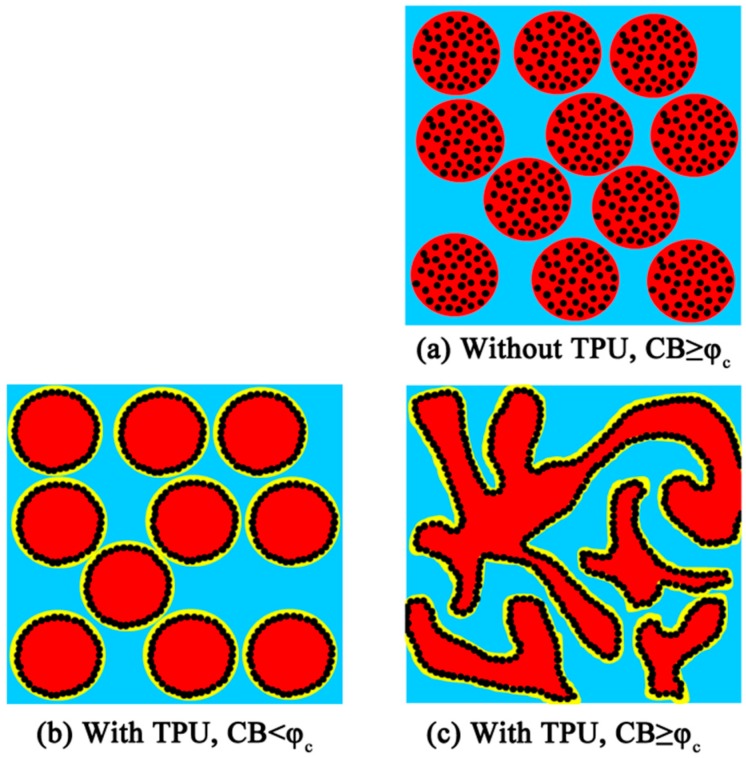
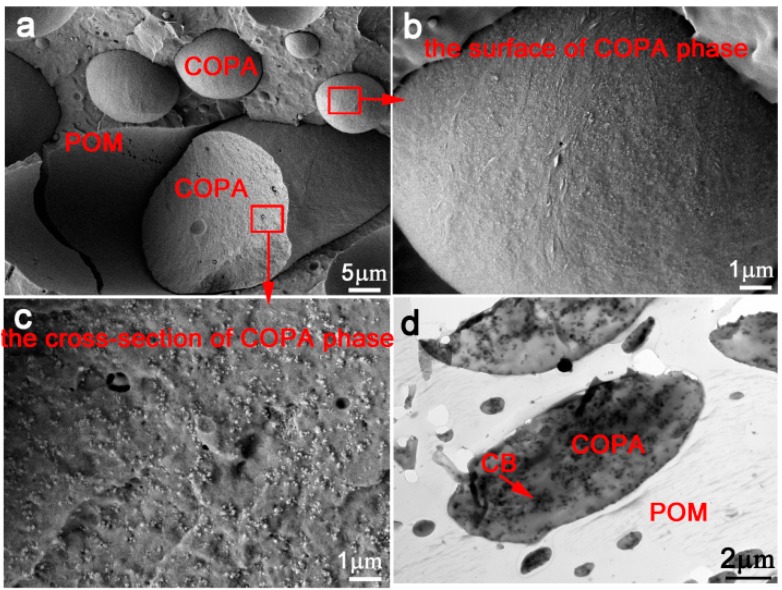
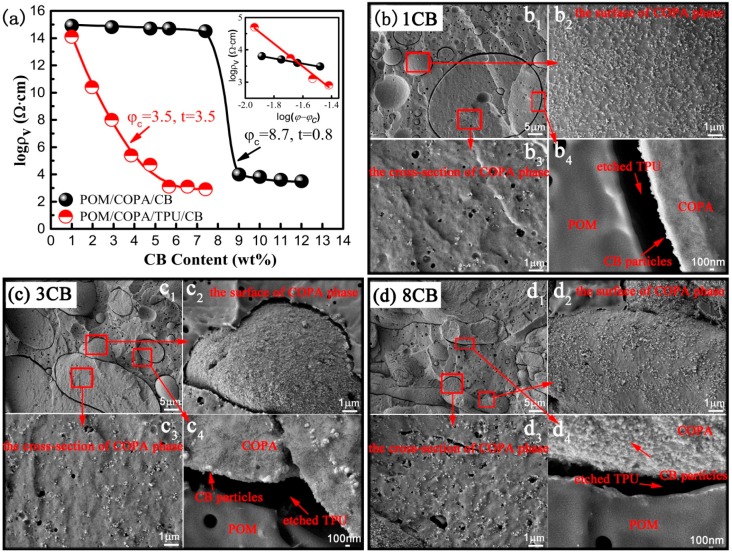
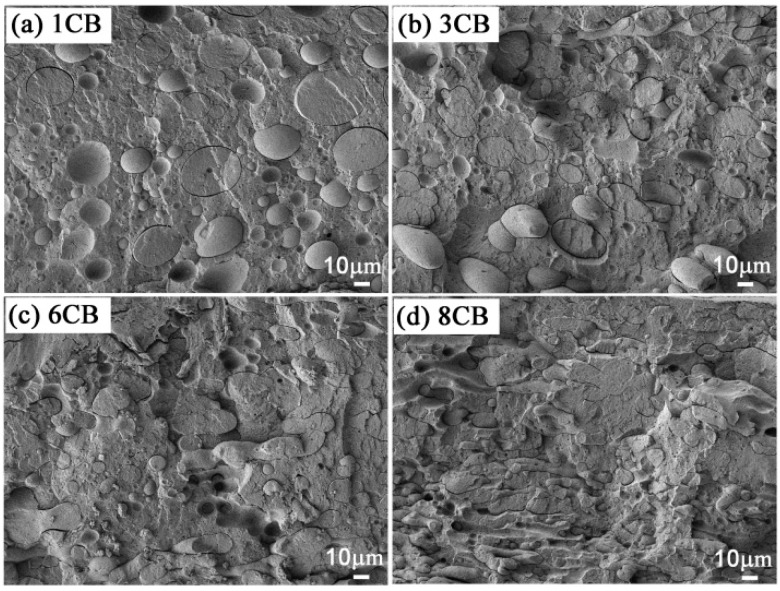
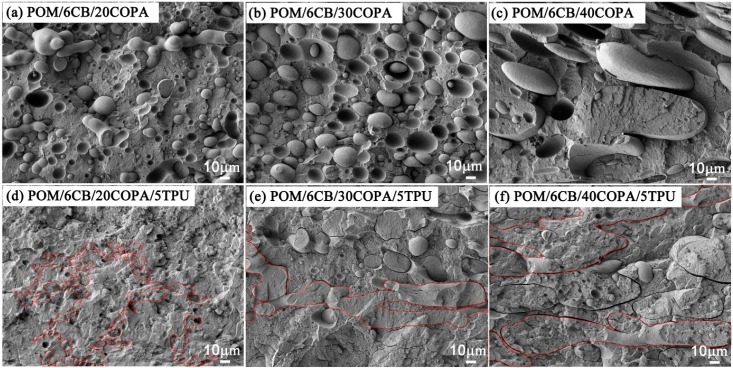
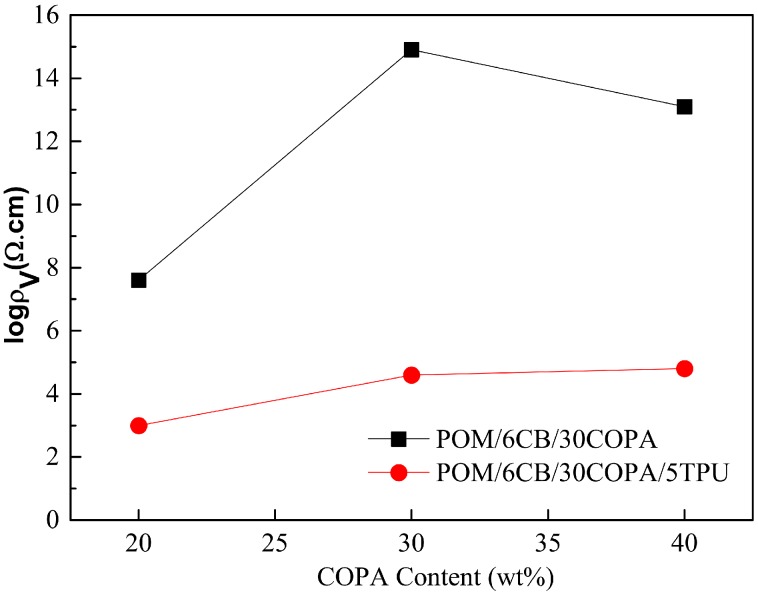
A type of hierarchical structured composite composed of a minor thermoplastic polyurethane (TPU) phase spreading at the interface of two major phases polyoxymethylene/polyamide copolymer (POM/COPA) and carbon black (CB) particles selectively localized at the TPU/COPA interface of the tri-continuous blends was fabricated by melt compounding. The hierarchical structure was designed according to predictions and verified by a combination of electron microscopy and solvent extraction technique. The hierarchical structured composites show the dramatically decreased percolation threshold, a reduction of 60% compared to those without TPU where CB is selectively distributed in the COPA phase. The effects of CB contents and TPU on the phase morphology of POM/COPA were investigated, showing the occurrence of the POM/COPA phase inversion from a sea-island to a co-continuous structure beyond the percolation threshold of CB in the presence of TPU. The mechanism for the formation of conductive network is construction of CB network at the TPU/COPA interface of tri-continuous POM/COPA/TPU blends and double percolation effect.
通过熔融共混制备了一种分层结构复合材料,该材料由在聚甲醛/聚酰胺共聚物(POM/COPA)两个主要相的界面处分散的少量热塑性聚氨酯(TPU)相和选择性地定位在三连续共混物的TPU/COPA界面处的炭黑(CB)颗粒组成。分层结构是根据预测设计的,并通过电子显微镜和溶剂萃取技术相结合进行了验证。与CB选择性分布在COPA相中且不含TPU的复合材料相比,分层结构复合材料的逾渗阈值显著降低,降低了60%。研究了CB含量和TPU对POM/COPA相形态的影响,结果表明在TPU存在的情况下,当CB超过逾渗阈值时,POM/COPA发生了从海岛结构到共连续结构的相转变。导电网络形成的机制是在三连续POM/COPA/TPU共混物的TPU/COPA界面处构建CB网络以及双逾渗效应。