Schürmann Britta, Bermingham Daniel P, Kopeikina Katherine J, Myczek Kristoffer, Yoon Sehyoun, Horan Katherine E, Kelly Crystle J, Martin-de-Saavedra Maria Dolores, Forrest Marc P, Fawcett-Patel Jessica M, Smith Katharine R, Gao Ruoqi, Bach Anthony, Burette Alain C, Rappoport Joshua Z, Weinberg Richard J, Martina Marco, Penzes Peter
Department of Physiology, Northwestern University Feinberg School of Medicine, Chicago, IL, USA.
Department of Molecular Psychiatry, University of Bonn, Bonn, Germany.
Mol Psychiatry. 2020 Sep;25(9):2000-2016. doi: 10.1038/s41380-019-0407-3. Epub 2019 Apr 9.
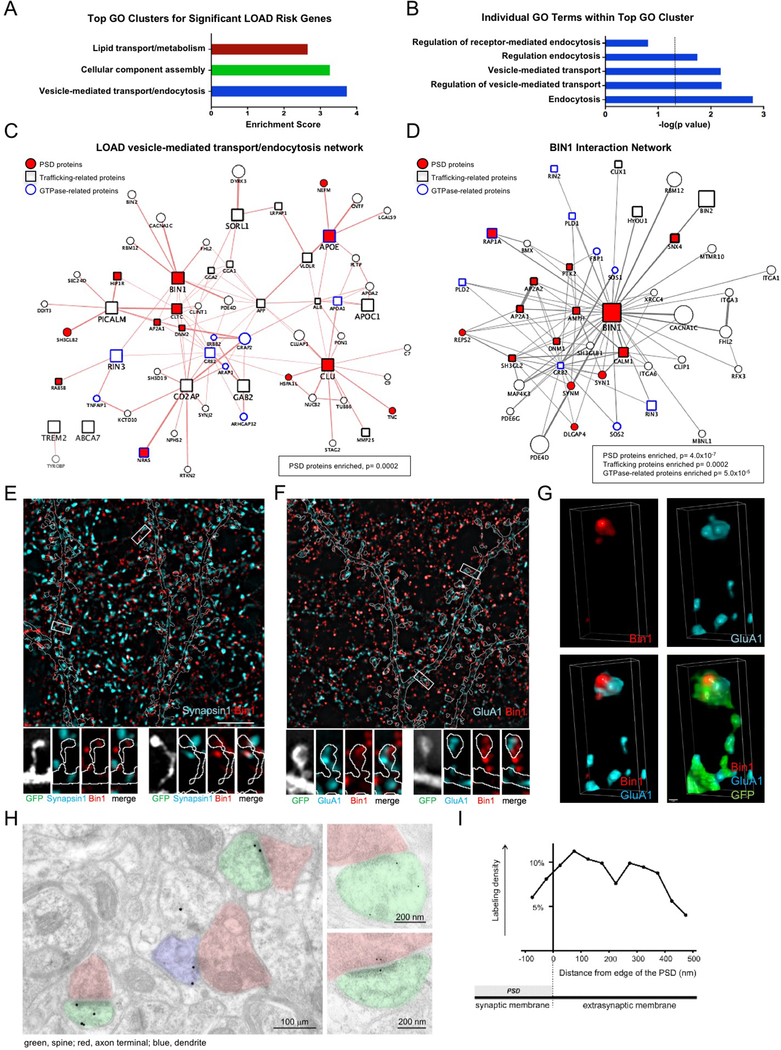
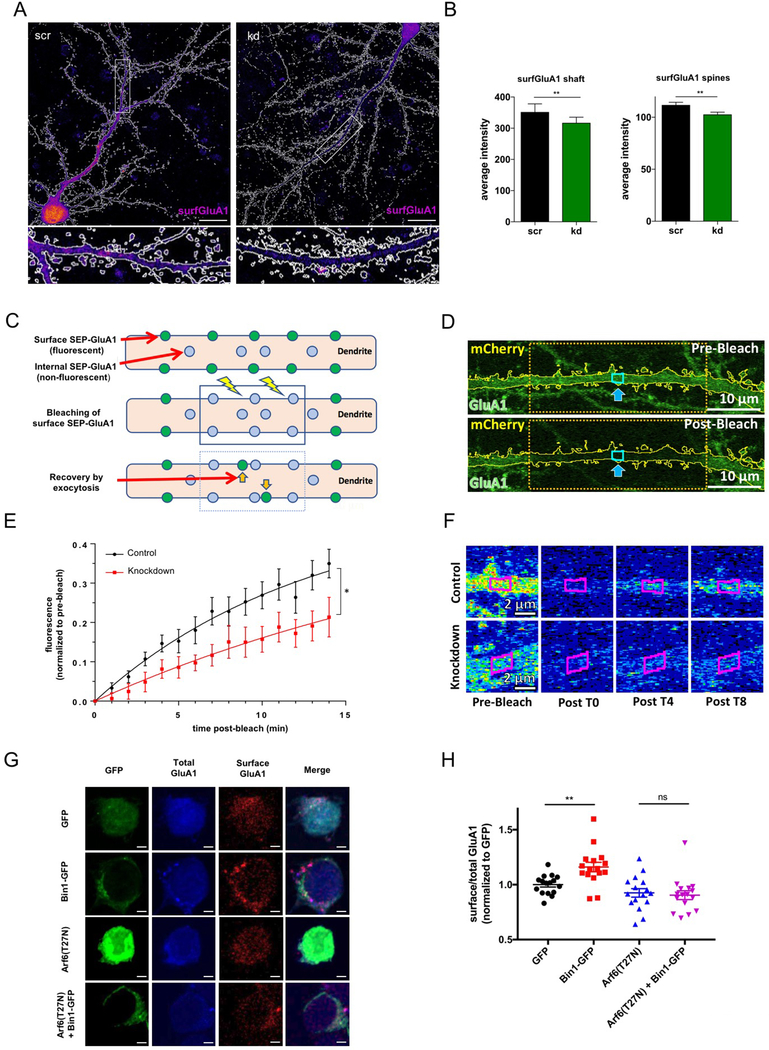
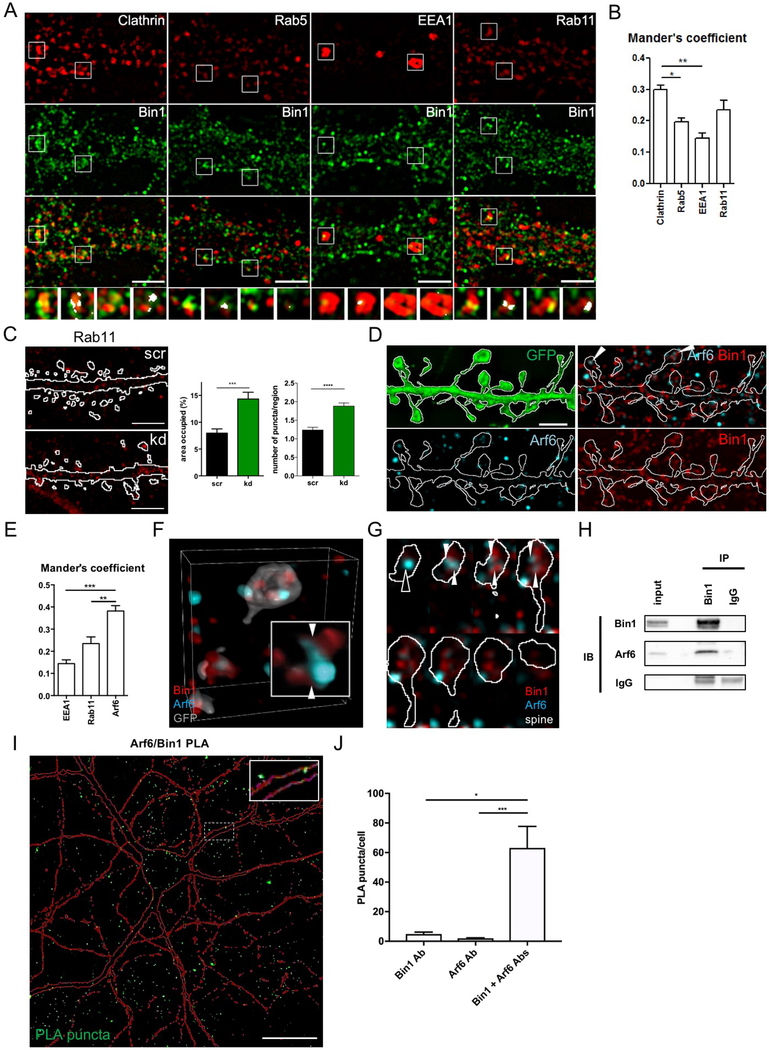
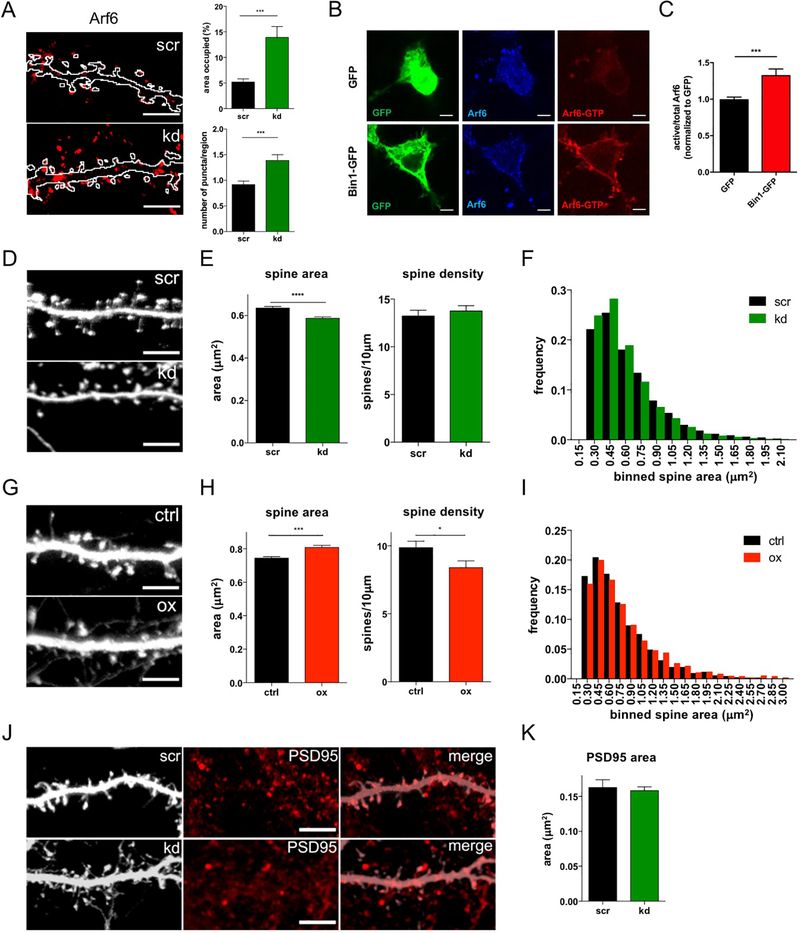
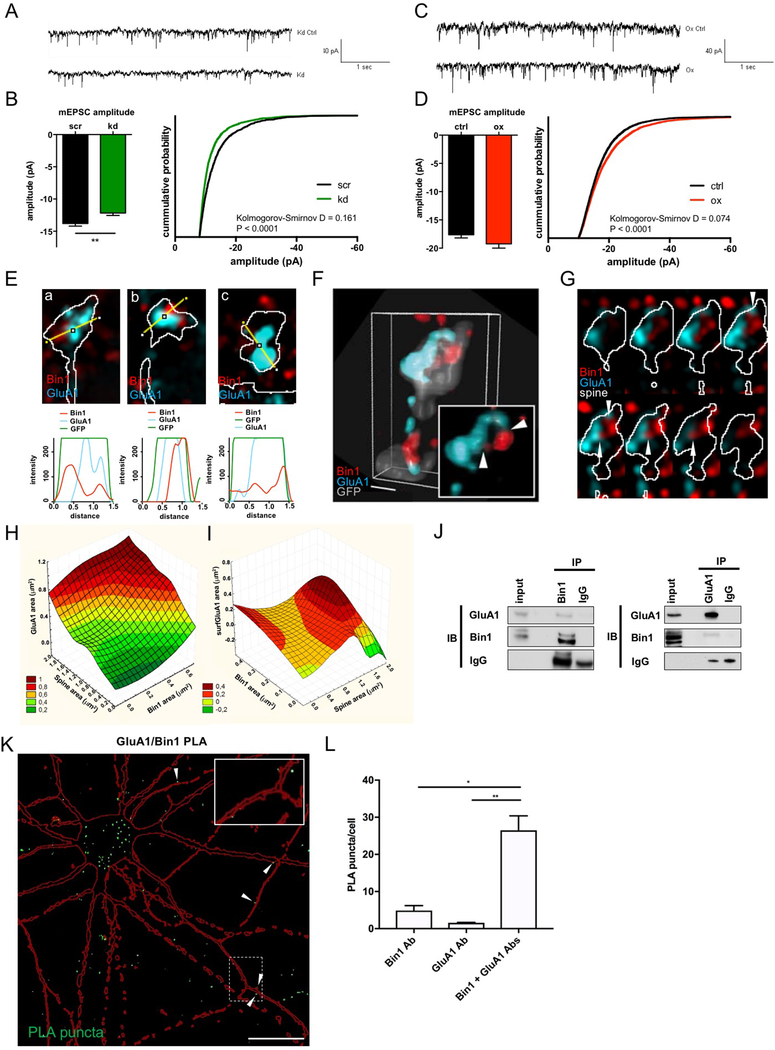
Postsynaptic trafficking plays a key role in regulating synapse structure and function. While spiny excitatory synapses can be stable throughout adult life, their morphology and function is impaired in Alzheimer's disease (AD). However, little is known about how AD risk genes impact synaptic function. Here we used structured superresolution illumination microscopy (SIM) to study the late-onset Alzheimer's disease (LOAD) risk factor BIN1, and show that this protein is abundant in postsynaptic compartments, including spines. While postsynaptic Bin1 shows colocalization with clathrin, a major endocytic protein, it also colocalizes with the small GTPases Rab11 and Arf6, components of the exocytic pathway. Bin1 participates in protein complexes with Arf6 and GluA1, and manipulations of Bin1 lead to changes in spine morphology, AMPA receptor surface expression and trafficking, and AMPA receptor-mediated synaptic transmission. Our data provide new insights into the mesoscale architecture of postsynaptic trafficking compartments and their regulation by a major LOAD risk factor.
突触后运输在调节突触结构和功能方面起着关键作用。虽然棘状兴奋性突触在成年期可能一直保持稳定,但其形态和功能在阿尔茨海默病(AD)中会受损。然而,关于AD风险基因如何影响突触功能却知之甚少。在此,我们使用结构化超分辨率荧光显微镜(SIM)来研究晚发性阿尔茨海默病(LOAD)的风险因素BIN1,并表明该蛋白在包括棘突在内的突触后区室中含量丰富。虽然突触后Bin1与主要的内吞蛋白网格蛋白共定位,但它也与外排途径的组成成分小GTP酶Rab11和Arf6共定位。Bin1与Arf6和GluA1参与蛋白质复合物的形成,对Bin1的操作会导致棘突形态、AMPA受体表面表达和运输以及AMPA受体介导的突触传递发生变化。我们的数据为突触后运输区室的中尺度结构及其受主要LOAD风险因素的调控提供了新的见解。