Huang Jing, Liu Fangkun, Wang Bolun, Tang Hui, Teng Ziwei, Li Lehua, Qiu Yan, Wu Haishan, Chen Jindong
Department of Psychiatry, The Second Xiangya Hospital, Central South University, Changsha, China.
Mental Health Institute of the Second Xiangya Hospital, Central South University, Chinese National Clinical Research Center for Mental Disorders (Xiangya), Chinese National Technology Institute on Mental Disorders, Hunan Key Laboratory of Psychiatry and Mental Health, Changsha, China.
Front Genet. 2019 Mar 22;10:232. doi: 10.3389/fgene.2019.00232. eCollection 2019.
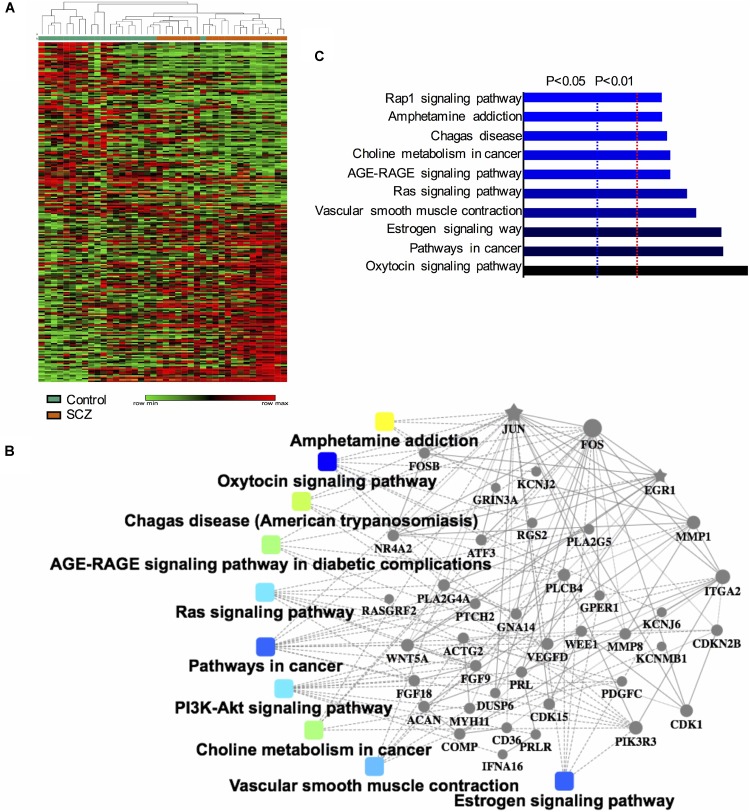
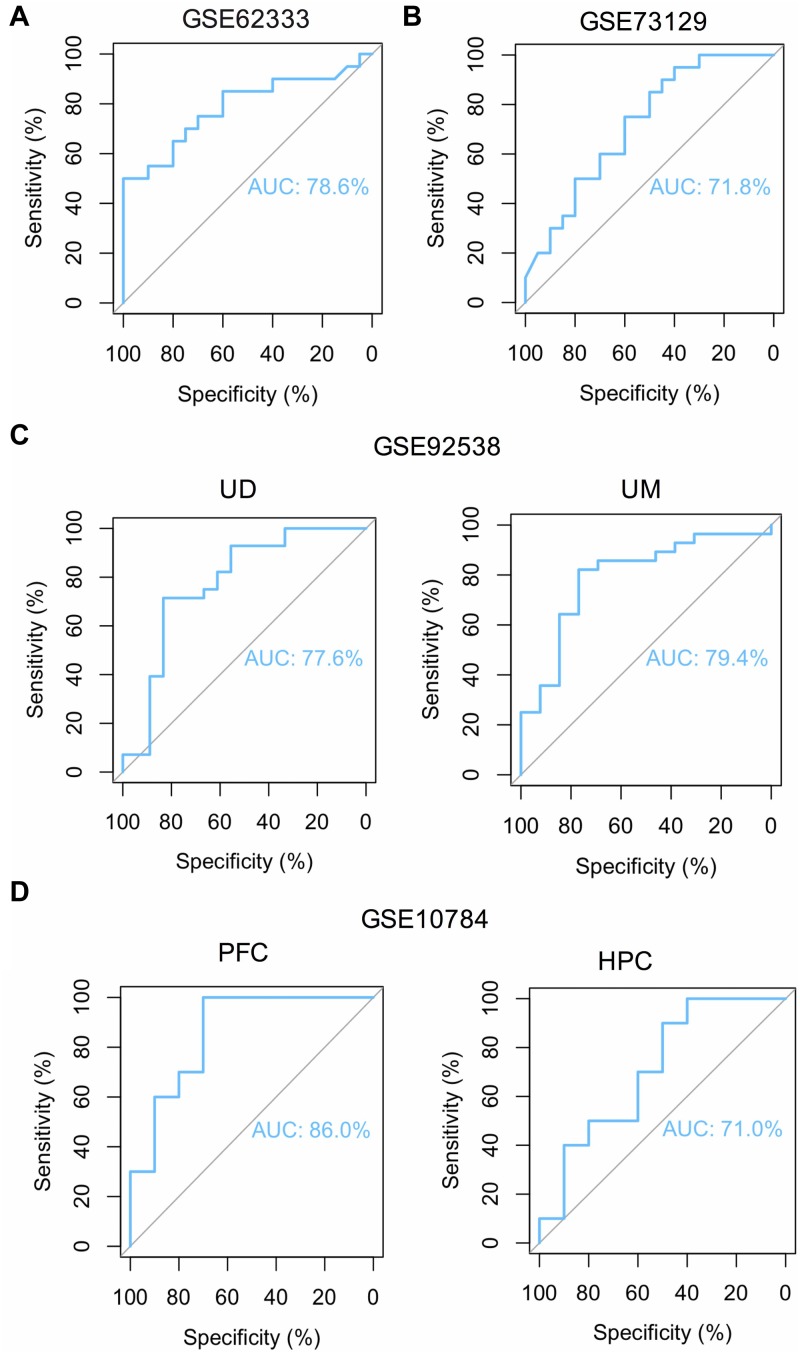
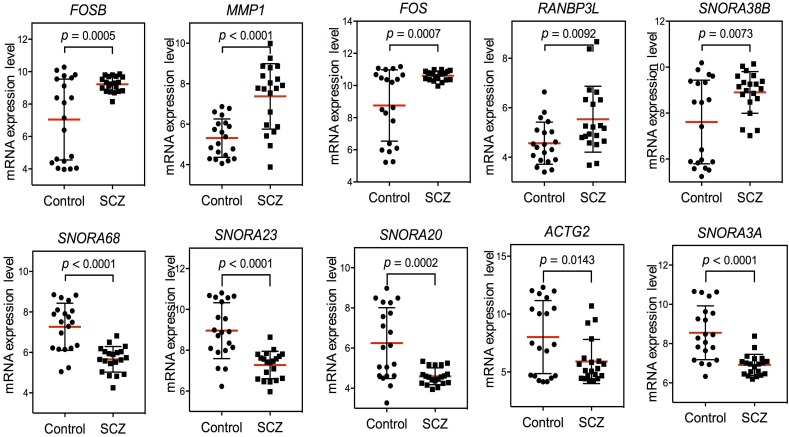
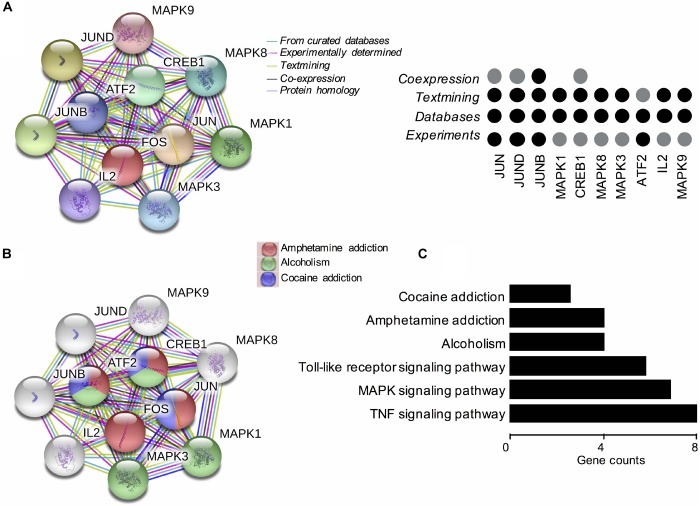
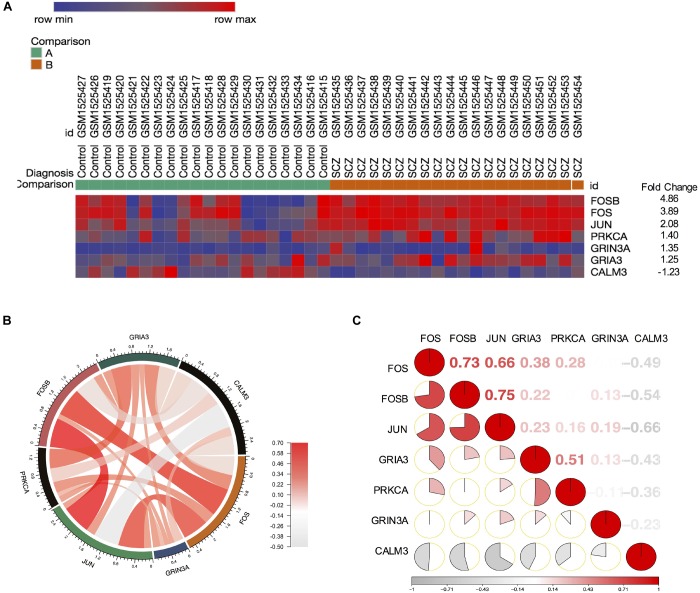
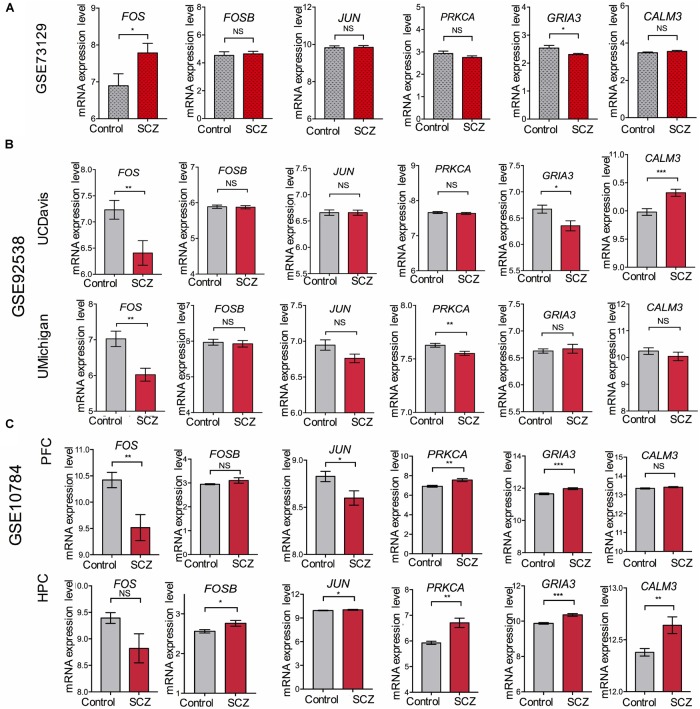
Schizophrenia is a chronic, debilitating neuropsychiatric disorder. Multiple transcriptomic gene expression profiling analysis has been used to identify schizophrenia-associated genes, unravel disease-associated biomarkers, and predict clinical outcomes. We aimed to identify gene expression regulation, underlying pathways, and their roles in schizophrenia pathogenesis. We searched the Gene Expression Omnibus (GEO) database for microarray studies of fibroblasts, lymphoblasts, and post-mortem brains of schizophrenia patients. Our analysis demonstrated high FOS expression in non-neural peripheral samples and low FOS expression in brain tissues of schizophrenia patients compared with healthy controls. FOS exhibited predictive value for schizophrenia patients in these datasets. Kyoto Encyclopedia of Genes and Genomes (KEGG) enrichment analysis revealed that "amphetamine addiction" was among the top 10 significantly enriched KEGG pathways. FOS and FOSB, which are implicated in the amphetamine addiction pathway, were up-regulated in schizophrenia fibroblast samples. Protein-protein interaction (PPI) network analysis revealed that proteins closely interacting with FOS-encoded protein were also involved in the amphetamine addiction pathway. Pearson correlation test indicated that FOS showed positive correlation with genes in the amphetamine pathway. The results revealed that FOS was acceptable as a biomarker for schizophrenia and may be involved in schizophrenia pathogenesis.
精神分裂症是一种慢性、使人衰弱的神经精神疾病。多种转录组基因表达谱分析已被用于识别精神分裂症相关基因、揭示疾病相关生物标志物以及预测临床结果。我们旨在确定基因表达调控、潜在途径及其在精神分裂症发病机制中的作用。我们在基因表达综合数据库(GEO)中搜索了有关精神分裂症患者成纤维细胞、淋巴细胞和成人大脑死后样本的微阵列研究。我们的分析表明,与健康对照相比,精神分裂症患者的非神经外周样本中FOS表达较高,而脑组织中FOS表达较低。在这些数据集中,FOS对精神分裂症患者具有预测价值。京都基因与基因组百科全书(KEGG)富集分析显示,“苯丙胺成瘾”在KEGG显著富集的前10条通路中。在精神分裂症成纤维细胞样本中,与苯丙胺成瘾途径相关的FOS和FOSB上调。蛋白质-蛋白质相互作用(PPI)网络分析显示,与FOS编码蛋白密切相互作用的蛋白质也参与了苯丙胺成瘾途径。Pearson相关性检验表明,FOS与苯丙胺途径中的基因呈正相关。结果表明,FOS可作为精神分裂症的生物标志物,可能参与精神分裂症的发病机制。