School of Human Sciences, the University of Western Australia, Perth, Western Australia, Australia.
Department of Biochemistry and Genetics, La Trobe Institute for Molecular Science, La Trobe University, Melbourne, Victoria, Australia.
PLoS One. 2019 Apr 10;14(4):e0214908. doi: 10.1371/journal.pone.0214908. eCollection 2019.
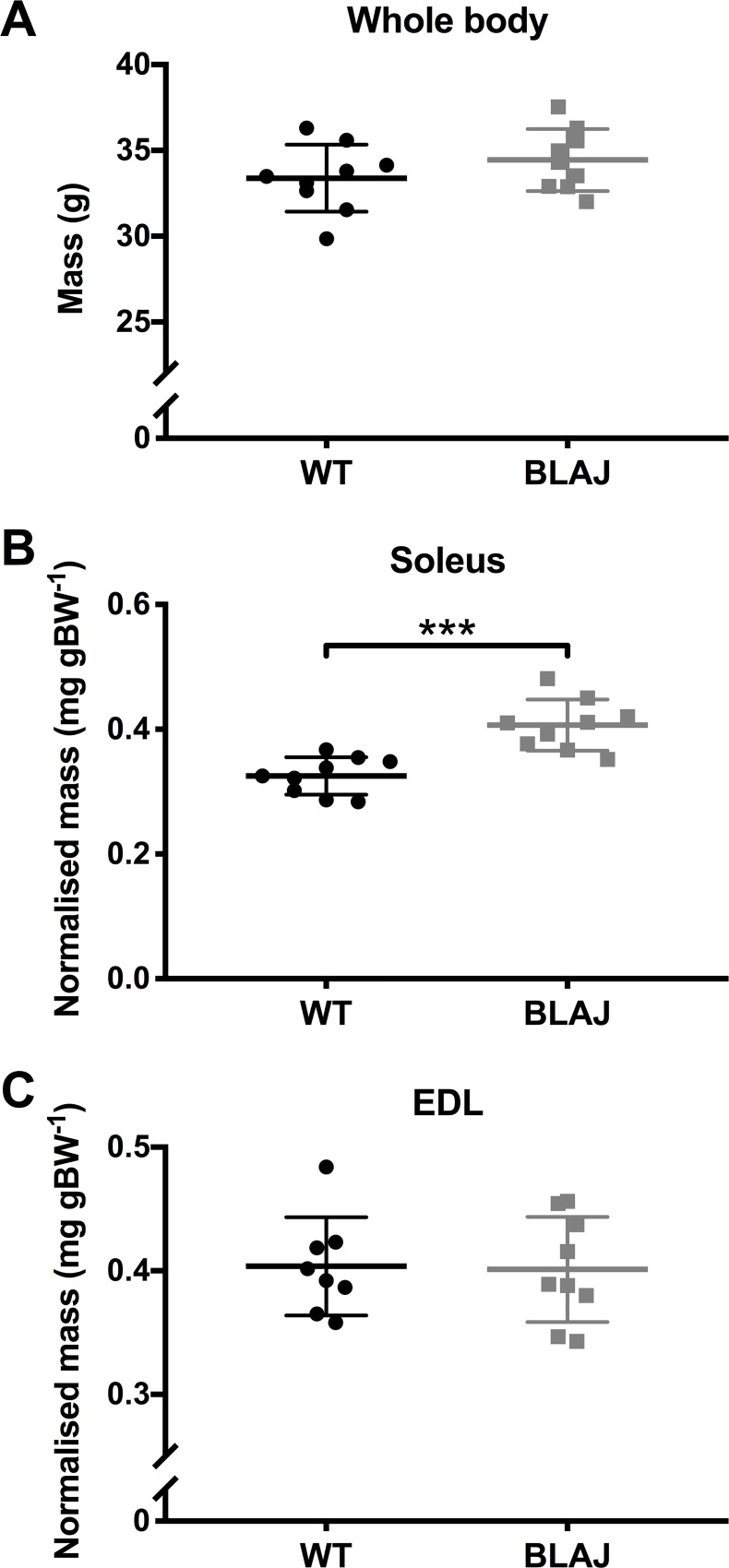
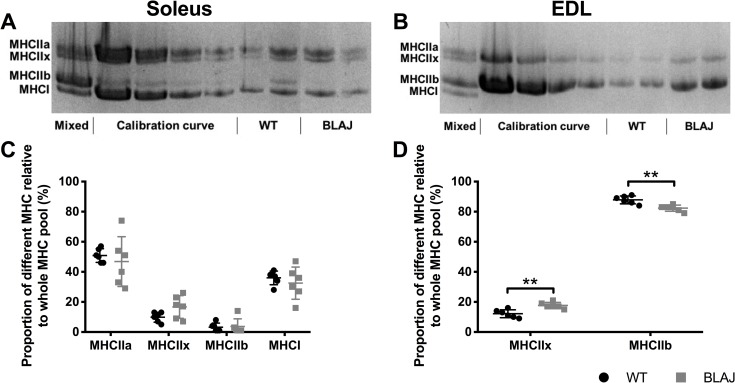
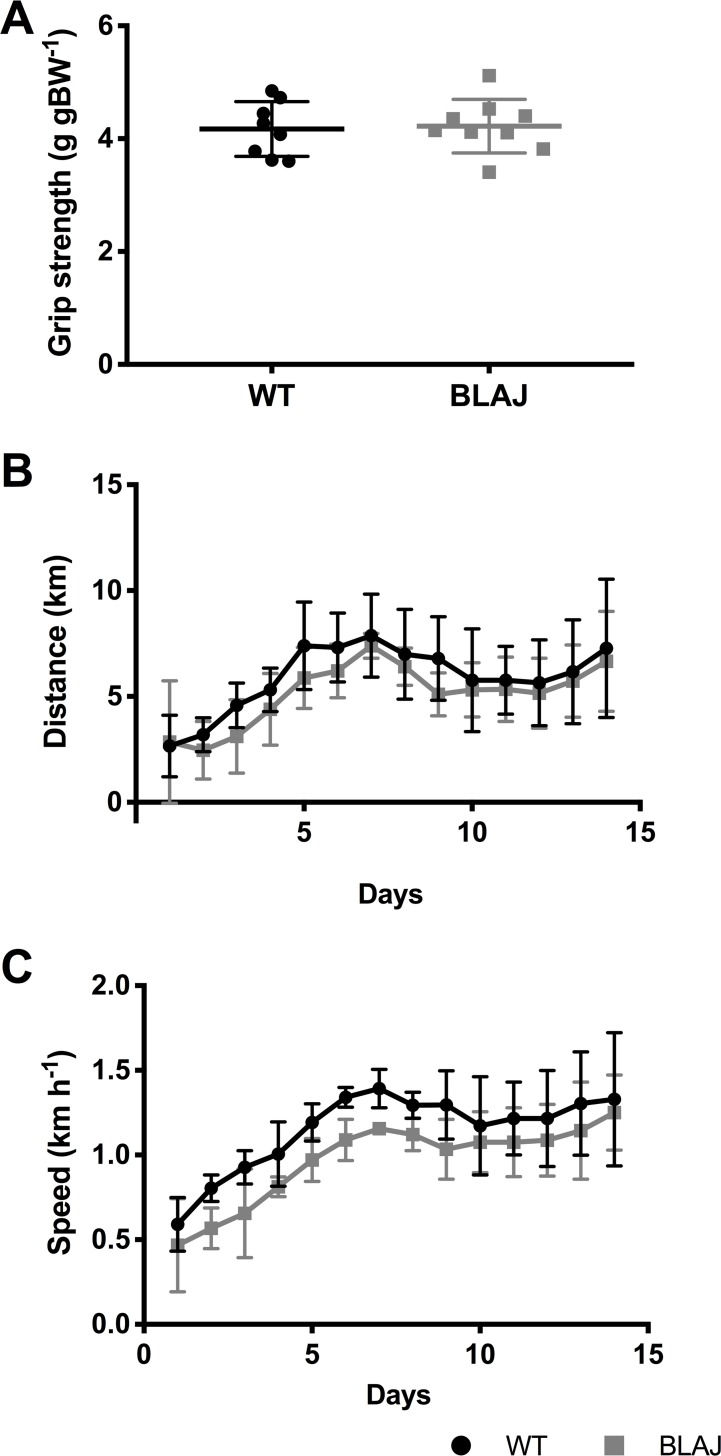
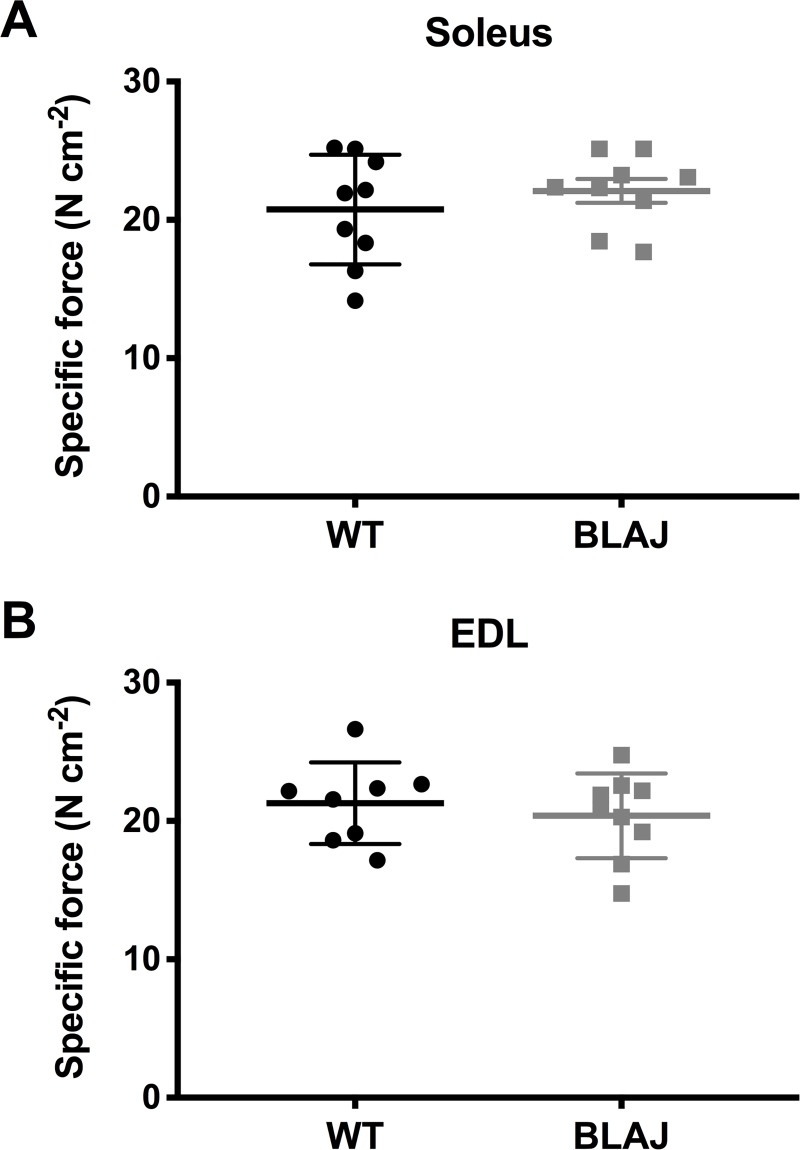
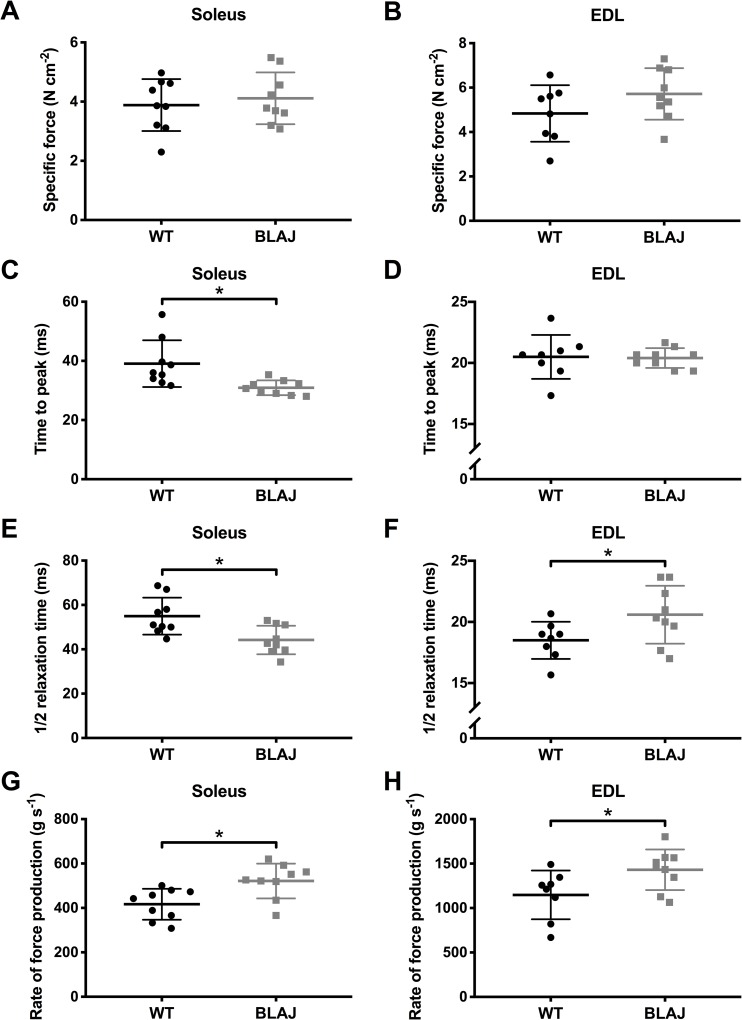
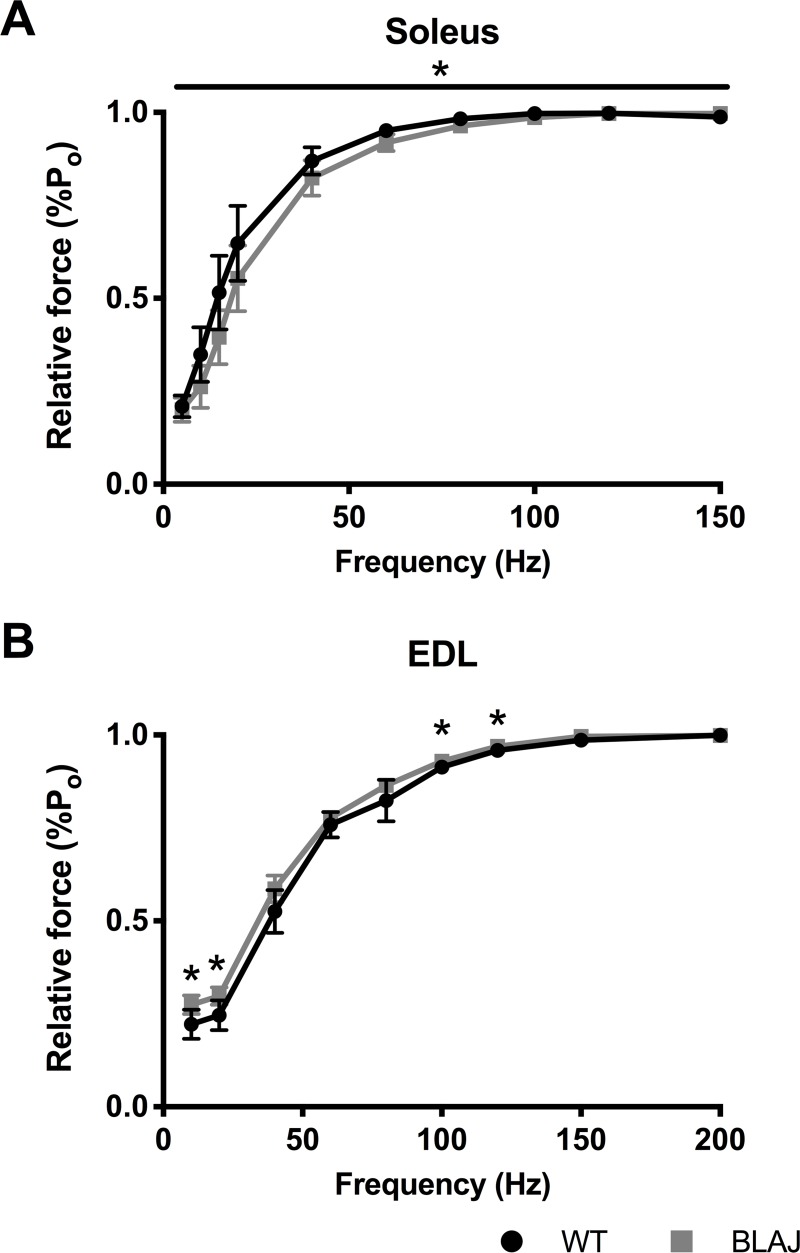
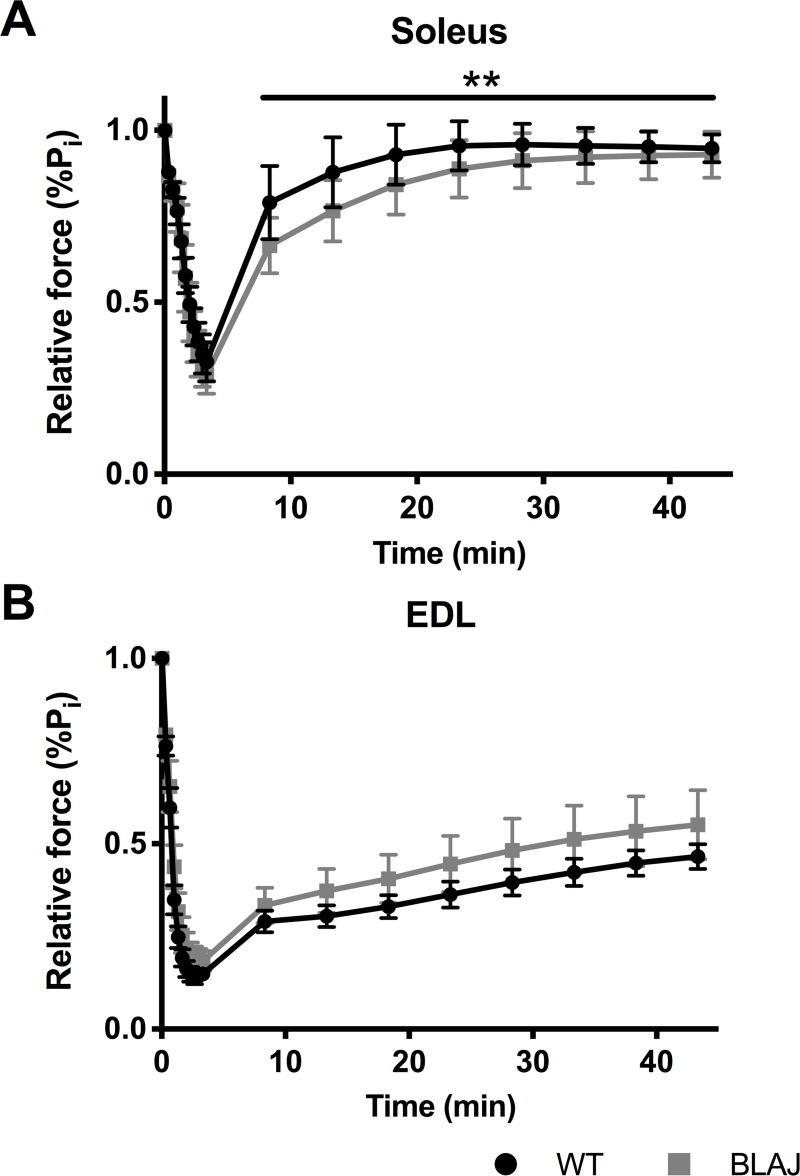
Dysferlinopathies are a form of muscular dystrophy caused by gene mutations resulting in deficiency of the protein dysferlin. Symptoms manifest later in life in a muscle specific manner, although the pathomechanism is not well understood. This study compared the impact of dysferlin-deficiency on in vivo and ex vivo muscle function, and myofibre type composition in slow (soleus) and fast type (extensor digitorum longus; EDL) muscles using male dysferlin-deficient (dysf-/-) BLAJ mice aged 10 months, compared with wild type (WT) C57Bl/6J mice. There was a striking increase in muscle mass of BLAJ soleus (+25%) (p<0.001), with no strain differences in EDL mass, compared with WT. In vivo measures of forelimb grip strength and wheel running capacity showed no strain differences. Ex vivo measures showed the BLAJ soleus had faster twitch contraction (-21%) and relaxation (-20%) times, and delayed post fatigue recovery (ps<0.05); whereas the BLAJ EDL had a slower relaxation time (+11%) and higher maximum rate of force production (+25%) (ps<0.05). Similar proportions of MHC isoforms were evident in the soleus muscles of both strains (ps>0.05); however, for the BLAJ EDL, there was an increased proportion of type IIx MHC isoform (+5.5%) and decreased type IIb isoform (-5.5%) (ps<0.01). This identification of novel differences in the impact of dysferlin-deficiency on slow and fast twitch muscles emphasises the importance of evaluating myofibre type specific effects to provide crucial insight into the mechanisms responsible for loss of function in dysferlinopathies; this is critical for the development of targeted future clinical therapies.
肌营养不良症是一种由基因突变引起的肌肉疾病,导致肌营养不良蛋白的缺乏。尽管其发病机制尚不清楚,但症状在生命后期以肌肉特异性方式出现。本研究比较了肌营养不良蛋白缺乏对体内和体外肌肉功能的影响,以及慢肌(比目鱼肌)和快肌(伸趾长肌;EDL)肌纤维类型组成的差异,使用 10 月龄的雄性肌营养不良蛋白缺乏(dysf-/-)BLAJ 小鼠与野生型(WT)C57Bl/6J 小鼠进行比较。BLAJ 比目鱼肌的肌肉质量显著增加(+25%)(p<0.001),而与 WT 相比,EDL 肌肉的张力没有差异。体内前肢握力和轮跑能力测量没有显示出种间差异。体外测量显示,BLAJ 比目鱼肌的快速收缩(-21%)和松弛(-20%)时间更快,疲劳后恢复延迟(p<0.05);而 BLAJ EDL 的松弛时间较慢(+11%),最大力产生速度较高(+25%)(p<0.05)。两种品系的比目鱼肌中均可见相似比例的 MHC 同工型(p>0.05);然而,对于 BLAJ EDL,IIx 型 MHC 同工型的比例增加(+5.5%),IIb 型同工型的比例减少(-5.5%)(p<0.01)。这种对肌营养不良蛋白缺乏对慢肌和快肌影响的新发现差异的鉴定,强调了评估肌纤维类型特异性效应的重要性,为肌营养不良蛋白病丧失功能的机制提供了重要的见解;这对于未来靶向临床治疗的发展至关重要。