Tu Xiaoyan, Meng Chao, Liu Zhe, Sun Lu, Zhang Xianshuo, Zhang Mingkui, Sun Mingrui, Ma Liwei, Liu Mingzhu, Wei Hua
State Key Laboratory of Applied Organic Chemistry, Key Laboratory of Nonferrous Metal Chemistry and Resources Utilization of Gansu Province, and College of Chemistry and Chemical Engineering, Lanzhou University, Lanzhou 730000, China.
Polymers (Basel). 2017 Jul 23;9(7):301. doi: 10.3390/polym9070301.
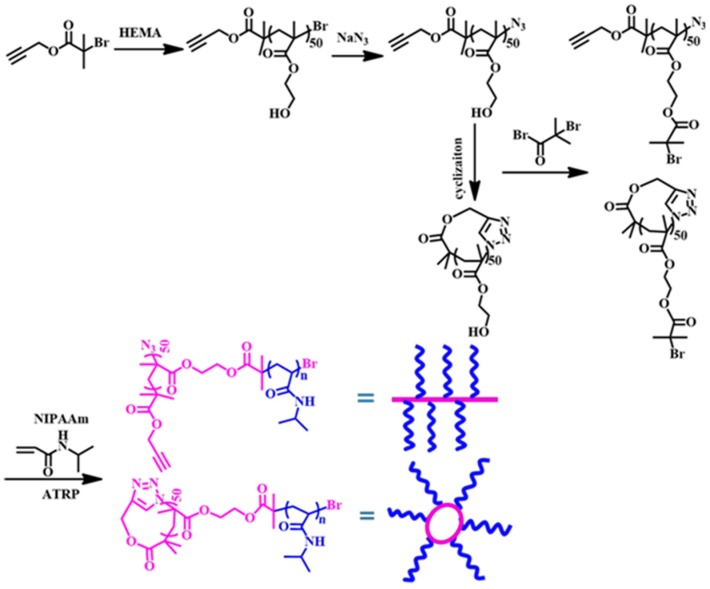
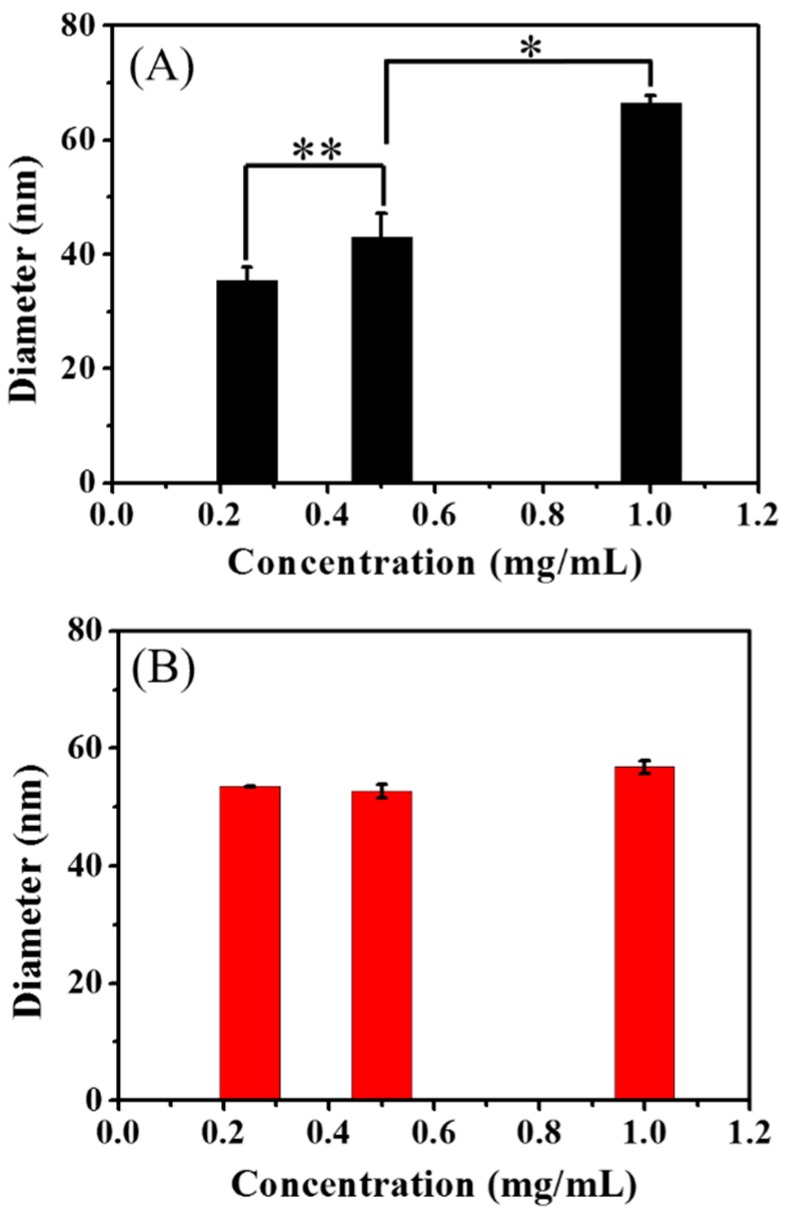
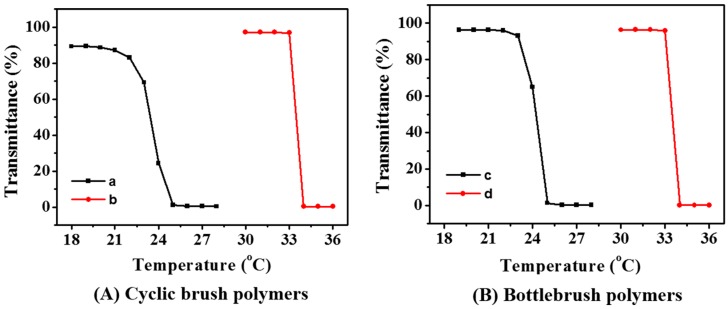
Polymers with advanced topological architectures are promising materials for wide applications due to their structure-generated unique properties different from that of the linear analogues. The elegant integration of stimuli-responsive polymers with such advanced architectures can create novel materials with virtues from both moieties, are thus a hot subject of research for both fundamental and practical investigations. To fabricate cyclic brush polymer-based intelligent materials for biomedical applications, herein, we designed and synthesized thermo-sensitive cyclic brush polymers with poly(N-isopropylacrylamide) (PNIPAAm) brushes by controlled living radical polymerization using cyclic multimacroinitiator. The thermo-induced phase transition behaviors of the resultant cyclic brush polymers with different compositions were investigated in detail by temperature-dependent optical transmittance measurements, and compared with the properties of bottlebrush and linear counterparts. Interestingly, the cloud point transition temperature (Tcp) of cyclic brush PNIPAAm could be regulated by the chain length of PNIPAAm brush. Although the bottlebrush polymers with the same composition exhibited similarly structurally dependent Tcps behaviors to the cyclic brush polymers, the cyclic brush PNIPAAm did show higher critical aggregation concentration (CAC) and enhanced stability against dilution than the bottlebrush counterpart. The readily tailorable Tcps together with the ability to form highly stable nanoparticles makes thermo-sensitive cyclic brush PNIPAAm a promising candidate for controlled drug delivery.
具有先进拓扑结构的聚合物因其结构产生的独特性质(不同于线性类似物)而成为具有广泛应用前景的材料。将刺激响应性聚合物与这种先进结构巧妙整合,可以创造出兼具两种成分优点的新型材料,因此是基础研究和实际应用研究的热点课题。为了制备用于生物医学应用的基于环状刷状聚合物的智能材料,在此,我们通过使用环状多宏观引发剂的可控活性自由基聚合,设计并合成了带有聚(N-异丙基丙烯酰胺)(PNIPAAm)刷的热敏环状刷状聚合物。通过温度依赖性透光率测量详细研究了所得不同组成的环状刷状聚合物的热致相变行为,并与瓶刷状和线性对应物的性质进行了比较。有趣的是,环状刷状PNIPAAm的浊点转变温度(Tcp)可以通过PNIPAAm刷的链长来调节。尽管具有相同组成的瓶刷状聚合物表现出与环状刷状聚合物类似的结构依赖性Tcp行为,但环状刷状PNIPAAm确实比瓶刷状对应物表现出更高的临界聚集浓度(CAC)和更强的抗稀释稳定性。易于调节的Tcp以及形成高度稳定纳米颗粒的能力使得热敏环状刷状PNIPAAm成为可控药物递送的有前途的候选者。