Aziz Shujahadeen B, Abdullah Ranjdar M, Rasheed Mariwan A, Ahmed Hameed M
Advanced Polymeric Materials Research Lab., Department of Physics, College of Science, University of Sulaimani, Qlyasan Street, Sulaimani 46001, Iraq.
Development Center for Research and Training (DCRT), University of Human Development, Qrga Street, Sulaimani 46001, Iraq.
Polymers (Basel). 2017 Aug 4;9(8):338. doi: 10.3390/polym9080338.
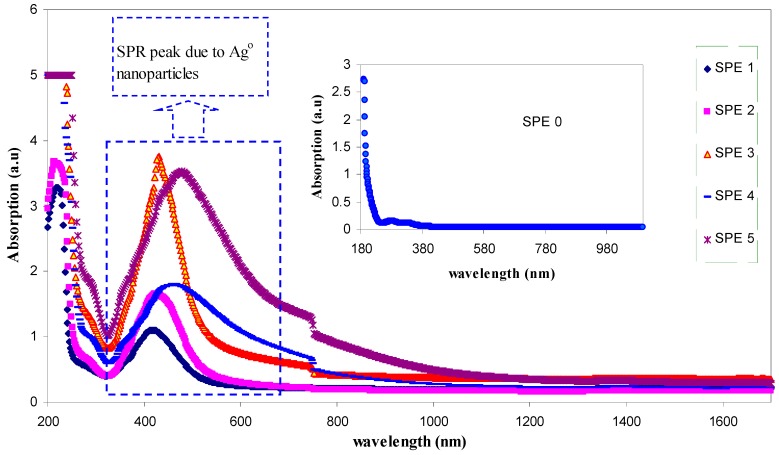
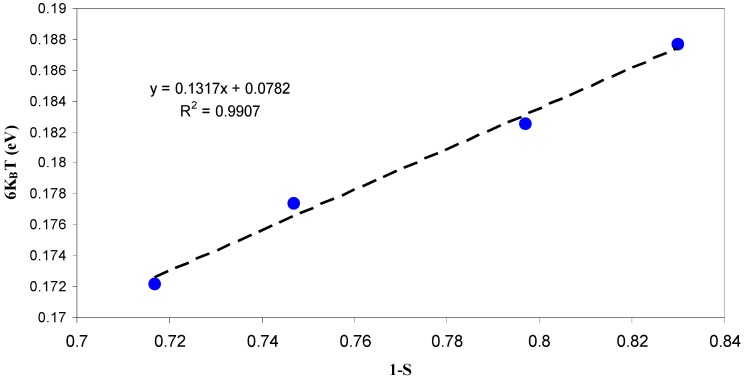
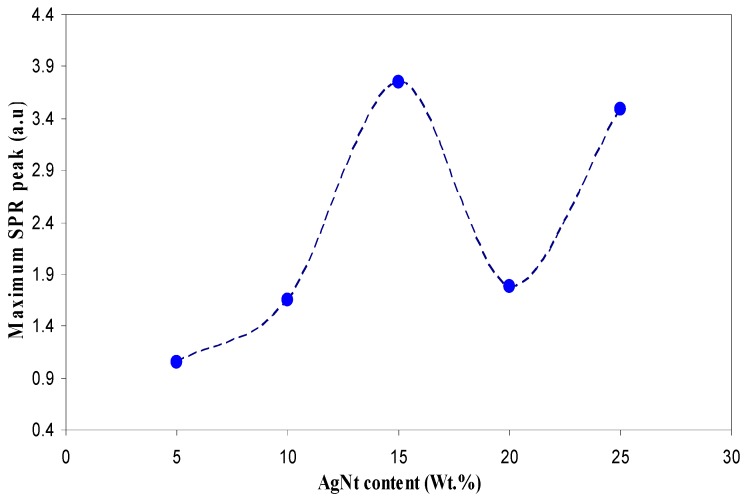
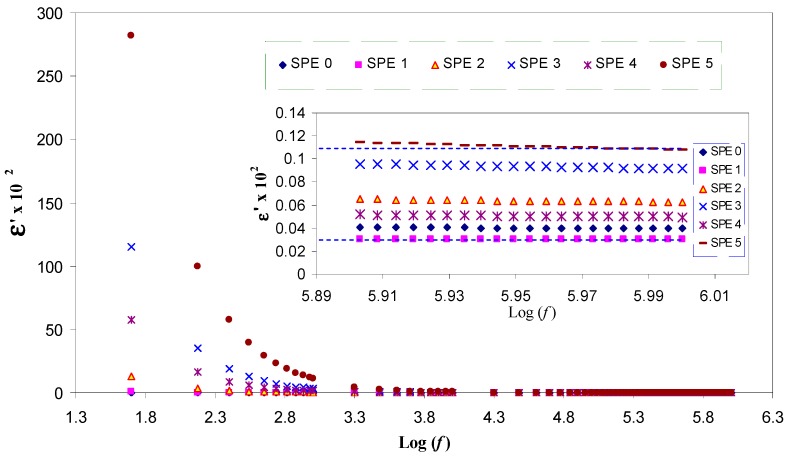
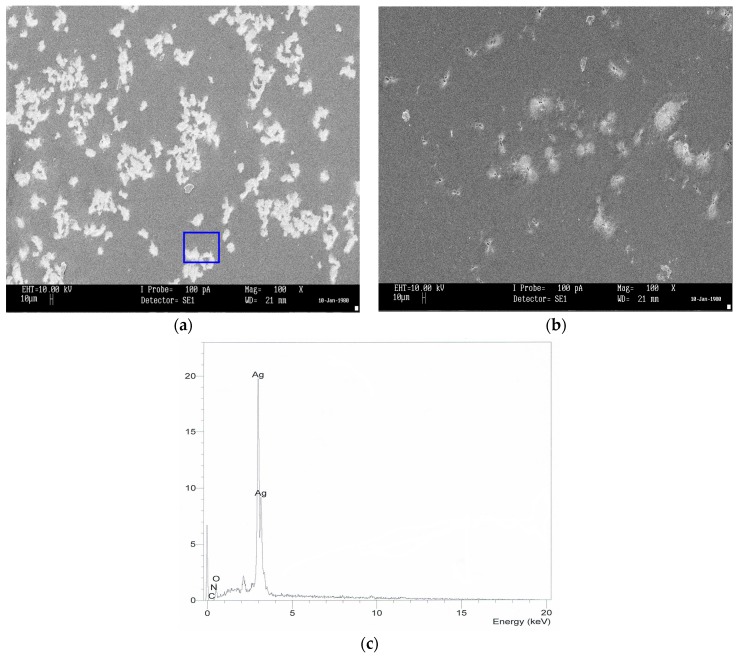
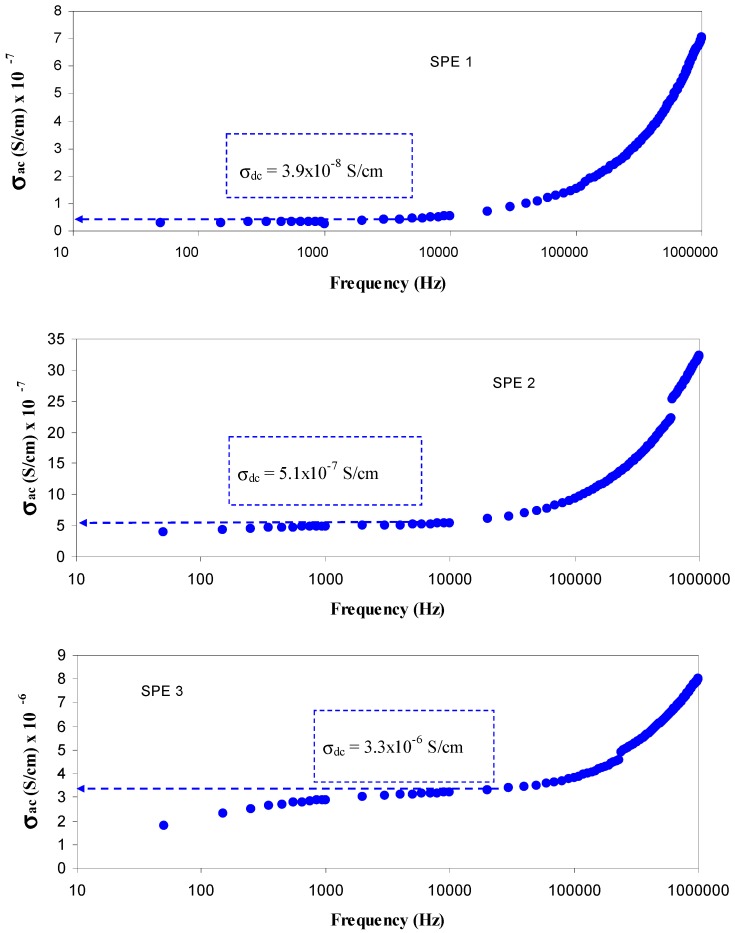
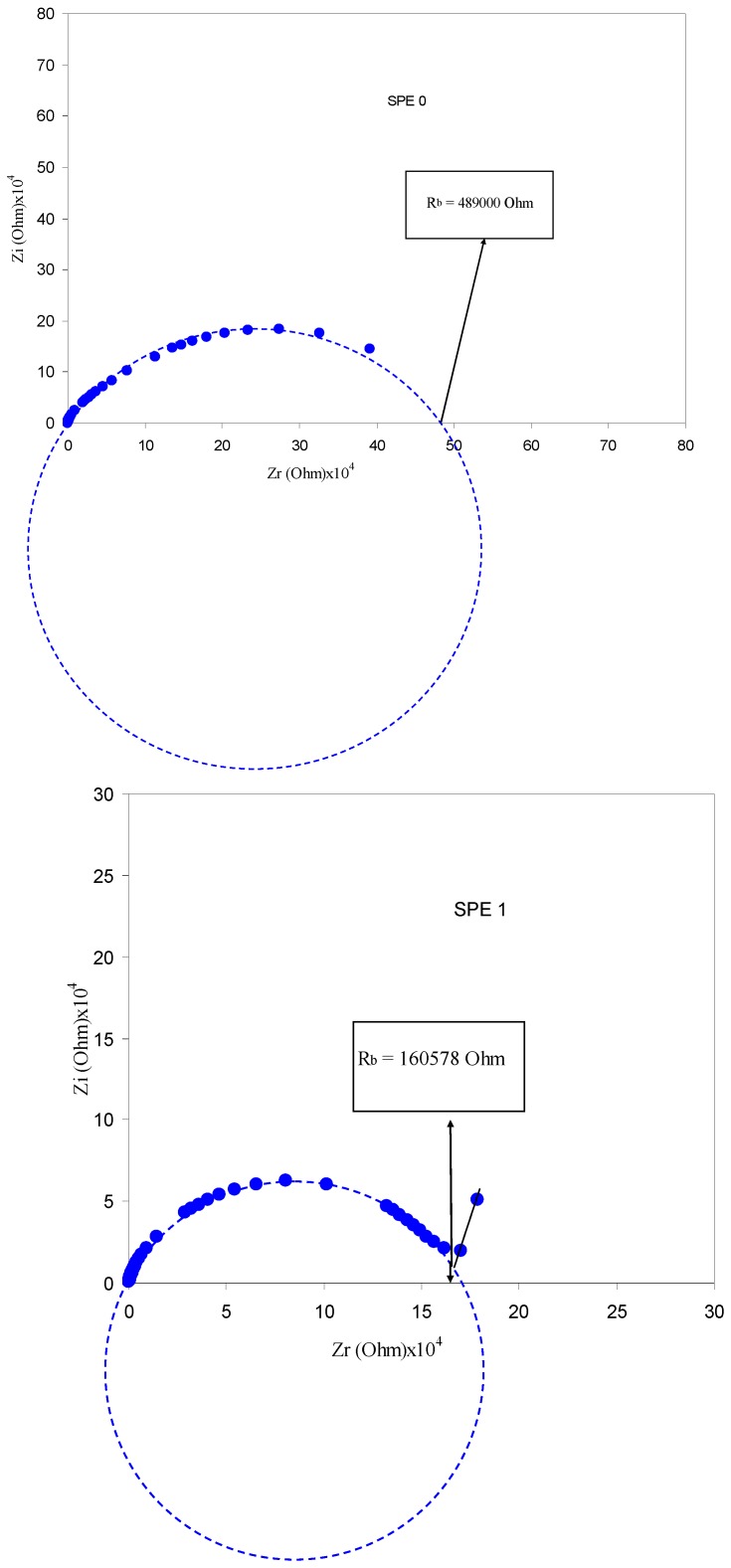
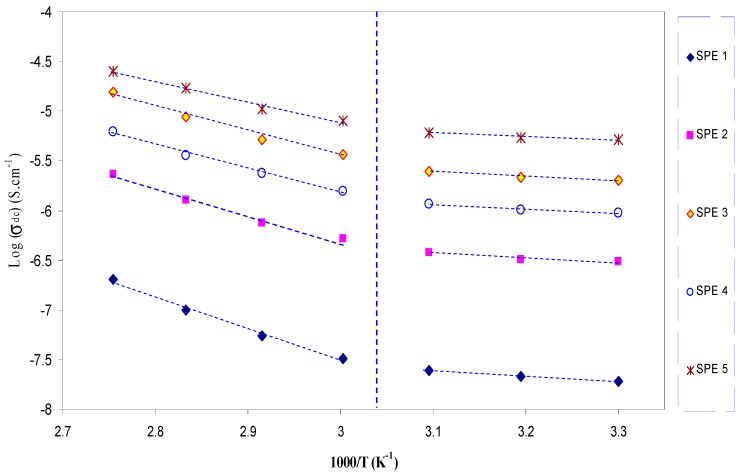
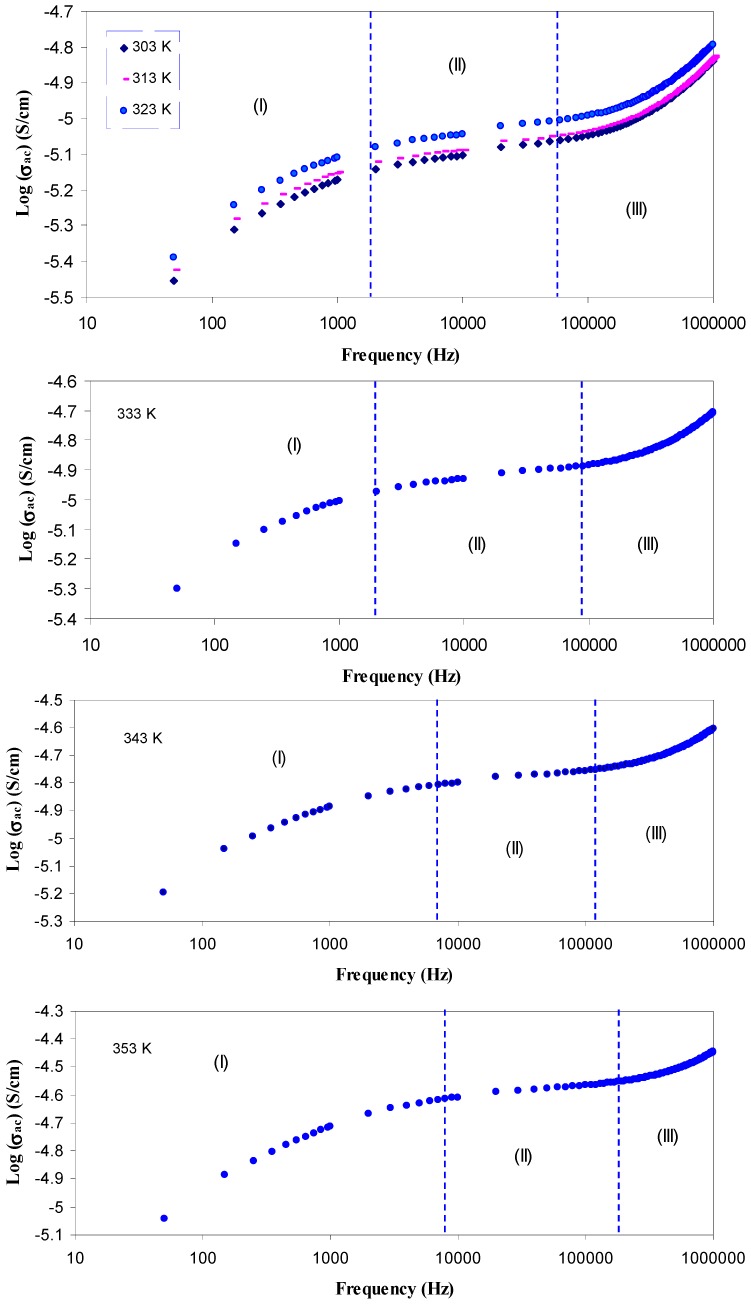
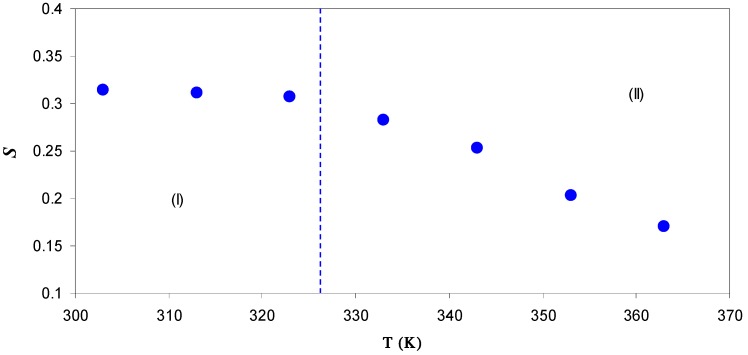
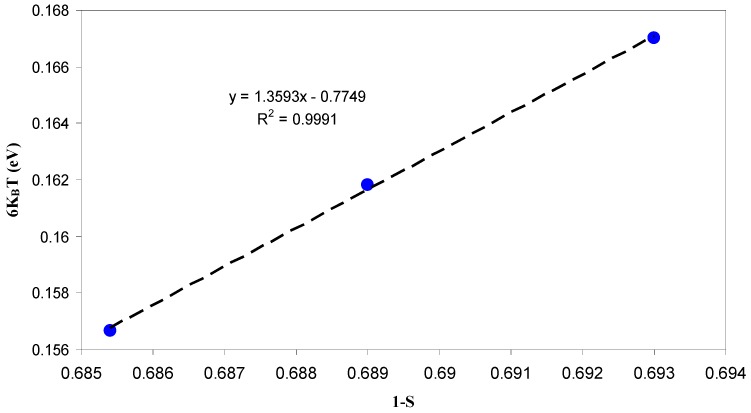
In this study, the role of ion dissociation on formation of silver nanoparticle and DC conductivityin PVA:AgNO₃ based solid polymer electrolyte has been discussed in detail. Samples of silver ion conducting solid polymer electrolyte were prepared by using solution cast technique. Absorption spectroscopy in the ultraviolet⁻visible (UV⁻Vis) spectral region was used to investigate the formation of silver nanoparticles. Broad and sharp peaks due to plasmonic silver nanoparticles subjected to ion dissociation have been observed. The influence of dielectric constant on the intensity of surface plasmonic resonance (SPR) peaks attributed to silver nanoparticles was discussed. From impedance plots, the diameter of high frequency semicircle was found to be decreased with increasing salt concentration. The DC conductivity in relation to the dielectric constant was also explained. From the AC conductivity spectra, the dc conductivity was estimated to be close to that calculated from the bulk resistance. The temperature dependence of the DC conductivity was studied and found to follow Arrhenius equation within two distinguished regions. The AC conductivity at different temperatures has been studied to comprehend the ion conduction mechanism. The AC conductivity against frequency was found to obey the universal power law of Jonscher. Three distinct regions were recognized from the spectra of AC conductivity. The frequency exponent () was calculated for the dispersive region of the measured AC conductivity spectra. Various models were discussed to explain the behavior of value with temperature. The behavior of value with temperature was then used to interpret the DC conductivity pattern against 1000/T. Finally, from the comparison of calculated activation energy () and maximum barrier height (), deep insights into ion conduction mechanism could be grasped.
在本研究中,详细讨论了离子解离对基于聚乙烯醇(PVA):硝酸银(AgNO₃)的固体聚合物电解质中银纳米颗粒形成和直流电导率的作用。采用溶液浇铸技术制备了银离子传导固体聚合物电解质样品。利用紫外-可见(UV-Vis)光谱区域的吸收光谱来研究银纳米颗粒的形成。观察到由于离子解离导致的等离子体银纳米颗粒产生的宽峰和尖峰。讨论了介电常数对归因于银纳米颗粒的表面等离子体共振(SPR)峰强度的影响。从阻抗图中发现,随着盐浓度的增加,高频半圆的直径减小。还解释了与介电常数相关的直流电导率。从交流电导率谱估计,直流电导率接近由体电阻计算得到的值。研究了直流电导率的温度依赖性,发现在两个不同区域内遵循阿伦尼乌斯方程。研究了不同温度下的交流电导率以理解离子传导机制。发现交流电导率与频率的关系服从琼舍尔的通用幂律。从交流电导率谱中识别出三个不同区域。计算了测量的交流电导率谱色散区域的频率指数()。讨论了各种模型来解释值随温度的行为。然后利用值随温度的行为来解释直流电导率相对于1000/T的模式。最后,通过比较计算的活化能()和最大势垒高度(),可以深入了解离子传导机制。