Wang Lien, Lee Grace, Kuei Chester, Yao Xiang, Harrington Anthony, Bonaventure Pascal, Lovenberg Timothy W, Liu Changlu
Janssen Research and Development, LLC, San Diego, CA, United States.
Front Neurosci. 2019 Mar 26;13:281. doi: 10.3389/fnins.2019.00281. eCollection 2019.
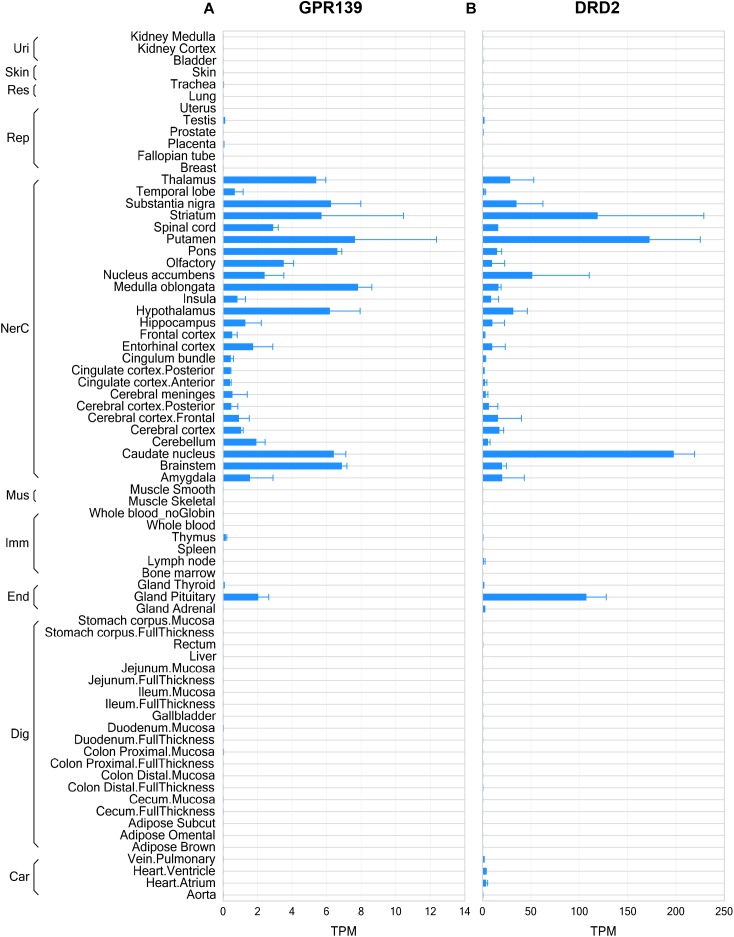
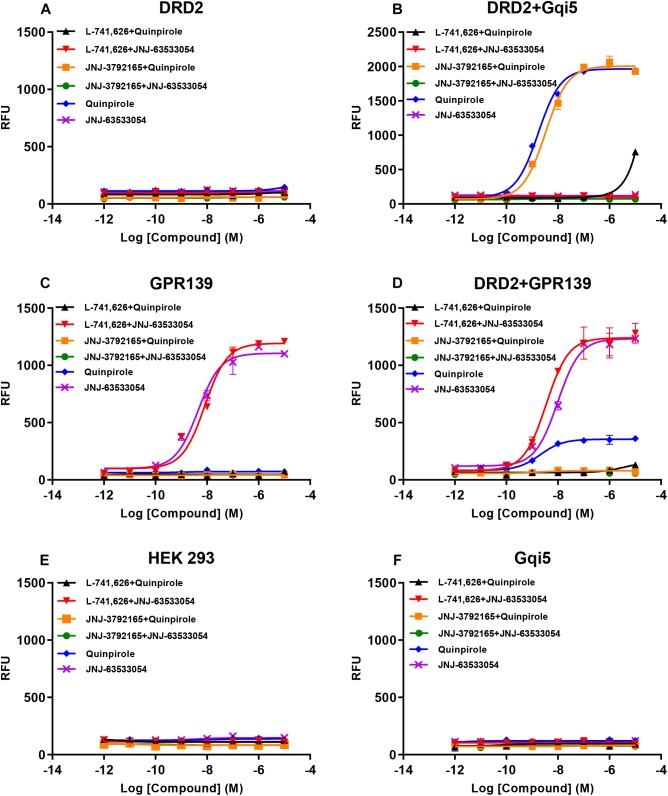
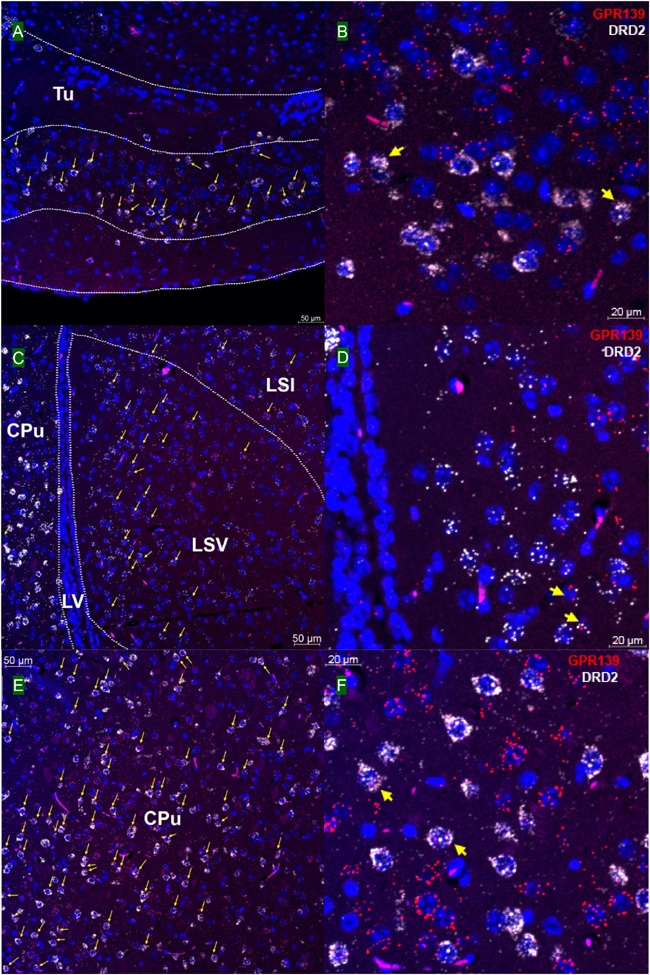
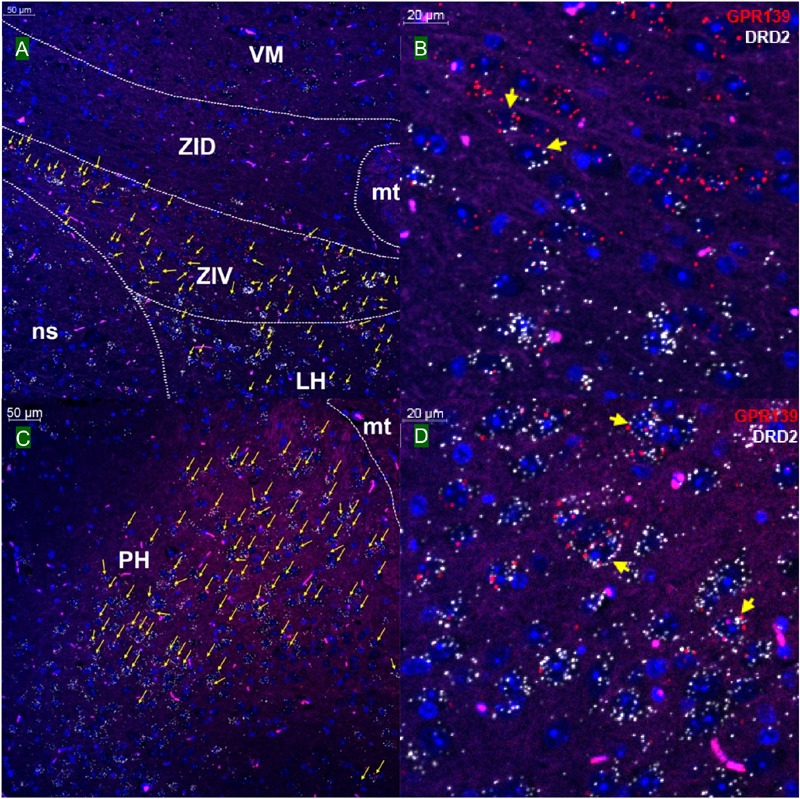
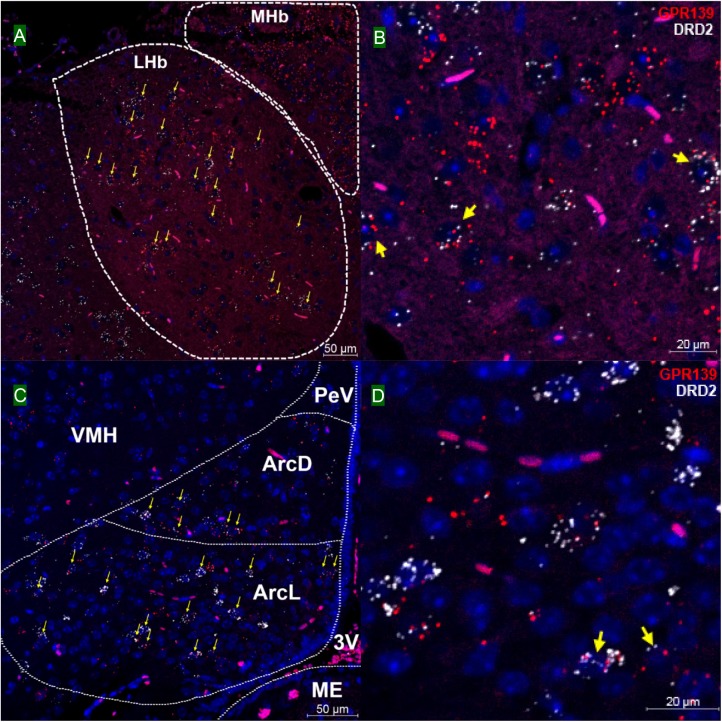
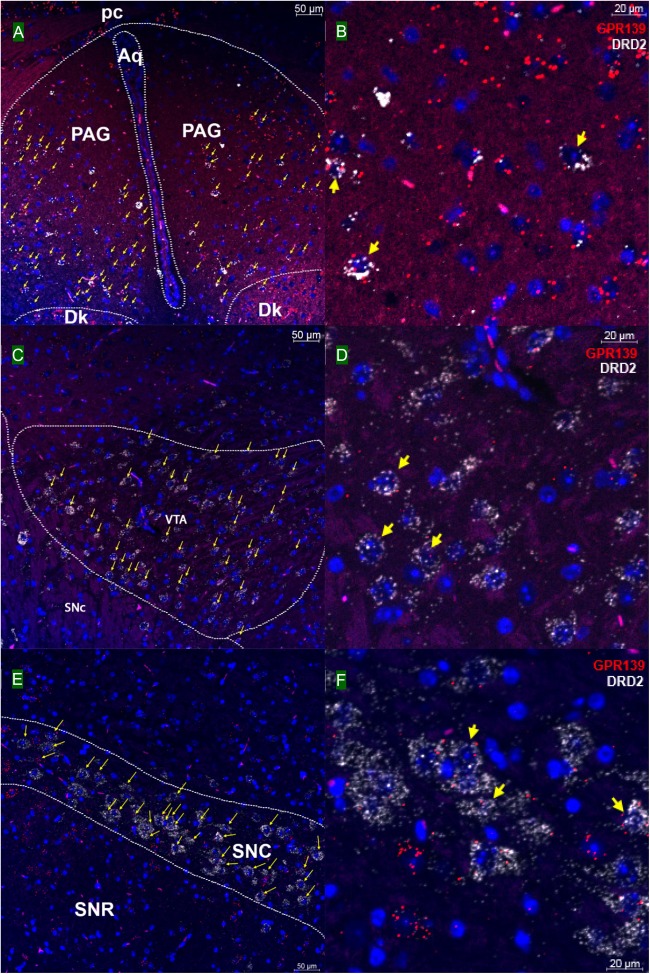
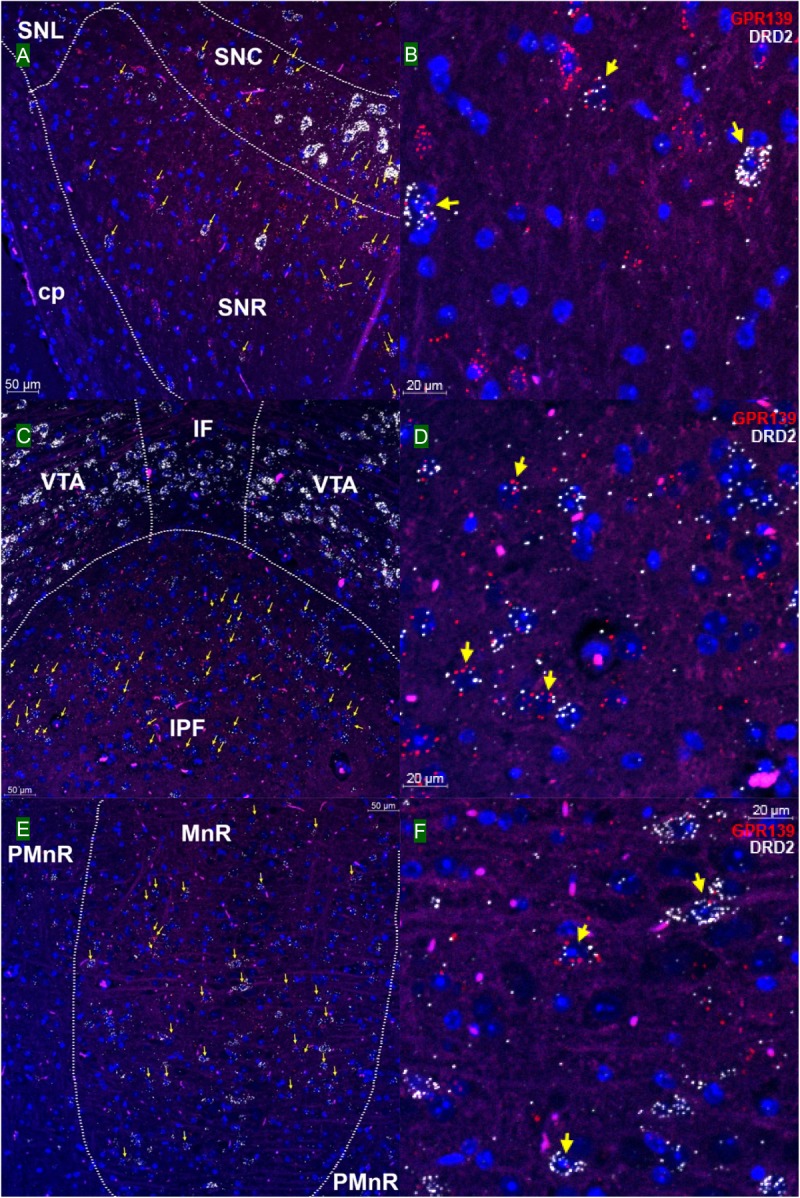
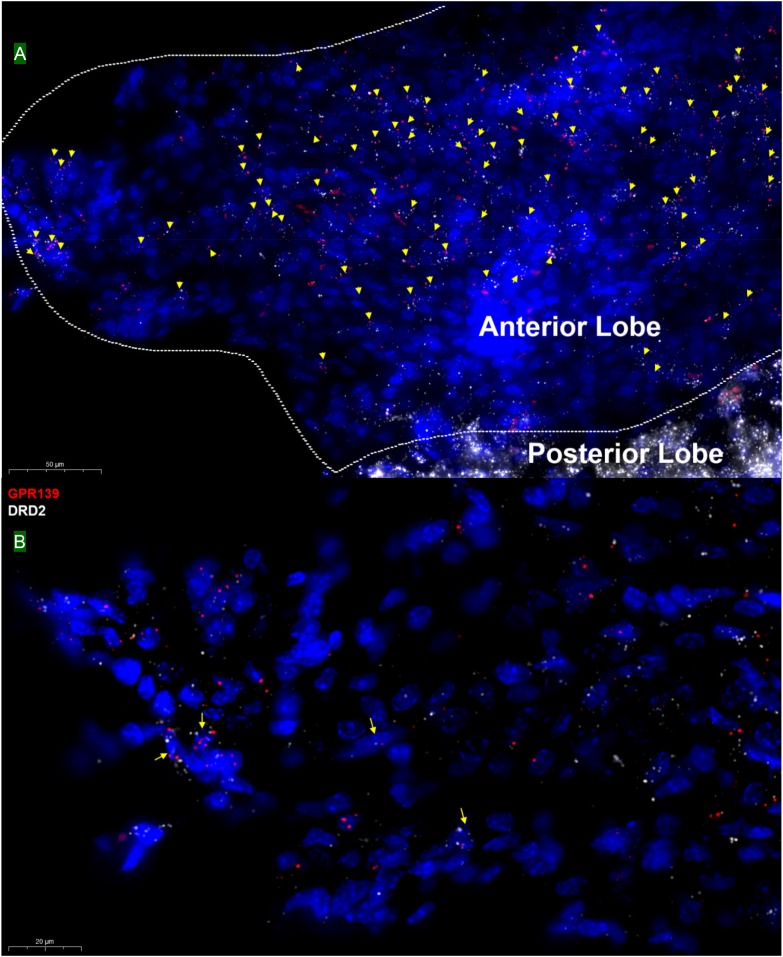
GPR139, a G-coupled receptor that is activated by the essential amino acids L-tryptophan and L-phenylalanine, is predominantly expressed in the brain and pituitary. The physiological function of GPR139 remains elusive despite the availability of pharmacological tool agonist compounds and knock-out mice. Whole tissue RNA sequencing data from human, mouse and rat tissues revealed that GPR139 and the dopamine D receptor (DRD2) exhibited some similarities in their distribution patterns in the brain and pituitary gland. To determine if there was true co-expression of these two receptors, we applied double hybridization in mouse tissues using the RNAscope technique. GPR139 and DRD2 mRNA co-expressed in a majority of same cells within part of the dopaminergic mesolimbic pathways (ventral tegmental area and olfactory tubercle), the nigrostriatal pathway (compact part of substantia nigra and caudate putamen), and also the tuberoinfundibular pathway (arcuate hypothalamic nucleus and anterior lobe of pituitary). Both receptors mRNA also co-express in the same cells of the brain regions involved in responses to negative stimulus and stress, such as lateral habenula, lateral septum, interpeduncular nucleus, and medial raphe nuclei. GPR139 mRNA expression was detected in the dentate gyrus and the pyramidal cell layer of the hippocampus as well as the paraventricular hypothalamic nucleus. The functional interaction between GPR139 and DRD2 was studied using a calcium mobilization assay in cells co-transfected with both receptors from several species (human, rat, and mouse). The dopamine DRD2 agonist did not stimulate calcium response in cells expressing DRD2 alone consistent with the G signaling transduction pathway of this receptor. In cells co-transfected with DRD2 and GPR139 the DRD2 agonist was able to stimulate calcium response and its effect was blocked by either a DRD2 or a GPR139 antagonist supporting an interaction between GPR139 and DRD2. Taken together, these data showed that GPR139 and DRD2 are in position to functionally interact in native tissue.
GPR139是一种G蛋白偶联受体,可被必需氨基酸L-色氨酸和L-苯丙氨酸激活,主要在大脑和垂体中表达。尽管有药理学工具激动剂化合物和基因敲除小鼠,但GPR139的生理功能仍然不清楚。来自人类、小鼠和大鼠组织的全组织RNA测序数据显示,GPR139和多巴胺D受体(DRD2)在大脑和垂体中的分布模式存在一些相似之处。为了确定这两种受体是否真的共表达,我们使用RNAscope技术在小鼠组织中进行了双重杂交。GPR139和DRD2 mRNA在多巴胺能中脑边缘通路(腹侧被盖区和嗅结节)、黑质纹状体通路(黑质致密部和尾状壳核)以及结节漏斗通路(弓状下丘脑核和垂体前叶)的大部分相同细胞中共表达。这两种受体的mRNA也在参与对负面刺激和应激反应的脑区的相同细胞中共表达,如外侧缰核、外侧隔、脚间核和中缝内侧核。在齿状回、海马锥体细胞层以及室旁下丘脑核中检测到了GPR139 mRNA的表达。使用钙动员试验研究了在几种物种(人类、大鼠和小鼠)中同时转染两种受体的细胞中GPR139和DRD2之间的功能相互作用。多巴胺DRD2激动剂在单独表达DRD2的细胞中不刺激钙反应,这与该受体的G信号转导途径一致。在同时转染DRD2和GPR139的细胞中,DRD2激动剂能够刺激钙反应,其作用被DRD2或GPR139拮抗剂阻断,这支持了GPR139和DRD2之间的相互作用。综上所述,这些数据表明GPR139和DRD2在天然组织中能够进行功能相互作用。