Division of Immunology and Allergy, University Hospitals and Medical Faculty, Geneva, Switzerland.
CSL Behring AG, Bern, Switzerland.
Front Immunol. 2019 Mar 27;10:556. doi: 10.3389/fimmu.2019.00556. eCollection 2019.
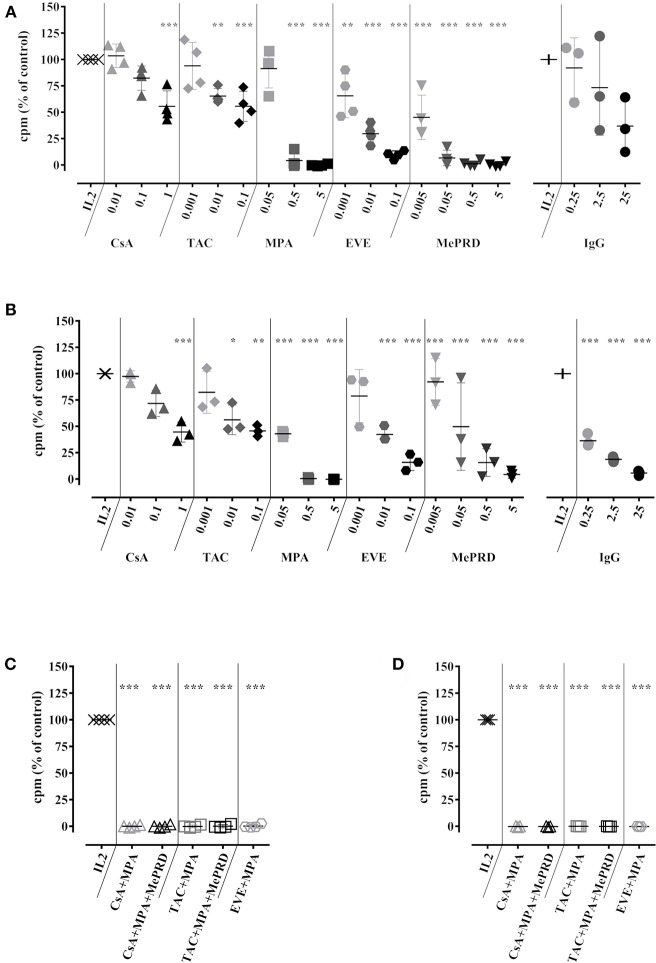
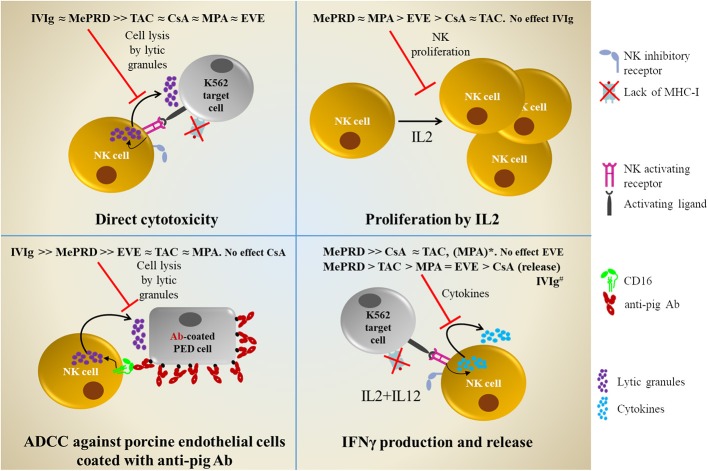
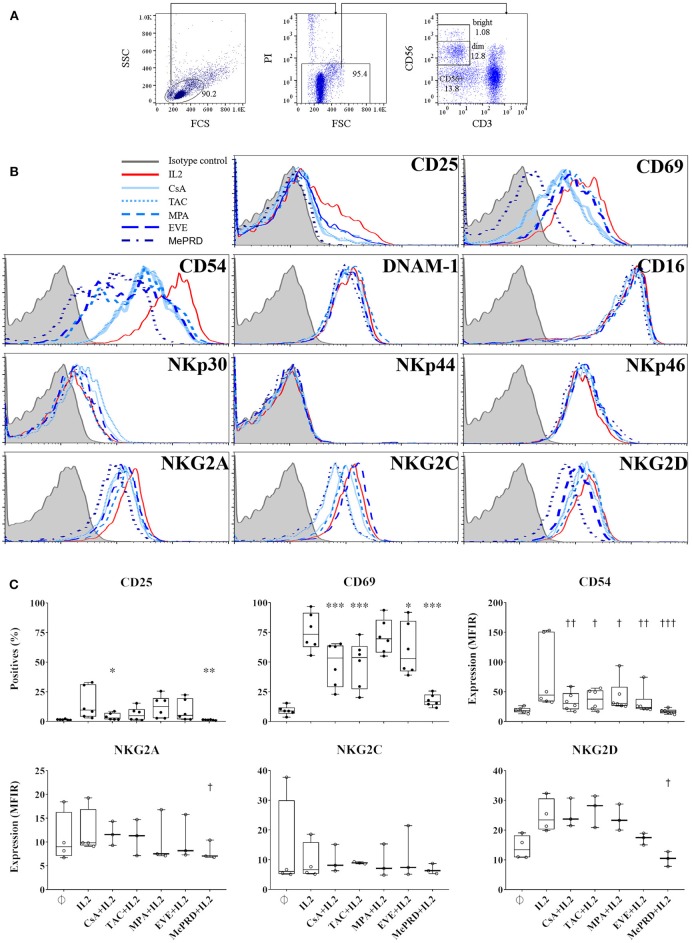
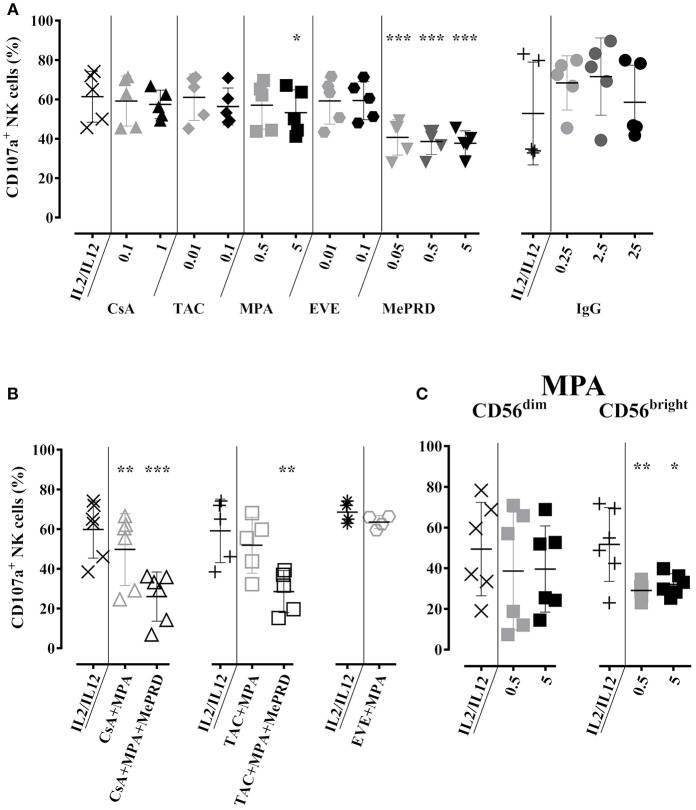
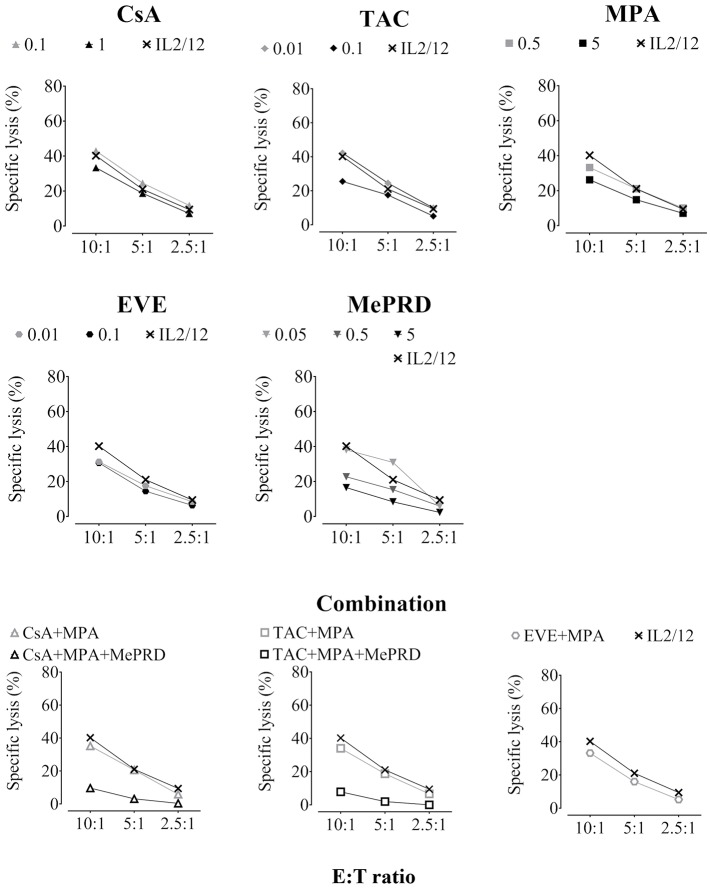
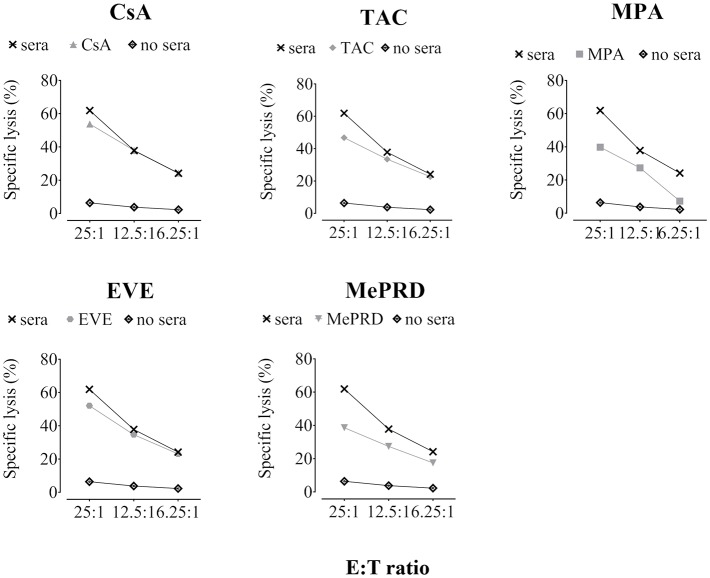
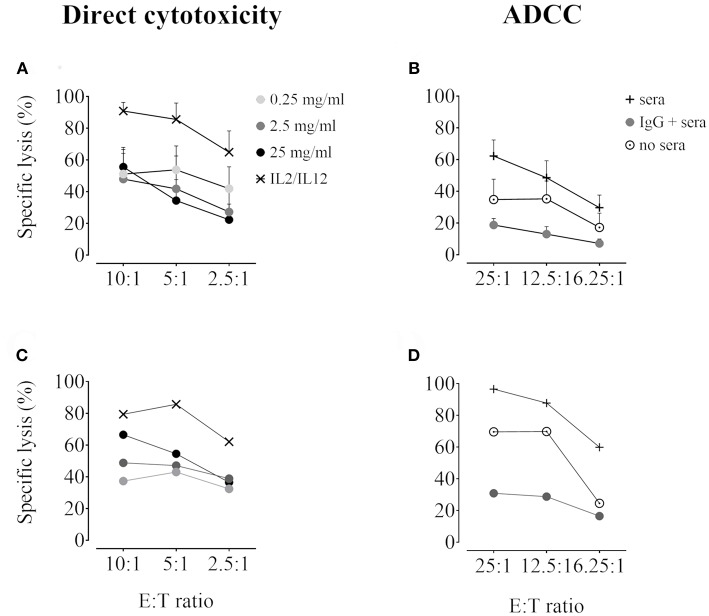
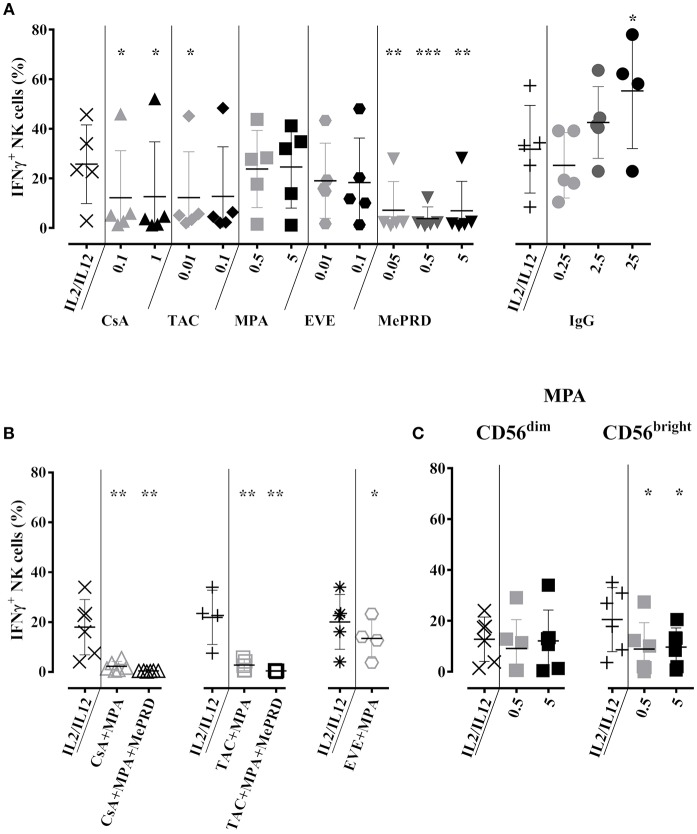
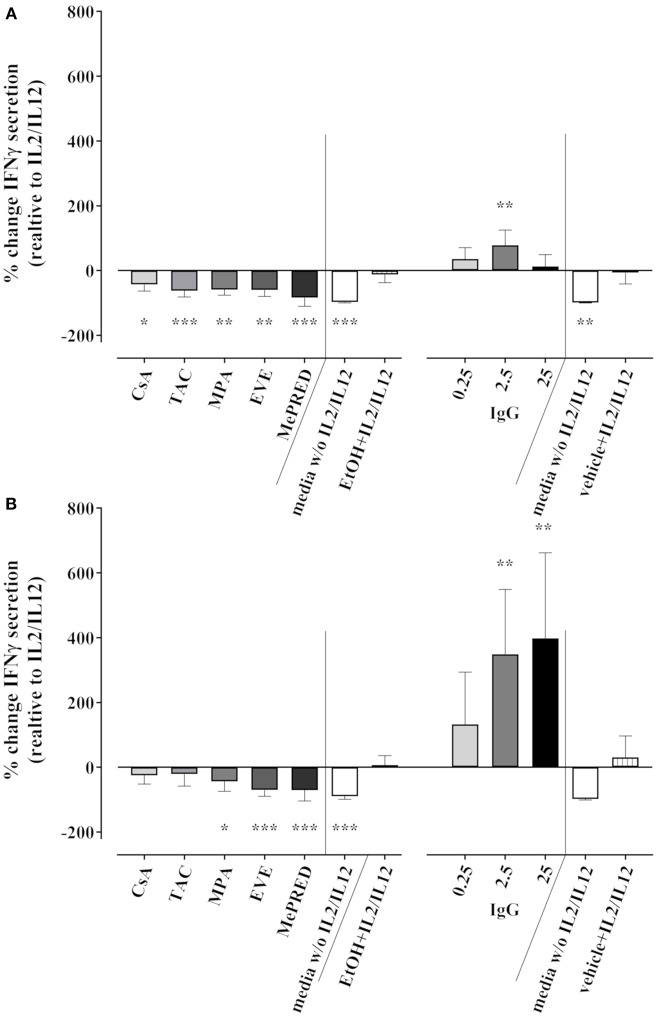
Small-molecule immunosuppressive drugs (ISD) prevent graft rejection mainly by inhibiting T lymphocytes. Therapeutic immunoglobulins (IVIg) are used for substitution, antibody-mediated rejection (AbMR) and HLA-sensitized recipients by targeting distinct cell types. Since the effect of ISD and IVIg on natural killer (NK) cells remains somewhat controversial in the current literature, the aim of this comparative study was to investigate healthy donor's human NK cell functions after exposure to ISD and IVIg, and to comprehensively review the current literature. NK cells were incubated overnight with IL2/IL12 and different doses and combinations of ISD and IVIg. Proliferation was evaluated by [H]-thymidine incorporation; phenotype, degranulation and interferon gamma (IFNγ) production by flow cytometry and ELISA; direct NK cytotoxicity by standard [Cr]-release and non-radioactive DELFIA assays using K562 as stimulator and target cells; porcine endothelial cells coated with human anti-pig antibodies were used as targets in antibody-dependent cellular cytotoxicity (ADCC) assays. We found that CD69, CD25, CD54, and NKG2D were downregulated by ISD. Proliferation was inhibited by methylprednisolone (MePRD), mycophenolic acid (MPA), and everolimus (EVE). MePRD and MPA reduced degranulation, MPA only of CD56 NK cells. MePRD and IVIg inhibited direct cytotoxicity and ADCC. Combinations of ISD demonstrated cumulative inhibitory effects. IFNγ production was inhibited by MePRD and ISD combinations, but not by IVIg. In conclusion, IVIg, ISD and combinations thereof differentially inhibit NK cell functions. The most potent drug with an effect on all NK functions was MePRD. The fact that MePRD and IVIg significantly block NK cytotoxicity, especially ADCC, has major implications for AbMR as well as therapeutic strategies targeting cancer and immune cells with monoclonal antibodies.
小分子免疫抑制药物 (ISD) 主要通过抑制 T 淋巴细胞来预防移植物排斥反应。治疗性免疫球蛋白 (IVIg) 通过针对不同的细胞类型用于替代、抗体介导的排斥反应 (AbMR) 和 HLA 致敏受者。由于目前文献中关于 ISD 和 IVIg 对自然杀伤 (NK) 细胞的影响仍存在一些争议,本研究旨在调查 ISD 和 IVIg 暴露后健康供者的人 NK 细胞功能,并全面回顾当前文献。NK 细胞与 IL2/IL12 孵育过夜,并与不同剂量和组合的 ISD 和 IVIg 孵育。通过 [H]-胸苷掺入评估增殖;通过流式细胞术和 ELISA 评估表型、脱颗粒和干扰素 γ (IFNγ) 产生;通过使用 K562 作为刺激物和靶细胞的标准 [Cr]-释放和非放射性 DELFIA 测定法评估直接 NK 细胞毒性;用人抗猪抗体包被的猪内皮细胞用于抗体依赖性细胞毒性 (ADCC) 测定中的靶细胞。我们发现 ISD 下调了 CD69、CD25、CD54 和 NKG2D。甲基强的松龙 (MePRD)、霉酚酸 (MPA) 和依维莫司 (EVE) 抑制增殖。MPA 仅抑制 CD56 NK 细胞的脱颗粒。MePRD 和 IVIg 抑制直接细胞毒性和 ADCC。ISD 组合显示出累积抑制作用。MPA 和 ISD 组合抑制 IFNγ 产生,但 IVIg 不抑制。总之,IVIg、ISD 及其组合对 NK 细胞功能有不同的抑制作用。对所有 NK 功能均有作用的最有效药物是 MePRD。MePRD 和 IVIg 显著阻断 NK 细胞毒性,尤其是 ADCC,这对 AbMR 以及针对癌症和免疫细胞的单克隆抗体的治疗策略具有重大意义。