Hassan Ahmad, Sharif Kareem
Psychiatry, Yale University School of Medicine, New Haven, USA.
Psychiatry, University of Pennsylvania School of Medicine, Philadelphia, USA.
Cureus. 2019 Jan 30;11(1):e3984. doi: 10.7759/cureus.3984.
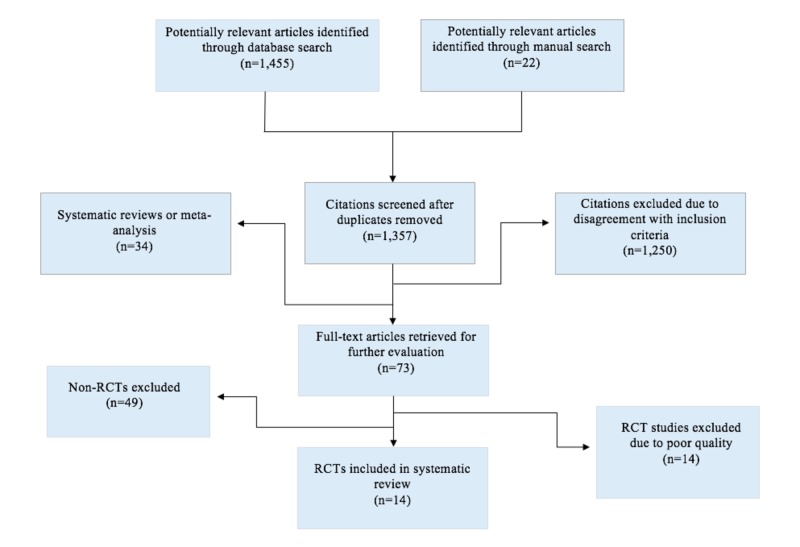
Introduction Telepsychiatry is becoming an increasingly appealing option for mental health treatment due to its ability to overcome barriers which prevent certain demographics from having access to mental health services. There is a surprising lack of research being done on this promising mode of health care delivery. The aim of this study is to evaluate the existing literature in order to determine the clinical effectiveness and cost-effectiveness of telepsychiatry in resource-constrained environments. Methods Literature searches were performed in PsychINFO, PubMed, Medline, EMBASE, Centre for Reviews and Dissemination, and the Cochrane Library Controlled Trial Registry databases (2000 - May 2017). A search of the following terms was used: telemedicine; telemedical; telepsychiatry; telepsychiatric; teleconsultation; e-health; video conference; and telecare. Type of mental disorder and intervention, along with the clinical outcome or patient satisfaction, were all identified. Exclusion criteria included studies with a sample size of fewer than 10 cases, as well as studies which failed to analyze intervention outcomes. Results Of the 1,477 identified articles, 14 randomized controlled trials were included for review. Despite the methodological limitations and the small number of existing studies, there appears to be limited evidence pointing towards the efficacy of telepsychiatry in resource-constrained environments, although patients and providers tend to prefer face-to-face treatment over video conferencing. Two of the studies included in this paper found video conferencing to be more effective than face-to-face treatment, while none reported the opposite. At the very least, we hypothesize that psychotherapeutic treatment delivered via video conferencing is just as effective as a traditional treatment, albeit less desirable. Conclusion More research is required in order to further evaluate the efficacy of telepsychiatry in the management of mental illness, as there is a current lack of scientific evidence to draw any conclusions. However, there exists a strong hypothesis that telepsychiatric treatment yields the same results as the traditional, in-person therapy and that telepsychiatry is a useful alternative when traditional therapy is not possible. Countries with substantial numbers of refugees living in resource-constrained areas, such as camps, should be encouraged to develop telepsychiatry programs.
引言 远程精神病学正日益成为心理健康治疗中一个颇具吸引力的选择,因为它能够克服阻碍特定人群获得心理健康服务的障碍。令人惊讶的是,对于这种有前景的医疗服务提供模式的研究却非常匮乏。本研究的目的是评估现有文献,以确定远程精神病学在资源受限环境中的临床有效性和成本效益。方法 在PsychINFO、PubMed、Medline、EMBASE、循证医学图书馆和Cochrane图书馆对照试验注册数据库(2000年至2017年5月)中进行文献检索。使用了以下检索词:远程医疗;远程医学的;远程精神病学;远程精神病学的;远程会诊;电子健康;视频会议;以及远程护理。确定了精神障碍类型和干预措施,以及临床结果或患者满意度。排除标准包括样本量少于10例的研究,以及未分析干预结果的研究。结果 在1477篇检索到的文章中,纳入了14项随机对照试验进行综述。尽管存在方法学上的局限性以及现有研究数量较少,但似乎仅有有限的证据表明远程精神病学在资源受限环境中的疗效,不过患者和提供者往往更倾向于面对面治疗而非视频会议治疗。本文纳入的两项研究发现视频会议治疗比面对面治疗更有效,而没有研究报告相反的结果。至少,我们推测通过视频会议进行的心理治疗与传统治疗同样有效,尽管不太受欢迎。结论 需要更多研究来进一步评估远程精神病学在精神疾病管理中的疗效,因为目前缺乏科学证据来得出任何结论。然而,有一个强有力的假设,即远程精神病学治疗产生的结果与传统的面对面治疗相同,并且当传统治疗不可行时,远程精神病学是一种有用的替代方法。应鼓励在资源受限地区(如难民营)有大量难民居住的国家开展远程精神病学项目。