Department of Comparative Anatomy, Institute of Zoology and Biomedical Research, Jagiellonian University, Gronostajowa 9, 30-387, Krakow, Poland.
Department of Cell Biology and Imaging, Institute of Zoology and Biomedical Research, Jagiellonian University, Krakow, Poland.
Dev Genes Evol. 2019 May;229(2-3):53-72. doi: 10.1007/s00427-019-00630-y. Epub 2019 Apr 10.
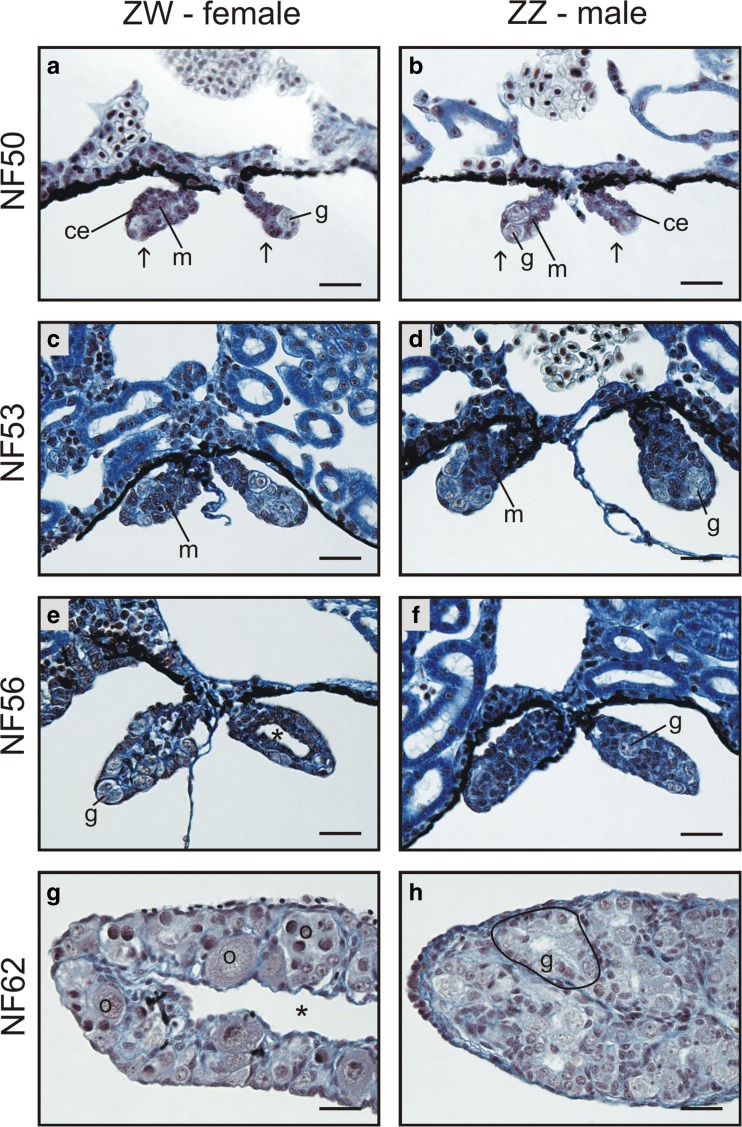
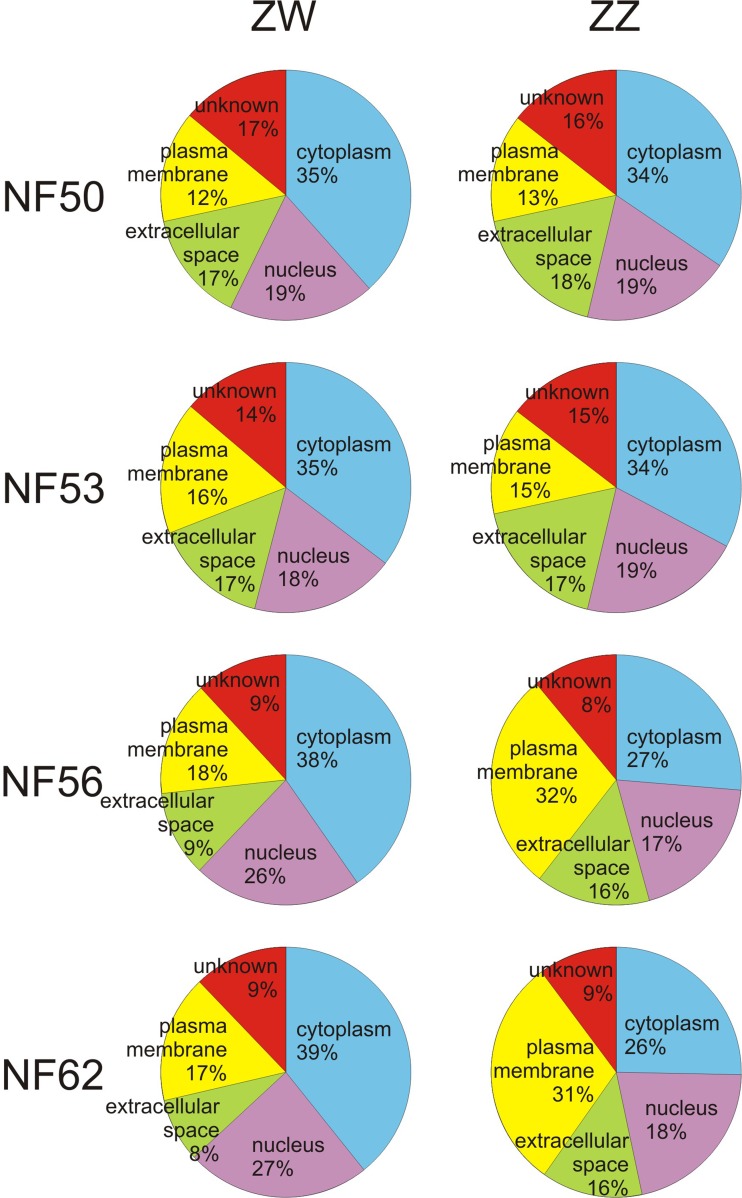
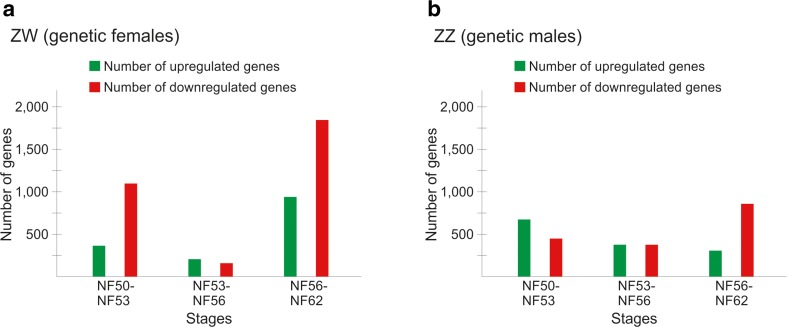
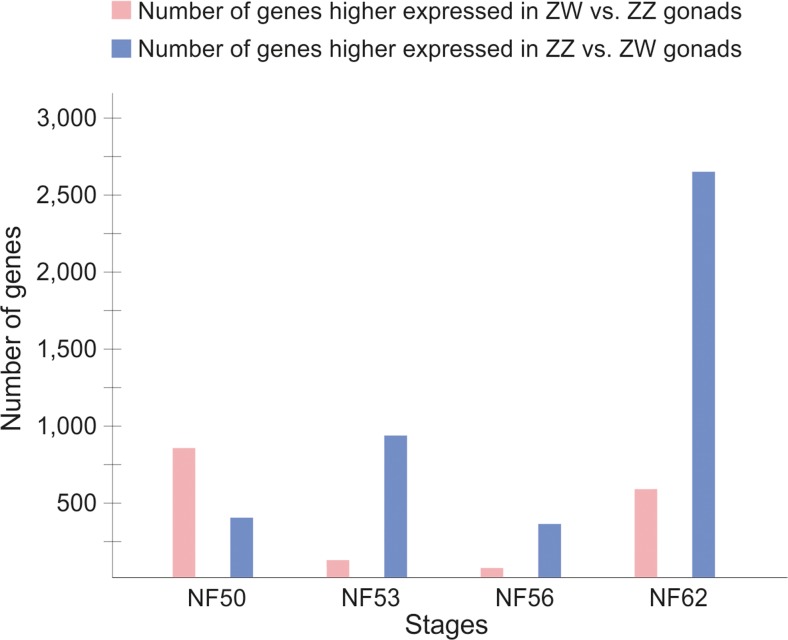
Xenopus laevis is an amphibian (frog) species widely used in developmental biology and genetics. To unravel the molecular machinery regulating sex differentiation of Xenopus gonads, we analyzed for the first time the transcriptome of developing amphibian gonads covering sex determination period. We applied microarray at four developmental stages: (i) NF50 (undifferentiated gonad during sex determination), (ii) NF53 (the onset of sexual differentiation of the gonads), (iii) NF56 (sexual differentiation of the gonads), and (iv) NF62 (developmental progression of differentiated gonads). Our analysis showed that during the NF50, the genetic female (ZW) gonads expressed more sex-specific genes than genetic male (ZZ) gonads, which suggests that a robust genetic program is realized during female sex determination in Xenopus. However, a contrasting expression pattern was observed at later stages (NF56 and NF62), when the ZW gonads expressed less sex-specific genes than ZZ gonads, i.e., more genes may be involved in further development of the male gonads (ZZ). We identified sexual dimorphism in the expression of several functional groups of genes, including signaling factors, proteases, protease inhibitors, transcription factors, extracellular matrix components, extracellular matrix enzymes, cell adhesion molecules, and epithelium-specific intermediate filaments. In addition, our analysis detected a sexually dimorphic expression of many uncharacterized genes of unknown function, which should be studied further to reveal their identity and if/how they regulate gonad development, sex determination, and sexual differentiation. Comparison between genes sex-specifically expressed in developing gonads of Xenopus and available transcriptome data from zebrafish, two reptile species, chicken, and mouse revealed significant differences in the genetic control of sex determination and gonad development. This shows that the genetic control of gonad development is evolutionarily malleable.
非洲爪蟾是一种广泛应用于发育生物学和遗传学的两栖动物(青蛙)物种。为了解析调控非洲爪蟾性腺性别分化的分子机制,我们首次分析了涵盖性别决定期的发育中的两栖动物性腺转录组。我们在四个发育阶段应用了微阵列技术:(i)NF50(性别决定期间未分化的性腺),(ii)NF53(性腺性分化的开始),(iii)NF56(性腺的性分化),和(iv)NF62(分化性腺的发育进展)。我们的分析表明,在 NF50 期间,遗传上的雌性(ZW)性腺比遗传上的雄性(ZZ)性腺表达更多的性别特异性基因,这表明在非洲爪蟾的雌性性别决定过程中实现了一个强大的遗传程序。然而,在后期(NF56 和 NF62)观察到了相反的表达模式,此时 ZW 性腺表达的性别特异性基因比 ZZ 性腺少,即更多的基因可能参与了雄性性腺(ZZ)的进一步发育。我们鉴定了几个功能基因群的表达存在性别二态性,包括信号因子、蛋白酶、蛋白酶抑制剂、转录因子、细胞外基质成分、细胞外基质酶、细胞黏附分子和上皮特异性中间丝。此外,我们的分析还检测到许多功能未知的未表征基因的性别二态性表达,这些基因应该进一步研究以揭示它们的身份以及它们如何调节性腺发育、性别决定和性分化。比较在非洲爪蟾发育性腺中特异性表达的基因和来自斑马鱼、两种爬行动物、鸡和鼠的可用转录组数据揭示了性别决定和性腺发育的遗传控制存在显著差异。这表明性腺发育的遗传控制在进化上是可塑的。