• 文献检索
  • 文档翻译
  • 深度研究
  • 学术资讯
  • Suppr Zotero 插件Zotero 插件
  • 邀请有礼
  • 套餐&价格
  • 历史记录
应用&插件
Suppr Zotero 插件Zotero 插件浏览器插件Mac 客户端Windows 客户端微信小程序
定价
高级版会员购买积分包购买API积分包
服务
文献检索文档翻译深度研究API 文档MCP 服务
关于我们
关于 Suppr公司介绍联系我们用户协议隐私条款
关注我们

Suppr 超能文献

核心技术专利:CN118964589B侵权必究
粤ICP备2023148730 号-1Suppr @ 2026

文献检索

告别复杂PubMed语法,用中文像聊天一样搜索,搜遍4000万医学文献。AI智能推荐,让科研检索更轻松。

立即免费搜索

文件翻译

保留排版,准确专业,支持PDF/Word/PPT等文件格式,支持 12+语言互译。

免费翻译文档

深度研究

AI帮你快速写综述,25分钟生成高质量综述,智能提取关键信息,辅助科研写作。

立即免费体验

基于气体溶解发泡法制备的聚甲基丙烯酸甲酯低密度纳米多孔聚合物:制备与泡孔结构表征

Low Density Nanocellular Polymers Based on PMMA Produced by Gas Dissolution Foaming: Fabrication and Cellular Structure Characterization.

作者信息

Martín-de León Judith, Bernardo Victoria, Rodríguez-Pérez Miguel Ángel

机构信息

Cellular Laboratory (CellMat), Universidad de Valladolid, Valladolid 47011, Spain.

出版信息

Polymers (Basel). 2016 Jul 18;8(7):265. doi: 10.3390/polym8070265.

DOI:10.3390/polym8070265
PMID:30974541
原文链接:https://pmc.ncbi.nlm.nih.gov/articles/PMC6432238/
Abstract

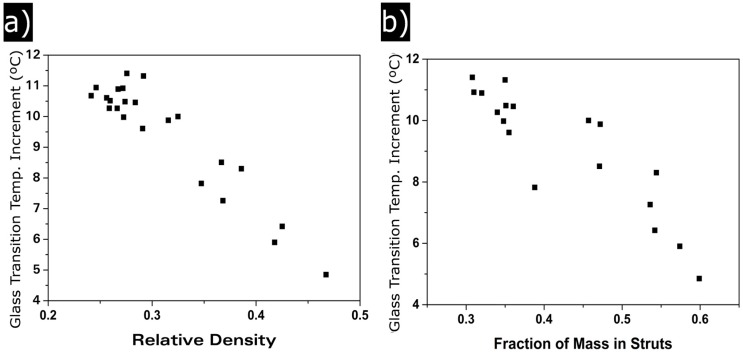
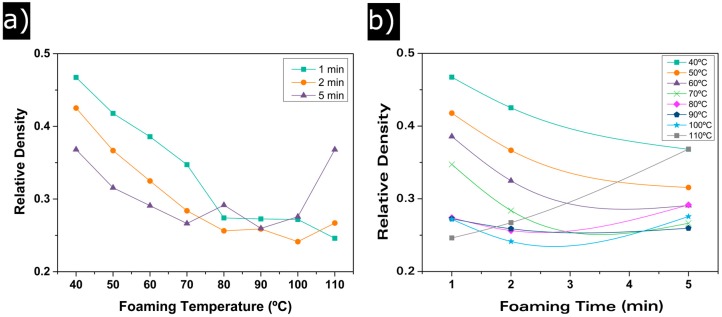
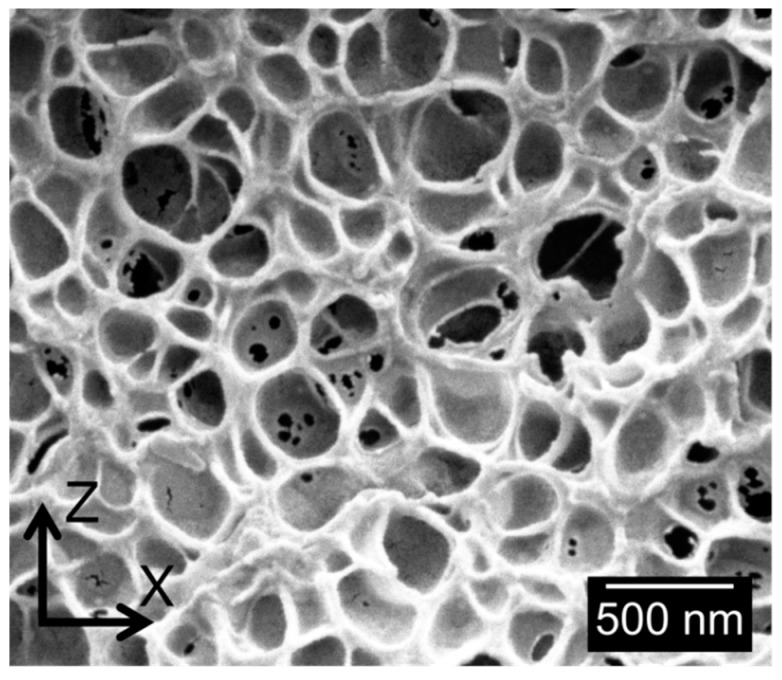
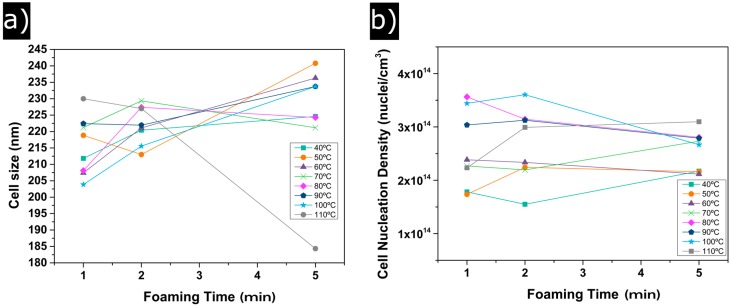
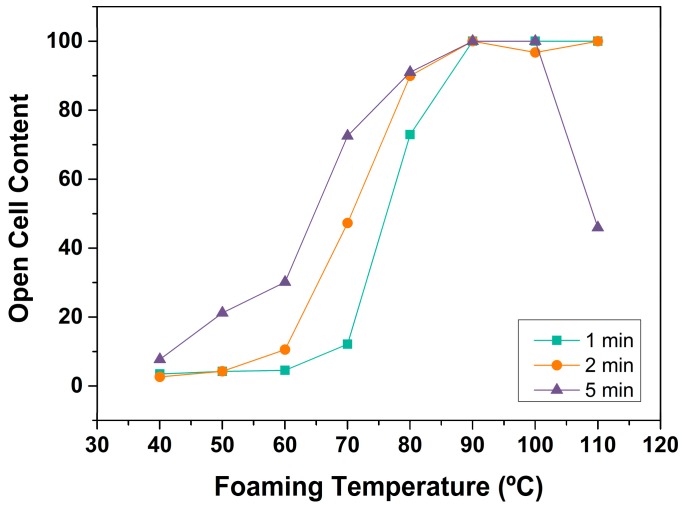
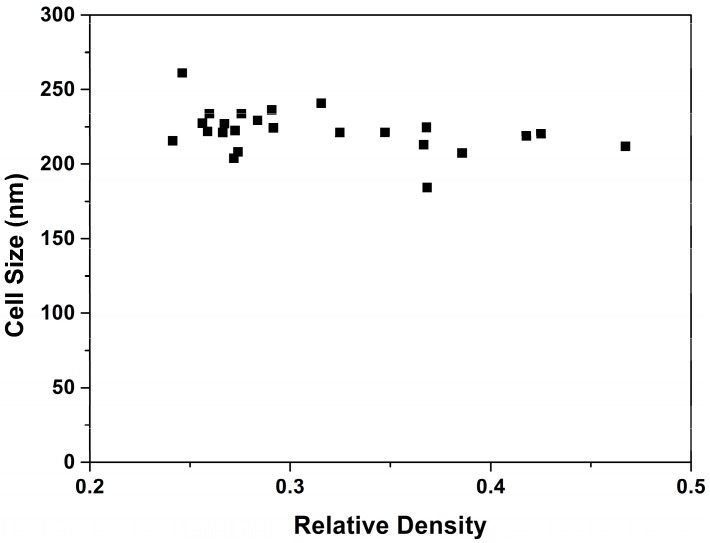
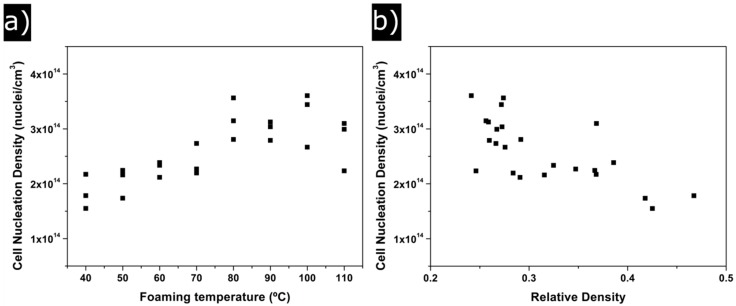
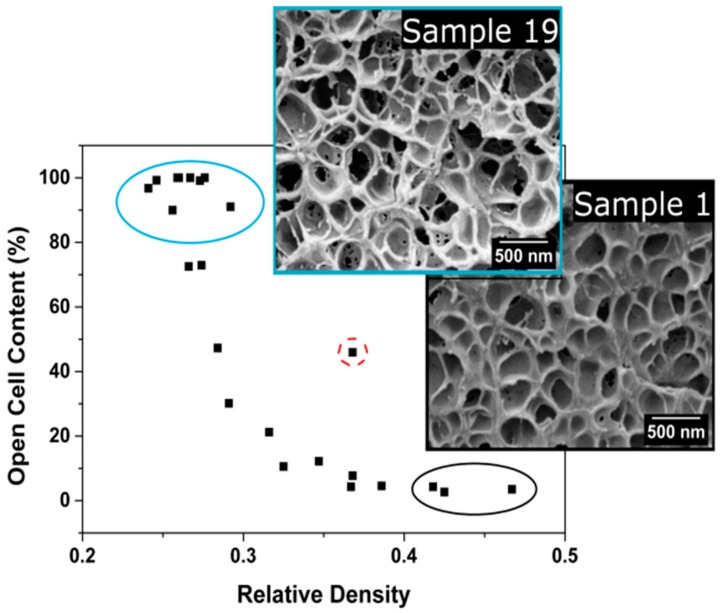
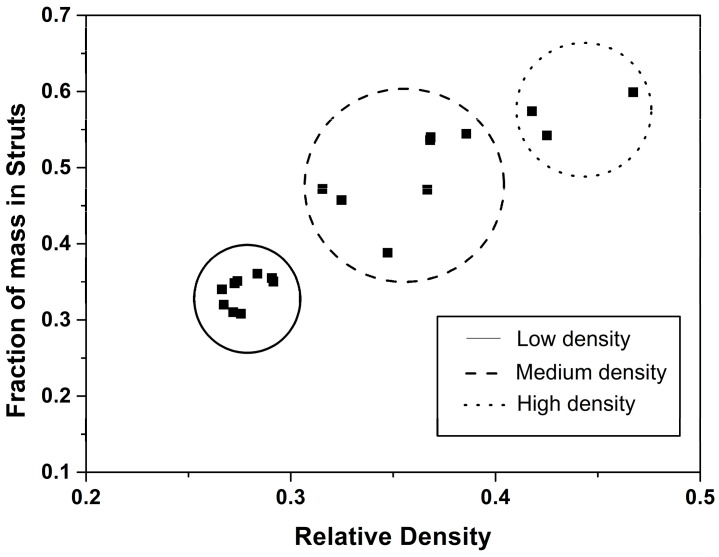
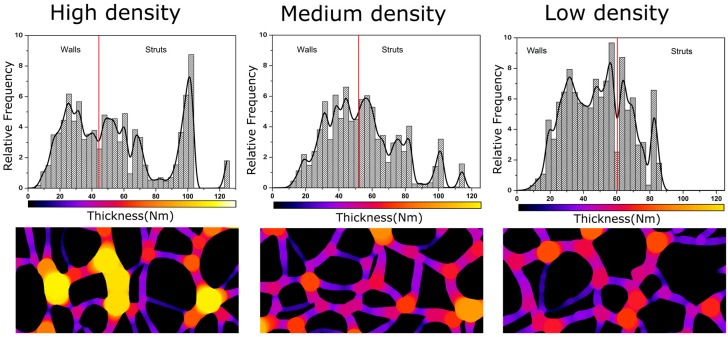
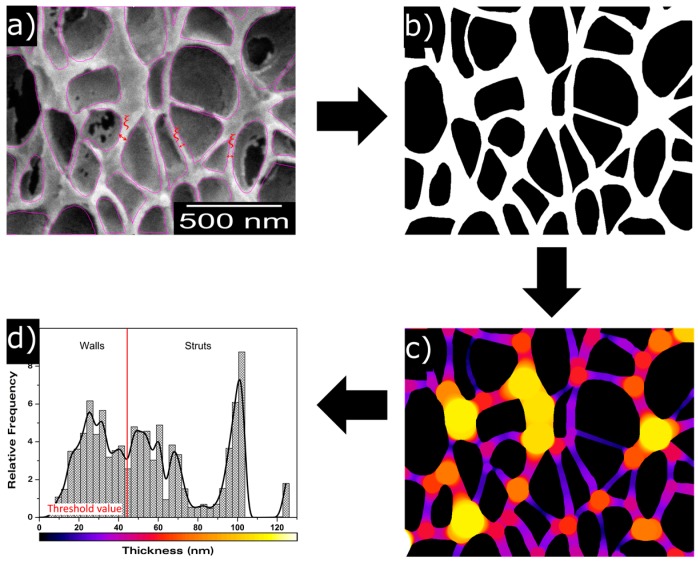
This paper describes the processing conditions needed to produce low density nanocellular polymers based on polymethylmethacrylate (PMMA) with relative densities between 0.45 and 0.25, cell sizes between 200 and 250 nm and cell densities higher than 10 cells/cm³. To produce these nanocellular polymers, the foaming parameters of the gas dissolution foaming technique using CO₂ as blowing agent have been optimized. Taking into account previous works, the amount of CO₂ uptake was maintained constant (31% by weight) for all the materials. Foaming parameters were modified between 40 °C and 110 °C for the foaming temperature and from 1 to 5 min for the foaming time. Foaming temperatures in the range of 80 to 100 °C and foaming times of 2 min allow for production of nanocellular polymers with relative densities as low as 0.25. Cellular structure has been studied in-depth to obtain the processing-cellular structure relationship. In addition, it has been proved that the glass transition temperature depends on the cellular structure. This effect is associated with a confinement of the polymer in the cell walls, and is one of the key reasons for the improved properties of nanocellular polymers.

摘要

本文描述了生产基于聚甲基丙烯酸甲酯(PMMA)的低密度纳米多孔聚合物所需的加工条件,这些聚合物的相对密度在0.45至0.25之间,泡孔尺寸在200至250纳米之间,泡孔密度高于10个泡孔/立方厘米。为了生产这些纳米多孔聚合物,对以CO₂作为发泡剂的气体溶解发泡技术的发泡参数进行了优化。考虑到之前的工作,所有材料的CO₂吸收量保持恒定(重量比为31%)。发泡温度在40℃至110℃之间变化,发泡时间在1至5分钟之间变化。80至100℃的发泡温度和2分钟的发泡时间能够生产出相对密度低至0.25的纳米多孔聚合物。对泡孔结构进行了深入研究,以获得加工与泡孔结构之间的关系。此外,已经证明玻璃化转变温度取决于泡孔结构。这种效应与聚合物在细胞壁中的受限有关,是纳米多孔聚合物性能改善的关键原因之一。
https://cdn.ncbi.nlm.nih.gov/pmc/blobs/2880/6432238/b2be404344c5/polymers-08-00265-g011.jpg
https://cdn.ncbi.nlm.nih.gov/pmc/blobs/2880/6432238/a4ac43dbdf8f/polymers-08-00265-g001.jpg
https://cdn.ncbi.nlm.nih.gov/pmc/blobs/2880/6432238/c63e48de41d3/polymers-08-00265-g002.jpg
https://cdn.ncbi.nlm.nih.gov/pmc/blobs/2880/6432238/57bfe94eecf7/polymers-08-00265-g003.jpg
https://cdn.ncbi.nlm.nih.gov/pmc/blobs/2880/6432238/c6d9ec32fa56/polymers-08-00265-g004.jpg
https://cdn.ncbi.nlm.nih.gov/pmc/blobs/2880/6432238/d8845ea27421/polymers-08-00265-g005.jpg
https://cdn.ncbi.nlm.nih.gov/pmc/blobs/2880/6432238/1d28d2823142/polymers-08-00265-g006.jpg
https://cdn.ncbi.nlm.nih.gov/pmc/blobs/2880/6432238/6bf8504709ab/polymers-08-00265-g007.jpg
https://cdn.ncbi.nlm.nih.gov/pmc/blobs/2880/6432238/7d22f90d420d/polymers-08-00265-g008.jpg
https://cdn.ncbi.nlm.nih.gov/pmc/blobs/2880/6432238/79288fd6fd25/polymers-08-00265-g009.jpg
https://cdn.ncbi.nlm.nih.gov/pmc/blobs/2880/6432238/14ca12b62924/polymers-08-00265-g010.jpg
https://cdn.ncbi.nlm.nih.gov/pmc/blobs/2880/6432238/b2be404344c5/polymers-08-00265-g011.jpg
https://cdn.ncbi.nlm.nih.gov/pmc/blobs/2880/6432238/a4ac43dbdf8f/polymers-08-00265-g001.jpg
https://cdn.ncbi.nlm.nih.gov/pmc/blobs/2880/6432238/c63e48de41d3/polymers-08-00265-g002.jpg
https://cdn.ncbi.nlm.nih.gov/pmc/blobs/2880/6432238/57bfe94eecf7/polymers-08-00265-g003.jpg
https://cdn.ncbi.nlm.nih.gov/pmc/blobs/2880/6432238/c6d9ec32fa56/polymers-08-00265-g004.jpg
https://cdn.ncbi.nlm.nih.gov/pmc/blobs/2880/6432238/d8845ea27421/polymers-08-00265-g005.jpg
https://cdn.ncbi.nlm.nih.gov/pmc/blobs/2880/6432238/1d28d2823142/polymers-08-00265-g006.jpg
https://cdn.ncbi.nlm.nih.gov/pmc/blobs/2880/6432238/6bf8504709ab/polymers-08-00265-g007.jpg
https://cdn.ncbi.nlm.nih.gov/pmc/blobs/2880/6432238/7d22f90d420d/polymers-08-00265-g008.jpg
https://cdn.ncbi.nlm.nih.gov/pmc/blobs/2880/6432238/79288fd6fd25/polymers-08-00265-g009.jpg
https://cdn.ncbi.nlm.nih.gov/pmc/blobs/2880/6432238/14ca12b62924/polymers-08-00265-g010.jpg
https://cdn.ncbi.nlm.nih.gov/pmc/blobs/2880/6432238/b2be404344c5/polymers-08-00265-g011.jpg

相似文献

1
Low Density Nanocellular Polymers Based on PMMA Produced by Gas Dissolution Foaming: Fabrication and Cellular Structure Characterization.基于气体溶解发泡法制备的聚甲基丙烯酸甲酯低密度纳米多孔聚合物:制备与泡孔结构表征
Polymers (Basel). 2016 Jul 18;8(7):265. doi: 10.3390/polym8070265.
2
Cyclic Gas Dissolution Foaming as an Approach for Simultaneously Reducing Cell Size and Relative Density in Nanocellular PMMA.循环气体溶解发泡法作为一种同时减小纳米多孔聚甲基丙烯酸甲酯细胞尺寸和相对密度的方法。
Polymers (Basel). 2021 Jul 20;13(14):2383. doi: 10.3390/polym13142383.
3
Effect of the Molecular Structure of TPU on the Cellular Structure of Nanocellular Polymers Based on PMMA/TPU Blends.热塑性聚氨酯(TPU)的分子结构对基于聚甲基丙烯酸甲酯(PMMA)/热塑性聚氨酯(TPU)共混物的纳米多孔聚合物细胞结构的影响
Polymers (Basel). 2021 Sep 10;13(18):3055. doi: 10.3390/polym13183055.
4
Nanocellular Polymers: The Challenge of Creating Cells in the Nanoscale.纳米细胞聚合物:在纳米尺度上创建细胞的挑战。
Materials (Basel). 2019 Mar 7;12(5):797. doi: 10.3390/ma12050797.
5
Nanostructure of PMMA/MAM Blends Prepared by Out-of-Equilibrium (Extrusion) and Near-Equilibrium (Casting) Self-Assembly and Their Nanocellular or Microcellular Structure Obtained from CO Foaming.通过非平衡(挤出)和近平衡(浇铸)自组装制备的聚甲基丙烯酸甲酯/甲基丙烯酸甲酯共混物的纳米结构及其从CO发泡获得的纳米孔或微孔结构。
Nanomaterials (Basel). 2021 Oct 25;11(11):2834. doi: 10.3390/nano11112834.
6
Nanocellular Foaming Behaviors of Chain-Extended Poly(lactic acid) Induced by Isothermal Crystallization.等温结晶诱导的扩链聚乳酸的纳米孔发泡行为
ACS Omega. 2019 Jul 23;4(7):12512-12523. doi: 10.1021/acsomega.9b01620. eCollection 2019 Jul 31.
7
Highly Ordered Nanocellular Polymeric Foams Generated by UV-Induced Chemical Foaming.通过紫外线诱导化学发泡制备的高度有序纳米孔聚合物泡沫
ACS Macro Lett. 2020 Oct 20;9(10):1433-1438. doi: 10.1021/acsmacrolett.0c00475. Epub 2020 Sep 17.
8
Bubble Seeding Nanocavities: Multiple Polymer Foam Cell Nucleation by Polydimethylsiloxane-Grafted Designer Silica Nanoparticles.气泡播种纳米腔:聚二甲基硅氧烷接枝的定制二氧化硅纳米颗粒引发的多种聚合物泡沫孔核化
ACS Nano. 2020 Feb 25;14(2):1623-1634. doi: 10.1021/acsnano.9b06837. Epub 2020 Feb 10.
9
Modelling of thermal transport through a nanocellular polymer foam: toward the generation of a new superinsulating material.通过纳米多孔聚合物泡沫的热传输建模:新型超级隔热材料的研发。
Nanoscale. 2017 May 11;9(18):5996-6009. doi: 10.1039/c7nr00327g.
10
Forefront Research of Foaming Strategies on Biodegradable Polymers and Their Composites by Thermal or Melt-Based Processing Technologies: Advances and Perspectives.基于热或熔融加工技术的可生物降解聚合物及其复合材料发泡策略的前沿研究:进展与展望
Polymers (Basel). 2024 May 3;16(9):1286. doi: 10.3390/polym16091286.

引用本文的文献

1
Modeling and Experimental Validation of Gradient Cell Density in PMMA Microcellular Foaming Induced by One-Sided Heating.单侧加热诱导聚甲基丙烯酸甲酯微孔发泡中梯度细胞密度的建模与实验验证
Polymers (Basel). 2025 Jun 27;17(13):1780. doi: 10.3390/polym17131780.
2
Effect of the Molecular Structure of TPU on the Cellular Structure of Nanocellular Polymers Based on PMMA/TPU Blends.热塑性聚氨酯(TPU)的分子结构对基于聚甲基丙烯酸甲酯(PMMA)/热塑性聚氨酯(TPU)共混物的纳米多孔聚合物细胞结构的影响
Polymers (Basel). 2021 Sep 10;13(18):3055. doi: 10.3390/polym13183055.
3
Advanced Nanocellular Foams: Perspectives on the Current Knowledge and Challenges.
先进的纳米多孔泡沫材料:当前知识与挑战的视角
Nanomaterials (Basel). 2021 Mar 2;11(3):621. doi: 10.3390/nano11030621.
4
The mechanics of solid-state nanofoaming.固态纳米发泡的力学原理。
Proc Math Phys Eng Sci. 2019 Oct;475(2230):20190339. doi: 10.1098/rspa.2019.0339. Epub 2019 Oct 2.
5
Recent Trends of Foaming in Polymer Processing: A Review.聚合物加工中发泡的最新趋势:综述
Polymers (Basel). 2019 Jun 1;11(6):953. doi: 10.3390/polym11060953.
6
Preparation and Characterization of Highly Aligned Carbon Nanotubes/Polyacrylonitrile Composite Nanofibers.高度取向的碳纳米管/聚丙烯腈复合纳米纤维的制备与表征
Polymers (Basel). 2017 Jan 3;9(1):1. doi: 10.3390/polym9010001.
7
Polyetherimide Foams Filled with Low Content of Graphene Nanoplatelets Prepared by scCO₂ Dissolution.通过超临界二氧化碳溶解法制备的低含量石墨烯纳米片填充的聚醚酰亚胺泡沫
Polymers (Basel). 2019 Feb 13;11(2):328. doi: 10.3390/polym11020328.
8
Improving the Supercritical CO₂ Foaming of Polypropylene by the Addition of Fluoroelastomer as a Nucleation Agent.通过添加氟弹性体作为成核剂改善聚丙烯的超临界CO₂发泡
Polymers (Basel). 2019 Feb 1;11(2):226. doi: 10.3390/polym11020226.
9
Nanocellular Polymers: The Challenge of Creating Cells in the Nanoscale.纳米细胞聚合物:在纳米尺度上创建细胞的挑战。
Materials (Basel). 2019 Mar 7;12(5):797. doi: 10.3390/ma12050797.