Department of Biomedical Engineering, Hanyang University, Seoul, South Korea.
Department of Neurology, Yale University School of Medicine, New Haven, Connecticut, USA.
Sci Rep. 2019 Apr 11;9(1):5907. doi: 10.1038/s41598-019-42322-7.
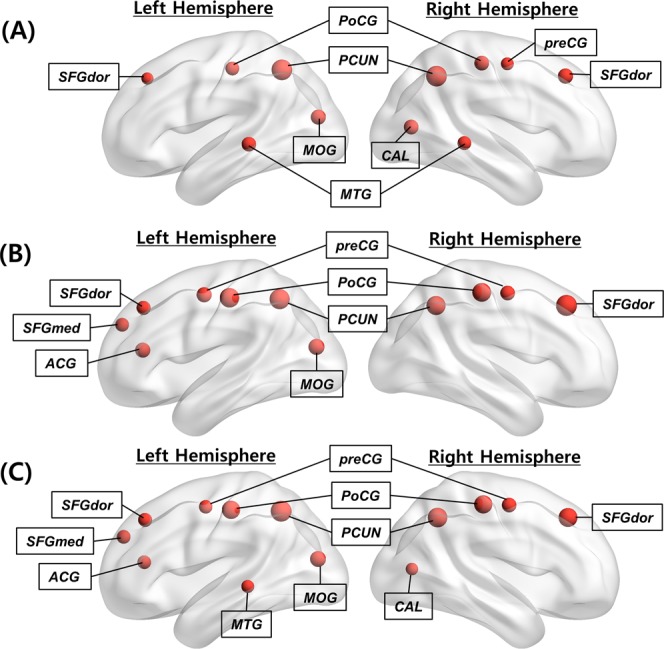
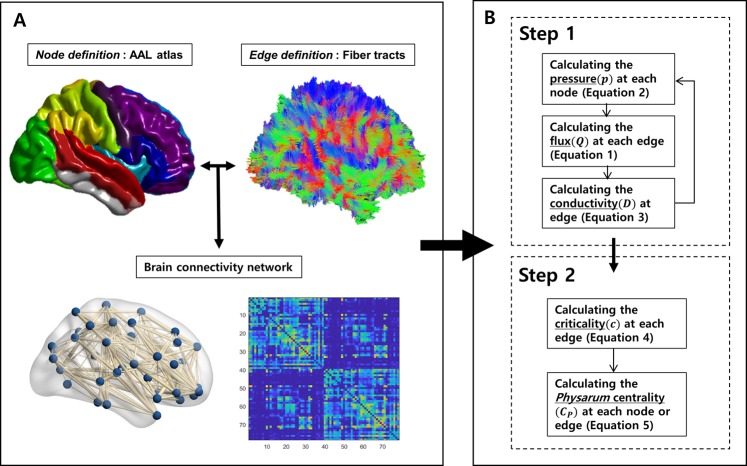
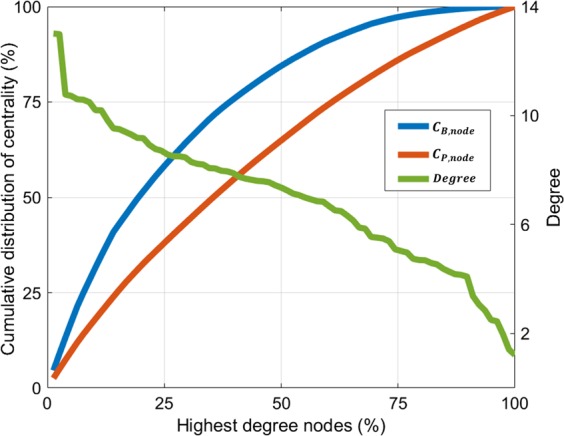
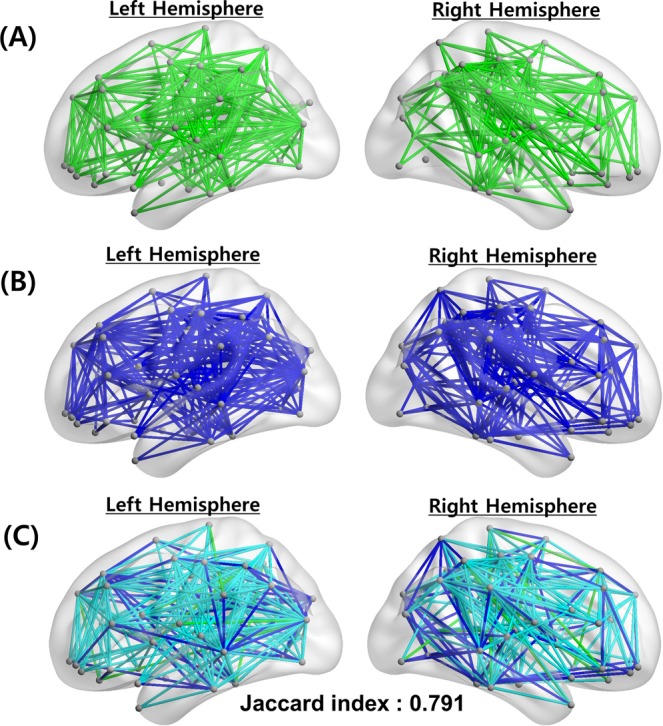
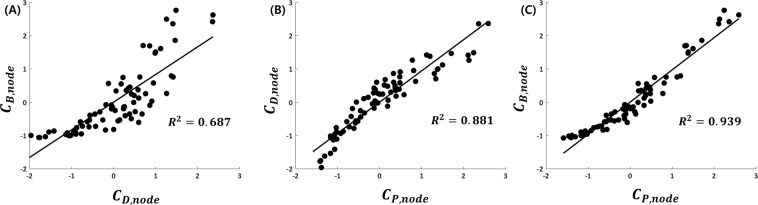
The most important goals of brain network analyses are to (a) detect pivotal regions and connections that contribute to disproportionate communication flow, (b) integrate global information, and (c) increase the brain network efficiency. Most centrality measures assume that information propagates in networks with the shortest connection paths, but this assumption is not true for most real networks given that information in the brain propagates through all possible paths. This study presents a methodological pipeline for identifying influential nodes and edges in human brain networks based on the self-regulating biological concept adopted from the Physarum model, thereby allowing the identification of optimal paths that are independent of the stated assumption. Network hubs and bridges were investigated in structural brain networks using the Physarum model. The optimal paths and fluid flow were used to formulate the Physarum centrality measure. Most network hubs and bridges are overlapped to some extent, but those based on Physarum centrality contain local and global information in the superior frontal, anterior cingulate, middle temporal gyrus, and precuneus regions. This approach also reduced individual variation. Our results suggest that the Physarum centrality presents a trade-off between the degree and betweenness centrality measures.
(a) 检测对不成比例的信息流有贡献的关键区域和连接;(b) 整合全局信息;(c) 提高大脑网络效率。大多数中心性度量假设信息在具有最短连接路径的网络中传播,但对于大脑中的信息通过所有可能路径传播的大多数实际网络来说,这种假设并不成立。本研究提出了一种基于从 Physarum 模型中采用的自我调节生物概念来识别人类大脑网络中具有影响力的节点和边的方法学流程,从而可以识别与所述假设无关的最佳路径。使用 Physarum 模型研究了结构大脑网络中的网络枢纽和桥梁。最优路径和流体流动用于构建 Physarum 中心性度量。大多数网络枢纽和桥梁在某种程度上是重叠的,但基于 Physarum 中心性的枢纽和桥梁包含了额上回、前扣带回、中颞叶和楔前叶区域的局部和全局信息。这种方法还减少了个体差异。我们的结果表明,Physarum 中心性在度中心性和介数中心性度量之间存在权衡。