Occams, Amstelveen, The Netherlands.
Merck Healthcare KGaA, Darmstadt, Germany.
CPT Pharmacometrics Syst Pharmacol. 2019 Jun;8(6):415-427. doi: 10.1002/psp4.12406. Epub 2019 Apr 25.
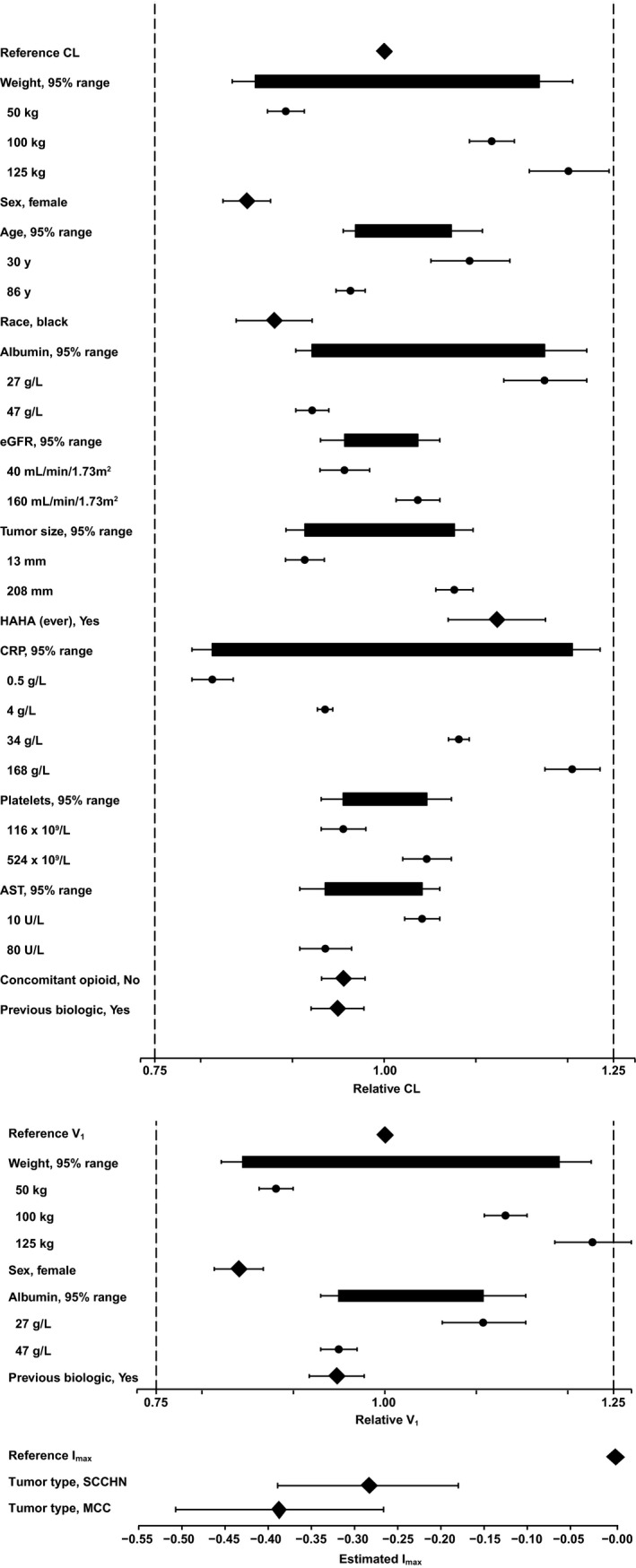
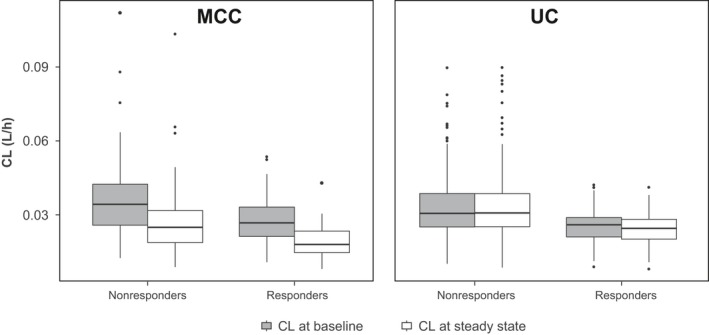
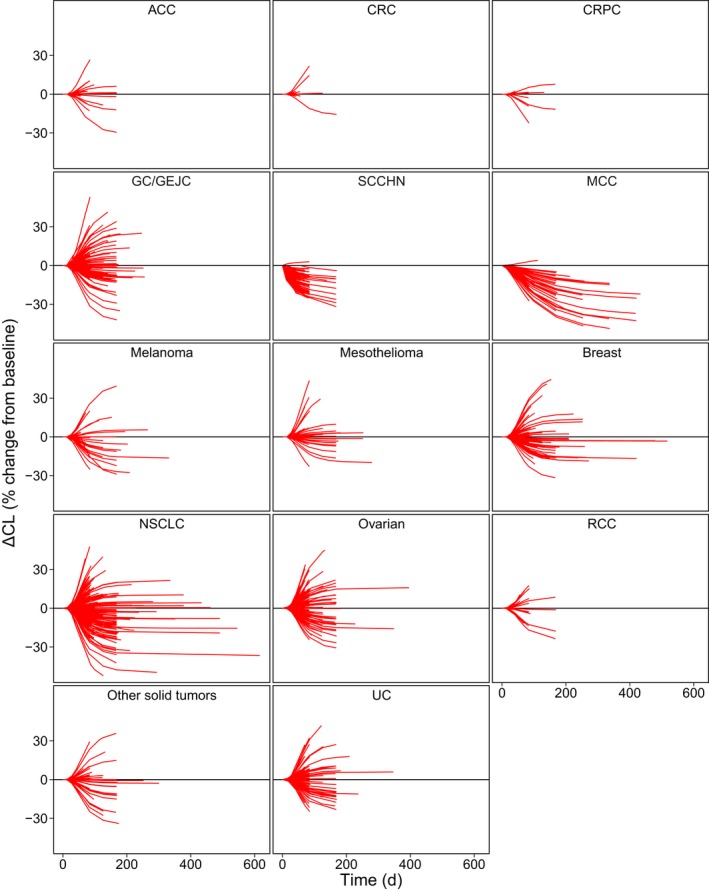
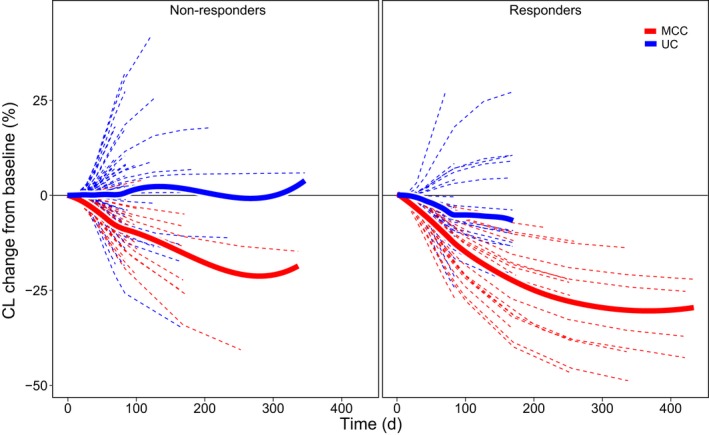
Avelumab, a human anti-programmed death ligand 1 immunoglobulin G1 antibody, has shown efficacy and manageable safety in multiple tumors. A two-compartment population pharmacokinetic model for avelumab incorporating intrinsic and extrinsic covariates and time-varying clearance (CL) was identified based on data from 1,827 patients across three clinical studies. Of 14 tumor types, a decrease in CL over time was more notable in metastatic Merkel cell carcinoma and squamous cell carcinoma of the head and neck, which had maximum decreases of 32.1% and 24.7%, respectively. The magnitude of reduction in CL was higher in responders than in nonresponders. Significant covariate effects of baseline weight, baseline albumin, and sex were identified on both CL and central distribution volume. Significant covariate effects of black/African American race, C-reactive protein, and immunogenicity were found on CL. None of the covariate or time-dependent effects were clinically important or warranted dose adjustment.
avelumab 是一种人源抗程序性死亡配体 1 免疫球蛋白 G1 抗体,已在多种肿瘤中显示出疗效和可管理的安全性。根据三项临床研究中 1827 名患者的数据,建立了包含内在和外在协变量以及时变清除率(CL)的avelumab 两室群体药代动力学模型。在 14 种肿瘤类型中,转移性 Merkel 细胞癌和头颈部鳞状细胞癌的 CL 随时间的下降更为明显,分别最大下降 32.1%和 24.7%。与无应答者相比,应答者的 CL 降低幅度更大。基线体重、白蛋白和性别对 CL 和中央分布容积均有显著的协变量作用。黑种人/非裔美国人种族、C 反应蛋白和免疫原性对 CL 有显著的协变量作用。没有发现任何与临床相关的或需要剂量调整的协变量或时间依赖性效应。