Naveed Sheikh, Thappa Devinder Mohan, Dubashi Biswajit, Pandjatcharam Jagadeesan, Munisamy Malathi, Singh Nidhi
Department of Dermatology and STD, Jawaharlal Institute of Postgraduate Medical Education and Research, Puducherry, India.
Department of Medical Oncology, Jawaharlal Institute of Postgraduate Medical Education and Research, Puducherry, India.
Indian J Dermatol. 2019 Mar-Apr;64(2):122-128. doi: 10.4103/ijd.IJD_129_17.
With the introduction of newer anti-cancer agents, the adverse effects have become more rampant which call for concern in the treatment of patients with cancer. Hence, the assessment and management of dermatological adverse effects of anti-cancer therapy have become a significant part of the care of patients with cancer and require proper and close collaboration between the dermatologists and the oncologists.
To assess the frequency and pattern of mucocutaneous adverse reactions to cancer chemotherapy and chemoradiation and grade them according to their severity and to identify hematological and biochemical changes related to cancer chemotherapy-induced mucocutaneous adverse reactions.
This was a descriptive study done among 226 patients in an Indian tertiary care hospital, who presented with mucocutaneous adverse reactions to either chemotherapy alone or combination of chemotherapy and radiation to dermatology, medical oncology and radiotherapy outpatient departments. Detailed history and examination were undertaken. Visual analog score (VAS) was employed to quantify pain and pruritus. Correlation of various biochemical and hematological parameters with chemotherapy-induced adverse reactions was attempted and grading of adverse reactions was done based on the severity scale of Common Terminology Criteria for Adverse Events (CTCAE).
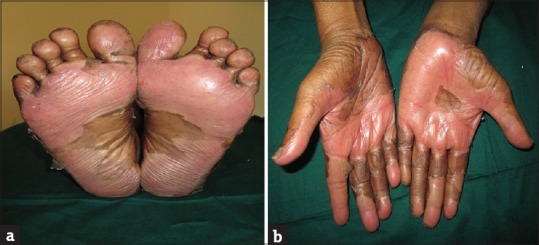
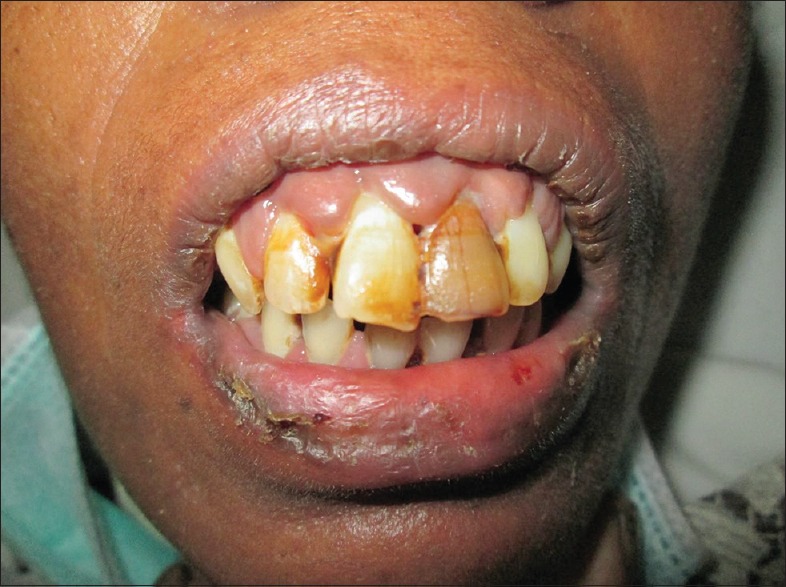
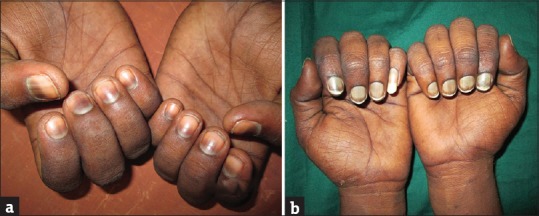
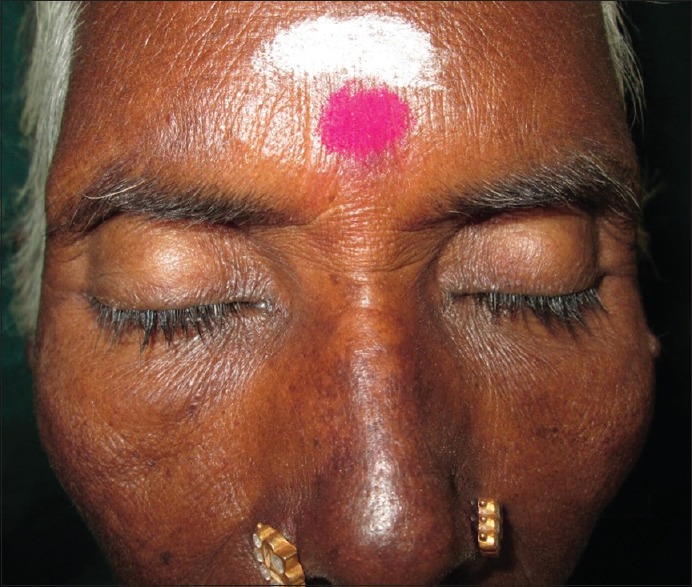
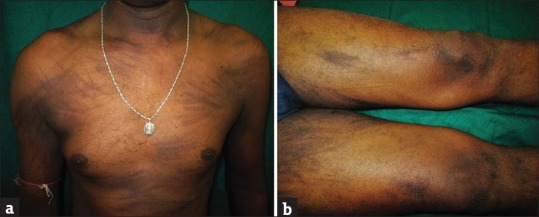
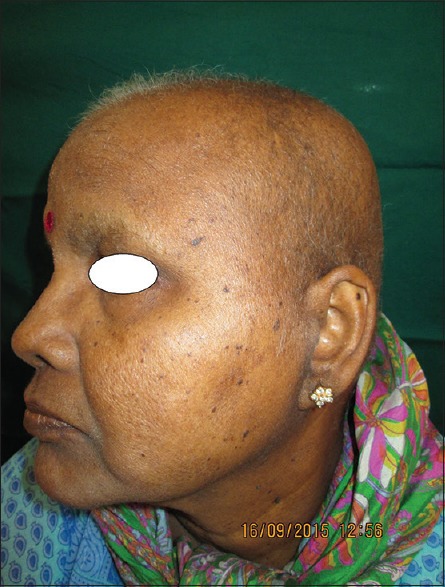
The common cutaneous adverse reactions observed in our study were nail changes (194 patients; 85.84%), followed by skin changes (191; 84.51%), hair changes (159, 70.35%), mucosal changes (34, 15.04%), and other miscellaneous manifestations. Grade 1 manifestations comprised of 49.91% of total manifestations followed by Grade 2 (45.45%) and Grade 3 (5.64%). In addition to bleomycin, other chemotherapeutic agents also had been shown to produce flagellate dermatitis in our study.
Nail changes, skin changes, hair changes and mucosal changes occurred frequently as a significant side effect of chemotherapy, which a physician should be aware of, while selecting a chemotherapeutic drug.
随着新型抗癌药物的引入,不良反应愈发普遍,这在癌症患者的治疗中值得关注。因此,抗癌治疗的皮肤不良反应的评估与管理已成为癌症患者护理的重要组成部分,需要皮肤科医生和肿瘤内科医生进行适当且密切的协作。
评估癌症化疗和放化疗引起的黏膜皮肤不良反应的频率和模式,并根据其严重程度进行分级,同时确定与癌症化疗引起的黏膜皮肤不良反应相关的血液学和生化变化。
这是一项在印度一家三级护理医院对226例患者进行的描述性研究,这些患者因单独化疗或化疗与放疗联合治疗出现黏膜皮肤不良反应,前往皮肤科、医学肿瘤学和放疗门诊就诊。进行了详细的病史询问和检查。采用视觉模拟评分法(VAS)对疼痛和瘙痒进行量化。尝试将各种生化和血液学参数与化疗引起的不良反应进行相关性分析,并根据不良事件通用术语标准(CTCAE)的严重程度量表对不良反应进行分级。
在我们的研究中观察到的常见皮肤不良反应依次为指甲改变(194例患者;85.84%)、皮肤改变(191例;84.51%)、毛发改变(159例,70.35%)、黏膜改变(34例,15.04%)以及其他杂项表现。1级表现占总表现的49.91%,其次是2级(45.45%)和3级(5.64%)。在我们的研究中,除博来霉素外,其他化疗药物也被证明可引起鞭毛虫性皮炎。
指甲改变、皮肤改变、毛发改变和黏膜改变作为化疗的显著副作用频繁发生,医生在选择化疗药物时应予以注意。