Swelem Amal Ali, Al-Rafah Eman MohamedZaghloul
Oral and Maxillofacial Prosthodontic Department, Faculty of Dentistry, King Abdulaziz University, Jeddah, Saudi Arabia.
Removable Prosthodontic Department, Faculty of Oral and Dental Medicine, Cairo University, Egypt.
Saudi Dent J. 2019 Apr;31(2):277-283. doi: 10.1016/j.sdentj.2019.01.012. Epub 2019 Jan 29.
The Golden Proportion (GP) has been considered by many as the most harmonious recurrent tooth-to-tooth ratio and has long been proposed as an aesthetic guideline for restoring/replacing maxillary anterior teeth. Researchers investigated GP in various populations.
The aim of the current study was to investigate the occurrence and prevalence of the GP between the perceived widths of maxillary anterior teeth in a Saudi population with natural smiles.
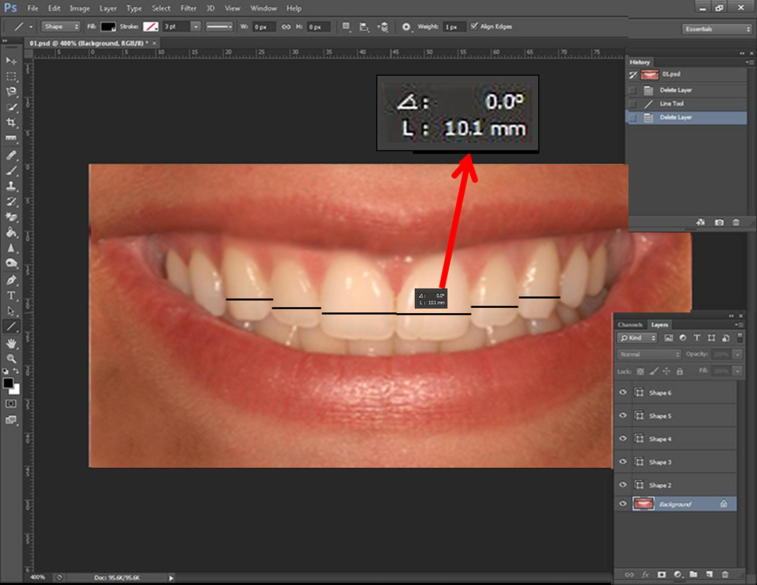
A total of 360 Saudi dental students (180 males and 180 females) with natural smiles and who met the inclusion criteria were included in the study. Frontal photographs were captured for all participants while maximally smiling using a digital camera with standardized settings. Photo-editing software was used to measure the perceived mesiodistal width of each anterior maxillary tooth in all digital images. Paired and student -tests were performed to detect side and/or gender differences respectively. Calculated ratios of the perceived mesiodistal widths of the teeth were compared with their respective GP values using a one sample -test. Statistical significance was set at 5%.
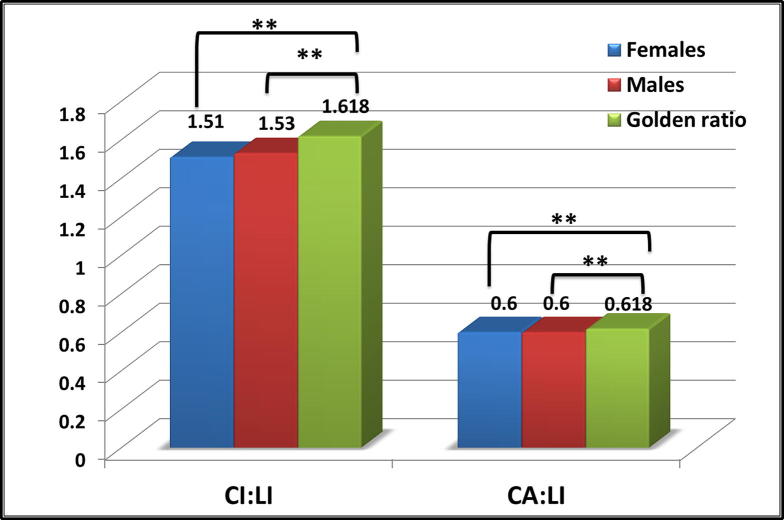
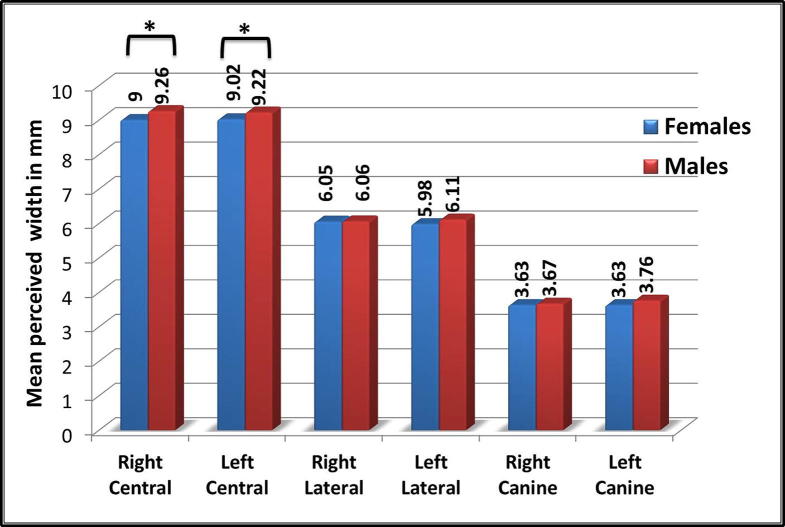
For both genders, there were significant differences (P < 0.001) between the calculated ratios and the golden ratios. No side differences in the GP were detected. Males had wider teeth than females however significant differences between genders was detected for the centrals (P < 0.001) only.
Width ratios of the maxillary anterior teeth did not follow the GP for the examined Saudi population. Males had wider anterior teeth with the centrals exhibiting a significant gender-based difference. There was no side-dependent variation for both genders.
黄金比例(GP)被许多人认为是最和谐的牙与牙之间反复出现的比例,长期以来一直被提议作为修复/替换上颌前牙的美学指南。研究人员在不同人群中对黄金比例进行了调查。
本研究的目的是调查在具有自然微笑的沙特人群中,上颌前牙感知宽度之间黄金比例的出现情况和流行程度。
共有360名具有自然微笑且符合纳入标准的沙特牙科学生(180名男性和180名女性)纳入本研究。使用具有标准化设置的数码相机为所有参与者在最大程度微笑时拍摄正面照片。使用照片编辑软件测量所有数字图像中每个上颌前牙的近远中感知宽度。分别进行配对检验和学生检验以检测左右侧和/或性别差异。使用单样本检验将计算出的牙齿近远中感知宽度的比例与其各自的黄金比例值进行比较。统计学显著性设定为5%。
对于男女两性,计算出的比例与黄金比例之间均存在显著差异(P<0.001)。未检测到黄金比例的左右侧差异。男性的牙齿比女性宽,但仅在中切牙中检测到性别之间的显著差异(P<0.001)。
对于所研究的沙特人群,上颌前牙的宽度比例不符合黄金比例。男性的前牙更宽,中切牙表现出显著的性别差异。男女两性均不存在左右侧依赖性差异。