Yoo Yongjae, Moon Jee Youn, Yoon Sojeong, Kwon Seok Min, Sim Sung Eun
Department of Anesthesiology and Pain Medicine, Seoul National University Hospital.
Integrated Cancer Management Center, Seoul National University Cancer Hospital.
Medicine (Baltimore). 2019 Apr;98(15):e15169. doi: 10.1097/MD.0000000000015169.
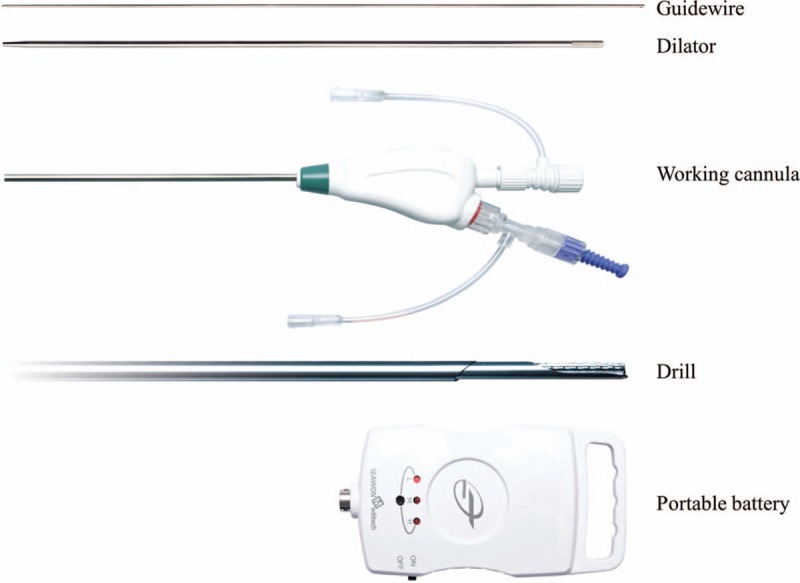
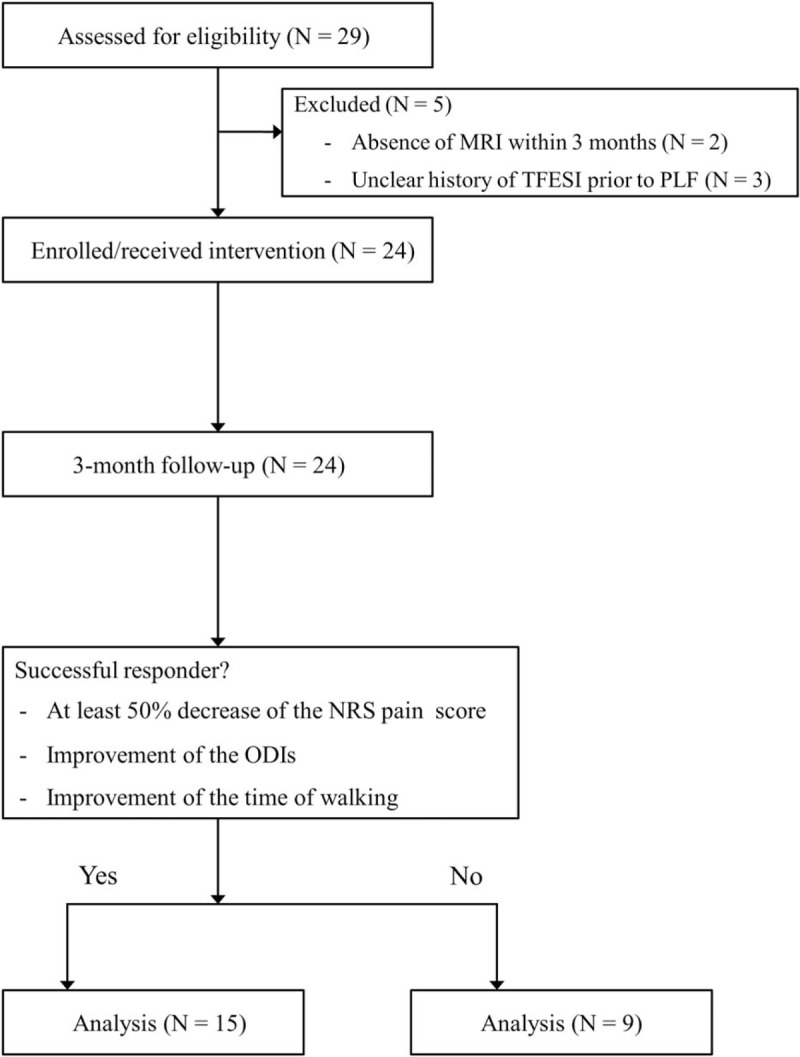
Lumbar foraminal spinal stenosis (LFSS) is defined as the narrowing of the nerve root exit associated with a herniated intervertebral disc, osteoarthritic changes in the facet joints, or a hypertrophied ligamentum flavum, which can provoke neurogenic claudication. To achieve effective and safe decompression of the lumbar spinal foramen, a specially designed instrument (Claudicare, SEAWON Meditech, Bucheon-si, Gyeonggi-do, Republic of Korea) for percutaneous lumbar foraminoplasty (PLF) was invented. The purpose of this study was to evaluate the clinical efficacy and safety of the newly devised instrument in patients with LFSS.PLF was performed for LFSS by a single pain physician. For each patient, an 11-point numerical rating scale (NRS) pain score-the Oswestry Disability Index (ODI)-and the duration of walking without radicular pain were evaluated at the 3-month follow-up. The successful responder percentage was defined as ≥50% reduction from the baseline NRS score with improvement in ODI and duration of walking.Among 24 patients who underwent PLF, 15 patients showed successful responses. The NRS pain score and duration of walking without radicular pain were improved significantly from baseline at the 3-month follow-up (P < .01). The ODI was also decreased, but the difference was not statistically significant (P = .09). The NRS pain score and walking duration without pain at 3 months were statistically significantly different between the groups (P < .001 and P = .01, respectively), whereas there was no statistically significant difference in improvement in ODI between the groups (P = .23). No serious adverse events occurred in the study.In conclusion, PLF using the Claudicare device may be an optimal and safe option for managing intractable LFSS on an outpatient basis.
腰椎椎间孔狭窄症(LFSS)被定义为与椎间盘突出、小关节骨关节炎改变或肥厚的黄韧带相关的神经根出口狭窄,这可引发神经源性间歇性跛行。为实现腰椎椎间孔的有效且安全减压,发明了一种专门设计的用于经皮腰椎椎间孔成形术(PLF)的器械(Claudicare,韩国京畿道富川市SEAWON Meditech公司)。本研究的目的是评估这种新设计器械对LFSS患者的临床疗效和安全性。
由一位疼痛科医生对LFSS患者进行PLF。对每位患者,在3个月随访时评估11点数字评定量表(NRS)疼痛评分、奥斯维斯特功能障碍指数(ODI)以及无神经根性疼痛的行走持续时间。成功应答者百分比定义为与基线NRS评分相比降低≥50%,且ODI和行走持续时间有所改善。
在接受PLF的24例患者中,15例显示出成功应答。在3个月随访时,NRS疼痛评分和无神经根性疼痛的行走持续时间与基线相比有显著改善(P<0.01)。ODI也有所降低,但差异无统计学意义(P=0.09)。两组之间3个月时的NRS疼痛评分和无痛行走持续时间有统计学显著差异(分别为P<0.001和P=0.01),而两组之间ODI改善情况无统计学显著差异(P=0.23)。本研究中未发生严重不良事件。
总之,使用Claudicare设备进行PLF可能是门诊治疗难治性LFSS的一种最佳且安全的选择。