Institute of Biology and Ecology, Faculty of Sciences, University of Pavol Jozef Šafárik in Košice, Šrobárova 2, 04154 Košice, Slovakia.
Department of Pathophysiology and Allergy Research, Center for Pathophysiology, Infectiology and Immunology, Medical University of Vienna, Währinger Gürtel 18-20, 1090 Vienna, Austria.
Int J Mol Sci. 2019 Apr 3;20(7):1673. doi: 10.3390/ijms20071673.
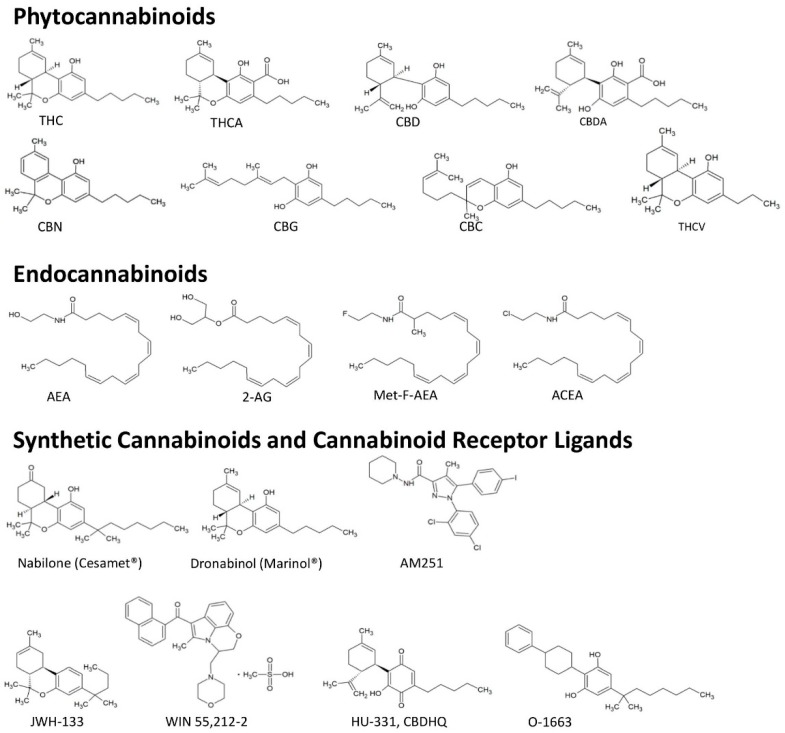
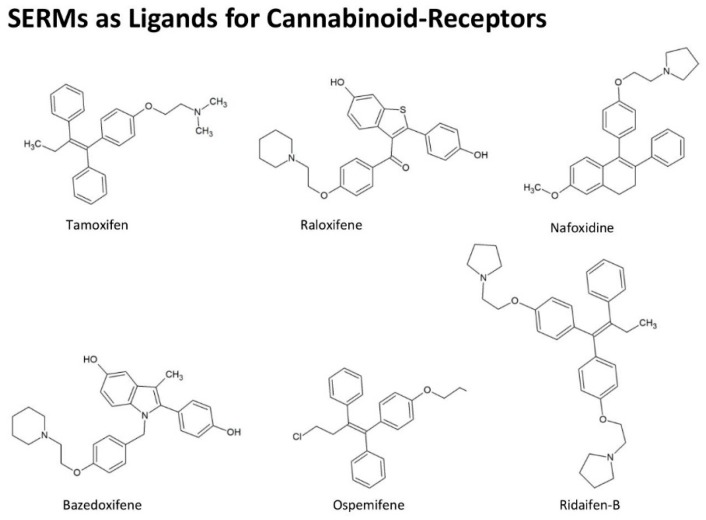
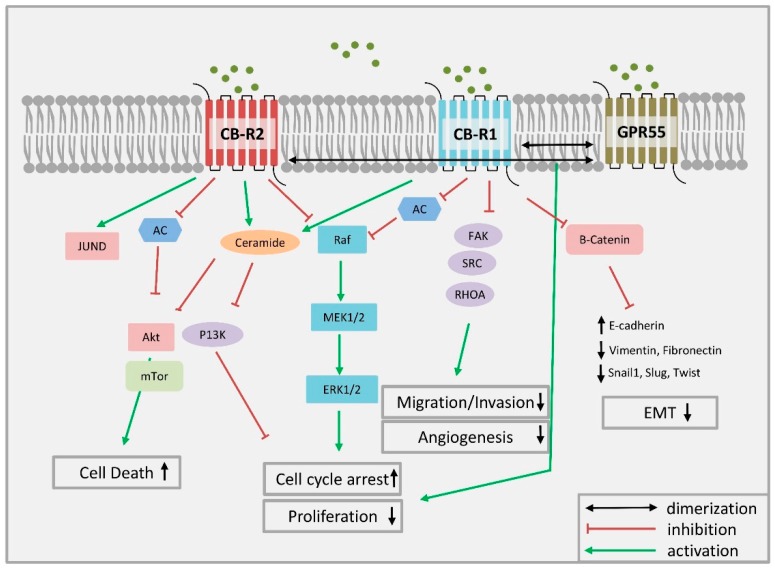
Cannabinoids (CBs) from provide relief for tumor-associated symptoms (including nausea, anorexia, and neuropathic pain) in the palliative treatment of cancer patients. Additionally, they may decelerate tumor progression in breast cancer patients. Indeed, the psychoactive delta-9-tetrahydrocannabinol (THC), non-psychoactive cannabidiol (CBD) and other CBs inhibited disease progression in breast cancer models. The effects of CBs on signaling pathways in cancer cells are conferred via G-protein coupled CB-receptors (CB-Rs), CB1-R and CB2-R, but also via other receptors, and in a receptor-independent way. THC is a partial agonist for CB1-R and CB2-R; CBD is an inverse agonist for both. In breast cancer, CB1-R expression is moderate, but CB2-R expression is high, which is related to tumor aggressiveness. CBs block cell cycle progression and cell growth and induce cancer cell apoptosis by inhibiting constitutive active pro-oncogenic signaling pathways, such as the extracellular-signal-regulated kinase pathway. They reduce angiogenesis and tumor metastasis in animal breast cancer models. CBs are not only active against estrogen receptor-positive, but also against estrogen-resistant breast cancer cells. In human epidermal growth factor receptor 2-positive and triple-negative breast cancer cells, blocking protein kinase B- and cyclooxygenase-2 signaling via CB2-R prevents tumor progression and metastasis. Furthermore, selective estrogen receptor modulators (SERMs), including tamoxifen, bind to CB-Rs; this process may contribute to the growth inhibitory effect of SERMs in cancer cells lacking the estrogen receptor. In summary, CBs are already administered to breast cancer patients at advanced stages of the disease, but they might also be effective at earlier stages to decelerate tumor progression.
大麻素(CBs)可缓解肿瘤相关症状(包括恶心、厌食和神经性疼痛),用于癌症患者的姑息治疗。此外,它们可能会减缓乳腺癌患者的肿瘤进展。实际上,精神活性的 delta-9-四氢大麻酚(THC)、非精神活性的大麻二酚(CBD)和其他 CBs 可抑制乳腺癌模型中的疾病进展。CBs 对癌细胞信号通路的影响是通过 G 蛋白偶联 CB 受体(CB-R)、CB1-R 和 CB2-R 赋予的,但也通过其他受体和受体非依赖性方式赋予的。THC 是 CB1-R 和 CB2-R 的部分激动剂;CBD 是两者的反向激动剂。在乳腺癌中,CB1-R 表达适度,但 CB2-R 表达较高,这与肿瘤侵袭性有关。CBs 通过抑制组成性激活的致癌信号通路,如细胞外信号调节激酶通路,阻止细胞周期进程和细胞生长,并诱导癌细胞凋亡。它们减少动物乳腺癌模型中的血管生成和肿瘤转移。CBs 不仅对雌激素受体阳性有效,而且对雌激素抵抗的乳腺癌细胞也有效。在人类表皮生长因子受体 2 阳性和三阴性乳腺癌细胞中,通过 CB2-R 阻断蛋白激酶 B 和环氧化酶-2 信号可防止肿瘤进展和转移。此外,选择性雌激素受体调节剂(SERMs),包括他莫昔芬,与 CB-R 结合;这个过程可能有助于 SERMs 在缺乏雌激素受体的癌细胞中发挥生长抑制作用。总之,CBs 已经在疾病晚期的乳腺癌患者中使用,但它们也可能在早期阶段有效,以减缓肿瘤进展。