Department of Orthopedics, Shanghai General Hospital, Shanghai Jiao Tong University School of Medicine, Shanghai, China.
Department of Orthopedics, Shanghai General Hospital, Shanghai Jiao Tong University School of Medicine, Shanghai, China
Biosci Rep. 2019 May 14;39(5). doi: 10.1042/BSR20190456. Print 2019 May 31.
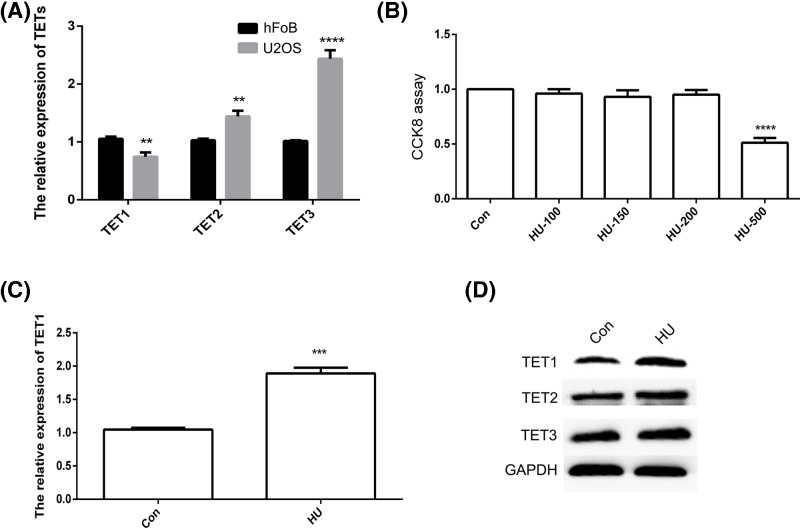
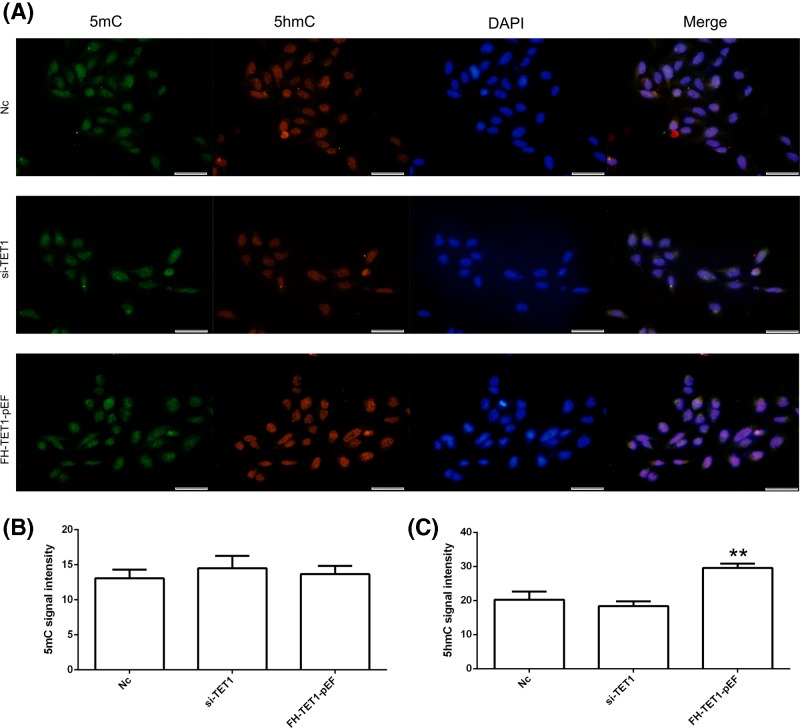
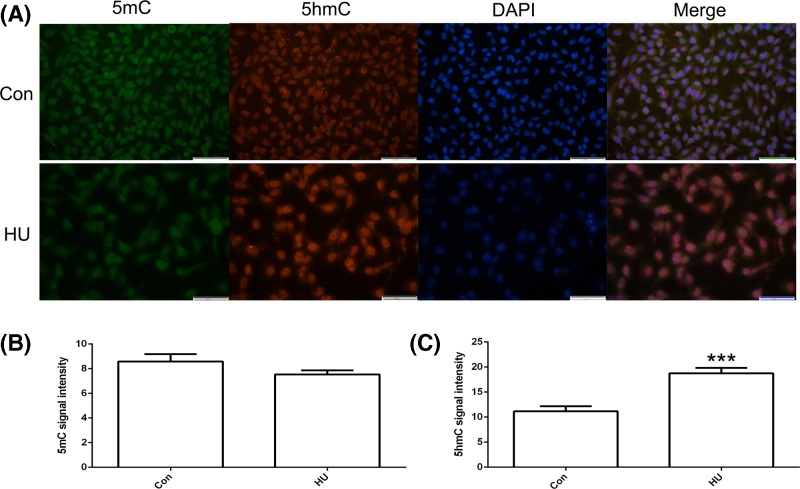
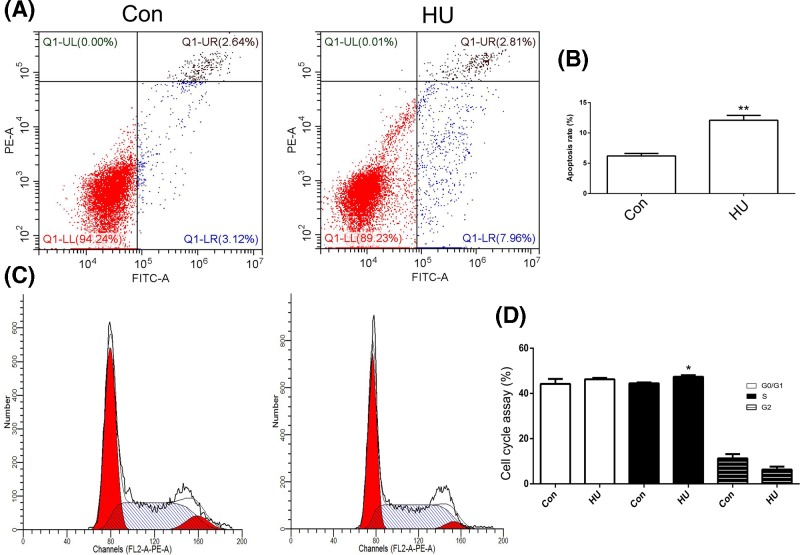
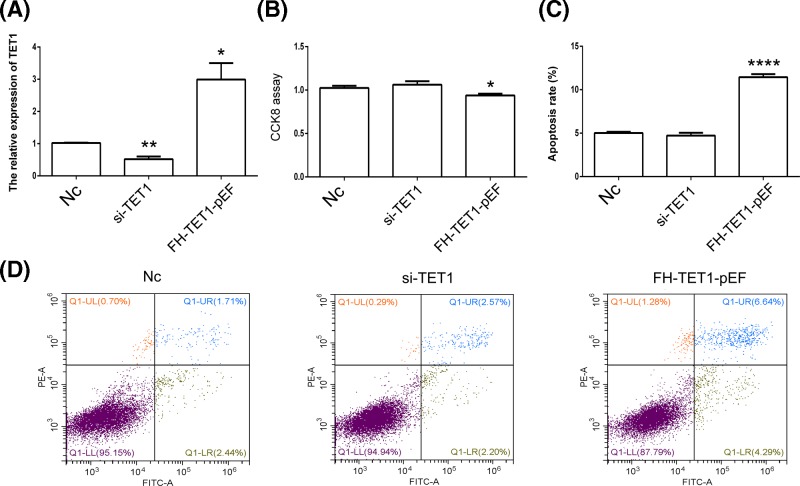
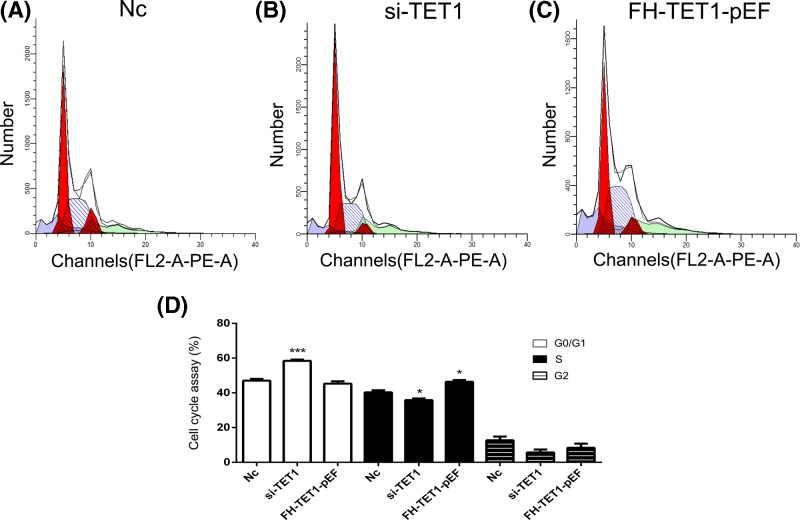
Ten-eleven translocation (TET) proteins are abnormally expressed in various cancers. Osteosarcoma cells were treated with hydroxyurea to investigate the expression pattern of TET proteins in these cells. The expression of TET1 was increased in U2OS cells after treatment with hydroxyurea. In addition, hydroxyurea increased cell apoptosis and altered the cell cycle. TET proteins catalyze the oxidation of 5-methylcytosine (5mC) to 5-hydroxymethylcytosine (5hmC); therefore, 5mC and 5hmC levels were evaluated. Increased 5hmC levels were observed after the hydroxyurea treatment. Experiments examining cell apoptosis and the cell cycle after knockdown and overexpression of TET1 were conducted to further investigate whether TET1 expression affected cell growth. The overexpression of TET1 increased cell apoptosis and inhibited cell growth. Taken together, TET1 expression regulated proliferation and apoptosis in U2OS cells, changes that were associated with 5hmC levels.
十号十一号易位(TET)蛋白在各种癌症中异常表达。用羟基脲处理骨肉瘤细胞,研究 TET 蛋白在这些细胞中的表达模式。羟基脲处理后 U2OS 细胞中 TET1 的表达增加。此外,羟基脲增加细胞凋亡并改变细胞周期。TET 蛋白催化 5-甲基胞嘧啶(5mC)氧化为 5-羟甲基胞嘧啶(5hmC);因此,评估了 5mC 和 5hmC 水平。羟基脲处理后观察到 5hmC 水平升高。进行了敲低和过表达 TET1 后细胞凋亡和细胞周期的实验,以进一步研究 TET1 表达是否影响细胞生长。TET1 的过表达增加了细胞凋亡并抑制了细胞生长。综上所述,TET1 表达调节 U2OS 细胞的增殖和凋亡,这些变化与 5hmC 水平相关。