Department of Immunology and Microbiology, The Scripps Research Institute, Jupiter, FL, USA.
Epigenetics Chromatin. 2019 Apr 16;12(1):23. doi: 10.1186/s13072-019-0267-8.
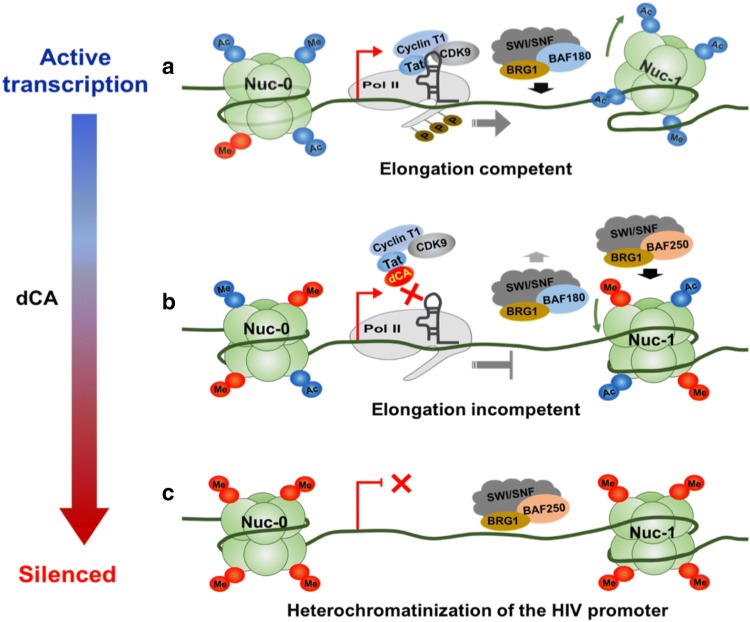
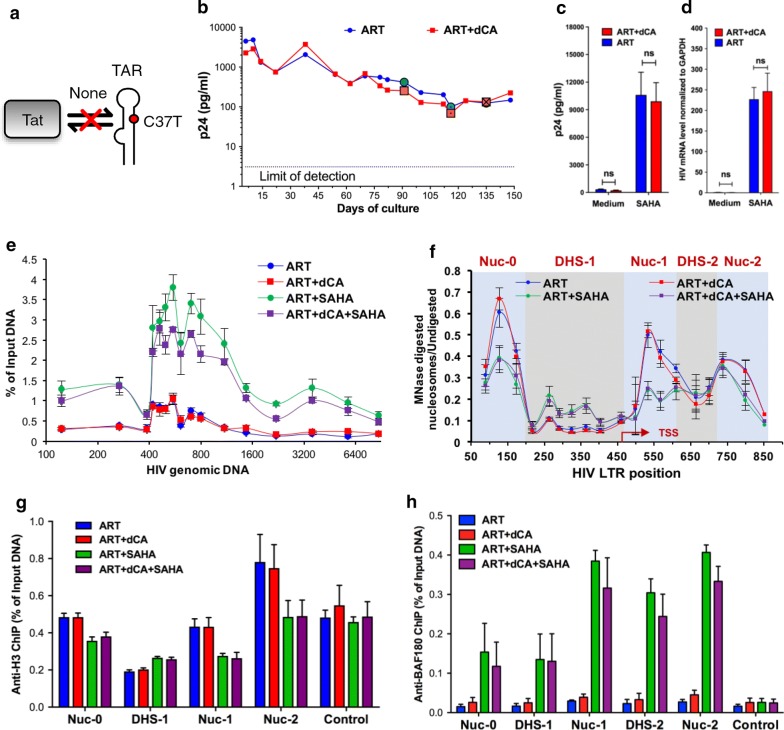
Transcription from the integrated HIV-1 promoter is directly governed by its chromatin environment, and the nucleosome-1 downstream from the transcription start site directly impedes transcription from the HIV-1 promoter. The HIV-1 Tat protein regulates the passage from viral latency to active transcription by binding to the viral mRNA hairpin (TAR) and recruiting transcriptional factors to promote transcriptional elongation. The Tat inhibitor didehydro-Cortistatin A (dCA) inhibits transcription and overtime, the lack of low-grade transcriptional events, triggers epigenetic changes at the latent loci that "lock" HIV transcription in a latent state.
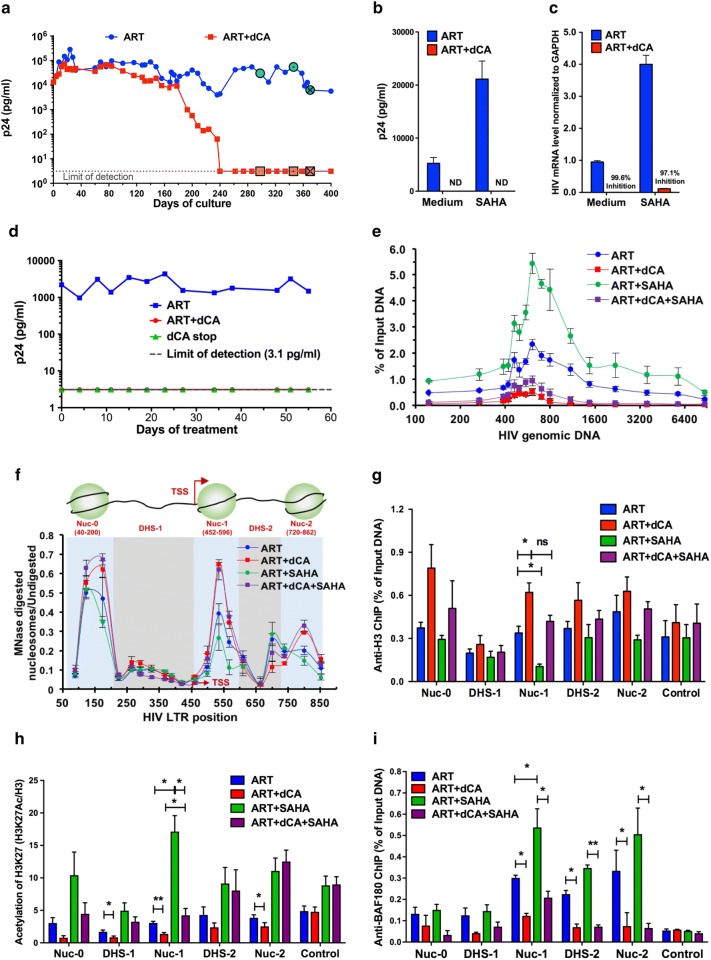
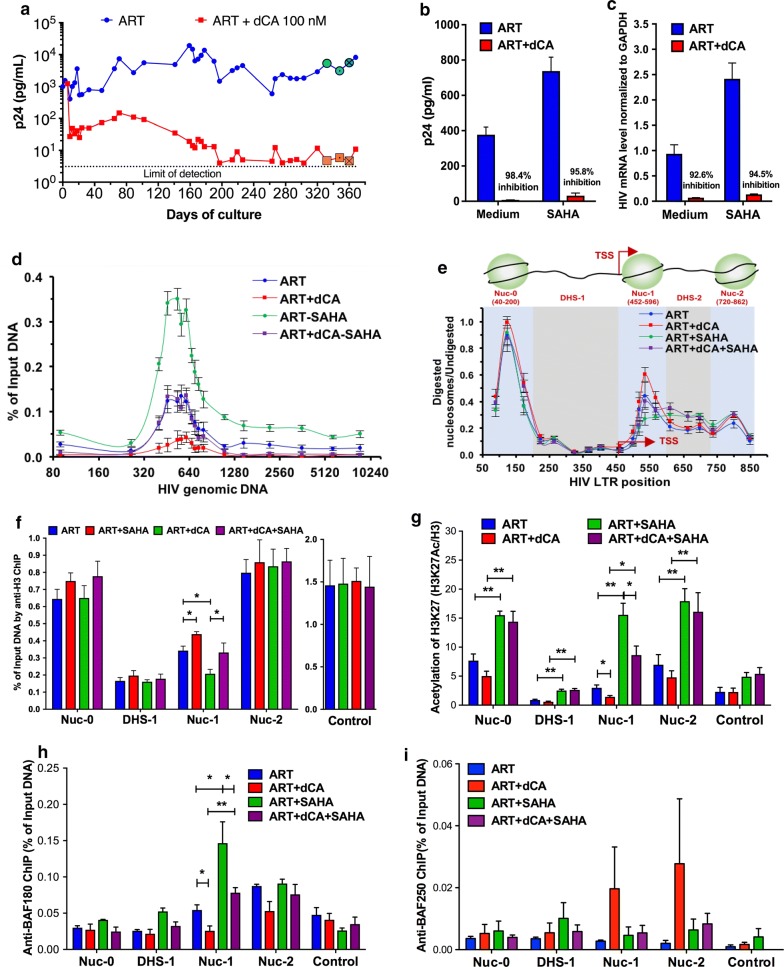
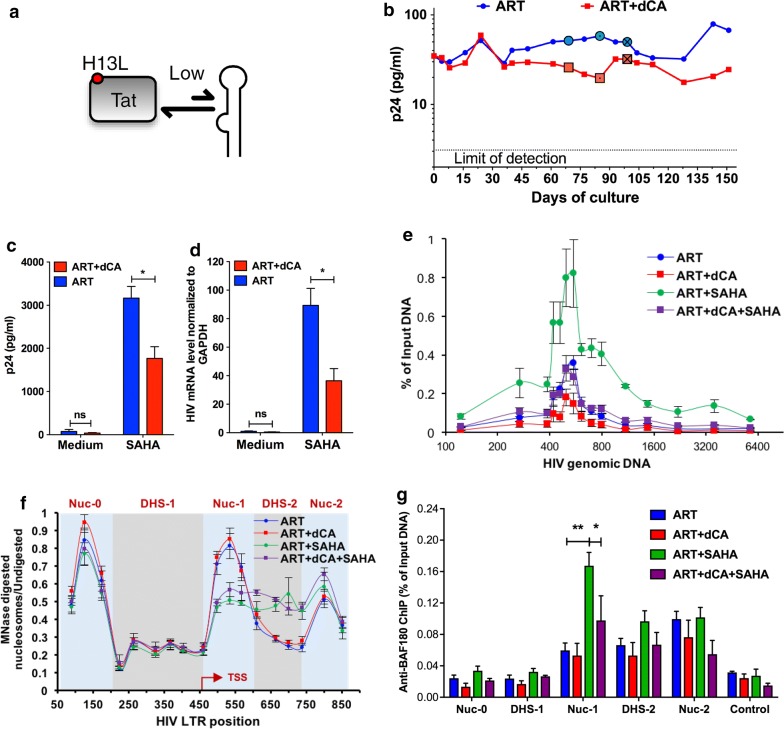
Here we investigated those epigenetic changes using multiple cell line models of HIV-1 latency and active transcription. We demonstrated that dCA treatment does not alter the classic nucleosome positioning at the HIV-1 promoter, but promotes tighter nucleosome/DNA association correlating with increased deacetylated H3 occupancy at nucleosome-1. Recruitment of the SWI/SNF chromatin remodeling complex PBAF, necessary for Tat-mediated transactivation, is also inhibited, while recruitment of the repressive BAF complex is enhanced. These results were supported by loss of RNA polymerase II recruitment on the HIV genome, even during strong stimulation with latency-reversing agents. No epigenetic changes were detected in cell line models of latency with Tat-TAR incompetent proviruses confirming the specificity of dCA for Tat.
We characterized the dCA-mediated epigenetic signature on the HIV genome, which translates into potent blocking effects on HIV expression, further strengthening the potential of Tat inhibitors in "block-and-lock" functional cure approaches.
HIV-1 启动子的转录直接受其染色质环境调控,而转录起始位点下游的核小体-1 直接阻碍 HIV-1 启动子的转录。HIV-1 Tat 蛋白通过结合病毒 mRNA 发夹(TAR)并募集转录因子来促进转录延伸,从而调节从病毒潜伏到活跃转录的转变。Tat 抑制剂二去氢皮质抑素 A(dCA)抑制转录,随着时间的推移,缺乏低度转录事件会导致潜伏部位的表观遗传变化,从而将 HIV 转录“锁定”在潜伏状态。
在这里,我们使用多种 HIV-1 潜伏和活跃转录的细胞系模型研究了这些表观遗传变化。我们证明 dCA 处理不会改变 HIV-1 启动子的经典核小体定位,但会促进核小体/DNA 更紧密的结合,与核小体-1 中乙酰化 H3 占有率的增加相关。Tat 介导的反式激活所必需的 SWI/SNF 染色质重塑复合物 PBAF 的募集也受到抑制,而抑制性 BAF 复合物的募集则增强。这些结果得到了 HIV 基因组上 RNA 聚合酶 II 募集丧失的支持,即使在潜伏逆转剂的强烈刺激下也是如此。带有 Tat-TAR 无功能前病毒的潜伏细胞系模型中未检测到表观遗传变化,证实了 dCA 对 Tat 的特异性。
我们描述了 dCA 介导的 HIV 基因组上的表观遗传特征,这转化为对 HIV 表达的有效阻断作用,进一步增强了 Tat 抑制剂在“阻断-锁定”功能性治愈方法中的潜力。