Xu Shutan, Feng Yuan, Zhao Shaying
Department of Biochemistry and Molecular Biology, Institute of Bioinformatics, University of Georgia, Athens, GA 30602-7229, USA.
Comput Struct Biotechnol J. 2019 Mar 19;17:430-440. doi: 10.1016/j.csbj.2019.03.008. eCollection 2019.
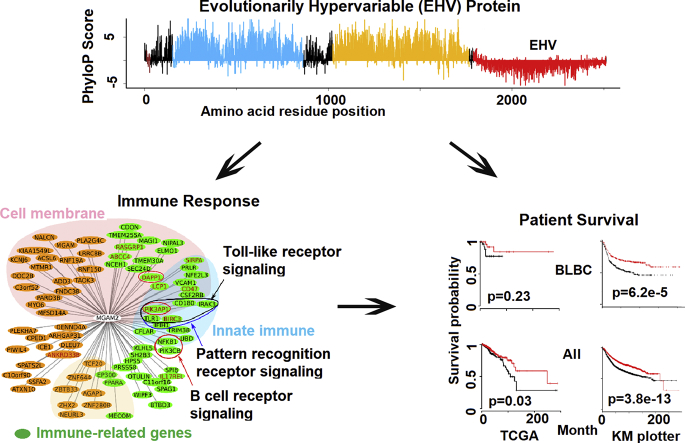
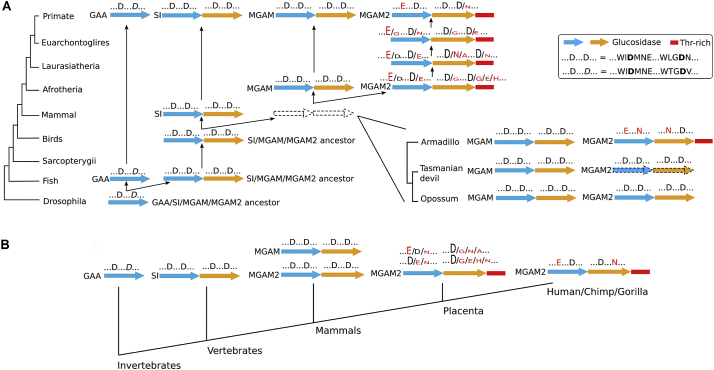
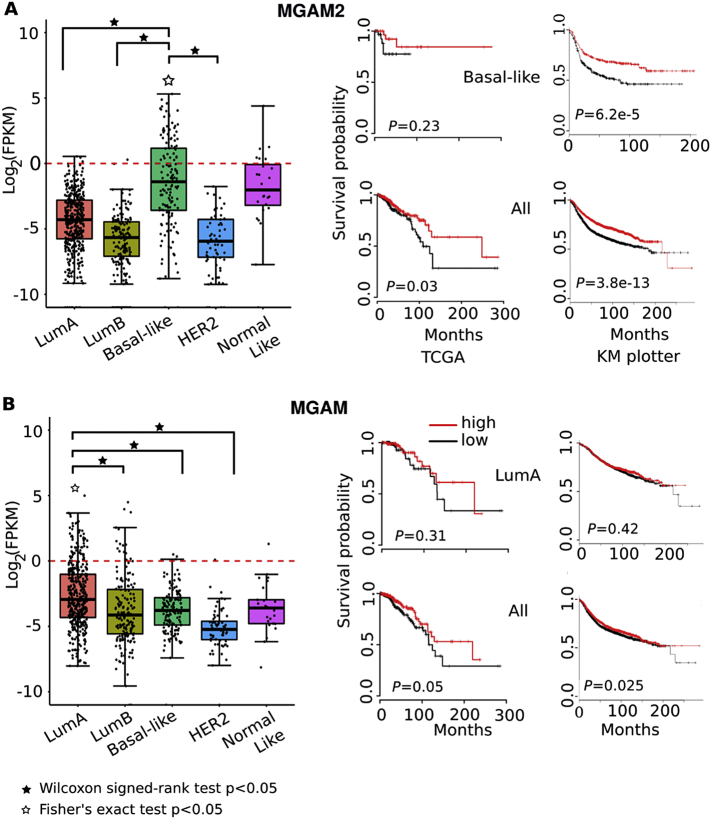
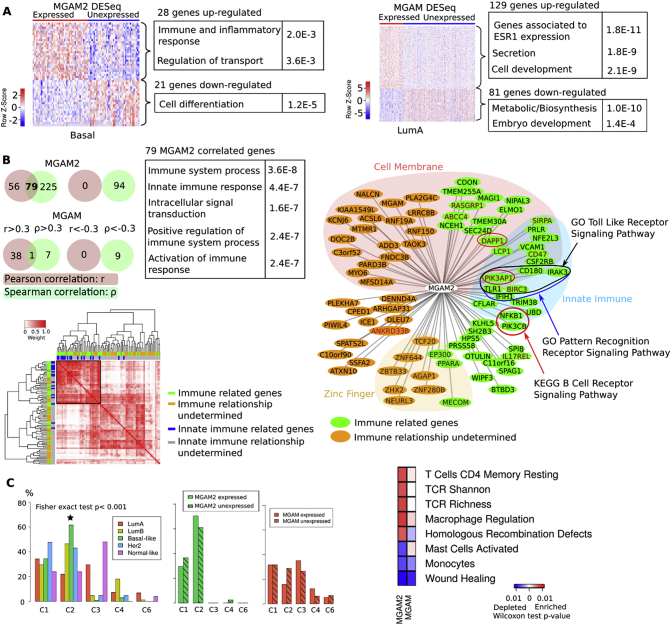
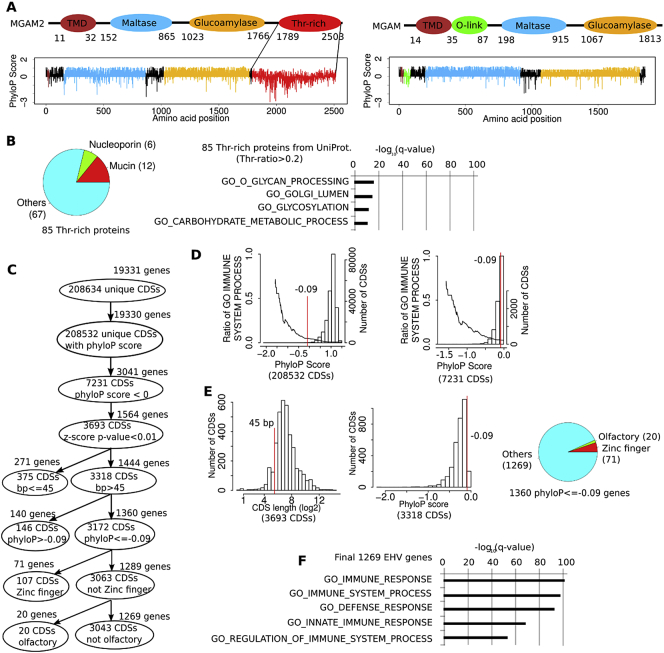
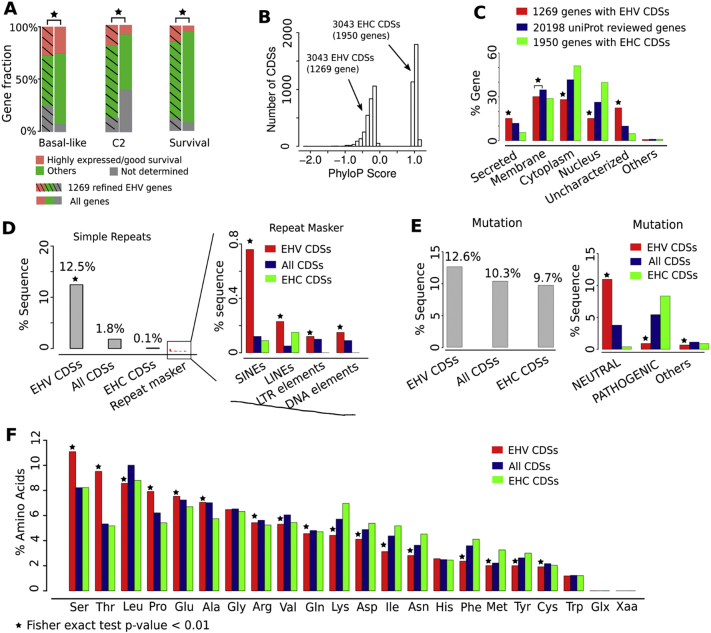
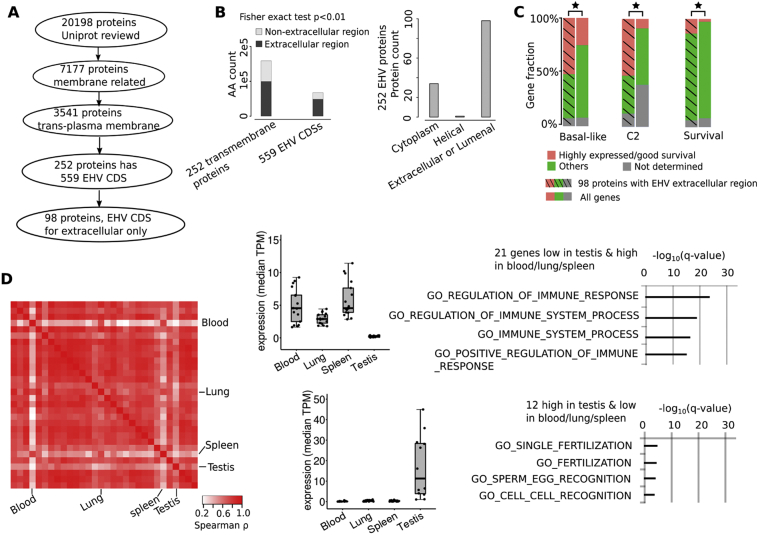
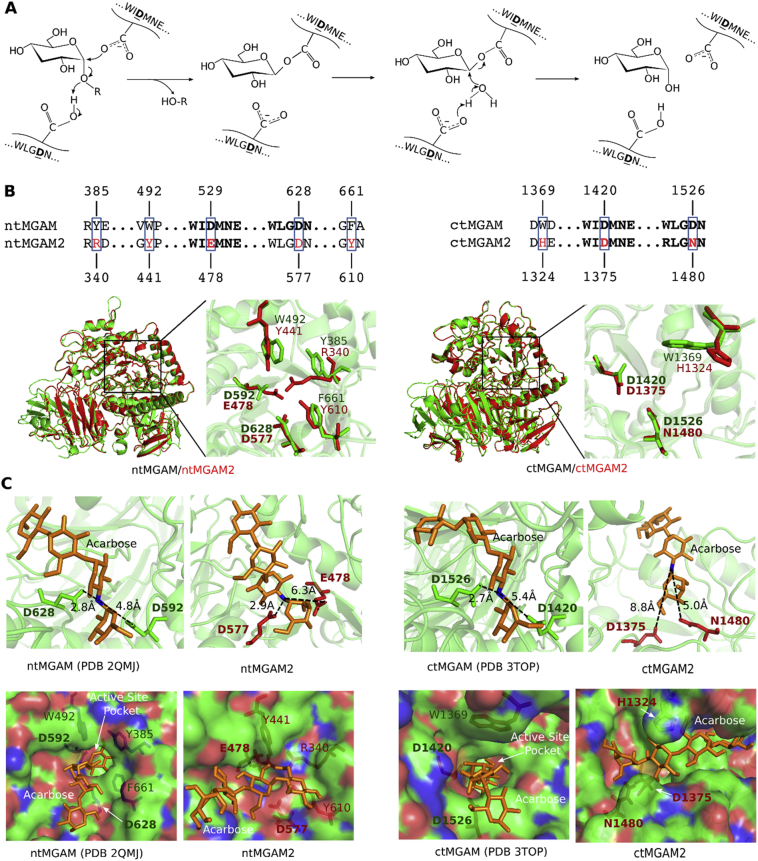
Maltase-glucoamylase (MGAM) and MGAM2 both belong to the glycoside hydrolase family 31. MGAM, a therapeutic target for type 2 diabetes, is α-1,4-glucosidase and expressed in the intestine to catalyze starch digestion. MGAM2, however, is largely uncharacterized. By investigating The Cancer Genome Atlas data, we found that among breast cancer subtypes expression is nearly exclusive to basal-like breast cancers (BLBCs), whereas tends to express in luminal A breast cancers. Moreover, expression is associated with better patient survival and correlated with immune genes/signatures, unlike . Both genes have emerged in mammals, but diverged after the placental-marsupial split. In placentals, MGAM2 has likely lost its α-1,4-glucosidase activity due to mutations in key catalytic sites, and has acquired a large domain that is extracellular, threonine-rich and evolutionarily hypervariable (EHV). Guided by MGAM2 findings, our genome-wide search identified >1000 human proteins with EHV regions. These proteins are enriched in immune functions and molecules, including major histocompatibility complex proteins. Their genes are expressed higher in BLBCs and are associated with better patient survival, like . Their EHV-coding sequences are rich in simple repeats and harbor more cancer passenger mutations. In conclusion, MGAM2 diverges from MGAM structurally and likely functionally in placentals. MGAM2 is among >1000 human proteins with EHV regions and associated with immune response. We propose that these EHV molecules may have significant implication in cancer immunotherapy and BLBC treatment.
麦芽糖酶 - 葡糖淀粉酶(MGAM)和MGAM2均属于糖苷水解酶家族31。MGAM是2型糖尿病的治疗靶点,是一种α-1,4 - 葡糖苷酶,在肠道中表达以催化淀粉消化。然而,MGAM2在很大程度上尚未被充分研究。通过研究癌症基因组图谱数据,我们发现,在乳腺癌亚型中,其表达几乎仅见于基底样乳腺癌(BLBC),而MGAM则倾向于在腔面A型乳腺癌中表达。此外,与MGAM不同,MGAM2的表达与患者更好的生存率相关,并与免疫基因/特征相关。这两种基因在哺乳动物中均已出现,但在胎盘类动物和有袋类动物分化后发生了分歧。在胎盘类动物中,由于关键催化位点的突变,MGAM2可能已失去其α-1,4 - 葡糖苷酶活性,并获得了一个大的结构域,该结构域位于细胞外、富含苏氨酸且在进化上高度可变(EHV)。基于MGAM2的研究结果,我们在全基因组范围内搜索,鉴定出了1000多种具有EHV区域的人类蛋白质。这些蛋白质在免疫功能和分子中富集,包括主要组织相容性复合体蛋白质。它们的基因在BLBC中表达更高,并且与患者更好的生存率相关,与MGAM2相似。它们的EHV编码序列富含简单重复序列,并含有更多的癌症乘客突变。总之,在胎盘类动物中,MGAM2在结构上与MGAM不同,功能上可能也不同。MGAM2是1000多种具有EHV区域并与免疫反应相关的人类蛋白质之一。我们提出,这些EHV分子可能在癌症免疫治疗和BLBC治疗中具有重要意义。