Department of Diabetes Immunology, Diabetes and Metabolism Research Institute at the Beckman Research Institute of City of Hope, Duarte, CA, United States.
Department of Immunohaematology and Blood Transfusion, Leiden University Medical Center, Leiden, Netherlands.
Front Immunol. 2019 Apr 3;10:694. doi: 10.3389/fimmu.2019.00694. eCollection 2019.
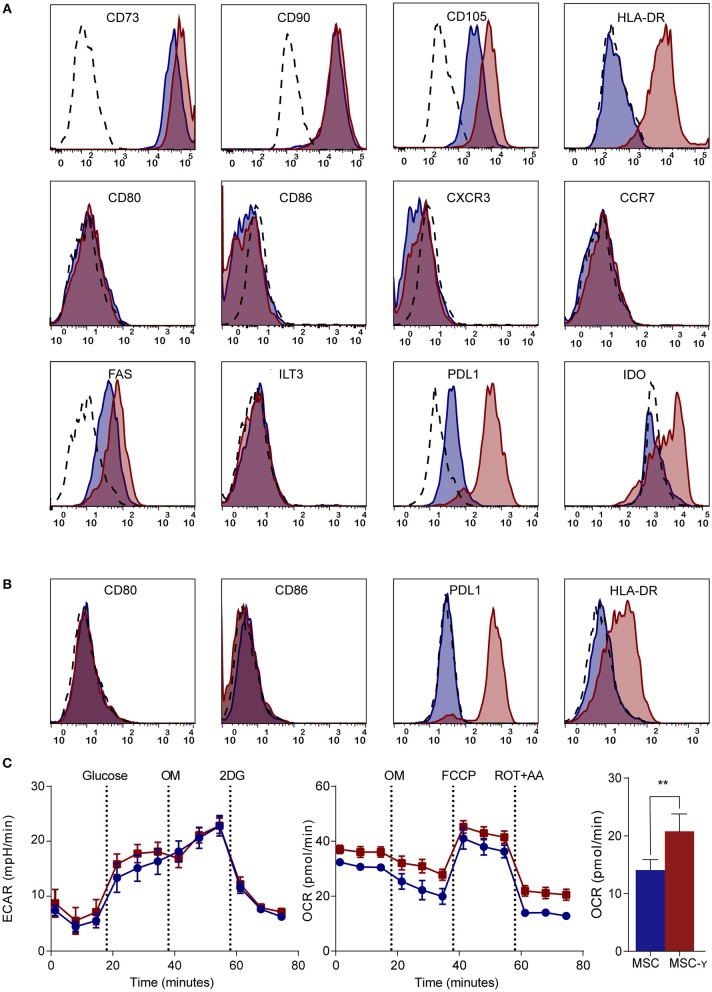
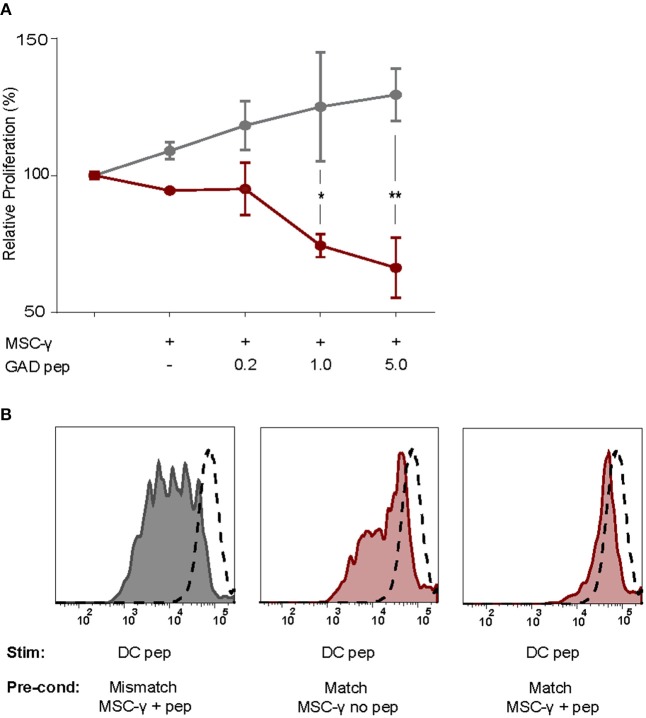
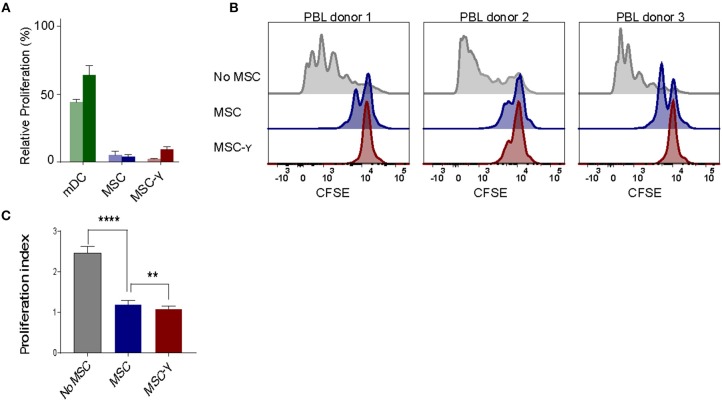
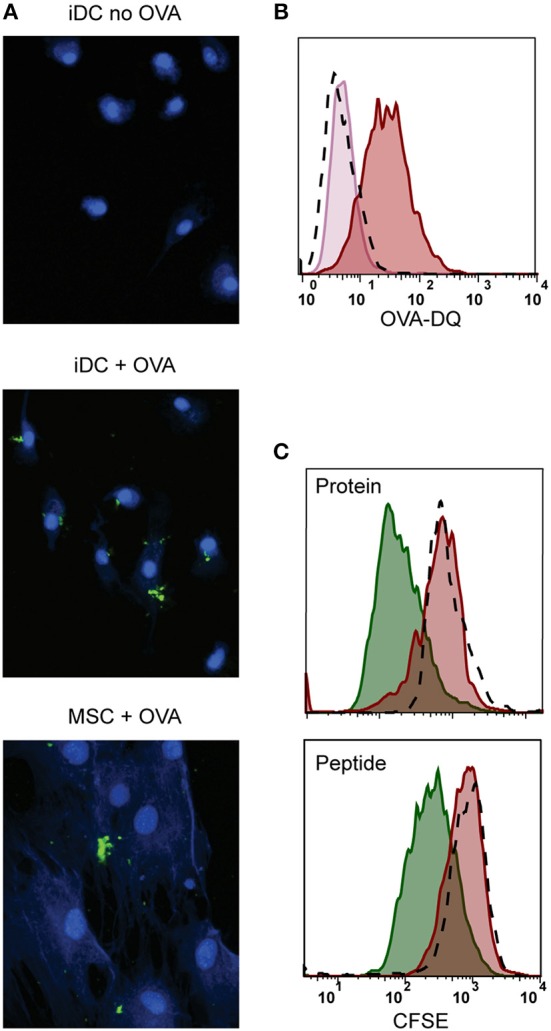
Mesenchymal stromal cells (MSCs) are inherently immunomodulatory through production of inhibiting soluble factors and expression of immunosuppressive cell surface markers. We tested whether activated MSCs qualify for the induction of antigen-specific immune regulation. Bone marrow derived human MSCs were activated by interferon-γ and analyzed for antigen uptake and processing and immune regulatory features including phenotype, immunosuppressive capacity, and metabolic activity. To assess whether activated MSC can modulate adaptive immunity, MSCs were pulsed with islet auto-antigen (GAD65) peptide to stimulate GAD65-specific T-cells. We confirm that inflammatory activation of MSCs increased HLA class II, PD-L1, and intracellular IDO expression, whereas co-stimulatory molecules including CD86 remained absent. MSCs remained locked in their metabolic phenotype, as activation did not alter glycolytic function or mitochondrial respiration. MSCs were able to uptake and process protein. Activated HLA-DR3-expressing MSCs pulsed with GAD65 peptide inhibited proliferation of HLA-DR3-restricted GAD65-specific T-cells, while this HLA class II expression did not induce cellular alloreactivity. Conditioning of antigen-specific T-cells by activated and antigen-pulsed MSCs prevented T-cells to proliferate upon subsequent activation by dendritic cells, even after removal of the MSCs. In sum, activation of MSCs with inflammatory stimuli turns these cells into suppressive cells capable of mediating adaptive regulation of proinflammatory pathogenic T-cells.
间充质基质细胞 (MSCs) 通过产生抑制性可溶性因子和表达免疫抑制性细胞表面标志物而固有地具有免疫调节作用。我们测试了激活的 MSCs 是否有资格诱导抗原特异性免疫调节。通过干扰素-γ激活骨髓来源的人 MSCs,并分析其抗原摄取和加工以及免疫调节特征,包括表型、免疫抑制能力和代谢活性。为了评估激活的 MSC 是否可以调节适应性免疫,我们用胰岛自身抗原 (GAD65) 肽脉冲刺激 GAD65 特异性 T 细胞。我们证实 MSCs 的炎症激活增加了 HLA Ⅱ类、PD-L1 和细胞内 IDO 的表达,而共刺激分子,包括 CD86,仍然不存在。MSCs 仍然保持其代谢表型,因为激活不会改变糖酵解功能或线粒体呼吸。MSCs 能够摄取和处理蛋白质。用 GAD65 肽脉冲刺激 HLA-DR3 表达的激活 MSC 抑制 HLA-DR3 限制性 GAD65 特异性 T 细胞的增殖,而这种 HLA Ⅱ类表达不会诱导细胞同种反应性。用激活和抗原脉冲刺激的 MSCs 对抗原特异性 T 细胞进行调理,可防止 T 细胞在随后被树突状细胞激活时增殖,即使在去除 MSCs 后也是如此。总之,用炎症刺激物激活 MSCs 可使这些细胞转变为具有抑制性的细胞,能够介导促炎致病性 T 细胞的适应性调节。