Wen Yingying, Ji Yong, Zhang Shifeng, Zhang Jie, Cai Gaotang
College of Water Conservancy and Ecological Engineering, Nanchang Institute of Technology, Nanchang 330099, China.
Beijing Key Laboratory of Wood Science and Engineering, Beijing Forestry University, Beijing 100083, China.
Polymers (Basel). 2019 Apr 18;11(4):711. doi: 10.3390/polym11040711.
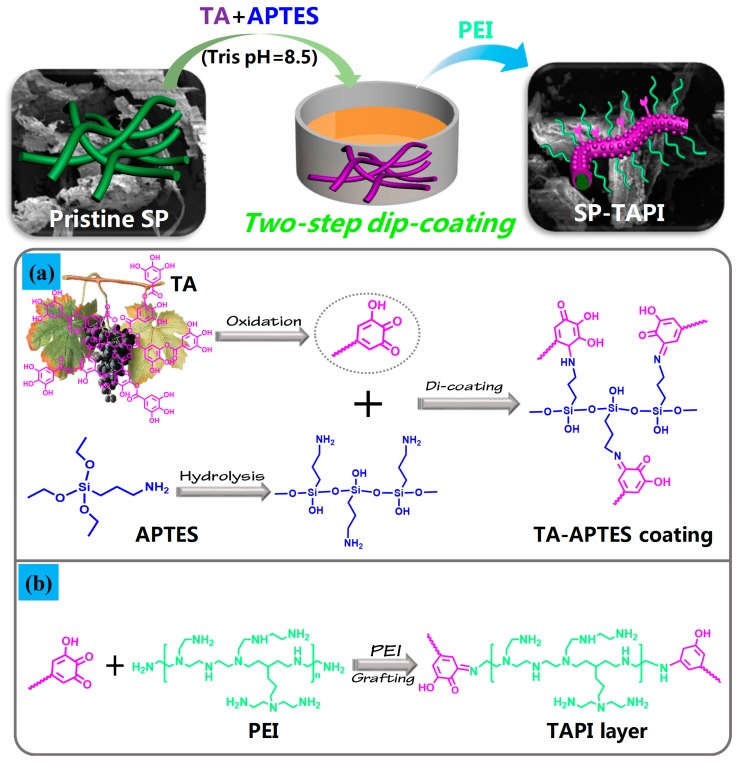
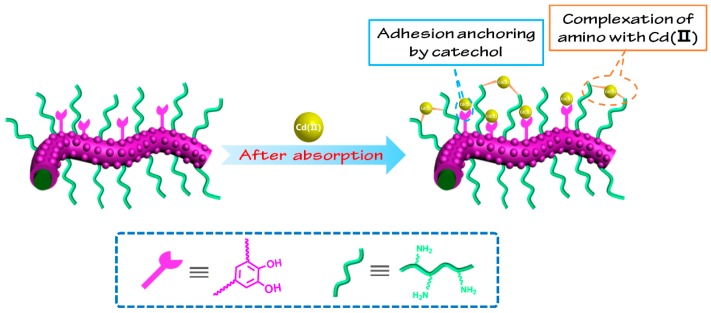
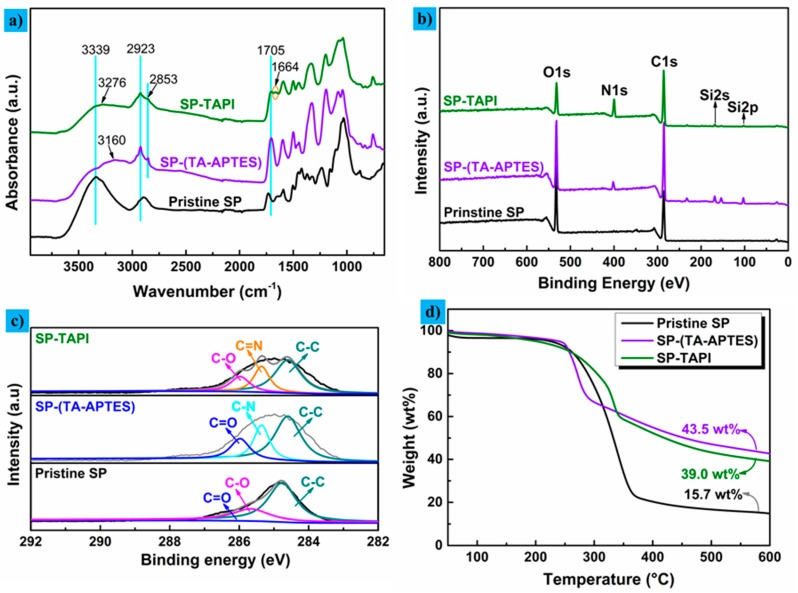
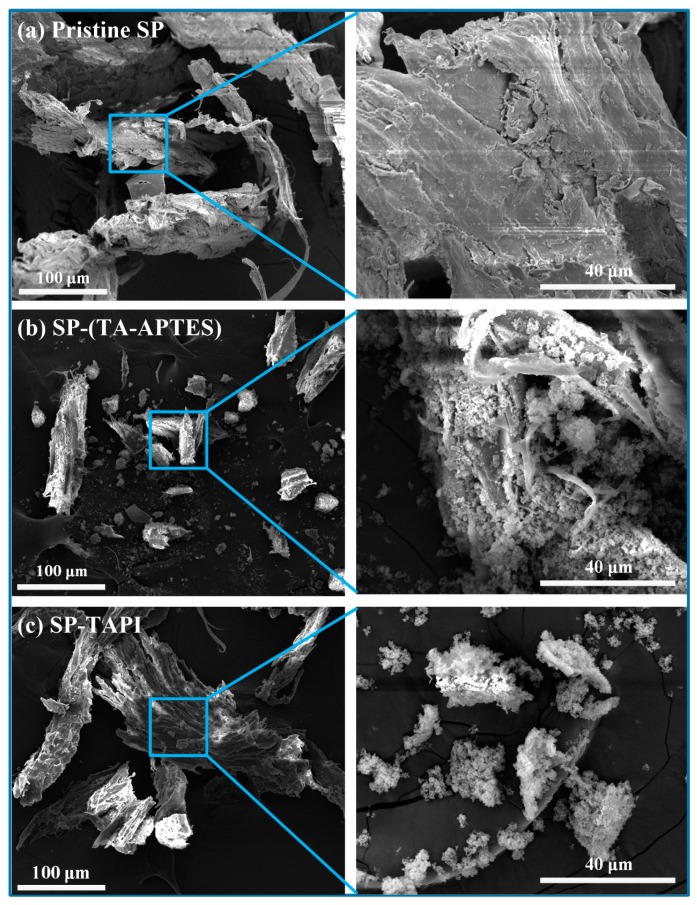
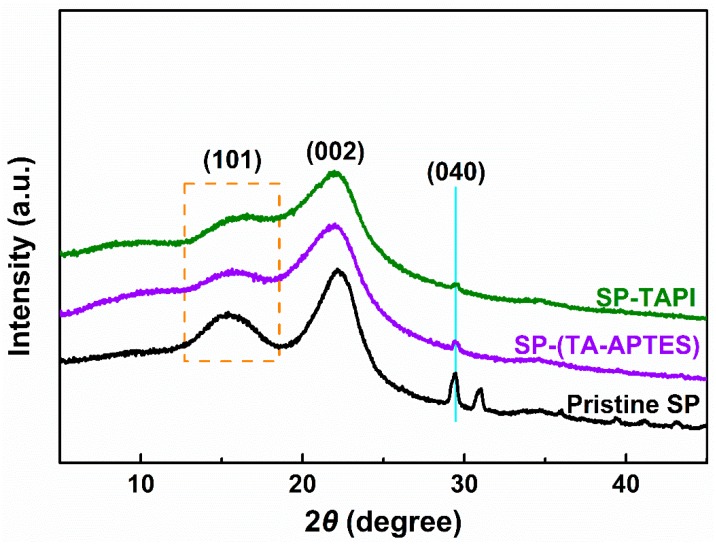
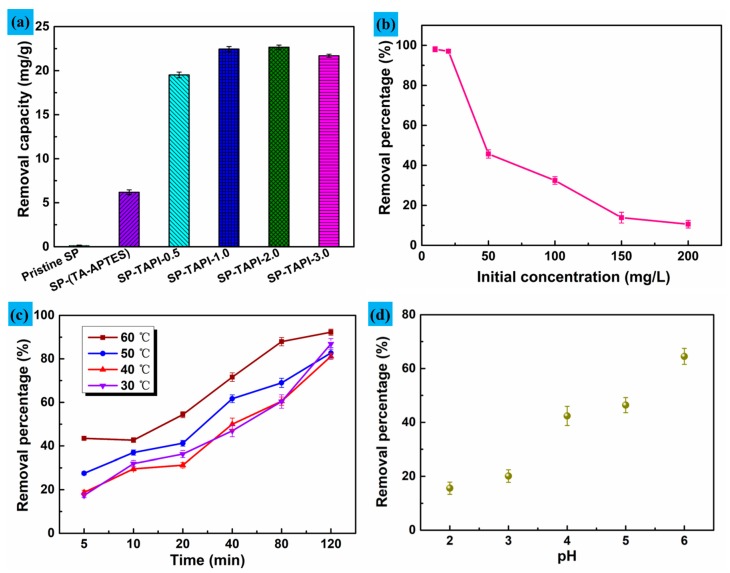
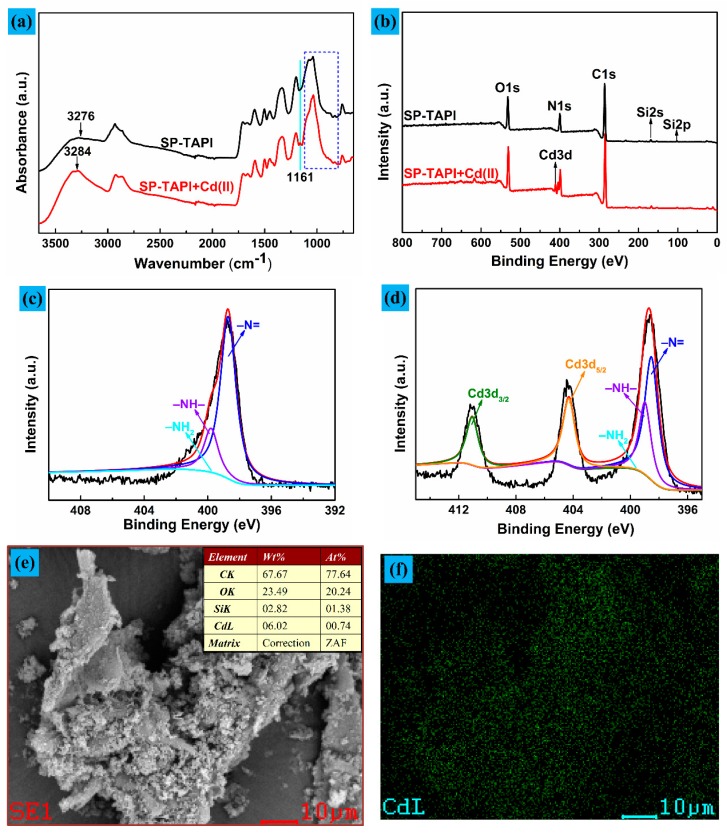
The fabrication of functional lignocellulose-based materials has drawn considerable attention because it acts as a green separation/absorption material owing to its multi-porous mesostructure. In this study, a surface functionalized lignocellulose-based adsorbent for the highly efficient capture of Cd(II) ions was prepared through facile in situ co-deposition of wood waste-derived saw powder (SP) in the presence of tannic acid (TA) and aminopropyltriethoxysilane (APTES) mixed aqueous solution. The SP was first modified using TA-APTES coating to synthesize the functional SP substrate (SP-(TA-APTES)). The SP-(TA-APTES) hybrids served as reactive platforms, which enabled further decoration with amino-rich polyethylenimine (PEI) due to the outstanding secondary reactions of the TA-APTES layer. The surface morphology of the resulting SP-(TA-APTES)-PEI (SP-TAPI) composites were investigated using Fourier-transform infrared spectroscopy (FTIR), X-ray photoelectron spectroscopy (XPS), X-ray diffraction (XRD), thermogravimetric analysis (TGA), and scanning electron microscopy (SEM). Significantly, the combined advantages of the lignocellulosic skeleton, the layer-particle structure, and the hybrid coating contributed to the enhanced adsorption capacity of Cd(II) (up to 22.66 mg/g at pH = 5.0). This removal capacity was higher than that of most reported agricultural waste-based or lignocellulose-based materials. The Cd(II) adsorption mechanism of the surface-modified SP-TAPI composites was studied in detail. These results provide new insights into the high value-added utilization of agricultural waste for water purification applications.
功能性木质纤维素基材料的制备引起了广泛关注,因为其具有多孔介观结构,可作为绿色分离/吸附材料。在本研究中,通过在单宁酸(TA)和氨丙基三乙氧基硅烷(APTES)混合水溶液存在下,将木材废料衍生的锯末粉(SP)进行简便的原位共沉积,制备了一种用于高效捕获Cd(II)离子的表面功能化木质纤维素基吸附剂。首先使用TA-APTES涂层对SP进行改性,以合成功能性SP底物(SP-(TA-APTES))。由于TA-APTES层出色的二次反应,SP-(TA-APTES)杂化物作为反应平台,能够用富含氨基的聚乙烯亚胺(PEI)进一步修饰。使用傅里叶变换红外光谱(FTIR)、X射线光电子能谱(XPS)、X射线衍射(XRD)、热重分析(TGA)和扫描电子显微镜(SEM)对所得的SP-(TA-APTES)-PEI(SP-TAPI)复合材料的表面形态进行了研究。值得注意的是,木质纤维素骨架、层状颗粒结构和混合涂层的综合优势有助于提高Cd(II)的吸附容量(在pH = 5.0时高达22.66 mg/g)。这种去除能力高于大多数报道的农业废弃物基或木质纤维素基材料。详细研究了表面改性的SP-TAPI复合材料对Cd(II)的吸附机理。这些结果为农业废弃物在水净化应用中的高附加值利用提供了新的见解。