University/BHF Centre for Cardiovascular Science, University of Edinburgh, UK; Edinburgh Preclinical Imaging (EPI), University of Edinburgh, UK.
University/BHF Centre for Cardiovascular Science, University of Edinburgh, UK; Edinburgh Preclinical Imaging (EPI), University of Edinburgh, UK.
J Chromatogr B Analyt Technol Biomed Life Sci. 2019 Jun 15;1118-1119:33-39. doi: 10.1016/j.jchromb.2019.04.026. Epub 2019 Apr 12.
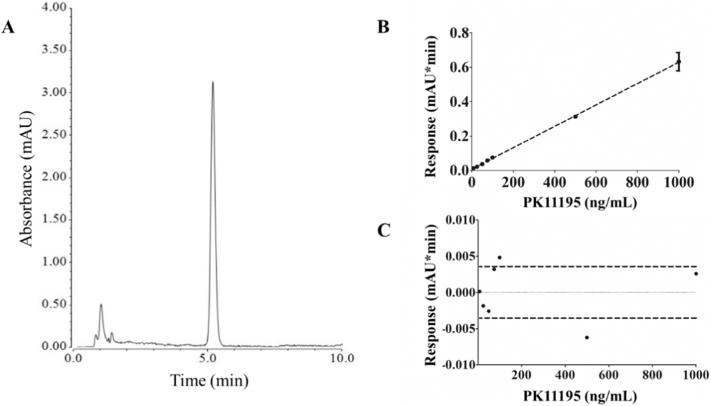
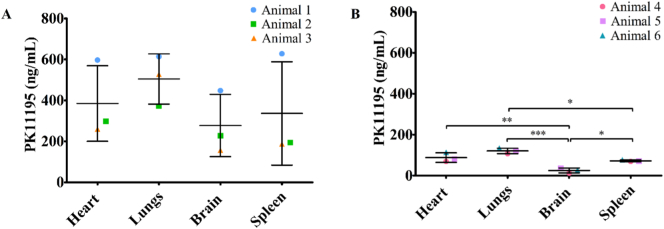
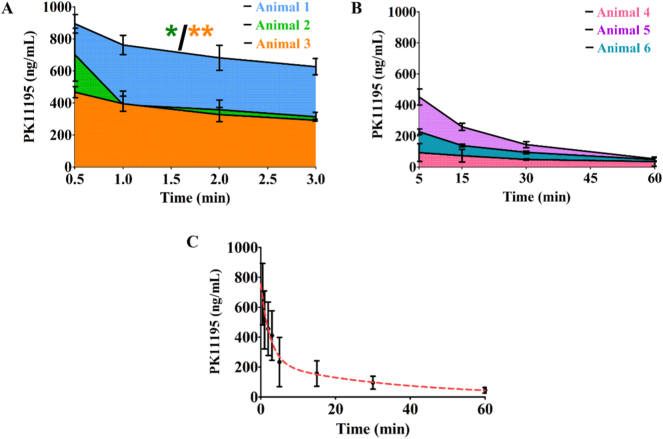
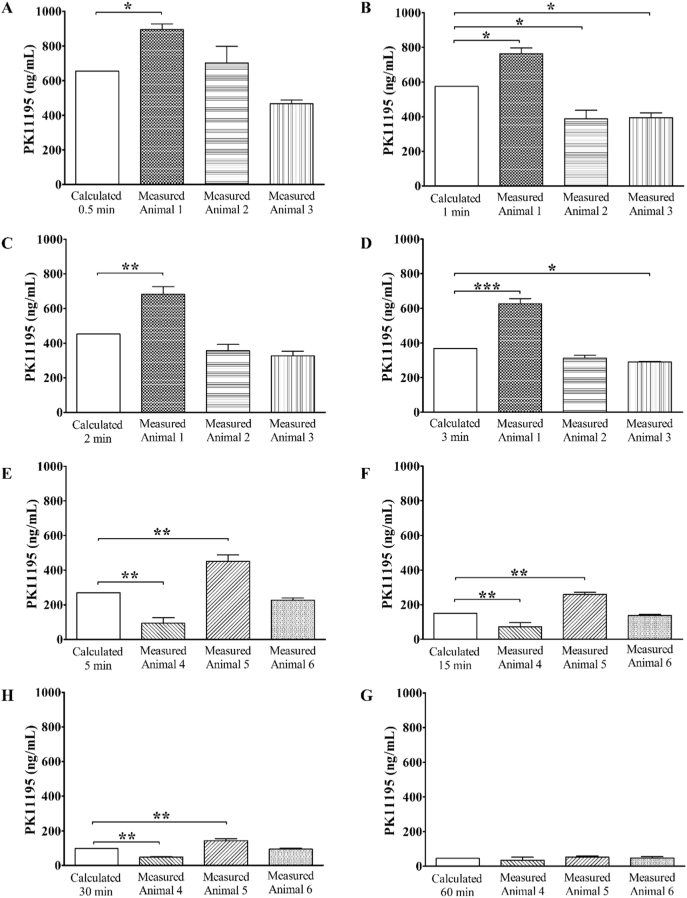
In Positron Emission Tomography (PET) research, it is important to assess not only pharmacokinetics of a radiotracer in vivo, but also of the drugs used in blocking/displacement PET studies. Typically, pharmacokinetic/pharmacodynamic (PK/PD) analyses of drugs used in rodent PET studies are based on population average pharmacokinetic profiles of the drugs due to limited blood volume withdrawal while simultaneously maintaining physiological homeostasis. This likely results in bias of PET data quantification, including unknown bias of target occupancy (TO) measurements. This study aimed to develop a High Performance Liquid Chromatography (HPLC) method for PK/PD quantification of drugs used in preclinical rodent PET research, specifically the translocator 18 kDa protein (TSPO) selective drug, PK11195, that used sub-millilitre blood volumes. The lowest detection limit for the proposed HPLC method ranged between 7.5 and 10 ng/mL depending on the method used to calculate the limit of detection, and the measured average relative standard deviation for intermediate precision was equal to 17.2%. Most importantly, we were able to demonstrate a significant difference between calculated PK11195 concentrations at 0.5, 1, 2, 3, 5, 15 and 30 min post-administration and individually measured whole blood levels (significance level range from p < 0.05 to p < 0.001; one-way ANOVA, Dunnet's post hoc test, p < 0.05). The HPLC method developed here uses sub-millilitre sample volumes to reproducibly assess PK/PD of PK11195 in rodent blood. This study highlights the importance of individually measured PK/PD drug concentrations when quantifying the TO from blocking/displacement rodent PET experiments.
在正电子发射断层扫描(PET)研究中,不仅要评估放射性示踪剂在体内的药代动力学,还要评估用于阻断/置换 PET 研究的药物。通常,由于在同时维持生理动态平衡的情况下,从啮齿动物 PET 研究中使用的药物中提取的血液量有限,因此基于药物的群体平均药代动力学曲线对其进行药代动力学/药效学(PK/PD)分析。这可能导致 PET 数据定量存在偏差,包括目标占有率(TO)测量值的未知偏差。本研究旨在开发一种用于临床前啮齿动物 PET 研究中使用的药物的 PK/PD 定量的高效液相色谱(HPLC)方法,特别是用于评估转位蛋白 18 kDa 蛋白(TSPO)选择性药物 PK11195,该药物仅使用亚毫升的血液量。所提出的 HPLC 方法的最低检测限范围为 7.5 至 10ng/mL,具体取决于用于计算检测限的方法,并且中间精密度的测量平均相对标准偏差等于 17.2%。最重要的是,我们能够证明在给药后 0.5、1、2、3、5、15 和 30 分钟时计算的 PK11195 浓度与单独测量的全血水平之间存在显著差异(显著性水平范围从 p < 0.05 到 p < 0.001;单向方差分析,Dunnet 事后检验,p < 0.05)。这里开发的 HPLC 方法使用亚毫升的样品量来可重复地评估 PK11195 在啮齿动物血液中的 PK/PD。本研究强调了在定量阻断/置换啮齿动物 PET 实验中的 TO 时,单独测量 PK/PD 药物浓度的重要性。