Alahmar Ahmed T
Department of Pathological Analysis, College of Science, University of Sumer, Thi-Qar, Iraq.
J Hum Reprod Sci. 2019 Jan-Mar;12(1):4-18. doi: 10.4103/jhrs.JHRS_150_18.
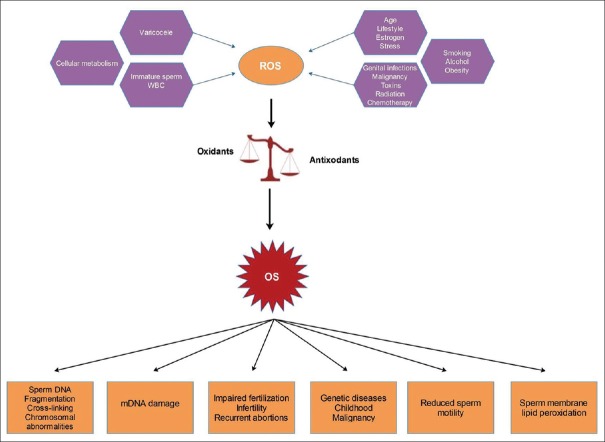
Current evidence links oxidative stress (OS) to male infertility, reduced sperm motility, sperm DNA damage and increased risk of recurrent abortions and genetic diseases. A review of PubMed, Medline, Google Scholar, and Cochrane review databases of published articles from years 2000-2018 was performed focusing on physiological and pathological consequences of reactive oxygen species (ROS), sperm DNA damage, OS tests, and the association between OS and male infertility, pregnancy and assisted reproductive techniques outcomes. Generation of ROS is essential for reproductive function, but OS is detrimental to fertility, pregnancy, and genetic status of the newborns. Further, there is a lack of consensus on selecting OS test, type, and duration of antioxidants treatment as well as on the target patients group. Developing advanced diagnostic and therapeutic options for OS is essential to improve fertility potential and limit genetic diseases transmitted to offspring.
目前的证据表明氧化应激(OS)与男性不育、精子活力降低、精子DNA损伤以及反复流产和遗传疾病风险增加有关。对2000年至2018年发表文章的PubMed、Medline、谷歌学术和Cochrane综述数据库进行了回顾,重点关注活性氧(ROS)的生理和病理后果、精子DNA损伤、OS检测以及OS与男性不育、妊娠和辅助生殖技术结局之间的关联。ROS的产生对生殖功能至关重要,但OS对生育力、妊娠和新生儿的遗传状况有害。此外,在选择OS检测方法、抗氧化剂治疗的类型和持续时间以及目标患者群体方面缺乏共识。开发针对OS的先进诊断和治疗方案对于提高生育潜力和限制遗传疾病传递给后代至关重要。