Zhang Yinghui, Guo Jia, Li Yongchao, Jiao Kai, Zhang Yingbo
Department of Ultrasound, The Second Affiliated Hospital of Qiqihar Medical University, Qiqihar, Heilongjiang 161000, P.R. China.
Laboratory Center, Medical Technology College of Qiqihar Medical University, Qiqihar, Heilongjiang 161000, P.R. China.
Exp Ther Med. 2019 May;17(5):3935-3942. doi: 10.3892/etm.2019.7457. Epub 2019 Apr 1.
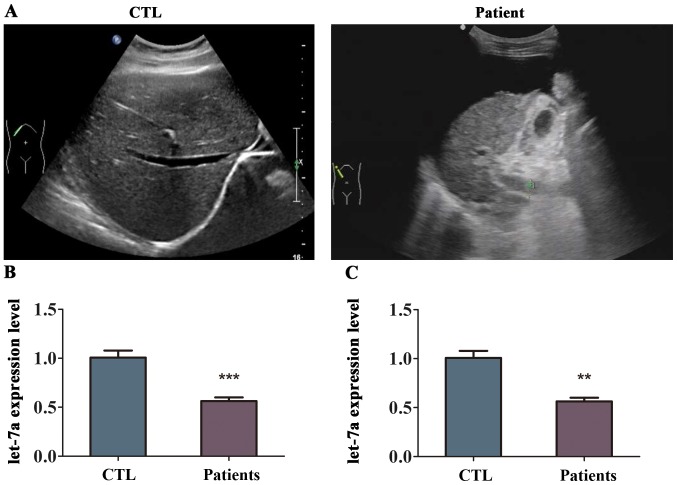
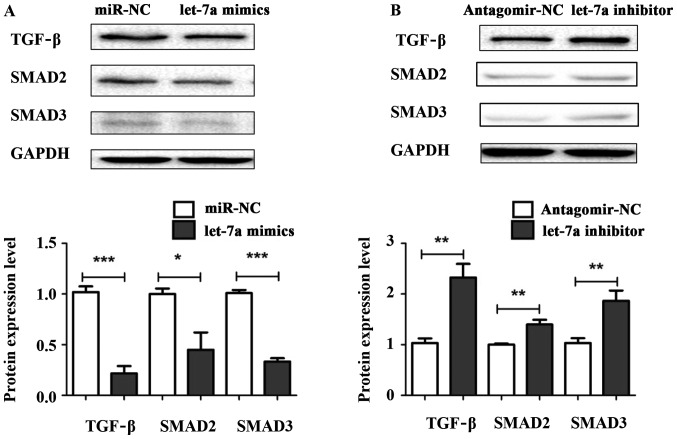
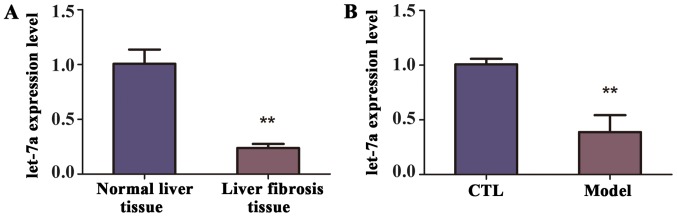
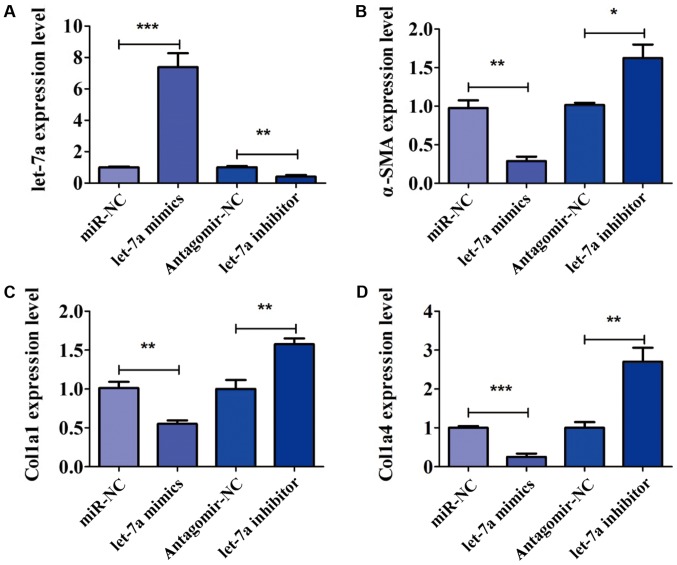
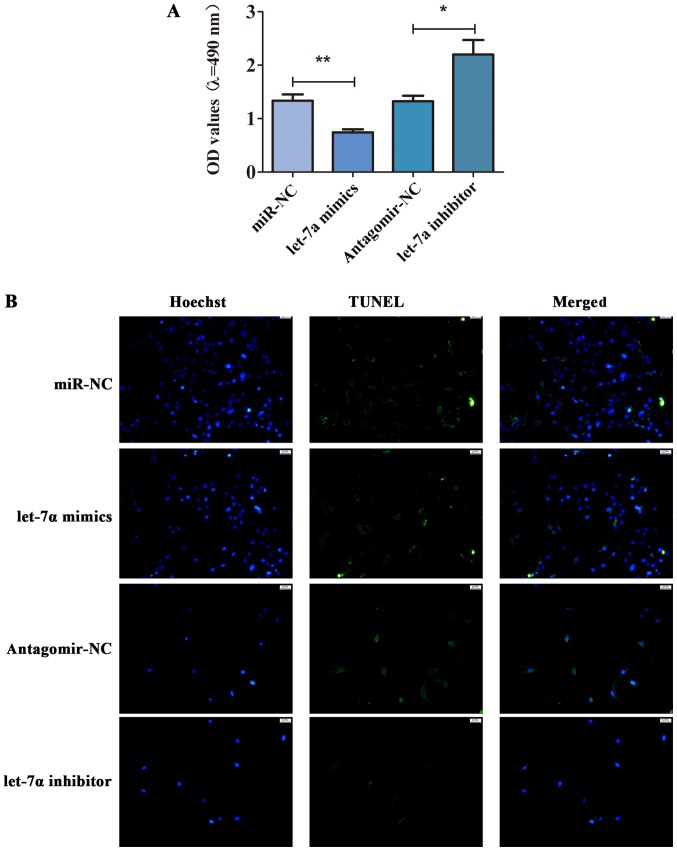
Liver fibrosis is the most common pathological outcome and the most severe complication of chronic liver diseases. Accumulating evidence suggests that miRNAs are involved in cell proliferation, differentiation, apoptosis, as well as the occurrence and development of various diseases. In this study, we found that the expression of let-7a was markedly decreased in the liver tissue samples and blood samples from patients with liver fibrosis compared with healthy volunteers. Furthermore, let-7a was downregulated in the liver tissues and blood samples in mouse models of liver fibrosis. Further analysis indicated that let-7a suppresses the activation level of hepatic stellate cells (HSCs). In addition, overexpression of let-7a reduced cell viability and promoted apoptosis of HSCs. Western blot analysis showed that let-7a might inhibit HSCs through TGFβ/SMAD signaling pathway. The present study provides a potential accurate target and vital evidence to better understand the underlying pathogenesis for early diagnosis and treatment of liver fibrosis.
肝纤维化是慢性肝病最常见的病理结果和最严重的并发症。越来越多的证据表明,微小RNA(miRNAs)参与细胞增殖、分化、凋亡以及各种疾病的发生和发展。在本研究中,我们发现与健康志愿者相比,肝纤维化患者肝组织样本和血液样本中let-7a的表达显著降低。此外,在肝纤维化小鼠模型的肝组织和血液样本中let-7a表达下调。进一步分析表明,let-7a抑制肝星状细胞(HSCs)的激活水平。此外,let-7a的过表达降低了细胞活力并促进了HSCs的凋亡。蛋白质免疫印迹分析表明,let-7a可能通过TGFβ/SMAD信号通路抑制HSCs。本研究为更好地理解肝纤维化的潜在发病机制以进行早期诊断和治疗提供了一个潜在的精确靶点和重要证据。