Boiten Henk-Jan, Baris Lucia, van den Bos Ewout J
Department of Internal Medicine, Albert Schweitzer Hospital, Albert Schweitzerplaats 25, AT Dordrecht, The Netherlands.
Department of Cardiology, Albert Schweitzer Hospital, Albert Schweitzerplaats 25, AT Dordrecht, The Netherlands.
Eur Heart J Case Rep. 2018 May 9;2(2):yty062. doi: 10.1093/ehjcr/yty062. eCollection 2018 Jun.
Congenital long-QT (LQT) syndrome can lead to torsades de pointes (TdP), which can deteriorate into ventricular fibrillation resulting in sudden death. Thus far, more than 16 genes have been linked to the LQT syndrome. We report an orgasm-induced TdP in a patient with LQT syndrome type 2 with a novel mutation in the KCNH2 gene.
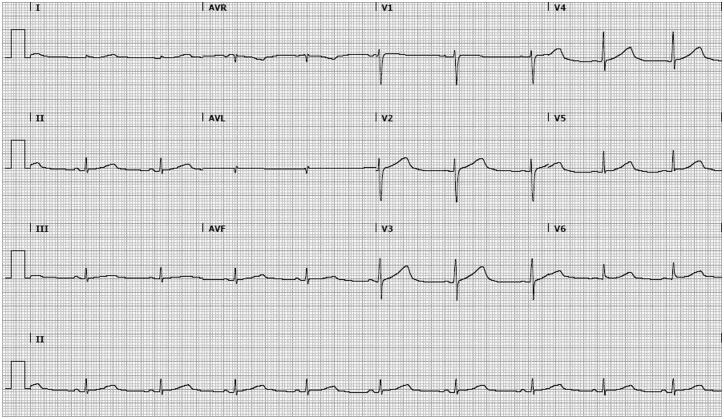
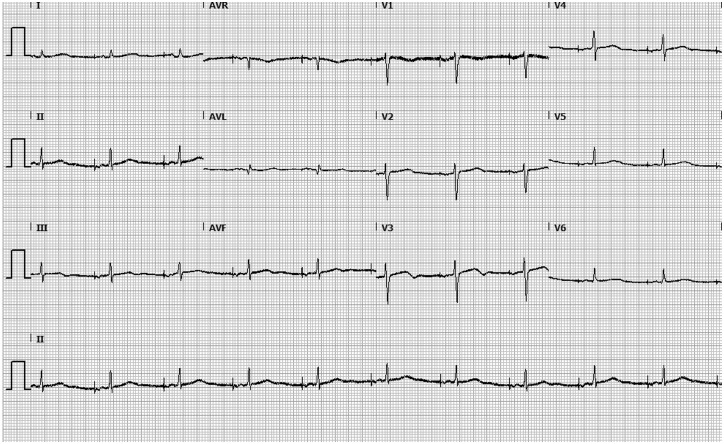
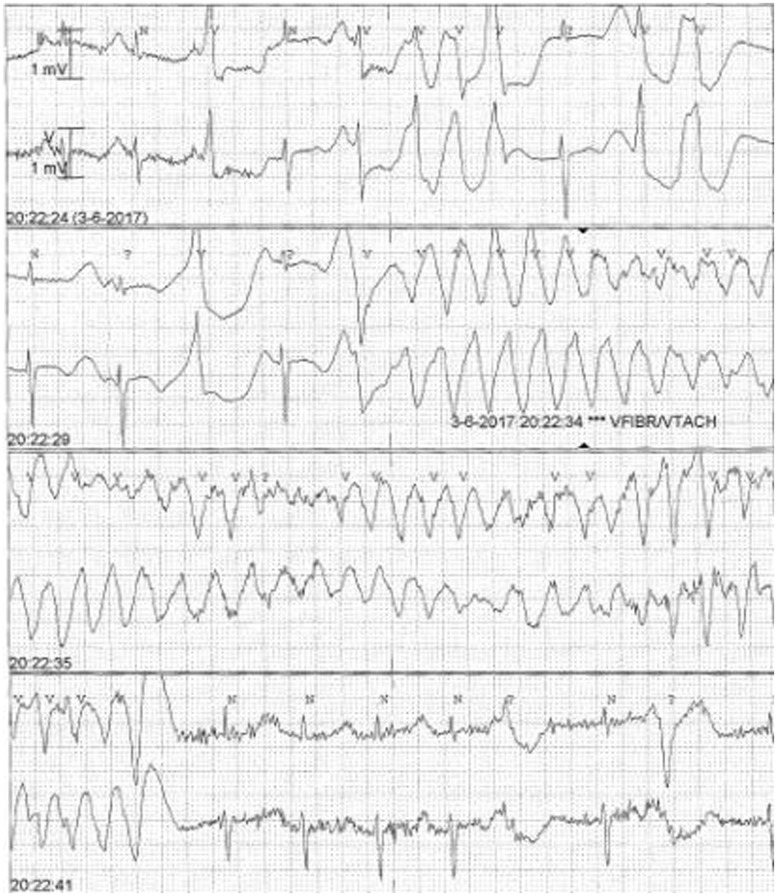
A 24-year-old Caucasian woman with a medical history of depression, no medication use and no family history of sudden death, presented with recurrent syncope during sexual activity. Immediately after achieving orgasm during sexual intercourse she lost consciousness. Baseline 12-lead electrocardiogram revealed a wide based T-wave with a prolonged QTc-interval of 507 ms. During hospital admission runs of TdP were recorded. The patient was treated with magnesium, an oral beta-blocker, and an implantable cardioverter-defibrillator. Genetic testing (Sanger sequencing) revealed a novel mutation (c.361del) in the KCNH2 gene (chromosome 7q36).
To date, orgasm-induced TdP as a first symptom in a patient with LQT2 has not been published previously. In studies with continuous blood sampling in healthy volunteers, large peaks in plasma epinephrine levels during orgasm were observed with fast post-orgasmic decline. However, in a large cohort study (402 patients of which 129 with LQT2), no patients experienced cardiac events during sexual activity, suggesting that these are indeed very rare. Nevertheless, the high levels of sympathetic adrenal hormones during orgasm may explain the timing of the TdP in our patient. The patient has remained free of syncope at 6 months of follow-up.
先天性长QT(LQT)综合征可导致尖端扭转型室速(TdP),进而恶化为心室颤动,导致猝死。迄今为止,已有超过16个基因与LQT综合征相关。我们报告了1例2型LQT综合征患者因性高潮诱发TdP,该患者的KCNH2基因存在新的突变。
一名24岁的白种女性,有抑郁症病史,未服用药物,无猝死家族史,在性活动期间反复出现晕厥。在性交过程中达到性高潮后,她立即失去意识。基线12导联心电图显示T波宽大,QTc间期延长至507毫秒。住院期间记录到了TdP发作。患者接受了镁剂、口服β受体阻滞剂和植入式心脏复律除颤器治疗。基因检测(桑格测序)显示KCNH2基因(7号染色体q36)存在新的突变(c.361del)。
迄今为止,性高潮诱发TdP作为LQT2患者的首发症状此前尚未见报道。在对健康志愿者进行连续采血的研究中,观察到性高潮期间血浆肾上腺素水平大幅升高,随后迅速下降。然而,在一项大型队列研究(402例患者,其中129例为LQT2患者)中,没有患者在性活动期间发生心脏事件,这表明此类情况确实非常罕见。尽管如此,性高潮期间交感肾上腺激素水平升高可能解释了我们这位患者发生TdP的时间。该患者在随访6个月时未再出现晕厥。