Department of Biotechnology and Biosciences, University of Milano-Bicocca, Piazza della Scienza, 2, 20126, Milan, Italy.
Fondazione IRCCS Casa Sollievo della Sofferenza, Production Unit of Advanced Therapies (UPTA), Institute for Stem-Cell Biology, Regenerative Medicine and Innovative Therapies (ISBReMIT), 71013, San Giovanni Rotondo, Foggia, Italy.
Cell Death Dis. 2019 Apr 25;10(5):345. doi: 10.1038/s41419-019-1582-5.
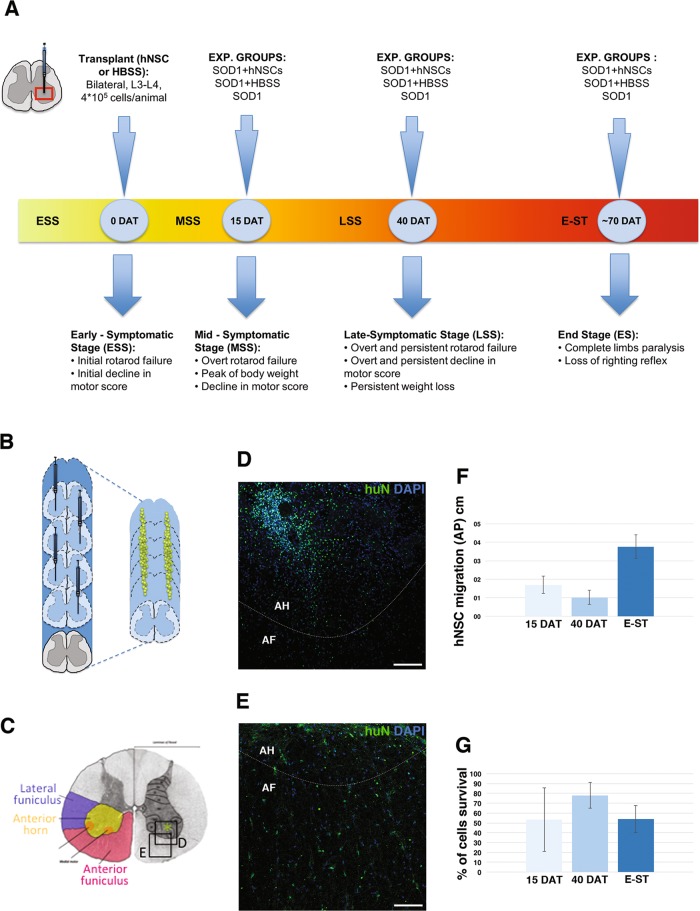
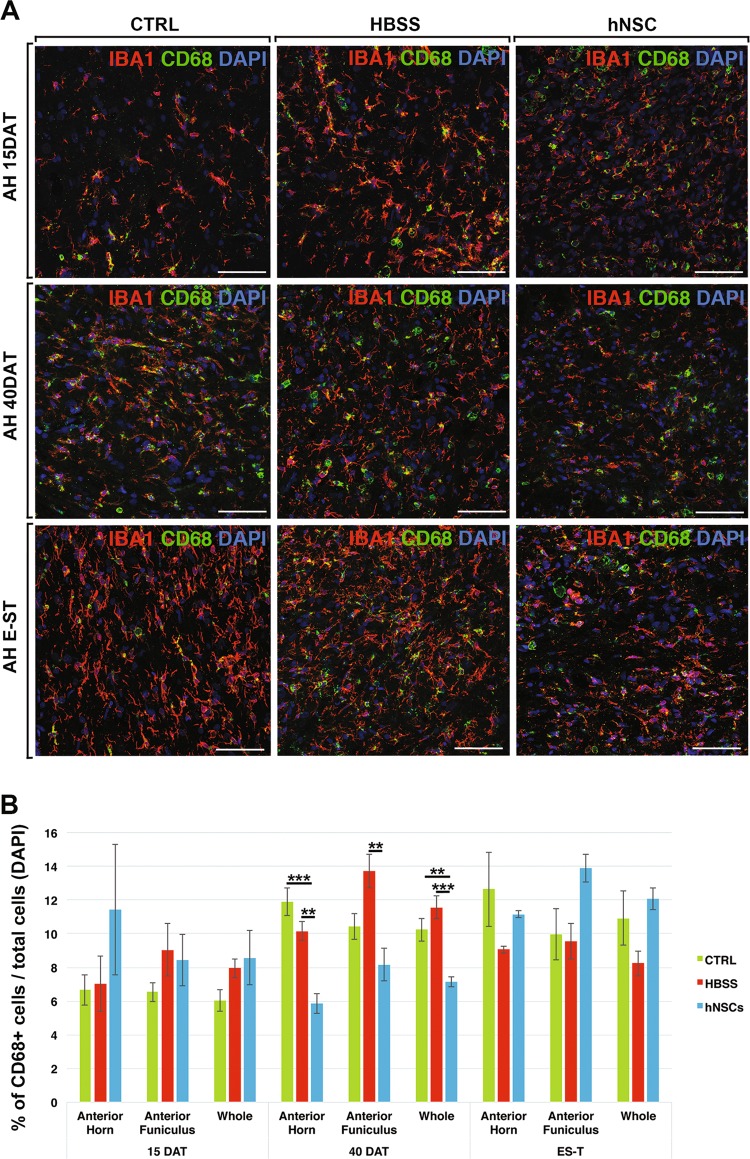
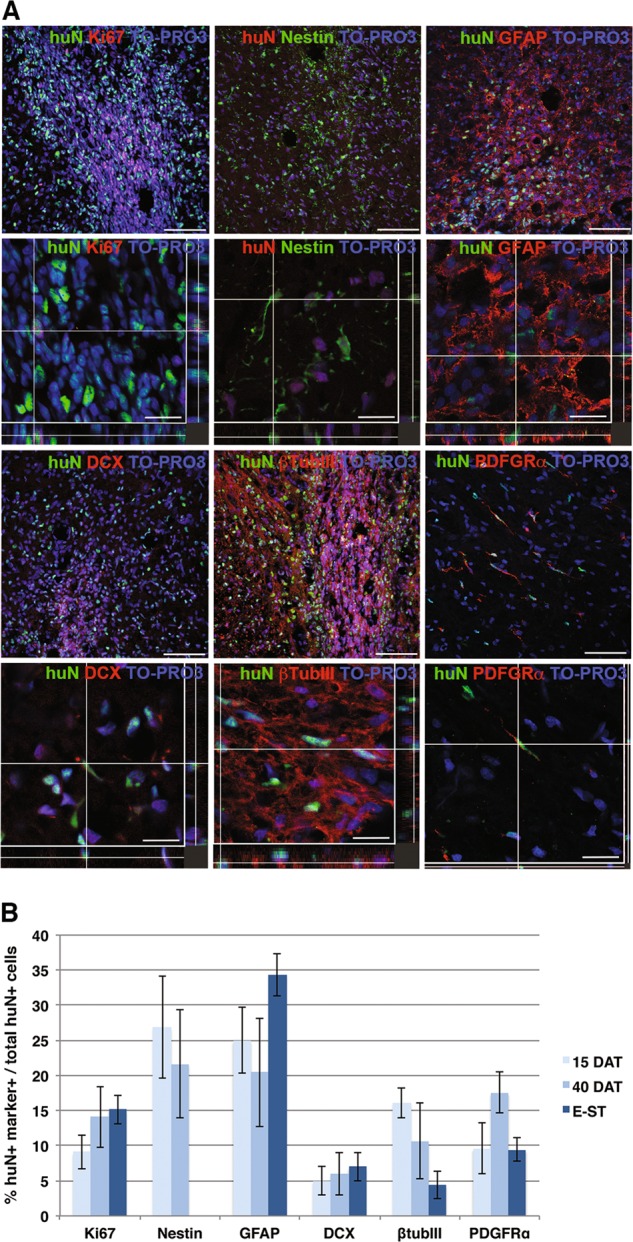
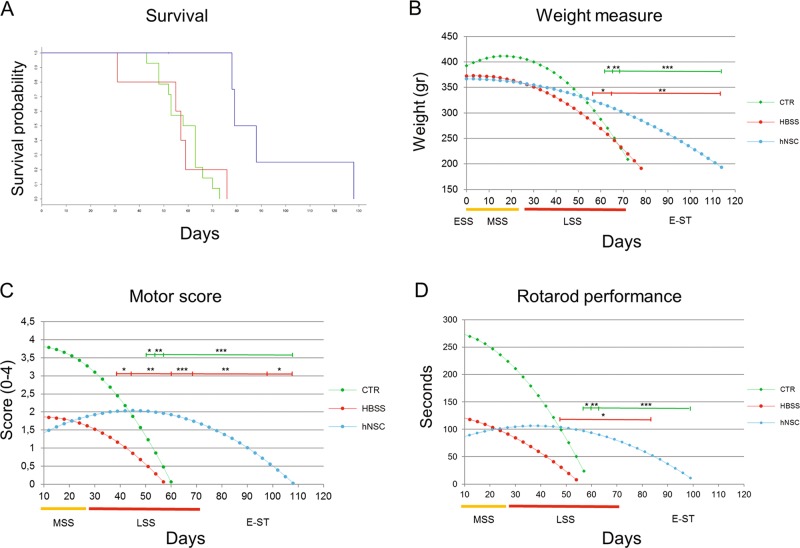
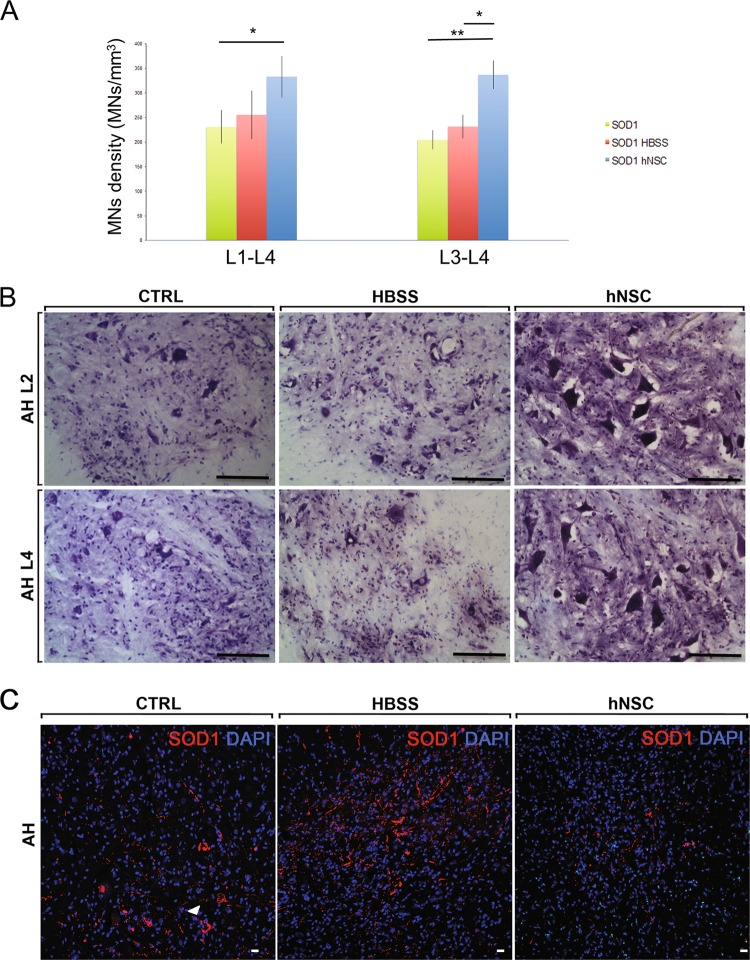
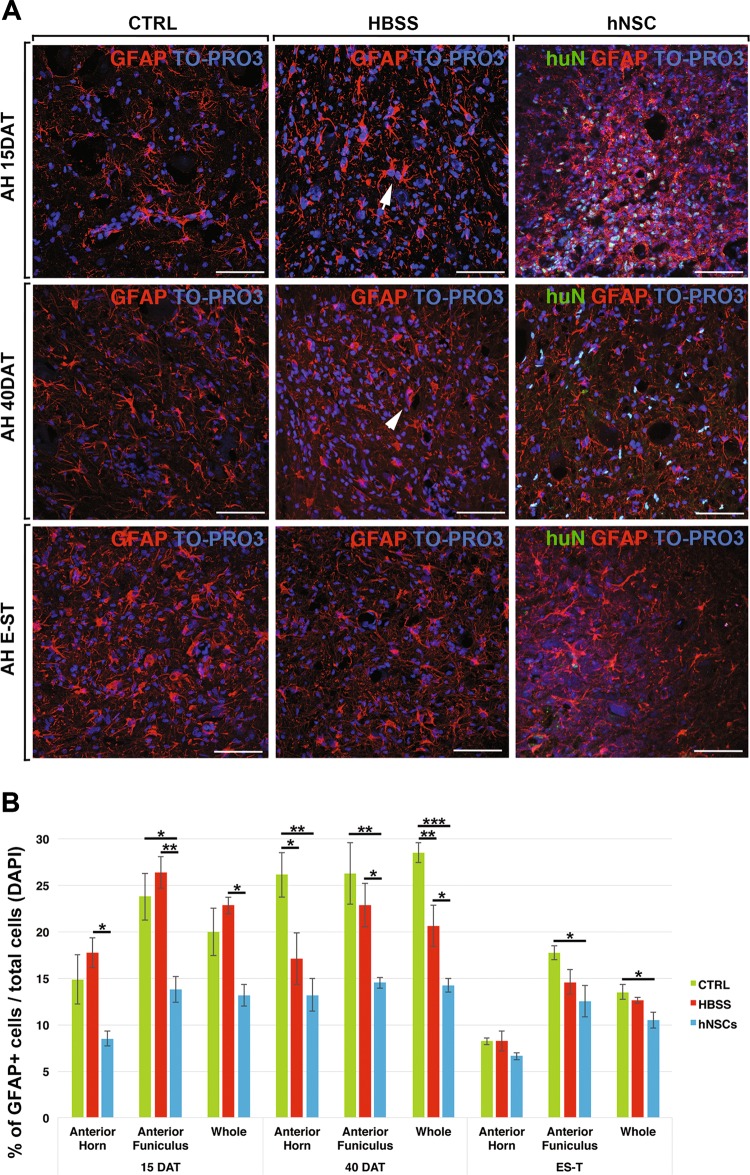
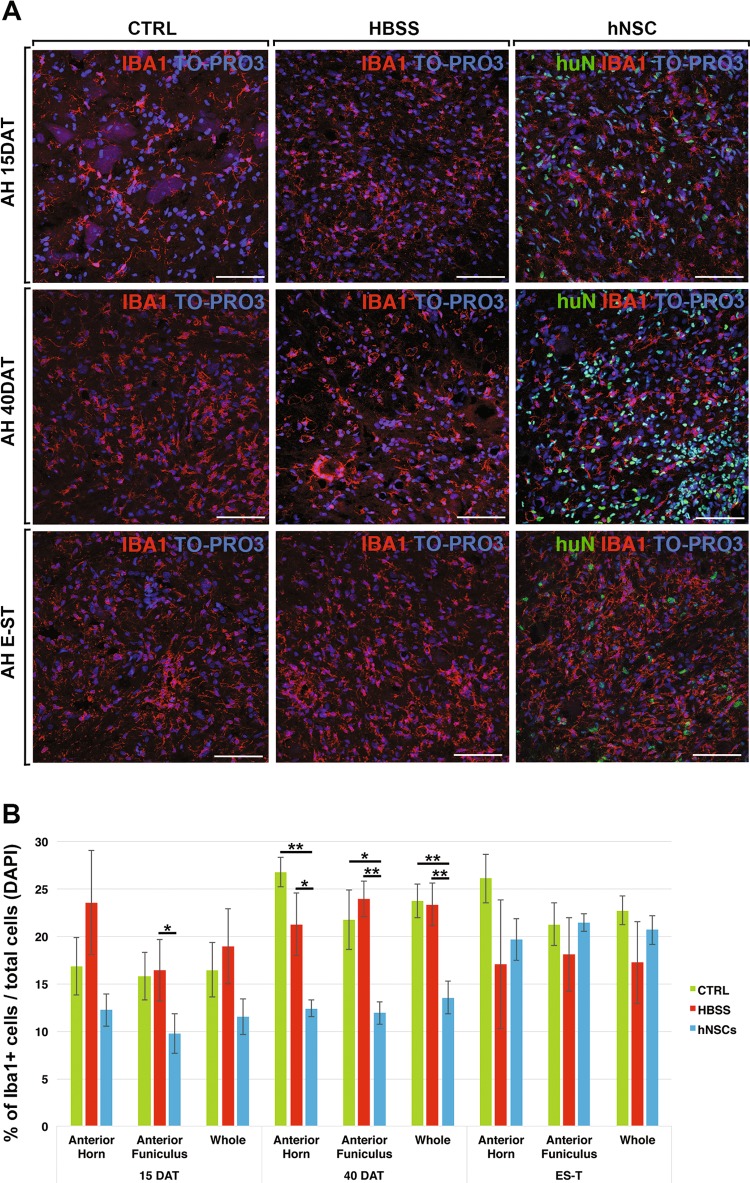
Stem cells are emerging as a therapeutic option for incurable diseases, such as Amyotrophic Lateral Sclerosis (ALS). However, critical issues are related to their origin as well as to the need to deepen our knowledge of the therapeutic actions exerted by these cells. Here, we investigate the therapeutic potential of clinical-grade human neural stem cells (hNSCs) that have been successfully used in a recently concluded phase I clinical trial for ALS patients (NCT01640067). The hNSCs were transplanted bilaterally into the anterior horns of the lumbar spinal cord (four grafts each, segments L3-L4) of superoxide dismutase 1 G93A transgenic rats (SOD1 rats) at the symptomatic stage. Controls included untreated SOD1 rats (CTRL) and those treated with HBSS (HBSS). Motor symptoms and histological hallmarks of the disease were evaluated at three progressive time points: 15 and 40 days after transplant (DAT), and end stage. Animals were treated by transient immunosuppression (for 15 days, starting at time of transplantation). Under these conditions, hNSCs integrated extensively within the cord, differentiated into neural phenotypes and migrated rostro-caudally, up to 3.77 ± 0.63 cm from the injection site. The transplanted cells delayed decreases in body weight and deterioration of motor performance in the SOD1 rats. At 40DAT, the anterior horns at L3-L4 revealed a higher density of motoneurons and fewer activated astroglial and microglial cells. Accordingly, the overall survival of transplanted rats was significantly enhanced with no rejection of hNSCs observed. We demonstrated that the beneficial effects observed after stem cell transplantation arises from multiple events that counteract several aspects of the disease, a crucial feature for multifactorial diseases, such as ALS. The combination of therapeutic approaches that target different pathogenic mechanisms of the disorder, including pharmacology, molecular therapy and cell transplantation, will increase the chances of a clinically successful therapy for ALS.
干细胞作为一种治疗方法,在治疗一些绝症方面,如肌萎缩性侧索硬化症(ALS),有着广阔的应用前景。然而,一些关键问题,如它们的起源,以及深入了解这些细胞的治疗作用,仍需要进一步研究。在这里,我们研究了已成功应用于最近结束的肌萎缩性侧索硬化症患者 I 期临床试验(NCT01640067)的临床级人神经干细胞(hNSCs)的治疗潜力。在症状出现时,将 hNSCs 双侧移植到超氧化物歧化酶 1 G93A 转基因大鼠(SOD1 大鼠)的腰骶部脊髓前角(每节 4 个移植物,L3-L4 节段)。对照组包括未治疗的 SOD1 大鼠(CTRL)和用 HBSS 治疗的大鼠(HBSS)。在三个不同的时间点:移植后 15 天和 40 天(DAT)以及终末期,评估运动症状和疾病的组织学特征。动物接受短暂的免疫抑制治疗(移植后 15 天开始)。在这些条件下,hNSCs 广泛整合到脊髓中,分化为神经表型,并向头侧和尾侧迁移,距离注射部位 3.77±0.63cm。移植细胞延迟了 SOD1 大鼠体重下降和运动功能恶化。在 40DAT 时,L3-L4 的前角显示出更高密度的运动神经元和更少的激活星形胶质细胞和小胶质细胞。因此,移植大鼠的整体存活率显著提高,没有观察到 hNSCs 的排斥反应。我们证明,干细胞移植后观察到的有益效果源于多种事件,这些事件抵消了疾病的多个方面,这是肌萎缩性侧索硬化症等多因素疾病的一个关键特征。结合针对疾病不同发病机制的治疗方法,包括药理学、分子治疗和细胞移植,将增加肌萎缩性侧索硬化症临床成功治疗的机会。