Shimizu Yasuhiro, Suzuki Toshihiro, Yoshikawa Toshiaki, Endo Itaru, Nakatsura Tetsuya
Division of Cancer Immunotherapy, Exploratory Oncology Research and Clinical Trial Center, National Cancer Center, Kashiwa, Japan.
Department of Gastroenterological Surgery, Yokohama City University Graduate School of Medicine, Yokohama, Japan.
Front Oncol. 2019 Apr 10;9:248. doi: 10.3389/fonc.2019.00248. eCollection 2019.
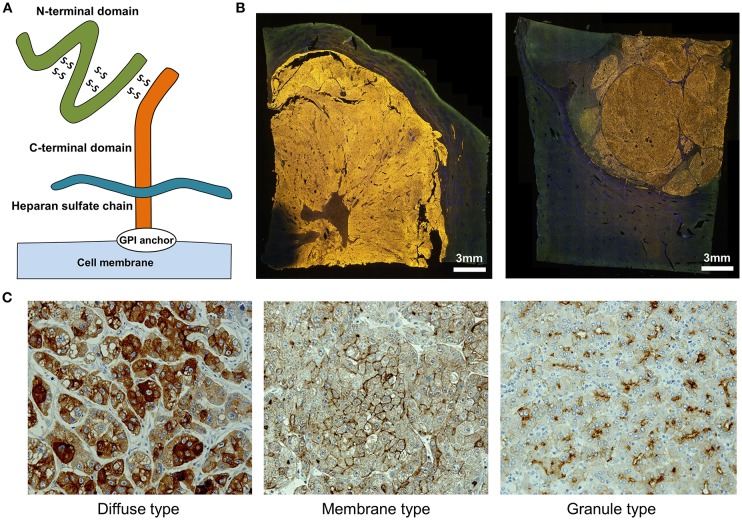
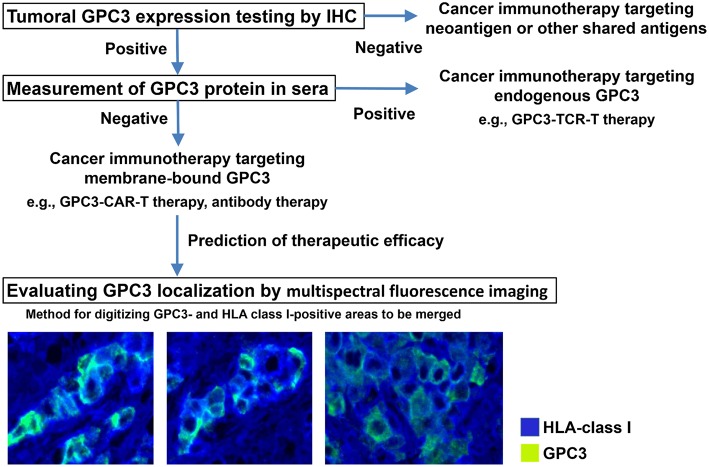
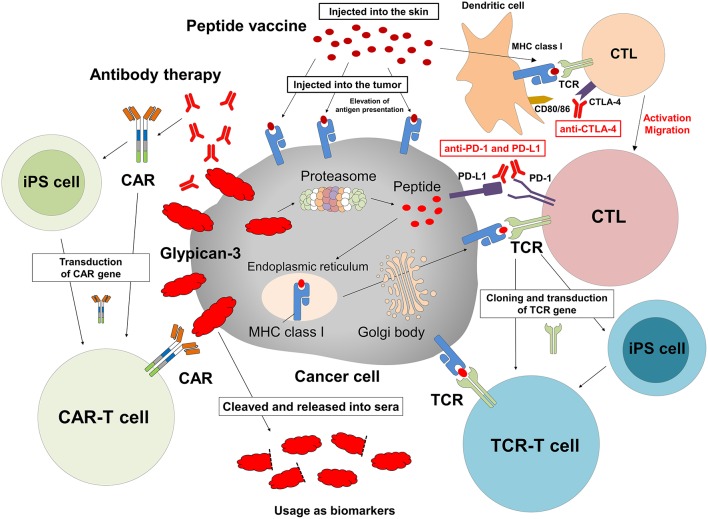
Glypican-3 (GPC3), a 65 kD protein consisting of 580 amino acids, is a heparan sulfate proteoglycan bound to the cell membrane by glycosylphosphatidylinositol. This protein is expressed in the liver and the kidney of healthy fetuses but is hardly expressed in adults, except in the placenta. Contrarily, GPC3 is specifically expressed in hepatocellular carcinoma (HCC), ovarian clear cell carcinoma, melanoma, squamous cell carcinoma of the lung, hepatoblastoma, nephroblastoma (Wilms tumor), yolk sac tumor, and some pediatric cancers. Although the precise function of GPC3 remains unclear, it has been strongly suggested that it is related to the malignant transformation of HCC. We identified GPC3 as a promising target for cancer immunotherapy and have been working on the development of cancer immunotherapeutic agents targeting it through clinical trials. In some trials, it was revealed that the GPC3 peptide vaccines we developed using human leukocyte antigen-A24- and A2-restricted GPC3-derived peptides could induce GPC3-specific cytotoxic T cells in most vaccinated patients and thereby improve their prognosis. To further improve the clinical efficacy of cancer immunotherapy targeting GPC3, we are also developing next-generation therapeutic strategies using T cells engineered to express antigen-specific T-cell receptor or chimeric antigen receptor. In addition, we have successfully monitored the levels of serum full-length GPC3 protein, which is somehow secreted in the blood. The utility of GPC3 as a biomarker for predicting tumor recurrence and treatment efficacy is now being considered. In this review article, we summarize the results of clinical trials carried out by our team and describe the novel agent targeting the cancer-specific shared antigen, GPC3.
磷脂酰肌醇蛋白聚糖-3(GPC3)是一种由580个氨基酸组成的65kD蛋白质,是一种通过糖基磷脂酰肌醇与细胞膜结合的硫酸乙酰肝素蛋白聚糖。该蛋白在健康胎儿的肝脏和肾脏中表达,但在成年人中几乎不表达,胎盘除外。相反,GPC3在肝细胞癌(HCC)、卵巢透明细胞癌、黑色素瘤、肺鳞状细胞癌、肝母细胞瘤、肾母细胞瘤(威尔姆斯瘤)、卵黄囊瘤和一些儿童癌症中特异性表达。尽管GPC3的确切功能尚不清楚,但强烈提示它与HCC的恶性转化有关。我们将GPC3确定为癌症免疫治疗的一个有前景的靶点,并一直在通过临床试验致力于开发针对它的癌症免疫治疗药物。在一些试验中,结果显示我们使用人白细胞抗原-A24和A2限制性GPC3衍生肽开发的GPC3肽疫苗能够在大多数接种疫苗的患者中诱导GPC3特异性细胞毒性T细胞,从而改善他们的预后。为了进一步提高针对GPC3的癌症免疫治疗的临床疗效,我们还在开发使用工程化表达抗原特异性T细胞受体或嵌合抗原受体的T细胞的下一代治疗策略。此外,我们已经成功监测到血清全长GPC3蛋白的水平,该蛋白以某种方式分泌到血液中。目前正在考虑将GPC3用作预测肿瘤复发和治疗疗效的生物标志物。在这篇综述文章中,我们总结了我们团队进行的临床试验结果,并描述了针对癌症特异性共享抗原GPC3的新型药物。